


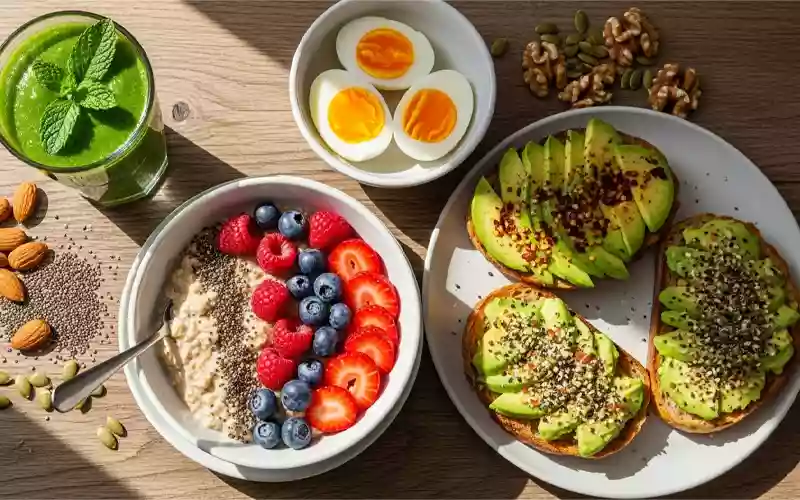
Easy Healthy Breakfasts for a Strong and Fit Body
healthy breakfasts is often called the most important meal of the day, and there’s a good reason for that. Starting your morning with nutritious foods gives you energy, lifts your mood, and helps your body stay healthy. Eating a healthy breakfast not only fuels you for the day but also supports weight control, keeps your heart strong, and improves your brain function. Skipping breakfast can make you feel tired, cause you to eat too much later, and slow down your metabolism. A balanced breakfast provides the vitamins, minerals, and nutrients your body needs to stay strong, active, and ready to face the day.
Many people believe that making breakfast takes too much time or is too difficult, but the reality is that you can prepare healthy and delicious meals quickly using simple ingredients. In this article, we will share a wide range of breakfast ideas, including easy healthy options, heart-friendly meals, and choices that kids will love. Whether you are a busy professional, a parent on the go, or someone trying to lose weight, there are plenty of ways to start your day with a nutritious and satisfying breakfast.
Table of Contents
ToggleWhy Healthy Breakfasts Matter
Healthy breakfasts kickstart your day with energy and focus. They not only provide your body with essential nutrients but also boost metabolism and help control appetite. From young children to adults, everyone benefits from a balanced breakfast that supports overall health and daily performance.
Healthy breakfasts also help boost your metabolism. Meals that are rich in protein, fiber, and healthy fats keep your blood sugar levels steady and stop you from overeating later in the day. Eating a balanced breakfast can also support weight management by reducing hunger and controlling cravings. For children, a nutritious morning meal enhances focus, learning, and overall growth. A good breakfast isn’t just about filling your stomach; it’s about giving your body the proper fuel it needs to work at its best.
Components of a Healthy Breakfast
A perfect healthy breakfast should have three key components: protein, complex carbohydrates, and healthy fats. Proteins, such as eggs, Greek yogurt, nuts, and seeds, help build muscles and keep you feeling full for longer. Complex carbohydrates, like oats, whole-grain bread, and fruits, give you lasting energy throughout the morning. Healthy fats, including avocado, olive oil, and nut butters, support heart health and help your brain function at its best.
Including fiber-rich foods in your breakfast is just as important. Fiber helps with digestion, prevents constipation, and keeps you feeling full for a longer time. Fresh fruits, vegetables, and whole grains are great sources of dietary fiber. By combining these elements, you can make balanced breakfasts that not only taste amazing but also support your overall health and well-being.
Easy Healthy Breakfast Ideas
Many people skip breakfast because they think it takes too much time, but there are plenty of easy and healthy options that can be ready in minutes. For example, overnight oats can be prepared the night before using rolled oats, milk or yogurt, chia seeds, and fresh fruits. By morning, they are ready to eat with no cooking required, making them a convenient and nutritious choice for busy mornings.
Smoothies are another fast and nutritious breakfast choice. By blending fruits, vegetables, and a scoop of protein powder, you can enjoy a refreshing and filling drink. Whole-grain toast topped with avocado, nut butter, or boiled eggs is simple to prepare and full of nutrients. Even a quick banana or apple with a handful of almonds makes a wholesome breakfast. These options are not only easy to make but also help boost your energy, improve focus, and support overall health.
Healthy Breakfast Ideas for Weight Loss
For anyone trying to lose weight, breakfast is an important meal. Eating healthy breakfast options for weight loss can help control your appetite and reduce the chances of overeating later in the day. High-protein choices, such as egg white omelets, Greek yogurt with fruits, or protein-packed smoothies, can keep you feeling full for several hours and support your weight loss goals.
Fiber-rich breakfasts also help with weight loss. Foods like oats, whole-grain toast, fruits, and vegetables slow down digestion and keep your blood sugar levels steady. It’s best to avoid sugary cereals and pastries, as they can cause rapid spikes in blood sugar and make you feel hungry again soon after. By choosing low-calorie, nutrient-packed foods in the morning, you can support your weight loss goals without feeling hungry or deprived.
Quick Healthy Breakfast Options
Even on busy mornings, you don’t have to skip breakfast. There are plenty of quick and healthy options that take less than ten minutes to prepare. For example, Greek yogurt with granola and berries, a smoothie made with milk and fruits, or whole-grain toast with peanut butter are all fast, nutritious, and balanced choices.
Another great idea is to prepare some ingredients the night before. Chopping fruits, soaking oats, or assembling smoothie packs can save valuable time in the morning. Even simple combinations, like a banana with almonds or a boiled egg with whole-grain toast, are nutritious and convenient. Quick breakfasts don’t have to compromise on health, and with a little planning, anyone can enjoy a balanced and satisfying morning meal.
Healthy Breakfast Ideas for Kids
Children need plenty of energy to grow, learn, and stay active. Healthy breakfast ideas for kids should be nutritious, colorful, and fun to eat. Options like smoothie bowls layered with fruits and yogurt, whole-grain pancakes topped with berries, or vegetable-packed egg muffins are all great choices that kids will enjoy.
Parents can encourage children to eat healthy by making breakfast visually appealing. Sliced fruits, fun-shaped sandwiches, or colorful yogurt parfaits can easily catch a child’s attention. Including protein and fiber ensures that kids stay full and energized until lunchtime. Developing healthy breakfast habits early helps children build a lifelong love for nutritious foods.
Heart Healthy Breakfasts
Eating heart-healthy breakfasts can help protect your cardiovascular system and lower the risk of heart disease. Foods that are rich in fiber, antioxidants, and omega-3 fatty acids are excellent for maintaining healthy cholesterol and blood pressure levels. Whole grains, nuts, seeds, fruits, and vegetables provide the essential nutrients your heart needs to stay strong and healthy.
Avoiding processed foods and sugary breakfast items is key. Replacing them with oats, flaxseeds, walnuts, berries, and lean protein creates meals that support both your heart and overall health. A breakfast that includes healthy fats, complex carbohydrates, and protein can keep your heart strong and improve long-term health outcomes.
Seasonal Breakfast Ideas
Eating seasonal foods not only improves flavor but also ensures you get the most nutrients. In summer, fresh fruits like berries, mangoes, and melons can be added to yogurt or smoothies. During winter, oatmeal with nuts, dried fruits, and a sprinkle of cinnamon provides warmth and energy. Seasonal vegetables can also be included in omelets or wraps to boost fiber and vitamin intake.
Changing your breakfast choices with the seasons keeps your meals interesting and varied. It also ensures that your body receives a wide range of nutrients throughout the year, which supports overall health, boosts immunity, and increases energy and vitality.
Tips to Make Breakfast More Enjoyable
Making breakfast enjoyable helps you stick to healthy habits and encourages consistency. Planning your meals ahead, prepping ingredients in advance, and trying out different flavors can make a big difference. Adding fresh herbs, a pinch of cinnamon, or a few slices of avocado can enhance the taste without sacrificing nutrition.
Eating breakfast mindfully is another important tip. Sitting down, avoiding distractions like phones, and truly savoring each bite can improve digestion and overall satisfaction. Consistency matters—making small, healthy changes to your breakfast routine can lead to significant long-term benefits for both your body and mind.
Common Mistakes to Avoid in Breakfast
Many people unknowingly make mistakes that reduce the benefits of breakfast. Skipping the meal, relying on sugary cereals, or eating highly processed foods can negatively affect your energy, weight, and overall health. Another common mistake is not including enough protein or fiber, which can lead to feeling hungry again before lunchtime.
To get the most benefits from your breakfast, focus on natural, whole foods. Avoid fried items, excessive sugar, and refined grains. Include a good balance of protein, fiber, and healthy fats. Staying hydrated is also important—drinking water, herbal teas, or milk with your breakfast helps your body start the day feeling refreshed and energized.
FAQs About Healthy Breakfasts
What are the best healthy breakfasts to eat every day?
The best healthy breakfasts include a balance of protein, fiber, and healthy fats. Options like oats with fruit, Greek yogurt with nuts, smoothies with greens and fruit, whole-grain toast with egg or avocado, and vegetable omelets are excellent choices. These meals help keep energy levels stable, improve focus, and support overall health throughout the day.
How does eating a healthy breakfast help with weight loss?
Eating a healthy breakfast boosts your metabolism and helps control hunger throughout the day. When you start your day with high-protein and fiber-rich foods, you are less likely to overeat later. Breakfast like Greek yogurt with berries, smoothies with protein, or egg white omelets keeps you full for longer and supports calorie control, which is essential for weight loss.
What are some easy healthy breakfast ideas for busy mornings?
For busy mornings, quick options are key. Simple breakfasts like overnight oats, smoothies, whole-grain toast with peanut butter or avocado, boiled eggs, or fresh fruit with a handful of almonds can be ready in just a few minutes. Preparing ingredients the night before also saves time and ensures you never skip breakfast.
Are smoothies a healthy breakfast choice?
Yes, smoothies can be a very healthy breakfast when made with the right ingredients. Use a mix of fresh fruits, vegetables, a source of protein like Greek yogurt or protein powder, and healthy fats like chia seeds or nut butter. Avoid adding too much sugar or flavored syrups to keep them nutritious.
What makes a breakfast heart healthy?
A heart healthy breakfast includes foods rich in fiber, antioxidants, and healthy fats. Oats, whole grains, fruits, nuts, seeds, and lean proteins support healthy cholesterol levels and reduce the risk of heart disease. Avoiding processed foods, sugary cereals, and high-fat fried foods also helps protect heart health.
Can kids eat the same healthy breakfasts as adults?
Yes, kids can eat many of the same healthy breakfasts as adults. Meals like fruit smoothie bowls, whole-grain pancakes with fresh fruit, vegetable omelets, and yogurt parfaits are great for children. The key is to make food colorful, fun, and balanced with protein and fiber to keep them full and energized for school and play.
What are healthy breakfast options for weight loss without eggs?
If you don’t eat eggs, there are still many healthy breakfast choices for weight loss. Overnight oats with chia seeds and berries, smoothies with plant-based protein, Greek yogurt with fruit, whole-grain toast with avocado, or fruit and nut bowls are all nutritious options. These meals are rich in nutrients and help you stay full longer.
Is oatmeal a good breakfast for weight loss and heart health?
Yes, oatmeal is one of the best breakfast choices for both weight loss and heart health. It is high in soluble fiber, which helps reduce cholesterol and keeps you full. Adding toppings like fresh fruit, nuts, or seeds makes it more nutritious without adding excessive calories.
Should I drink coffee or tea with my healthy breakfast?
Drinking coffee or tea with your healthy breakfast is fine for most people. Black coffee and unsweetened tea contain antioxidants and can increase alertness. Just avoid adding too much sugar or cream. Pairing your beverage with a balanced breakfast keeps your morning energetic and well-nourished.
How soon after waking up should I eat breakfast?
Experts recommend eating breakfast within one to two hours after waking up. Eating soon after you get up helps stabilize blood sugar, boosts metabolism, and provides energy for morning activities. Waiting too long can lead to low energy, hunger, and overeating later in the day.
Conclusion
Eating healthy breakfasts is essential for anyone who wants to stay strong, fit, and energized throughout the day. From easy healthy breakfast ideas to quick healthy breakfast options, healthy breakfast ideas for kids, and heart healthy breakfasts, there are countless ways to make mornings both nutritious and enjoyable. A balanced breakfast improves energy, supports weight management, and promotes long-term health.
By including protein, fiber, and healthy fats, and avoiding sugary and processed foods, you can create meals that are delicious, satisfying, and beneficial for your body. Start incorporating these breakfast ideas today and experience a stronger, healthier, and more vibrant life. Making breakfast a priority is an investment in your well-being, and with simple planning, anyone can enjoy a nutritious start to every day.
Learn more and explore exciting content on alamdiya.com
Tags
- Breakfast for Weight Loss, Breakfast Tips, Easy Breakfast Recipes, Easy Healthy Breakfast Ideas, Fiber Rich Breakfast, Healthy Breakfast Ideas for Kids, Healthy Breakfast Ideas for Weight Loss, Healthy Breakfasts, Healthy Morning Meals, Heart Healthy Breakfast, Kids Breakfast Ideas, Nutritious Breakfast, Protein Breakfast, Quick Healthy Breakfast, Simple Healthy Breakfast