
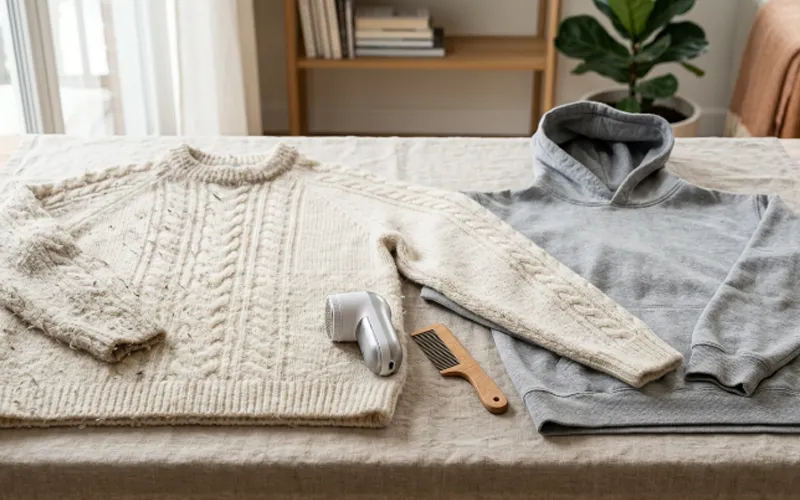
How to Remove Pilling From Clothes on Sweaters, Jeans, and More
Pilling is one of those small clothing problems that can make a favorite sweater, hoodie, pair of pants, or shirt look old before its time. You may notice tiny balls of fabric forming on areas that get regular rubbing, such as the sleeves, sides, underarms, collar, or waist. These small balls are called pills, and they usually appear when loose fibers become tangled on the surface of the fabric.
The good news is that pilling does not always mean you need to throw away your clothes. In many cases, you can remove these unwanted fibers at home with simple tools and careful techniques. Learning how to remove pilling from clothes can help you improve the appearance of older garments and keep your wardrobe looking cleaner for longer.
Different fabrics need different levels of care. A sturdy cotton sweatshirt may handle a fabric shaver well, while a delicate knit may need a gentler approach. Razors, lint removers, combs, and fabric shavers can all be useful, but they should be used carefully. The goal is to remove the pills without cutting, stretching, or damaging the main fabric.
Table of Contents
ToggleWhat Causes Pilling on Clothes?
Pilling happens mainly because of friction. When fabric rubs against another surface, some fibers can loosen from the material. These loose fibers become tangled together and form small balls on the surface. Everyday activities can create enough friction to cause this problem over time.
Clothing can rub against itself while you move, especially around the arms, sides, and waist. Other sources of friction include bags, seat belts, furniture, bedding, and other clothing. Washing and drying can also create extra movement that causes loose fibers to tangle.
The type of fabric also matters. Some fabrics are naturally more likely to pill because of their fiber structure. Synthetic materials such as polyester and acrylic can develop noticeable pills because their strong fibers may stay attached to the fabric even after becoming loose. Wool, cashmere, cotton blends, and some knitted materials can also pill, especially when they experience frequent rubbing.
Pilling is not always a sign that a garment is poor quality. Even expensive clothing can develop pills when it is worn and washed regularly. However, fabric quality, fiber length, construction, and finishing can affect how quickly pilling appears and how easy it is to remove.
How to Remove Pilling From Clothes Safely
The safest method depends on the fabric and the amount of pilling. First, place the dry garment on a clean, flat surface and test your chosen tool on a hidden area.
For light pilling, gently use a fabric comb in one direction without pulling the fabric. A fabric shaver can work better for heavier pilling, but use it slowly and avoid pressing too hard.
After removing the pills, use a lint roller to collect loose fibers and give the garment a cleaner appearance.
Using a Razor to Remove Fabric Pills
A razor can remove fabric pills, but it needs a gentle touch. If you are wondering how to remove pilling from clothes with a razor, lay the garment flat on a clean, hard surface and smooth out any folds.
Use a clean, sharp razor and move it lightly across the surface in short strokes. Do not press into the fabric. Be extra careful around seams, buttons, zippers, and pockets.
A razor can work well, but it is riskier than a fabric shaver. For delicate sweaters, loose knits, or expensive clothes, a fabric comb or shaver may be safer.
Removing Pilling From a Hoodie
Hoodies often develop pilling because they are worn frequently and experience a lot of friction. The sleeves can rub against desks and furniture, while the inside or outside of the hoodie may rub against other clothing. Washing can also contribute to surface fiber movement.
For a hoodie with light pilling, start with a fabric comb or fabric shaver. Lay the hoodie flat and work slowly over the affected areas. Pay particular attention to the sleeves, sides, cuffs, and areas around the pockets.
If you are searching for hoodie how to remove pilling from clothes, the same basic rule applies: avoid aggressive scraping. Hoodie fabrics can vary considerably. A thick cotton hoodie may be quite durable, while a soft fleece or blended fabric may need more care.
Turn the hoodie inside out before washing it in the future. This can reduce the amount of direct friction on the visible outer surface. Washing with similar fabrics and avoiding unnecessarily rough washing conditions can also help reduce further wear.
Removing Pills From Sweaters
Sweaters can be more difficult because many are made from knitted fibers that can be sensitive to pulling and cutting. Wool, cashmere, cotton knit, acrylic, and blended sweaters can all develop pilling, but they should not necessarily be treated in exactly the same way.
A fabric comb can be a good choice for controlled removal. Lay the sweater flat and gently move the comb across the affected areas. If the sweater has large pills, you can carefully remove them one section at a time rather than trying to clean the entire garment quickly.
For delicate sweaters, avoid strong pressure. Pulling pills with your fingers may seem easy, but it can remove fibers from the garment and create a rough or uneven surface. Cutting individual pills with small scissors can be safer when only a few are present, provided you work carefully.
After treatment, store the sweater properly. Folding knitwear instead of hanging it can help prevent unnecessary stretching, especially for heavier sweaters. Good storage will not eliminate pilling, but it can reduce some forms of wear.
Can You Remove Pilling From Jeans?
Jeans can develop small pills in areas where the denim rubs against other surfaces. However, traditional denim is usually more durable than delicate knitwear, so it may require a different approach.
If the pills are small and limited to a particular area, a fabric comb or suitable fabric shaver may be enough. Work carefully around seams, pockets, and decorative details. Denim can be strong, but decorative stitching and thinner sections can still be damaged by aggressive tools.
It is also worth checking whether what looks like pilling is actually loose denim fibers, lint, or surface wear. True pilling is usually made up of tangled fibers that form small raised balls. Removing loose lint does not require the same treatment.
Washing jeans less frequently, when practical, can also reduce unnecessary friction. When you do wash them, turning them inside out can help protect the visible surface from some of the mechanical movement that happens during washing.
Mistakes That Can Damage Your Clothes
One common mistake is pulling pills away with your fingers. A pill may look like a separate little ball, but it can still be connected to fibers inside the fabric. Pulling it can stretch the material or remove useful fibers.
Another mistake is using too much pressure with a razor or fabric shaver. More pressure does not always mean better results. It can actually increase the chance of cutting or thinning the garment.
Trying to remove pilling from a wrinkled garment is another problem. Folds can bring the blade or tool closer to the main fabric and make accidental damage more likely. Always create a smooth working surface first.
People also sometimes keep treating the same area after the pills are already gone. Once the surface looks smooth, stop. Repeated shaving can remove more fibers than necessary and may gradually weaken the material.
Finally, do not assume every fabric can be treated in the same way. A heavy cotton sweatshirt and a delicate cashmere sweater have very different care requirements. When in doubt, choose the gentler method.
How to Prevent Pilling in the Future
Removing pills solves the visible problem, but changing your clothing-care habits can help slow down future pilling. Since friction is a major cause, reducing unnecessary rubbing is one of the most useful steps.
Turn clothes inside out before putting them in the washing machine. This can reduce direct friction on the outside of the garment. It is especially useful for clothing where appearance is important.
Avoid overloading the washing machine. When clothes have enough room to move without being packed tightly together, there may be less unnecessary pressure and rubbing between garments. Following the care label is also important because different fabrics have different washing requirements.
Drying can also affect fabric wear. Excessive heat and strong mechanical movement may be harder on some fabrics. When the care label allows it, gentler drying methods can help protect the material.
Pay attention to items that regularly rub against your clothes. Shoulder bags, backpacks, seat belts, rough furniture, and even certain outerwear can create repeated friction in the same areas. If you notice pilling in one particular place, consider what is rubbing against that section.
Does Pilling Mean the Clothes Are Poor Quality?
Not necessarily. Pilling can happen to both inexpensive and expensive clothing. The likelihood of pilling depends on several factors, including the type of fiber, fiber length, fabric construction, finishing, and amount of friction.
Some fabrics naturally produce more loose surface fibers than others. A soft knitted garment may feel comfortable and warm but can also be more likely to develop visible pills. Synthetic fibers can sometimes create pills that remain attached strongly to the fabric because of their durability.
The way a garment is used also matters. A sweater worn several times a week and rubbed against coats, bags, furniture, and other surfaces will naturally experience more friction than a garment worn occasionally.
Instead of judging a garment only by whether it pills, look at the overall fabric, construction, stitching, comfort, durability, and care requirements. Pilling is a common form of surface wear and does not automatically mean that the garment has failed.
When You Should Stop Removing the Pills
There is a point where continued shaving is not worth the risk. If the fabric begins to look thin, uneven, fuzzy, or damaged after repeated treatment, stop working on it.
Some garments develop pilling because the surface fibers are naturally loose. Removing the pills again and again may gradually reduce the amount of material on the surface. This can make the garment thinner over time.
If a garment is valuable, delicate, handmade, or difficult to replace, professional cleaning or clothing-care advice may be a better choice. A professional can assess the material and choose a suitable treatment instead of relying on a general method.
The purpose of pilling removal is to improve the appearance of clothing, not to make the fabric perfectly smooth at any cost. Gentle care is usually more useful than trying to remove every tiny fiber.
Final Thoughts
Learning how to remove pilling from clothes can help you refresh sweaters, hoodies, jeans, shirts, and other everyday garments without replacing them. The most important part is choosing a method that matches the fabric and using it gently.
For light pilling, a fabric comb or small scissors may be enough. A fabric shaver can make larger jobs easier, while a razor can work when used carefully on suitable fabrics. If you are trying how to remove pilling from clothes at home, start with the gentlest practical method and test it on a hidden area first.
Pilling can also be reduced by changing how you wash, dry, store, and wear your clothes. Turning garments inside out, reducing friction, following care labels, and avoiding aggressive treatment can all help protect the fabric.
With the right approach, small fabric pills do not have to mean the end of a favorite garment. Careful maintenance can give many clothes a cleaner appearance and help you get more use from the pieces already in your wardrobe.
Frequently Asked Questions
How do you remove pilling from clothes?
You can remove pilling with a fabric comb, fabric shaver, or carefully used razor. Always lay the garment flat and use gentle movements to avoid damaging the fabric.
Can you remove pilling from clothes at home?
Yes, most light pilling can be removed at home with simple tools such as a fabric comb, razor, scissors, or fabric shaver.
Is it safe to use a razor to remove pilling?
A razor can remove pills, but it must be used carefully. Keep the fabric flat and move the razor lightly without pressing into the material.
How do you remove pilling from a hoodie?
Lay the hoodie flat and gently use a fabric comb or fabric shaver over the affected areas. Avoid applying too much pressure, especially on soft fleece or blended fabrics.
How do you remove pilling from sweaters?
A fabric comb is often a gentle option for sweaters. Work slowly over the pills and avoid pulling them with your fingers, as this can damage the fibers.
Can pilling be removed from jeans?
Yes, small pills on jeans can usually be removed with a suitable fabric comb or fabric shaver. Take extra care around seams, stitching, and decorative details.
Why do clothes get little balls on them?
These little balls are called pills. They usually form when loose fibers become tangled because of repeated friction from wearing, washing, bags, furniture, or other surfaces.
How can you prevent clothes from pilling?
Turning clothes inside out before washing, avoiding excessive friction, following care labels, and using gentle washing and drying methods can help reduce future pilling.
Tags