

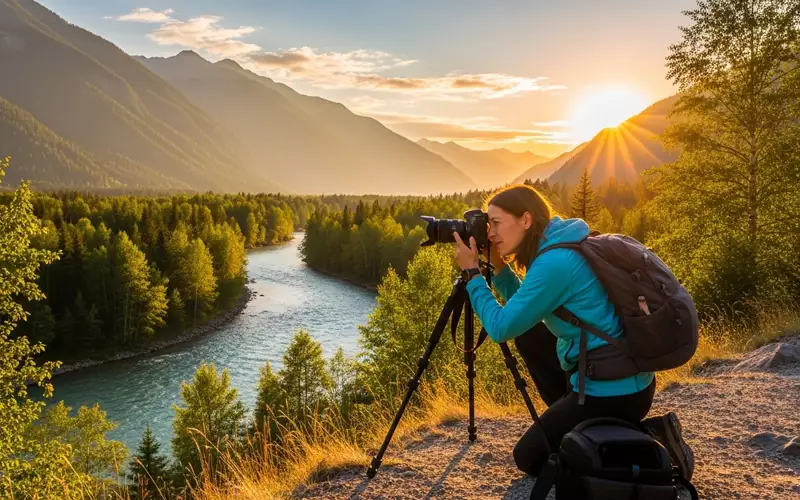
Photography Tips for Beginners: Take Amazing Photos Easily!
Photography is one of the best ways to capture special moments, express your creativity, and see the world from a new perspective. For beginners, it can feel a little overwhelming at first, with so many camera settings, lenses, and styles to understand. But don’t worry—you don’t need to learn everything at once. With some patience and regular practice, anyone can improve and start taking great photos.
In this guide on Photography Tips for Beginners, we’ll go through different types of photography, like travel, portrait, underwater, iPhone, wedding, macro, wildlife, sports, and nature photography. By understanding the basics of each type, you can get a clearer idea of what you enjoy most and feel more confident starting your photography journey.
Remember, photography is not just about the equipment—it’s about observing, experimenting, and enjoying the process. The more you practice, the better your eye will become, and soon you’ll be able to capture photos that truly tell your story.
Understanding the Basics of Photography
Before you start exploring different photography styles, it’s important to get the basics right. Photography is all about light—how you use it will completely change how your photos look. As a beginner, focus on three key elements of exposure: aperture, shutter speed, and ISO.
- Aperture controls how much light enters your camera and also affects how blurry or sharp the background looks.
- Shutter speed handles motion—fast speeds freeze action, while slower speeds can create a smooth, flowing effect.
- ISO determines how sensitive your camera is to light. But be careful: too high an ISO can make your photos look grainy.
Understanding these three basics will give you a strong foundation and make it much easier to experiment with different styles later. Remember, photography is about observing and experimenting, so don’t be afraid to try new settings and see what works best.
Along with understanding light and exposure, composition is just as important. A well-composed photo immediately feels more balanced and appealing. Simple techniques like the rule of thirds, leading lines, symmetry, and framing can make a huge difference in your shots. Once you start paying attention to things like light, shadows, and how elements are arranged in your frame, you’ll notice your photography improving naturally.
Table of Contents
ToggleTravel Photography Tips for Beginners
Travel photography is all about capturing the real feel of a place—its people, culture, and natural beauty. For beginners, it can be a bit challenging because every location is different and lighting keeps changing. One of the best travel photography tips for beginners is to plan before you go. Try to learn about your destination, look for good photo spots, and understand what time of day gives the best light. Early morning and late afternoon, known as golden hours, give soft and warm lighting that makes your photos look more natural and attractive.
Candid moments often tell the most real and interesting stories. Instead of only taking pictures of famous places, try to capture everyday life that shows the true culture of that location. Using a wide-angle lens is great for landscapes, while a zoom lens helps you capture small details from a distance without disturbing anyone. One important thing to remember is patience—sometimes you need to wait for the right moment, like when the place is less crowded or the lighting looks perfect. Also, always respect local traditions and ask for permission before taking photos of people, especially in traditional areas.
Portrait Photography Tips for Beginners
Portrait photography is all about capturing a person’s personality, mood, and emotions in a natural way. For beginners, the most important thing is to make the subject feel comfortable, because when someone is relaxed, their expressions look more real and natural. Lighting is also very important in portraits. Soft, natural light usually works best, especially compared to strong sunlight which can create harsh shadows. Try to avoid heavy shadows on the face so your photos look clean and flattering.
Focusing on the eyes is very important in portrait photography because the eyes show the most emotion and help connect the viewer with the subject. Keeping them sharp can make your photo look more powerful and engaging. You should also try different angles, backgrounds, and poses to add variety and give your photos a unique style. Using a wide aperture helps blur the background, which makes the subject stand out clearly without any distractions.
Quick Portrait Tips:
• Use soft natural light whenever possible.
• Keep the eyes in focus.
• Talk to your subject so their expressions look natural and real.
Underwater Photography Tips for Beginners Guide
Underwater photography gives a magical and different view of the world, but it can be tricky for beginners. Water changes how light works and can make images less sharp. To start, use a waterproof camera or a protective housing for your camera. Near the surface, natural light works best, but for deeper dives, using strobes or underwater flashes helps brighten your shots and capture colors more clearly.
Getting closer to your subject helps make underwater photos clearer, as water can reduce contrast and detail. Move slowly and maintain good buoyancy to avoid disturbing fish and other marine life. Trying different angles, like shooting from below to capture sunlight patterns or from the side to show movement, can make your images more interesting. After shooting, post-processing is important to correct colors, especially reds and oranges, which water tends to absorb and make look dull.
Essential Underwater Tips:
• Stay close to your subject to keep images sharp and clear.
• Use natural light when near the surface for better colors.
• Move slowly and steadily to avoid disturbing marine life and creating blurry shots.
iPhone Photography Tips for Beginners
iPhones have made photography easy and accessible for everyone. Even beginners can capture photos that look professional with some practice. Understanding basic camera settings—like tapping to focus, adjusting exposure, and using the grid—can greatly improve your composition. Features like Portrait mode, Night mode, and Panorama open up creative ways to take different types of photos.
When using your iPhone for photography, natural light is the most helpful. Try to avoid digital zoom because it reduces image quality—move closer to your subject instead. Experiment with different angles to make your photos more creative and interesting. Editing apps like Snapseed, Lightroom, or VSCO can help enhance brightness, contrast, and colors subtly, giving your shots a polished look.
iPhone Photography Highlights:
• Use natural light whenever you can for the best results.
• Avoid digital zoom—move closer to your subject instead.
• Experiment with different angles and perspectives to make your photos stand out.
Best Photography Tips for Beginners
Some tips work for every type of photography. Always carry your camera and take photos regularly—the more you practice, the faster you’ll improve. Pay attention to light, textures, colors, and patterns around you. Don’t worry about making mistakes; they are part of learning. Watching and studying the work of professional photographers can inspire you and teach new techniques. Trying different styles will help you discover your own unique photography style and voice.
Wedding Photography Tips for Beginners
Wedding photography can be challenging because the moments you need to capture happen quickly and are very important. Arriving early gives you time to explore the venue, check the lighting, and get your equipment ready. It’s also essential to carry extra batteries and memory cards to avoid running out of power or storage during the event.
Capturing candid moments—like laughter, tears, and interactions between family and friends—creates photos full of emotion and lasting memories. Wide-angle lenses are great for photographing groups, while prime lenses are perfect for close, intimate portraits. Being ready for important moments, such as the first kiss or cake cutting, helps ensure you don’t miss the most memorable shots of the day.
Macro Photography Tips for Beginners
Macro photography uncovers the hidden beauty in small subjects, such as flowers, insects, or interesting textures. Beginners can use a macro lens or extension tubes to focus closely on their subject. Soft, natural light helps reduce harsh shadows, and using a tripod keeps the camera steady to avoid blur. Precise focusing is very important, as even tiny movements can make the image blurry. Trying different backgrounds and angles can make your photos more creative and highlight fine details effectively.
Wildlife Photography Tips for Beginners
Wildlife photography demands patience, preparation, and respect for nature. Learning about your subject’s behavior, habitat, and active hours increases your chances of capturing great shots. Using a telephoto lens lets you photograph animals safely from a distance. A fast shutter speed is useful to freeze motion, especially for birds or other moving animals. Shooting in the early morning or late afternoon provides soft light and shows wildlife at its most active. Always respect the animals and avoid disturbing their natural behavior.
Sports Photography Tips for Beginners
Sports photography focuses on capturing movement, energy, and emotion during the action. Understanding the rules of the sport helps you anticipate important moments. Using a fast shutter speed freezes motion, while continuous shooting mode lets you take several shots in quick succession. Panning with the athlete can create a blurred background that emphasizes speed while keeping the subject sharp. Always find the best angles for your shots, but make sure safety comes first.
Nature Photography Tips for Beginners
Nature photography covers landscapes, trees, mountains, rivers, and skies. Patience is key because the ideal light, weather, or seasonal conditions may not appear immediately. Shooting during the golden hour or blue hour gives soft, dramatic lighting that enhances landscapes. Using foreground elements, leading lines, and wide-angle lenses adds depth and interest to your compositions. Observing changes in weather and seasons can help you capture unique and creative nature shots.
10 FAQs About Photography Tips for Beginners
- What are the basic photography tips for beginners?
Beginners should focus on understanding exposure, composition, lighting, and practice regularly to improve their photography skills. - Which camera is best for beginner photographers?
For beginners, DSLR, mirrorless cameras, or even high-quality smartphones like iPhone or Samsung can work well depending on your budget and goals. - How can I take better travel photos as a beginner?
Plan your shots, use golden hour lighting, capture candid moments, and experiment with wide-angle and zoom lenses for different perspectives. - What are the top portrait photography tips for beginners?
Focus on the eyes, use soft natural light, keep the subject relaxed, and experiment with background and poses. - Can I take professional-looking photos with my iPhone?
Yes! Learning iPhone camera settings, using natural light, avoiding digital zoom, and editing with apps like Snapseed or Lightroom can make a big difference. - How do I start macro photography as a beginner?
Use a macro lens or extension tubes, stabilize your camera with a tripod, focus carefully, and use soft natural light to highlight tiny subjects. - What are some easy wildlife photography tips for beginners?
Research your subject, use a telephoto lens, shoot during early mornings or late afternoons, and always respect animals in their natural habitat. - How can I improve my wedding photography as a beginner?
Scout locations early, carry backup equipment, capture candid moments, and anticipate key events like vows or cake cutting. - What are the best nature photography tips for beginners?
Use golden hour or blue hour lighting, include foreground elements for depth, and experiment with different weather and seasonal conditions. - How long does it take to become good at photography?
With consistent practice, studying techniques, and learning from mistakes, beginners can see significant improvement in a few months, but mastery takes years of experience.
Final Thoughts
Photography is a journey that requires creativity, observation, and consistent practice. Whether you are shooting travel, portrait, underwater, iPhone, wedding, macro, wildlife, sports, or nature photography, following these tips will help you improve steadily. Keep experimenting, learning from mistakes, and enjoying the process. With dedication and practice, anyone can take stunning photos that tell compelling visual stories.
For more interesting articles, visit https://alamdiya.com/ now!
Tags
- beginner photography guide, easy photography tips, iPhone photography tips, learn photography, macro photography tips, nature photography tips, photography for beginners, photography techniques, photography tips for beginners, portrait photography tips, sports photography tips, travel photography tips, underwater photography guide, wedding photography tips, wildlife photography tips

Related Posts
No posts were found matching your selection.