
Using a portable power station near water requires careful planning to prevent electrical hazards and equipment damage. Whether you’re camping beside a lake, spending time on a boat, or powering appliances near a swimming pool, moisture exposure can create serious safety risks. Water entering electrical components may cause short circuits, electric shock, or permanent battery damage. Understanding proper placement, cable management, weather protection, and emergency precautions helps reduce these dangers. This guide explains essential safety practices for operating portable power stations around water.
Understand the Risks of Using a Portable Power Station Near Water
Know How Water Exposure Can Cause Electric Shock and Short Circuits
Water entering a portable power station can create unintended electrical pathways between internal components. Contaminated water conducts electricity particularly well, increasing the risk of short circuits, overheating, and electric shock. Moisture around AC outlets or damaged connectors can also expose users to dangerous electrical currents. Never touch wet electrical connections or operate equipment while standing in water. Keeping the unit and its connections dry is essential for preventing electrical accidents.
Check IP Ratings and Water Resistance Limitations
Before using a portable power station outdoors, check its ingress protection (IP) rating in the manufacturer’s specifications. IP ratings indicate tested resistance to solid particles and water exposure under specific conditions. A higher water protection rating does not automatically mean a device is waterproof or suitable for submersion. Some models have no stated water resistance rating. Always follow the manufacturer’s environmental guidelines and avoid exposing unprotected outlets or charging ports to moisture.
Recognize the Dangers of Saltwater, Humidity, and Condensation
Saltwater presents additional risks because its dissolved salts increase electrical conductivity and accelerate corrosion. Coastal environments also expose equipment to salty air, which can gradually damage metal contacts and connectors. High humidity and sudden temperature changes may cause condensation inside electrical components, even without direct water contact. Store your power station in a dry, temperature-stable environment whenever possible. Avoid moving cold equipment into humid conditions and immediately connecting it to electrical devices.

Keep charging cables, plugs, and electrical connections dry when using a portable power station outdoors.
How to Set Up and Use a Portable Power Station Safely Near Water
Place Your Power Station on a Dry, Elevated, and Stable Surface
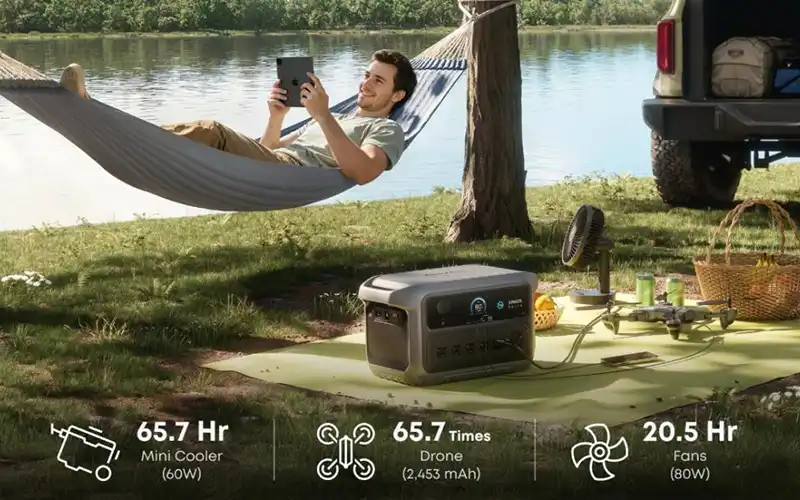
Position your portable power station on a firm, level platform above damp ground, puddles, and potential flooding. Choose a sheltered location away from shorelines, pool edges, and areas exposed to splashing water. A sturdy table or raised equipment stand can provide additional protection. Keep the unit away from unstable surfaces where it could fall into water. Maintain sufficient clearance around ventilation openings to support cooling and prevent overheating during operation.
Keep Charging Cables, Outlets, and Connectors Away From Water
Keep all charging cables, plugs, and electrical outlets away from wet surfaces. Route cables above areas where water may collect, and avoid placing connections directly on the ground. For example, the Anker SOLIX C2000 Gen 2 includes a TT-30 socket for compatible RV power connections. This feature does not eliminate water-related electrical risks. Always use correctly rated cables, inspect connectors before use, and keep electrical connections dry and securely positioned.
Use Suitable Protective Covers and GFCI Protection Without Blocking Ventilation
Choose a weather-resistant shelter designed to protect electrical equipment while maintaining adequate airflow. Avoid wrapping an operating power station in plastic sheets or placing it inside a sealed container, as trapped heat can cause overheating. Use appropriately rated ground-fault circuit interrupter (GFCI) protection for compatible AC connections near water. A GFCI can reduce certain electric shock risks but cannot prevent every electrical hazard. Confirm compatibility with your equipment and follow manufacturer instructions.
How to Prevent Water Damage and Handle Wet Power Stations
Protect Your Power Station From Rain, Splashes, and Accidental Submersion
Check weather forecasts before outdoor activities and prepare a sheltered location for your equipment. Position the power station beyond the reach of rain runoff, waves, and accidental splashes. Use a suitable protective cover during storage or transportation, but never obstruct cooling vents during operation. Keep liquids and wet camping equipment away from electrical outlets. If flooding or heavy rainfall threatens your setup, disconnect equipment and relocate it only when conditions are safe.
Stop Using a Wet Power Station and Avoid Reconnecting Power
If your portable power station becomes wet, stop using it immediately. Avoid touching the device, cables, or plugs if they are submerged or potentially energized. Disconnect external power only when doing so is safe, and never attempt to operate switches while standing in water. Do not recharge, restart, or test the unit after suspected water intrusion. Even when the exterior appears dry, moisture inside the battery system may create dangerous electrical conditions.
Inspect for Moisture Damage and Seek Professional Service Before Reuse
After suspected water exposure, keep the power station disconnected and inspect its exterior only when safe. Look for corrosion, discoloration, damaged connectors, or visible moisture around the ports. Do not open the battery enclosure or attempt to dry internal components with heat-producing equipment. Contact the manufacturer or an authorized service provider for inspection and guidance. Professional assessment can identify hidden electrical damage and determine whether the unit can safely return to operation.
Conclusion
Portable power station safety near water depends on proper placement, moisture protection, and careful electrical handling. Keep equipment elevated, maintain dry connections, and understand the limitations of water resistance ratings. Suitable shelters and compatible GFCI protection provide additional safeguards without replacing essential precautions. If water enters a power station, stop using it and arrange professional inspection before reconnecting electricity. Following these practices helps protect your equipment, reduce electrical hazards, and support safer outdoor power usage around lakes, beaches, campsites, and swimming areas.
Frequently Asked Questions
1. Can you use a portable power station near water?
Yes, but you must take proper safety precautions. Keep the power station on a dry, elevated surface and protect it from rain, splashes, and accidental contact with water.
2. Is a portable power station waterproof?
Not all portable power stations are waterproof. Check the manufacturer’s IP rating to understand the level of protection against water and dust. Never assume a device is waterproof without confirmation.
3. Can a portable power station get damaged by rain?
Yes. Rainwater can enter charging ports, outlets, and internal electrical components. This may cause short circuits, corrosion, or permanent damage.
4. How far should a portable power station be from a swimming pool?
Keep it well away from pool edges and splash zones. Follow the manufacturer’s safety instructions and applicable electrical safety requirements. Never place it where it could fall into the pool.
5. What should you do if a portable power station gets wet?
Stop using it immediately. Avoid touching wet electrical connections, and do not recharge or restart the unit. Contact the manufacturer or an authorized service provider for professional inspection.
6. Does a GFCI protect a portable power station near water?
A GFCI helps reduce the risk of electric shock by interrupting certain electrical faults. However, it does not make a power station waterproof or eliminate every electrical hazard.
7. Can humidity damage a portable power station?
Yes. High humidity and condensation can affect internal electrical components and metal connectors. Store the unit in a dry environment and follow the manufacturer’s temperature and humidity recommendations.