

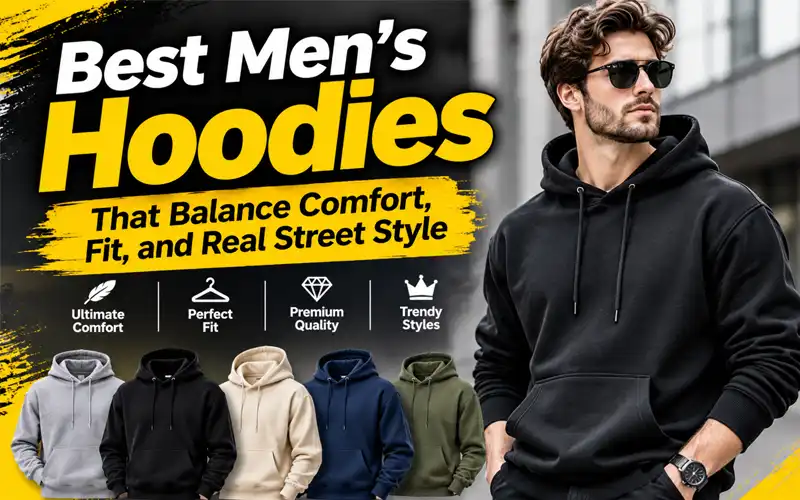
A good hoodie does a lot of quiet work. It keeps you warm on a cold commute, looks relaxed at a weekend lunch, and can even suit a night out when the cut is right. Finding the best men’s hoodies is harder than it sounds, though, because shelves are full of thin fabric, shapeless bodies, and prices that do not match quality.
This guide solves that problem. Inside, you will find ten dependable everyday picks, luxury and heavyweight options, streetwear styles, current trends, simple buying rules, outfit ideas, care tips, and answers to seven common questions. Along the way, it explains what separates a hoodie that lasts for years from one that loses its shape in a month. Each pick is described by its type and features, so you can compare choices by what matters: fabric, fit, and construction.
Why Hoodies Rule Every Wardrobe
A Short Journey From Locker Room to Runway
The hooded sweatshirt took shape in the 1930s as practical clothing for cold-weather workers and athletes. For decades it stayed in gyms, warehouses, and campus halls, valued for warmth instead of style. Then music scenes, skate culture, and high fashion adopted it. Today it shows up at airports, relaxed offices, and designer runways, which is why your options now stretch from a twenty-five dollar basic to a label piece costing hundreds.
Signs of a Hoodie Worth Your Money
Quality shows up in small details. The fabric should feel dense instead of see-through, the inside should feel smooth rather than scratchy, and the hood should keep its shape instead of flopping. A simple test is to hold the fabric up to a window: if you can see light through it, it is too thin to last.
Good makers also share a few habits. They publish the fabric blend and weight, offer a real range of sizes, and stand behind their work with a clear return policy or warranty. Use these signs as a quick filter before you read the picks below.
Top 10 Hoodies for Men Today
Here are ten hoodie types for men who want dependable everyday wear. The list covers classic, sporty, budget, and polished styles, so you can match one to your routine. Prices change often, so check current listings before you buy.
The Classic Heavy Fleece Pullover
This is the old-school reference point. Its thick fleece sits around 12 oz, the hood is double lined for extra warmth, and the panels are cut across the grain to resist lengthwise shrinking. The cut is generous through the body, with ribbed side panels that give your arms extra freedom. The brushed lining stays soft after washing, though it can leave lint on darker shirts underneath.
The Sportswear-Style Club Fleece
This is the hoodie most guys picture first. It uses a cotton-rich fleece, a cotton-lined hood, a kangaroo pocket, and ribbed cuffs. The fit is standard, and many buyers say it runs a little small and short. A few tall sizes are available in the larger range, which helps long frames. It is a safe choice when you want a familiar athletic look and a shape that works with nearly any pants.
The Workwear Midweight Pullover
Built with job sites in mind, this midweight pullover uses fabric of roughly 10.5 oz, a loose body, and triple-stitched main seams. Its biggest edge is sizing, with regular sizes from XS to 4XL plus tall options. The rib-knit cuffs and waistband keep drafts out, which suits cold work sites and cool mornings alike. Slim guys may find the cut too roomy. The price is usually in the mid-fifties.
The Relaxed Drawstring-Free Hoodie
This oversized pullover removes the drawstring, which gives the front a clean, quiet look. Without strings to adjust, the hood simply sits as a soft shape around the neck. The blend leans toward polyester with a cotton face, so read the fabric label if you want something cotton-heavy. It suits guys who want a loose shape without a loud design.
The Athleisure Movement Hoodie
This type is designed for people who move all day. The cut is roomy, the fabric breathes well, and the feel sits closer to athleisure than to a campus sweatshirt. It works as an easy layer for travel, since the fabric moves with you instead of binding. It suits gym warm-ups, long flights, and quick errands. The trade-off is a premium sports price, so it makes the most sense if you will wear it hard and often.
The Lightweight Half-Zip Layer
A lighter, cleaner take on the hoodie. A recessed half-zip runs up to the chin, and the colors stay in natural shades. The lean, polished profile makes it handy for mild days and mornings that start cool and end warm. Some makers offer as many as seven sizes, which helps if you fall between standard fits.
The Soft Upgrade Logo Hoodie
This is a smart pick for guys ready to upgrade from a basic sweatshirt. It uses thick cotton that feels extremely soft, with a slightly relaxed fit. The look stays simple and modern, so it pairs easily with denim or dark trousers. There are two small flaws: the logo can feel distracting to some, and the drawstrings run a little long.
The Polished Menswear-Style Popover
Coming from classic menswear, this popover has a neat shape, a restrained palette, and a finish that feels closer to a sweater than a gym layer. Think of it as the hoodie you wear to a casual dinner, where a standard gym style might feel too sporty. It is a good bridge between a hoodie and smart casual dressing, especially in quiet, solid tones. It costs more than mainstream sportswear.
The Dependable Value Fleece
A plain pullover fleece that many reviewers rate as an excellent budget pick. The design stays simple, and some versions use moisture-managing fleece, which helps during light workouts. Its popularity has one downside: common sizes can sell out, so grab a restock when you see one.
The Tight-Budget Basic
The midweight fleece is mostly a 50/50 blend with double-needle stitching at the neck and armholes. Some buyers find the fabric thin, so treat it as a casual home hoodie. Its low price lets you try a color or shape before committing to a pricier version. Big men’s sizing can extend up to 5XL, which is rare at this price.

Explore 10 popular men’s hoodie styles, from heavyweight fleece and sporty designs to relaxed, luxury-inspired, and budget-friendly options.
Heavyweight Hoodies for Men That Last
What Counts as Truly Heavy
When you search for heavyweight hoodies, start with fabric weight. Most midweight hoodies sit between 10 and 12 oz, while 13 oz and above feels properly thick in the hand. Some makers list GSM instead, and dividing that number by about 34 gives a rough ounce figure, so 340 GSM is close to 10 oz.
Heavy cloth holds heat and shape longer, but it can feel too warm in heated rooms, so choose weight based on where you will wear it.
The American-Made Durable Pullover
This one uses 13 oz combed ringspun cotton and reinforced elbow panels, all made in the United States. The neckline is wide and deep, so it slips on easily and lets a bit of your shirt show underneath. The all-cotton fabric is built to age well instead of turning brittle.
The Long-Warranty Hoodie
Made in Los Angeles, this hoodie is backed by a ten-year warranty that covers damage, not only defects. It carries about thirty percent polyester, which makes the fabric softer and slightly thinner to the touch. The fit is loose and classic, and an inner pocket is a useful extra. The cuffs are less elastic than some rivals, which some wearers notice at the wrist.
The Dense Arctic-Knit Hoodie
Made in Portugal from 100% heavyweight cotton fleece with a brushed interior, this hoodie is knitted horizontally, which helps it resist shrinking after washing. The fabric is tight, which is great for longevity but makes it a little awkward to pull on and off, and the relaxed cut runs short in length. Treat it as a long-term winter hoodie.
Streetwear Hoodies With Real Attitude
If you want the best of streetwear culture, focus on shape, restraint, and quality rather than loud branding. Two styles and one logo guide cover the ground.
The Relaxed-Drape Essentials Style
This style is known for a wide, softly draped shape and a muted palette. The look is minimal instead of loud, which keeps it relevant longer than trend-driven pieces. It works best when the rest of your outfit stays clean and simple.
The Side-Zip Statement Hoodie
This design became a celebrity favorite around 2016, and its two side zippers remain the signature. They let you loosen or tighten the waist, though the cut is slim, long, and lightweight. Zip the pockets up to reach the hidden storage, and the hood looks short and wide.
Graphic and Logo Choices That Age Well
Small chest logos, tonal prints, and clean typography stay wearable for years. Large prints and busy slogans date quickly and clash with other pieces. Check print quality too, since raised or cracked graphics spoil the whole look. Choose one statement per outfit and let the hoodie lead.
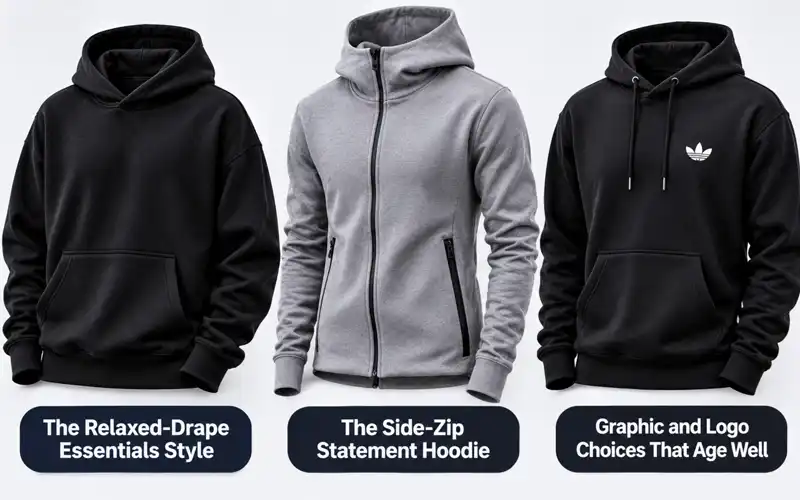
Explore three modern streetwear hoodie styles, including relaxed fits, side-zip designs, and graphic logo hoodies.
Trending Hoodie Styles Guys Love Now
Trending hoodies right now depend on shape and finish more than labels. These three details show up most often.
Boxy Shapes Still Lead
A boxy hoodie has a wider body, dropped shoulders, and a hem that ends around the hip. The proportion gives an easy, modern line, and sleeves that stack slightly at the wrist add to the effect. Choose a firm fabric so the shape holds instead of sagging. It flatters most builds and drapes easily over a plain tee.
Washed Finishes With Vintage Mood
Garment-washed and sun-faded hoodies look lived in from the first day. Soft shades such as faded black, dusty olive, and worn grey hide small marks and suit casual outfits. The fabric also feels softer, since the washing process relaxes it before it reaches you. Because the color is already mellowed, regular washing changes the look less over time.
Cropped Lengths With Tall Pockets
Shorter hoodies with a high kangaroo pocket create a compact, modern shape. The cropped line sits near the waistband and works well with high-rise or wide-leg pants. Check the length against your torso first, since a hem that rides too high can look like a mistake instead of a choice.
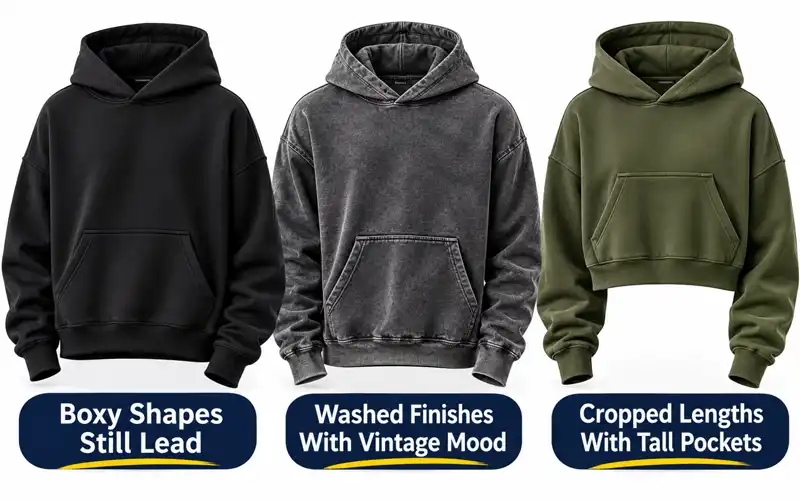
Discover three popular men’s hoodie trends, including boxy fits, vintage washed finishes, and cropped designs.
Smart Buying Tips Before You Pay
Fabric Blends Explained Simply
Cotton feels soft and breathes well, but it takes longer to dry. Polyester adds strength and shape retention, though too much can feel synthetic. A cotton-rich blend around 80/20 is a safe middle ground, and the tag shows the exact percentages, since some makers change the ratio by color. Also check the inside, since brushed fleece feels fluffy while looped terry feels smoother and cooler.
Sizing Rules for a Clean Fit
Shoulder seams should sit at the edge of your shoulders unless the hoodie is cut with a dropped shoulder. Sleeves should end near the wrist bone, and the hem should land around your belt line. Cuffs and waistband should hold without squeezing. Measure a hoodie you already like and compare it with the size chart, then look at what buyers say about fit.
Stitching and Hood Checks
Look for double or triple stitching at the shoulders, underarms, and pocket corners. A lined hood feels warmer and sits neatly around the neck, and flat seams feel smoother on the skin. Examine drawstring ends and grommets for solid hardware, and give zip styles a closer look at the teeth and the tape behind them. Straight, even stitch lines with no puckering show careful construction.
Outfit Ideas That Make Hoodies Look Sharp
A hoodie looks better when the rest of the outfit feels intentional. These three combinations cover most situations.
Jeans and Sneakers Made Simple
This is the easiest formula. Pair a dark hoodie with straight or slim jeans and clean white sneakers. Keep the palette tight, with two or three tones at most, and let the hoodie’s fit do the talking. Add a plain cap or a simple watch if you want a finishing touch.
Chinos for a Smarter Touch
Slim chinos in khaki, olive, or navy lift the look right away. Choose a plain pullover in a solid color, then add leather sneakers or loafers. A hoodie with a clean shape is enough to pass in relaxed offices or weekend brunches, as long as the fabric looks crisp and uncrumpled.
Layering Under Coats and Jackets
A midweight hoodie fits well under a denim jacket, bomber, or wool overcoat. Let the hood sit flat inside the collar, or pull it over the outer layer if the jacket is casual. Avoid thick fleece under a fitted coat, since it adds bulk across the shoulders and spoils the line.
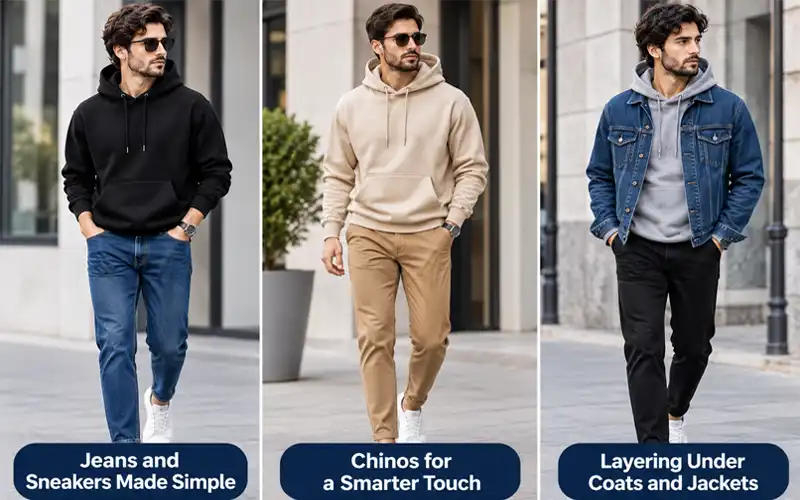
Discover three stylish ways to wear men’s hoodies with jeans, chinos, sneakers, and jackets.
Care Habits That Extend Hoodie Life
Washing Without Shrinking
Wash cold, on a gentle cycle, and turn the hoodie inside out to protect prints and fleece. Dry on low heat or hang it flat, since high heat is what shrinks cotton the most. Skip bleach and heavy fabric softener, which can dull color and coat fibers over time.
Folding Beats Hanging
Heavy hoodies stretch at the shoulders when left on hangers. Fold them in thirds and store them on a shelf, with the hood laid flat. Give each one a little space so the ribbing does not stay compressed for months, and keep dark colors out of direct sun, which fades dye.
Pilling Fixes That Actually Work
Pilling comes from friction, so keep hoodies away from rough items such as backpack straps and jeans with metal hardware. If small balls form, remove them with a fabric shaver or a fine comb, using light pressure. Pulling them off by hand can damage the surface.
Frequently asked questions
Is a pullover warmer than a zip-up?
Usually, yes. A pullover has no front opening, so heat stays trapped around your chest. A zip-up is easier to vent and layer, which helps if you move between warm and cool rooms during the day.
Can a hoodie work for hot evenings?
Yes, if you choose a lightweight cotton knit or a thin performance blend. Skip thick fleece. A light hoodie suits cool, breezy evenings, but it will not feel comfortable in very humid heat.
Which color is the safest first buy?
Heather grey is the easiest starting point because it pairs with almost everything and hides lint. Navy and black are close seconds, and charcoal works well if you want something slightly richer.
Will a hoodie stretch over time?
Slightly. Elbows and cuffs relax with wear, especially in pure cotton. A small share of elastane or spandex helps cuffs recover, so check the fabric tag if you want a snug fit.
Should a hoodie have a front pocket?
A kangaroo pocket is practical for hands and phones, but it adds bulk at the stomach. A hoodie without one looks cleaner and more refined, though you may keep reaching for a pocket that is not there.
How many hoodies does a man really need?
Two or three cover most lives: a neutral everyday pullover, a heavier one for cold months, and one more polished option for smarter plans. Add more only when you know you will wear them often.
Does hood size really matter?
Yes. A large hood sits comfortably when raised and gives a casual look, while a smaller hood lies flatter under jackets. Check that the drawstring cinches properly and that the opening does not collapse around your face.
Final Thoughts
The best men’s hoodies are the ones that match how you live. Use the buying checks above to judge fabric, fit, and stitching before you look at the price tag.
Whether you choose a budget fleece, a long-lasting heavyweight, or a luxury piece, a hoodie that fits well and is built well will outlast trends. Shop with your own routine in mind, and the right one will quickly become the layer you reach for most.