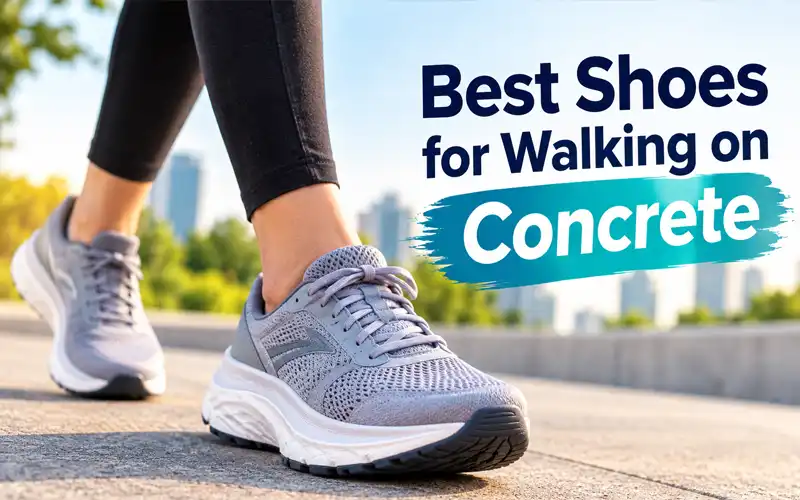
The best shoes for walking on concrete share three traits: a thick, shock absorbing midsole, a stable base, and a tough rubber outsole. Concrete does not bend or give, so every step sends force straight back into your body. Wear the wrong pair for a few hours, and your feet, knees, and lower back will quickly let you know.
This guide narrows the field to 14 proven shoes, chosen by comparing podiatrist advice, lab measurements, and long wear feedback, and each pick lists its real drawbacks. You will find picks for plush cushioning, men, women, long distances, all day wear, and sore knees, followed by simple care habits and answers to seven common questions. Every pick is explained once, so you will not read the same advice twice. Start with the buying tips, then jump to the section that matches your day.
Concrete Hurts More Than You Think
Grass, soil, and wood all soak up a little force with each step. Concrete soaks up almost none. That means your shoes, not the ground, must do the shock absorbing work, and thin soles simply cannot keep up over thousands of steps. The good news is that the right footwear makes a real difference, and the next two sections show where the damage happens.
Heels and Arches Take the Hit
Your heel meets the ground first, so it takes the sharpest blow. Over a long day, that repeated impact can leave the heel feeling bruised, and the pain is often worst when you step out of bed the next morning. Arches suffer in a different way. Without firm support, they slowly sag as the muscles tire, and the whole foot feels flat and heavy by evening. Pain that keeps returning on hard floors is a clear sign your shoes are doing too little.
Knees and Back Feel It Next
Force that your shoes fail to absorb keeps travelling upward. The ankle, knee, hip, and lower back each take a share, which is why a shoe problem can show up as an ache far from your feet. People who stand or walk on pavement for hours often notice stiff knees and a tight lower back first. Good footwear will not cure every cause of pain, but it lowers the load these joints carry with every single step.
Features That Really Matter
Before choosing the best shoes for walking on concrete, it helps to know what separates a true concrete shoe from an ordinary sneaker. Four features do most of the work, and each one is easy to check on a product page or in a store.
Thick Midsole Foam
The midsole is the foam layer between your foot and the ground, and it is your main shock absorber. A heel stack of about 25 to 30 millimeters gives a solid cushion, and taller stacks help more over long days. Choose foam that feels soft but springs back, because foam that stays squashed stops protecting you. Some labs score heel shock absorption on a scale called SA, and a score above 100 is a good target for long hours on hard ground.
Stable Wide Base
A wide platform keeps your foot from rolling sideways as the foam compresses, which saves your ankles from constant small corrections. Firm side walls and a solid heel cup add control. Pair these with arch support built into the shoe itself, not just a thin insole, and you get comfort that lasts well past lunchtime.
Tough Rubber Outsole
Concrete is rough and wears soft rubber down quickly. Choose a full length rubber outsole at least 3 millimeters thick, with a waffle or lug pattern for grip. Check that the rubber covers most of the sole, not only the heel. Traction matters on wet days too, because smooth concrete turns slippery when water or ice touches it.
Snug Heel and Roomy Toes
A secure heel stops your foot from sliding, which prevents blisters and wasted effort. Toes need space to spread as you push off, so a wide toe box is a real comfort feature, not a luxury. Add a breathable mesh or knit upper to keep your feet cool, since hot, sweaty feet blister faster. The upper should also hold your foot with some structure while flexing enough for a natural stride. Try shoes on later in the day, when your feet are slightly larger.
Quick Look at Our Top Picks
Short on time? This table matches six strong choices to your main need. Each shoe is explained fully in its own section below.
| Shoe | Best for |
| Hoka Bondi | Softest cushioning |
| Brooks Ghost | All round balance |
| Brooks Adrenaline GTS | Stability and durability |
| Asics Gel-Nimbus | Smooth walking |
| Saucony Triumph | Maximum cushioning |
| Skechers Go Walk Joy | Budget comfort |
Cushioned Picks for Concrete Floors
If you want the best cushioned shoes for concrete floors, start here. These four lead the pack for plush, protective cushioning, yet each one feels different underfoot, so read the details before you choose.
Maximum-Cushioning Walking Shoes
A maximum-cushioning walking shoe offers thick, balanced foam from heel to toe. Its slightly extended heel helps provide a smooth landing, while a removable insole allows room for custom inserts. Wide-fit options can also help people with bunions or broader feet. A wide base adds stability, making this type of shoe useful for people who spend more time standing than walking. However, its thick sole may feel warmer than a standard mesh sneaker.
Balanced-Cushioning Walking Shoes
Balanced-cushioning walking shoes offer comfort without feeling too bulky. Their midsoles combine soft and responsive foam, making them suitable for people with a neutral foot type. Extra heel padding helps create a smoother transition from landing to toe-off. A breathable upper with enough structure keeps the foot comfortable and secure. This type feels firmer and more grounded than maximum-cushioning footwear.
Gel-Cushioned Walking Shoes
Gel-cushioned walking shoes use soft cushioning to reduce the impact of heel strikes. A lightweight knit upper allows airflow, while a moisture-managing sockliner helps keep feet dry. Their rubber outsoles provide grip and resist wear during regular use. This type can be a comfortable option for brisk city walks and longer distances. However, gel-cushioned footwear may cost more than basic walking shoes.
Responsive and Springy Walking Shoes
Responsive walking shoes are designed for people who prefer a bouncy feel underfoot. Their cushioning systems often combine multiple foam layers with a firm internal plate to create a smooth push-off. Breathable knit uppers help with airflow, while durable rubber outsoles provide grip on hard surfaces. This type offers a soft and lively walking experience, although people who prefer firm footwear may find it too soft.

Different styles of cushioned walking shoes designed for comfort and support on hard surfaces.
Men’s Picks for Long Standing Hours
The best men’s shoes for standing on concrete for long hours stay supportive even after the foam begins to tire. The next two picks take different routes to the same goal, which is lasting protection.
Rugged Support in Brooks Adrenaline
The Brooks Adrenaline GTS earns top marks for stability. Its guide rails keep the foot centered, the base is broad, and the heel stack is generous at about 36 millimeters. It also suits walkers whose feet roll inward, since the guide rails limit extra movement. Lab tests showed the outsole barely wore after hard use, which points to a long life. The trade offs are weight and heat, since the upper breathes poorly, so it works best in cooler weather or air conditioned workplaces.
Plush Protection From Saucony Triumph
The Saucony Triumph is built for people who want maximum cushioning. The midsole is very tall, near 42 millimeters at the heel, and it scored very high for shock absorption in lab tests. Despite its size it weighs only about 9 ounces, and the lugged outsole grips well on wet and dry ground. The forefoot fits snugly, so men with wide feet should check width options first, and heavier walkers may enjoy the extra cushion most.

Supportive and cushioned footwear designed for men who spend long hours standing on hard surfaces.
Women’s Picks for Concrete Walks
Fit matters even more for women, so the best shoes for walking on concrete need the right shape as well as soft foam. This section covers fit tips first, then one standout shoe for long walks.
Choosing the Right Fit for Women’s Walking Shoes
Women’s feet can have different shapes, including narrower heels and wider forefeet. A well-fitting walking shoe should hold the heel securely without rubbing or slipping. The toe box should provide enough room for toes to spread naturally while walking. A tight forefoot can cause pressure and discomfort, especially during long walks. Shoe widths and sizing can vary, so it is important to consider both foot length and width. A comfortable fit helps improve stability and reduces unnecessary pressure on the feet.
Cushioned Walking Shoes for Long Distances
Cushioned walking shoes can make long walks on concrete more comfortable by reducing some of the impact that travels through the feet with each step. A thick foam midsole provides cushioning, while a wider toe box allows the toes to move naturally. A curved sole design can also support a smooth transition from heel to toe. The outsole should provide reliable grip on different surfaces, including smooth or slightly wet ground. Breathable upper materials help improve airflow and keep feet comfortable during daily walks.
Long Distance Walking Made Easier
The best walking shoes for long distance on concrete need more than soft foam. Shape, weight, and energy return decide whether your last mile feels as good as your first, and the three shoes below show how each quality works.
Rocker Soles Keep You Rolling
A rocker sole curves up at the toe and heel so the foot rolls forward with less effort and less strain on the Achilles tendon. The KEEN WK400 shows this clearly, with a very tall heel, a stiff plate, and tough rubber that barely wore in testing. It is heavy, breathes poorly, and can slip when wet. The On Cloudtilt offers a bouncier version of the idea, with strong energy return and a light 9.4 ounce build, though its woven upper holds in heat.
Weight Adds Up Over Miles
Every extra ounce is lifted thousands of times on a long walk. The Hoka Clifton 11 keeps a tall, soft stack at about 9.4 ounces, and its midsole bends more easily than most walking shoes. That mix of cushion and flexibility suits walkers who cover many miles. The toe box is narrow and tapered, so wider feet may need another shoe, and the price sits on the high side.
Shoes for Walking and Standing All Day
Some days involve both standing for several hours and walking across different areas. Shoes designed for these activities need to balance lightweight construction, comfortable cushioning, and reliable support. Slip-on walking shoes and weather-resistant walking shoes offer two different options for everyday use.
Lightweight Comfort for Everyday Walking
Lightweight walking shoes are useful for people who spend long hours on their feet. Many designs feature memory foam insoles that provide a soft feel underfoot, breathable mesh uppers that improve airflow, and flexible outsoles that support natural movement. Some styles are also machine washable, making them easier to maintain. However, softer budget cushioning may lose its shape faster with frequent use, so regular inspection and replacement are important.
Weather-Resistant Shoes for Wet Conditions
Weather-resistant walking shoes help protect feet when walking outdoors in rainy conditions. They often feature compression-molded foam midsoles for cushioning, abrasion-resistant upper materials for durability, and quick-adjustment laces for a secure fit. Reflective details can also improve visibility in low-light conditions. Waterproof versions may use special membranes to help prevent water from entering, although these materials can make shoes heavier than standard walking footwear.

Lightweight and weather-resistant walking shoes for everyday comfort on hard surfaces.
Bad Knees Need Extra Care
Sore knees make every step count, so the best shoes for walking on concrete with bad knees must reduce impact before it reaches the joint and add support where the foot needs it. Shoes are only one part of knee care, and the two picks below show two ways to ease the load.
Shock Absorption Comes First
The Oofos Club+ uses a patented foam that the brand says can absorb up to 37 percent of the shock that would otherwise reach your joints. The footbed is shaped to reduce stress on the knees and ankles, and the leather build and no tie laces make it easy to wear daily. It also carries the podiatry association’s seal of acceptance, which is reassuring for people who struggle with foot or joint pain.
Supportive Insoles Can Help
The Vionic Walk Quest is designed for daily fitness walks and combines shock absorbing foam with a contoured arch and a deep heel cup. That shape guides the foot and spreads pressure away from sore spots. If your shoes have removable insoles, you can also add a supportive insert or custom orthotics for extra help. A shoe with good arch support and a sensible insole is a simple first step for tired knees.
Care Habits That Save Your Feet
Even the best shoes need a little care. Three small habits will extend their life and keep your feet comfortable between walks.
Socks That Fight Sweat
Cotton socks hold moisture against your skin, which leads to blisters and odor. Choose merino wool or a technical synthetic blend instead, ideally with light cushioning in the heel and ball of the foot. On long, hot days, carry a spare pair and change them at lunch.
Retire Worn Out Shoes
Foam loses its spring over time. A common guideline is to replace walking shoes after about 500 miles, but your own signs matter more. If the midsole shows deep wrinkles, the outsole looks smooth, or old aches return with no other change, it is time for a new pair. Noting the purchase date inside the tongue makes it easy to track how long a pair has lasted.
Rotate Two Pairs
Cushioning needs time to recover after each walk. Alternating between two pairs lets the foam rebound and the lining dry out, so both pairs last longer. Air them out after each walk and keep them away from direct heat, which can break down the midsole foam. It also helps when your feet feel different from one day to the next.
Frequently asked questions
Are Hokas Good for Concrete?
Yes. Three Hoka models appear in this guide, and each suits a different day: the Bondi for standing, the Clifton for long walks, and the Transport for wet city streets. Choose by how you spend your day rather than by brand, and check the fit before buying, because tall cushioned shoes feel different from ordinary sneakers.
Which Shoes Work on Pavement?
Yes, the shoes in this guide work on pavement as well. Sidewalks add curbs, cracks, slopes, and puddles, so grip and a secure heel matter even more outdoors than on a smooth indoor floor. Check that the outsole pattern is deep enough to bite on wet ground, and avoid thin fashion sneakers, which offer style but little protection on long walks.
What Helps Most When Standing All Day?
Beyond good shoes, an anti-fatigue mat is the biggest upgrade, because it adds a little give under your feet. Shift your weight often, take short walking breaks, and avoid locking your knees. Even small movements keep blood flowing and reduce stiffness, so you finish the day with more energy and less ache.
How Can You Stop Foot Pain on Concrete?
Start with gentle stretches for your calves and the soles of your feet before and after long days. Rest with your feet raised, and roll a small ball under your arch to loosen tight tissue. If pain stays after a week of better shoes and rest, or if knee pain keeps returning, see a doctor or podiatrist, who can check for deeper problems.
Should You Break In New Shoes?
Yes, but gently. Cushioned shoes need a short settling period, so wear them for an hour or two at first and add more time over several days. This lets your feet adjust to the new shape and shows any rubbing spots early. Avoid making a long shift or a long walk their first outing.
Will Running Shoes Work for Walking?
Often yes. Running shoes carry some of the most developed cushioning, and many have the thick midsoles and tough outsoles concrete demands, which is why several picks above began life as running shoes. Skip lightweight racing models, though, since they trade protection for speed and offer little comfort over long hours.
Can Sandals Work for Walking on Concrete?
Some can. Choose a sandal with a firm, contoured footbed, a cushioned sole, adjustable straps, and a rubber outsole, so it supports the foot instead of letting it flap. Supportive sandals suit warm weather and shorter walks, while thin flip flops give almost no protection on hard ground. For long days, a closed shoe still gives the most shock absorption.
Wrapping Up Your Search
The best shoes for walking on concrete are the ones that fit your feet and match your day. Start with your main need, whether that is softness, stability, distance, or a tight budget, and the right pair becomes easy to spot.
If you are unsure, begin with the Brooks Ghost, which blends cushioning and support for many walkers. Models update often, so check current versions, widths, and prices before you buy. Add good socks and a simple rotation, and your knees, heels, and back will thank you for every mile.
Also Read : What Are Good Shoes for Standing All Day? A Simple Guide to Happy Feet