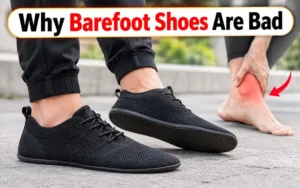


Barefoot shoes look clean, minimal and effortlessly modern. Scroll through any fitness or lifestyle feed and you will see them on runners, office workers and parents at the school gate. The pitch is appealing: free your toes, strengthen your feet and walk the way nature intended. But looks and marketing do not tell the whole story, and the real question many buyers ask too late is why barefoot shoes are bad for so many people.
The short answer is that your feet were not built for thin rubber on concrete, and a sudden switch can load tendons and bones faster than they can adapt. This article walks through the genuine risks, including what they mean for people with neuropathy and for children. It also covers the benefits people report, everyday use, warning signs, and safer ways to try them if you still want to. By the end, you will know whether this trend suits your feet or only your wardrobe.
What Barefoot Shoes Really Are
Barefoot shoes, sometimes called minimalist shoes, are footwear designed to mimic the feeling of walking without anything on your feet. They are built to be light, flexible and as close to the ground as possible, while still protecting the skin from glass, grit and weather. Most people first meet them as a simple, wide-fronted sneaker that looks harmless.
It helps to understand the design before judging it, because every feature that fans love is also a feature that changes how force travels through your body.
Zero Drop and Thin Soles
A typical barefoot shoe has a “zero drop” platform, meaning the heel and the forefoot sit at the same height. Conventional sneakers usually lift the heel by 8 to 12 millimetres. The sole is often only a few millimetres thick, and the toe box is wide so the toes can spread. Together, these features remove most of the cushioning and structure your feet have probably relied on for years.
Social Media Made Them Famous
The trend did not grow because of clinical evidence. It grew through viral videos, influencer reviews and a best-selling book about running that made going shoeless sound heroic. Brands then turned a niche idea into a fashion statement. Popularity, however, is not proof of safety, and many buyers discover the downsides only after weeks of nagging pain.
Why Barefoot Shoes Are Bad for Your Feet
No shoe is bad for everyone, and some people wear barefoot styles without trouble. The problem is that the design asks your body to do far more work than before, and most modern adults are not prepared for that. After years in cushioned shoes, the small muscles in the feet and the tendons in the lower legs are often underdeveloped. The five issues below are the most common reasons people end up regretting the switch.
Hard Ground Means No Cushion
The surfaces we walk on today are not soft soil or grass. They are concrete pavements, tiled malls and polished office floors. With only a few millimetres of rubber between you and that surface, the impact of every step travels straight up through your heels, shins, knees and hips. Natural-ground walking and city walking are very different activities, and a thin sole that feels pleasant on a beach can feel punishing on a pavement after an hour.
Flat Feet Lose Support
People with flat or low arches often rely on a bit of built-in support to keep the foot stable. Barefoot shoes remove it. Without a supportive midsole, a flexible flat foot can roll inward more, which may leave the arch, ankle and even the knee feeling strained. Some podiatrists suggest that people with flat feet who are pain-free in supportive shoes should think carefully before changing, because the stability they currently have may be doing real work for them.
Calves and Achilles Overwork
When the heel sits lower and the cushioning disappears, the calf muscles and the Achilles tendon take on more of the load. Studies on minimalist footwear have found that the lower leg works harder, particularly in runners who change shoe type. Tight, burning calves in the first weeks are common. For some people the discomfort settles, but for others it develops into Achilles tendon pain that lingers for months.
Stress Fractures Strike Early
Bone adapts to stress slowly, much more slowly than muscle. A small study from Brigham Young University followed runners who moved to minimalist shoes and found signs of bone stress in the foot after ten weeks, even though they had followed a gradual transition plan. The long, thin bones in the front of the foot, called metatarsals, are the usual victims. The worry is that the pain can feel like ordinary soreness until the damage is already done.
Heel Pain Flares Up
The thick band of tissue under your foot, the plantar fascia, is easily irritated by sudden changes in footwear. Less cushioning and more stretch on that tissue can trigger sharp heel pain, especially first thing in the morning. People who already have plantar fasciitis often find that barefoot shoes make it worse rather than better, which turns a fashionable purchase into an expensive setback.
Are Barefoot Shoes Good for Neuropathy
For most people with peripheral neuropathy, the honest answer is no, or at least not without medical guidance. Neuropathy changes how the feet feel, and footwear for this group is chosen to protect, not to “free” the foot. Anyone with a nerve condition should talk to a doctor before trying a thin-soled shoe.
Numbness Hides Injuries
A healthy foot sends a pain signal when something is wrong, such as a pebble in the shoe or a rubbing seam. A numb foot does not. With barely any padding between skin and ground, a person with reduced sensation can walk on a sharp object or develop a blister without noticing. The shoe becomes a poor warning system at exactly the moment a good one is needed.
Diabetes Raises the Stakes
Diabetes is the most common cause of neuropathy, and it also slows healing and affects circulation. A small, unnoticed cut can turn into an ulcer that struggles to close, and in severe cases that leads to serious infection. This is why diabetes care teams usually recommend cushioned, protective, well-fitted shoes and daily foot checks rather than minimalist footwear.
Little Feet, Big Risks
Parents often ask why barefoot shoes are bad for kids, especially when children seem to run around happily without any footwear at all. The picture is more nuanced than the marketing suggests. Healthy children’s feet do not need to be forced into stiff shoes, but “barefoot” at home and “barefoot shoes” at school are not the same thing.
Growing Bones Need Support
A child’s foot is still forming. Its bones are partly cartilage, and the arch develops gradually through the early years. Some children also have flexible flat feet, in-toeing or other developmental quirks that benefit from a little structure. Thin, flat footwear gives no help in these cases, and there is little long-term research showing that minimalist shoes improve a child’s foot health. When strong evidence is missing, protection is the safer default.
School and Playground Wear
A school day means hard corridors, sports halls, stairs and playgrounds full of gravel, bark and the occasional broken glass. Thin soles offer little defence against sharp objects or the knocks of active play, and children outgrow shoes quickly, so costly specialist pairs rarely pay off. A flexible, well-fitted school shoe with a roomy toe box gives most of the freedom without the exposure.

Children’s growing feet need comfortable, well-fitted footwear. Compare minimalist shoes with supportive school shoes to understand the importance of foot protection.
Everyday Wear Reality Check
Are barefoot shoes good for everyday use? For some people, in some situations, yes. For a full day of modern life, though, they ask a lot of the body. Everyday use is where the issues described above add up, because you are not on one short run but on your feet for ten or twelve hours across mixed surfaces.
Work Shifts and Long Standing
Nurses, retail staff, teachers and warehouse workers spend hours standing on hard floors. In those jobs cushioning is not a luxury, it is fatigue control. In a thin shoe, tired feet and aching legs usually show up earlier in the shift, and the discomfort follows people home. Desk workers have an easier time, but even a mostly seated day often includes commuting on concrete.
Weekend Walks and Errands
Short, relaxed outings are where barefoot shoes behave best. A stroll in the park or a quick trip to the shops puts limited stress on the body, and a flexible sole can feel natural. The trouble starts when a casual weekend turns into a long city walk or a shopping marathon. Treating these shoes as an occasional tool, instead of a full replacement, keeps the experience enjoyable.
Benefits and Cons Side by Side
A fair verdict needs both sides. Looking at barefoot shoes benefits and cons together shows why opinions are so divided: the same features that help one person can hurt another.
Good Points Fans Mention
People who love them describe a real list of positives, and it explains why barefoot shoes are good for some wearers. The wide toe box gives toes room, which many find more comfortable than narrow fashion shoes. Wearers often report better balance and a stronger sense of the ground, and some say their foot muscles feel more active. Bunion sufferers sometimes enjoy the extra space, and the lightweight build suits travel and gym floors.
Cons That Outweigh Them
For the average adult, however, the risks tend to carry more weight than the perks. The positive claims are mostly based on personal experience and small studies, while the injuries are well described by podiatrists and sports clinics. Reduced shock absorption, overloaded tendons and slow-healing bone problems can sideline a person for weeks, and that cost is far higher than the pleasant feeling of freer toes.
Simple Comparison Table
| Feature | What fans say | What the risk is |
| Thin sole | Better ground feel | Little shock absorption on hard floors |
| Zero drop | Natural posture | Extra strain on calves and Achilles |
| Wide toe box | Room for toes | Less structure for unstable feet |
| Light weight | Easy to carry and wear | Low protection from sharp objects |
| Flexible build | Stronger foot muscles | Overuse injuries if progress is rushed |
Warning Signs to Watch
Your feet communicate clearly if you listen. The trick is separating the ordinary aches of a new routine from signals that something is going wrong. Knowing the difference can stop a small irritation from becoming a long injury.
Soreness That Is Normal
Mild, even muscle tiredness in the arches or calves, which fades within a day or two and affects both feet equally, is usually just adaptation. It should feel like the day after a light workout. If it lessens as the days pass and you can walk without limping, you are most likely within the safe zone.
Pain That Needs a Doctor
Stop wearing the shoes and book an appointment with a podiatrist if you notice sharp, pinpoint pain in one spot on the foot, swelling on top of the foot, pain that worsens during activity or wakes you at night, or heel pain that does not ease after a few days. Numbness, tingling, redness or a wound that is slow to heal also deserve prompt medical advice. Pushing through this kind of pain is how minor problems become fractures.
Safer Ways to Try Them
If you are curious despite the risks, the way you start matters more than the brand you pick. The aim is to give bones and tendons time to adapt, which takes far longer than most marketing implies.
Slow Weekly Steps
Begin with 20 to 30 minutes a day on a soft, forgiving surface and keep your usual shoes for everything else. Add only a small amount each week, and take an easy day if anything feels sore. Expect to take two to three months, not two weeks, before extended wear is comfortable, and never begin with running.
Supportive Backup Pair
Keep a cushioned, supportive pair within reach for long days, hard pavements and tired feet. Swapping between footwear types also spreads stress across different tissues instead of repeating the same load. Think of the barefoot pair as one tool in the cupboard, not the whole toolbox.
Gentle Strength Moves
Building foot strength before you need it makes the transition kinder. Try short sets of toe spreading, picking up a towel with your toes, calf raises and standing on one leg while barefoot at home. A few minutes a day is enough, and doing it consistently is more useful than doing it hard.
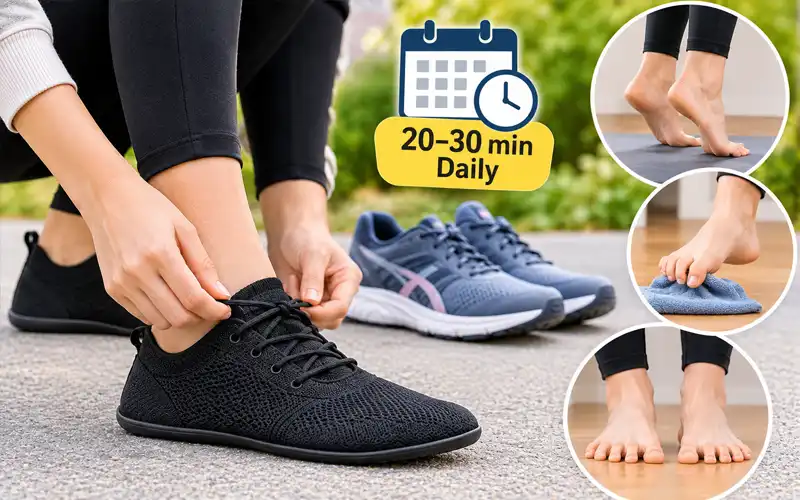
Start slowly when transitioning to barefoot shoes. Gradual wear, supportive backup footwear, and gentle foot exercises can help your feet adapt.
Frequently asked questions
Do Barefoot Shoes Weaken Arches
Not necessarily. Some evidence suggests that the small foot muscles can get stronger with careful use, but results vary from person to person. Problems tend to arise in people who already have weak or flat arches and who switch too quickly, so support may still be the wiser choice for them.
Can Beginners Wear Them All Day
It is not recommended. A beginner’s feet and lower legs have not yet adapted, and an all-day debut is a common cause of calf pain and bone stress. Start with short periods and increase slowly over weeks.
Is Running in Them Safe
Running is the highest-risk use because impact forces are much larger than in walking. Experienced runners who change gradually may cope, but novices face a greater chance of injury. If you try it, keep your first runs very short and mix them with your regular running shoes.
How Long Does Adjustment Take
Most people need at least eight to twelve weeks to feel settled, and some need longer. Bones adapt more slowly than muscles, so feeling fine does not mean you are ready to speed up. Let comfort, not the calendar alone, guide each step.
Should Seniors Try Them
Older adults often have thinner fat pads, reduced balance, arthritis or reduced sensation, all of which favour cushioned, stable footwear. A senior who is curious should speak with a doctor or podiatrist first. Safety on slippery or uneven ground matters more than any possible benefit.
Will Wide Toe Boxes Fix Bunions
A roomy front can reduce pressure and rubbing on a bunion, which many people find comforting. It does not reverse the bone changes, though, and the lack of support elsewhere may cause new discomfort. Treat extra width as a relief tool, not a cure.
Which Shoes Work Better Instead
For most adults, a supportive everyday shoe with moderate cushioning, a flexible forefoot and a roomy toe box offers many of the same freedoms with fewer drawbacks. Look for a firm heel cup, a gentle rocker sole and a fit that leaves space for your toes. A podiatrist can point you towards the right style for your foot shape.
Final Thoughts on Barefoot Shoes
Barefoot shoes are a classic case of style outrunning substance. They look smart and promise freedom, yet the reality for many wearers is sore calves, strained heels and, at worst, stress injuries. Those who are young, healthy, patient and wearing them on forgiving surfaces may enjoy them, but people with flat feet, nerve conditions, diabetes or growing children have more to lose. If you do try them, go slowly, keep supportive shoes close and listen to your feet. A shoe that looks stylish on the outside should never leave you stressed on the inside.
Note: this article is for general information and is not medical advice. Please consult a podiatrist or doctor about your own feet.