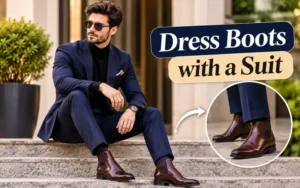


you can wear dress boots with a suit, and the right pair often looks sharper than a standard dress shoe. Boots under tailoring come across as confident, modern, and a little more interesting than the usual oxford. The trick is knowing how to wear dress boots with a suit without drifting into rugged or costume territory.
This guide walks through it in order: what a dress boot is, how to choose one, where the trouser hem should land, which colors work, and how to style the look for work, weddings, and nights out. You will also find advice for women and men, a section on Western styles, care habits, seven quick answers, and a closing tip.
Meet the Dress Boot
A dress boot is a refined ankle-height boot designed for formal and smart clothing. It is cut from smooth, polished leather, built on a slim last, and finished with a clean, low-profile sole. Think of it as a dress shoe that happens to rise just above the ankle bone. Lace-up styles, side-zip versions, and elastic-sided Chelsea designs all belong to this family, as long as they stay sleek.
What separates a dress boot from a work or casual boot is shape and finish. Work boots rely on thick leather, chunky lug soles, and a bulky, rounded toe. Hiking and utility boots add deep treads and heavy stitching. Those details look great with denim, but they fight the clean lines of tailoring. A dress boot keeps the silhouette narrow and the surface smooth, so the trouser falls over it without a visual clash.
There is also a practical reason the pairing works. A suit is built around structure, and a good boot adds a firm visual base at the bottom of the outfit. The extra ankle coverage and the texture of the leather give you something a plain shoe rarely offers. Once you know what makes a boot dressy, every choice that follows gets easier.
Picking Dress Boots That Match a Suit
Not every boot that looks smart on its own will sit well under a suit. Four qualities decide whether a pair works: finish, toe shape, sole, and height. Check each one before you buy.
Smooth Leather Finish
Choose boots made from fine calf leather with a gentle shine. Smooth leather reflects light in a similar way to suit cloth, so the two read as one outfit. Heavily textured, scuffed, or oiled leathers look rugged and push the whole look toward casual.
A high shine belongs to evening and formal events. For daytime wear, a soft, natural luster looks more refined and less showy.
Slim Toes and Low Heels
The toe should be slim and gently rounded or lightly pointed, never wide or square. A narrow toe lets the hem fall cleanly and keeps the foot in proportion with the leg. Square, stubby shapes look heavy under tailoring.
Keep the heel low, around an inch or less. A tall, stacked heel tilts the outfit toward fashion or Western styling, while a small, neat heel keeps your posture natural and the look formal.
Thin Leather Soles
Slim leather or low-profile rubber soles are the best match. They are light, flexible, and close to the ground, so the boot looks elegant from the side as well as the front. Thick commando soles and deep treads add bulk that no tailoring can hide.
Look for a sole edge that is trimmed neatly rather than flared out. A clean welt line tells the eye the boot was made for formal wear.
Ankle Height
Choose a shaft that ends just above the ankle bone. This height disappears under a trouser leg and keeps the outfit tidy. Taller shafts bunch up fabric and create awkward folds at the hem.
When you try boots on, wear the socks you plan to use with a suit and, if you can, a pair of dress trousers. The fit should feel snug at the heel and comfortable across the toes.

Discover how to choose elegant dress boots that complement a suit, featuring polished leather, slim toes, low heels, and sleek ankle-height designs.
Getting the Trouser Hem Right
A perfect boot can still look wrong if the trousers are the wrong length. The hem is where suit and boot meet, so it deserves careful attention.
Ideal Break
The break is the small fold that forms when trousers rest on the top of the footwear. With boots, aim for a slight break or none at all. The hem should just skim the top of the boot, or sit a touch above it, so the leather shows cleanly at the ankle.
A full break piles fabric over the boot and hides its shape. A hem that is too short exposes the shaft and your sock, which can look accidental. The sweet spot is a hem that hangs straight as you stand and lifts only slightly as you walk.
Cuffs or No Cuffs
Cuffs, also called turn-ups, add weight to the trouser leg and help it hang straight. They suit traditional and tweed suits and pair well with sturdier boots. On a sleek business suit, a plain hem is cleaner and looks more modern.
Keep cuffs modest, about one and a half inches. Large cuffs on a short leg shorten the body line and compete with the boot for attention.
Tailor Fitting Tips
Bring your boots to the tailor and wear them during the hemming. The tailor can then see exactly where fabric meets leather. Ask for the pins to be placed while you stand naturally, then walk a few steps to test the hang.
Also ask about the leg opening. It must be wide enough for the boot to pass through without catching, yet narrow enough to stay neat. A tailor can test this by sliding the boot through the opening and adjust it in one visit.
Matching Boot Color to Suit Color
Color is where most outfits succeed or fail. A dependable rule: the boots should be the same shade as the suit or darker. Beyond that, treat leather color as a supporting tone, not the main event. The chart below gives a quick reference.
| Suit Color | Best Boot Color | Overall Mood |
| Navy | Dark brown, black, or oxblood | Classic and versatile |
| Charcoal | Black or deep burgundy | Formal and polished |
| Black | Black | Sleek and evening-ready |
| Mid or light gray | Brown or burgundy | Smart and relaxed |
| Tan or beige | Mid to dark brown | Warm and natural |
| Olive or green | Dark brown or tobacco | Earthy and confident |
Classic Black Leather
Black boots are the most formal option and work best with navy and charcoal suits. They create a sharp, uniform line and suit offices, formal dinners, and evening events. A polished black boot under a charcoal suit is an easy, dependable combination.
Black looks less natural against tan or light suits, where the contrast turns harsh. Treat it as a cool-toned partner for cool-toned cloth.
Warm Brown Leather
Brown adds warmth and personality, and it is the most flexible color of the group. Dark chocolate brown works with navy, gray, and green suits, while a medium tan-brown pairs nicely with beige and light suits in spring and summer.
The richer the brown, the more formal it feels. Choose dark shades for business settings and keep honey or light brown for casual days.
Burgundy and Oxblood Pairs
Burgundy and oxblood sit between brown and black, which makes them a smart choice when you want a distinct but still formal boot. They stand out against gray and navy suits and add depth without shouting.
A deep red-brown also links well to accessories. A belt in the same tone, or a pocket square with a hint of red, completes the look with very little effort.

Choosing the right boot color can transform your entire outfit
Suit Fabrics and Seasons
The cloth of your suit should guide your choice of boot. Smooth worsted wool suits sit well with polished calf leather in any season. Heavier fabrics such as tweed and flannel bring out the best in textured leathers and suede, which makes them ideal for autumn and winter. Dark brown or burgundy suede looks especially natural beside tweed.
In warm weather, linen and cotton suits call for lighter boots in tan or mid-brown, with a thin sole and a soft, unlined feel. Dark, heavy boots feel too weighty in the heat and can be uncomfortable by midday.
The simple principle behind all of this is visual weight. Aim for cloth and leather that feel similar in heft, and the outfit will look balanced whatever the temperature outside.
Dress Boots for Every Occasion
The same boots can look very different depending on the setting. Here is how to adjust the look for work, weddings, and evenings.
Office and Business Meetings
For work, keep everything conservative. Choose plain-toe or cap-toe lace-up boots in black or dark brown, wear them with a dark suit, and keep the shine subtle. Lace-ups read as the most formal and neat of all dress boots.
Observe the dress culture before you commit. In creative or relaxed offices, boots blend in easily. In very traditional settings, start with a pair that looks as close to a dress shoe as possible.
Chelsea Dress Boots at Weddings
Chelsea boots with a suit at a wedding can look excellent when the style is clean and the leather is polished. Black or dark brown pairs work with navy and charcoal suits and suit ceremonies that follow a standard suit dress code.
Time of day matters. Daytime weddings allow a little more color, such as deep brown with a gray suit, while evening ceremonies suit black or oxblood with a sharper finish. Read the invitation before you decide.
Dinners and Evening Plans
Evenings give you room to be bolder. Suede boots in navy, chocolate, or burgundy look rich under artificial light, and a slightly pointed toe adds a hint of drama. Pair them with a slim suit in a dark shade so the texture takes center stage.
Keep everything else simple: a crisp shirt, a plain tie or an open collar, and a clean belt. Let the boots be the one interesting piece and let the rest step back.

Discover how to style dress boots for office meetings, weddings, and evening plans. Explore elegant combinations featuring black leather, brown Chelsea, and burgundy suede boots.
Women’s Take on Boots with Suits
Choosing boots with suit woman styling in mind starts with the same base principles as menswear: clean lines, good fit, and balanced proportions. Anyone searching for how to wear dress boots with a suit women’s guides can follow them, and the details change with the shape of the suit.
Pantsuits with Short Boots
Ankle boots are the easiest pairing for a pantsuit. Choose leather or suede that matches the tone of the suit and let straight or slightly tapered trousers fall just over the top of the shaft. An unbroken line from trouser to boot makes the legs look longer.
A pointed or almond toe adds elegance, while a block heel keeps a full workday comfortable. Black boots suit almost any dark suit, and tan boots lift a cream or camel one.
Heels and Cropped Hems
Cropped or ankle-length trousers show the whole boot, so the boot becomes part of the outfit. A heeled ankle boot with a slim leg creates a sharp, fashion-forward line. Make sure the hem stops just above the boot rather than awkwardly in the middle of it.
This style suits evening events and creative workplaces. Choose a heel height you can walk in confidently, because comfort shows in your posture.
Skirt Suits with Tall Boots
A knee-length or midi skirt suit looks striking with tall, sleek boots, as long as the skirt hem and the boot top overlap or leave only a very small gap. A knee-high boot in matte leather suits a tailored jacket and keeps the look polished.
Keep the boots plain and the tights simple. A structured jacket already provides the interest, so the lower half can stay quiet.
Men’s Shirt, Sock, and Belt Choices
A suit with boots, men especially, needs a few supporting choices to feel finished, and this is how to wear dress boots with a suit men’s wardrobes can rely on. Start with a crisp shirt in white, light blue, or a subtle stripe, and add a solid or fine-pattern tie when the occasion calls for one. Plain shirts let the boots carry the interest.
For socks, choose a fine wool or cotton pair in a dark shade close to the trousers. They should be long enough to cover the calf so no skin shows when you sit. Avoid bright patterns here, since the boot already draws the eye.
Match the belt to the boots in color and finish, and keep the buckle slim. These small matches shape the outfit as much as the boots themselves.
Polish and Storage Habits
Good boots last for years with a little care. Wipe off dust after each wear, apply conditioner every few weeks, and use cream polish in a matching color to restore shine and hide scratches. Suede needs a soft brush and a protective spray instead of polish.
Insert cedar shoe trees as soon as you take the boots off. They absorb moisture and stop the leather from creasing. Resting each pair for a day between wears helps it last far longer.
Frequently Asked Questions
Can You Wear Dress Boots with a Black Suit?
Yes. Stay with black boots in a smooth, simple style, since brown looks mismatched against true black cloth. A black suit is formal, so this pairing works best for evening events and dinners rather than daytime meetings.
Is a Tuxedo Suitable with Boots?
Only at relaxed events where the invitation says black tie optional, and only in sleek black leather. For strict black tie or white tie, wear patent oxfords or formal pumps instead.
Will New Boots Feel Comfortable Right Away?
Usually not. Leather needs one to two weeks to soften. Wear the boots around the house for a few hours at a time before a big event so your first full day in them is not also the day that counts.
Do Dress Boots Handle Rain and Snow?
Often better than shoes, because the shaft shields your ankle. Choose a rubber-leather sole for grip, apply a leather protector beforehand, and let the boots dry naturally afterward, away from direct heat.
Which Pairs Make a Good Starter Collection?
Two pairs cover most needs: black for formal use and dark brown for everything else. Once you feel confident in the style, add a third pair in burgundy or suede for variety.
Does a Boot Make Short Legs Look Shorter?
Not when the fit is correct. A slim boot, a short break, and a color close to your trousers create one long line from hip to floor, and a small heel can add a touch of height.
Are Hemming Costs Higher for Boots?
Usually no, since a standard hem is a standard hem. Adjusting the leg opening or adding cuffs may cost extra, so ask for a quote and bring the boots to the first fitting.
Final Thoughts
Knowing how to wear dress boots with a suit comes down to a few simple choices: pick a slim, smooth boot, hem the trousers to just touch the top, match the leather to the suit, and adapt the style to the occasion. Do these well and boots stop feeling like an experiment and start feeling like part of your tailoring.
One last tip: start with a single dark pair and wear it often. Familiarity builds confidence, and confidence is what makes any outfit look right.
Also Read : What Dress Looks Best with Cowboy Boots? 10 Easy Combos