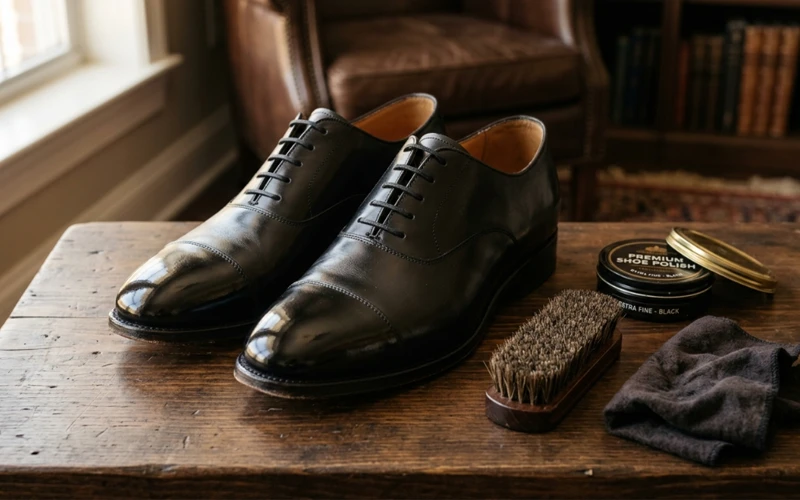
Well-polished leather shoes can completely change the way an outfit looks. Clean, smooth and shiny footwear gives a more professional appearance and also helps protect leather from dryness, scuffs and everyday wear. Learning how to polish shoes does not require expensive equipment or professional experience. With a few simple products, the right technique and a little patience, you can bring tired-looking leather shoes back to life at home.
Quick Guide to Shoe Polishing
| Shoe Care Stage | What You Need | Main Purpose | Approximate Time |
| Cleaning | Horsehair brush and damp cloth | Remove dirt and dust | 5–10 minutes |
| Conditioning | Shoe cream or conditioner | Add moisture and restore color | 10–15 minutes |
| Waxing | Hard wax polish | Add protection and surface shine | 5–10 minutes |
| Buffing | Brush or soft cloth | Develop the final shine | 5–10 minutes |
| Mirror Finish | Wax, cotton cloth and water | Create a highly reflective toe | 20–40 minutes |
Why Shoe Care Matters
Leather is a durable material, but it still needs regular care. Dust, moisture, heat and repeated bending can gradually make leather look dry and tired. Small scratches can also become more noticeable when shoes are not maintained. Regular polishing helps improve their appearance while keeping the surface conditioned and protected.
There is also a practical reason to develop a proper polishing routine. Dirt trapped in the seams can work like fine grit when you rub products into the leather. Over time, this can create unnecessary surface damage. Cleaning first, using suitable products and avoiding excessive polish are therefore just as important as creating the shine itself.
How to Polish Shoes Properly
The best approach is to think of shoe care as a process rather than simply rubbing polish onto the leather. Start by preparing the shoe, remove surface dirt, condition the material when needed, apply the appropriate polish and finish with controlled buffing. This method gives a cleaner result and reduces the chance of creating a thick, uneven layer.
Before beginning, place an old towel, newspaper or another protective covering underneath the shoes. Shoe products can easily stain furniture and flooring. Remove the laces so you can work around the tongue and eyelets without accidentally covering them with polish.
If you have shoe trees, insert them before polishing. They help maintain the shoe’s shape and make the leather firmer while you work. If shoe trees are not available, clean newspaper can be placed inside the shoes to support the upper and reduce visible creases.
Start With a Clean Surface
The first stage is often overlooked, but it has a major effect on the final result. Use a soft horsehair brush to remove loose dust, dirt and dried mud. Spend extra time around the stitching, seams and welt because these areas commonly collect debris.
For stubborn residue, use a slightly damp cloth rather than soaking the leather. Gently wipe the surface and allow the shoes to dry naturally. Never apply wax or cream while the leather is wet. Heat from a radiator, hair dryer or strong direct sunlight should also be avoided because excessive heat can dry leather and affect its finish.
If you are learning how to polish shoes at home, this preparation is one of the easiest habits to develop. You do not need a complicated setup. A clean table, an old towel, two soft cloths, a brush and suitable shoe-care products are enough for most routine polishing jobs.
Give the Leather Some Moisture
After cleaning, examine the leather closely. If it looks dry, faded or slightly rough, a shoe cream or leather conditioner can help restore its appearance. Cream products are generally used to nourish the leather and bring back color, while hard wax is mainly used for surface protection and shine.
Wrap a clean cotton cloth around two fingers and keep the fabric smooth. Apply a small amount of cream and spread it over the leather with gentle circular movements. Work evenly instead of concentrating a large amount of product in one place.
Allow the cream to settle for around 10 to 15 minutes. Once it has had time to absorb, use a horsehair brush with quick, light strokes. This removes excess product and creates a soft natural glow. Using too much cream can leave the surface greasy, so starting with a small amount is always safer.
Build the Protective Layer
Wax polish serves a different purpose from cream. Instead of being primarily absorbed into the leather, hard wax sits closer to the surface and helps fill tiny imperfections. It can create a smoother appearance and provide a protective layer against everyday moisture and scuffs.
For anyone wondering how to polish shoes with shoe polish, the key is moderation. Put a small amount of polish on a clean cotton cloth and spread it thinly over the shoe. Small circular movements work well when applying the product. You do not need a thick coating to produce a good shine.
After application, allow the polish to become slightly hazy. Depending on the product and room conditions, this can take around five to ten minutes. Once the surface loses its wet appearance, it is ready for buffing.
Create the Shine With Friction
Buffing is where the appearance of polished leather changes dramatically. A horsehair brush can be moved rapidly across the shoe using long, light strokes. Avoid pushing extremely hard because pressure is not what creates the shine. Controlled movement and friction help smooth the polish across the surface.
When considering how to polish shoes with brush, remember that the brush is useful for both cleaning and finishing, but polish itself is usually better applied with a cloth. Using a separate brush for the final buff also helps distribute the product evenly and removes excess wax.
Once the shoe develops a smooth glow, inspect it under different angles of light. Uneven dull areas usually mean that some excess product remains or that the wax has not been buffed sufficiently. A few additional light passes with the brush can often correct the problem.
When You Have No Brush
A brush is helpful, but it is not absolutely necessary. If you are figuring out how to polish shoes without a brush, an old smooth cotton T-shirt can work surprisingly well. A microfiber cloth can also be useful, provided it is clean and free from anything abrasive.
First wipe away dirt manually with a slightly damp cloth. Once the shoe is dry, apply a small amount of polish using another clean cloth. After the polish hazes, stretch a dry section of fabric tightly across the shoe and move it quickly from side to side.
The movement should be smooth rather than aggressive. You are trying to create controlled friction while removing excess product. Nylon stockings can also be used for a final buff because their smooth surface can produce a particularly clean finish.
Getting a Mirror-Like Finish
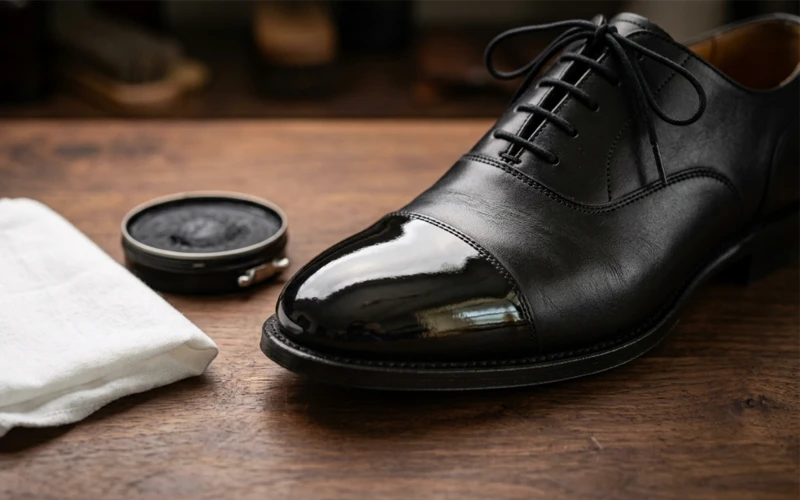
A normal polish produces a healthy shine, but a mirror finish requires a different technique. The goal is to gradually fill the microscopic texture of the leather with extremely thin layers of hard wax until the surface reflects light more evenly.
If your goal is how to polish shoes to a mirror shine, focus primarily on areas that remain relatively rigid, such as the toe cap and heel counter. Avoid building a thick wax shell over parts of the shoe that bend heavily during walking. Excessive wax in flexible areas can eventually crack and flake.
Begin with a foundation layer of hard wax. Apply it to the toe using a cotton cloth and gentle circular movements. Let the first layer settle before adding more. Later layers should be much thinner than the foundation.
A tiny amount of water can help during the final stages. Place a small drop on the cloth or the polished area and work it gently with very light circular movements. Continue gradually rather than trying to create the entire shine in one pass. A good mirror finish is mainly the result of patience and thin layers.
A Classic Wax Option
For people searching for how to polish shoes kiwi, the same basic principles apply. Kiwi wax polish is commonly used on smooth leather because it can provide a traditional high-gloss finish when applied correctly.
Start with clean leather and use a small amount of wax on a cotton cloth. Spread it evenly instead of creating a heavy coating. Allow it to become slightly hazy, then buff it with quick brush strokes. For additional gloss, a small amount of water can be introduced during careful finishing on a rigid toe area.
The most common mistake with wax is using too much. A thick layer does not automatically create a better shine. In many cases, excessive product creates a cloudy or sticky appearance that takes longer to correct.
How to Polish Shoes
Using Liquid Polish
Liquid products are popular because they are convenient and can produce a quick visual improvement. If you are learning how to polish shoes with liquid polish, begin by cleaning the footwear thoroughly and allowing it to dry.
Shake the bottle well so the contents are properly mixed. If the product has an integrated sponge, press it gently against the shoe according to the product design and move it across the surface in light, continuous strokes. Avoid repeatedly pressing the applicator in the same area because too much liquid can produce streaks or uneven coverage.
Liquid polish generally dries faster than traditional wax and may not require the same type of extended buffing. Give it enough time to dry before touching the surface. For long-term leather care, however, liquid polish should not automatically replace regular cleaning and conditioning.
Household Alternatives
Sometimes you may need a quick solution when traditional shoe products are unavailable. Some household items can temporarily improve the appearance of smooth leather, but they should not be treated as a complete replacement for dedicated leather-care products.
Petroleum jelly is one commonly discussed option. When considering how to polish shoes with vaseline, use only a very small amount on clean, dry smooth leather. Spread a thin coat with a soft cloth and allow it to sit briefly before buffing thoroughly with a fresh cloth.
The most important part is removing excess residue. Too much petroleum jelly can leave the surface greasy and attract dust. It should also not be used on suede or nubuck because oils can permanently affect their texture and appearance. Always test an unfamiliar household product on a hidden area first.
Other household methods, such as banana peel or a very small amount of olive oil, are sometimes used for temporary shine. These methods are less predictable than proper leather-care products, so they are better viewed as emergency solutions rather than a regular maintenance routine.
Choosing Premium Products
For enthusiasts who want a more refined finish, premium shoe-care systems can offer more specialized products. If you are researching how to polish shoes with saphir, a common approach is to separate conditioning, color restoration and high-shine waxing into different stages.
Saphir products include conditioners, cream polishes and harder wax products designed for different purposes. A conditioner can be used when the leather needs nourishment, while a pigmented cream can help refresh its color. A hard wax can then be applied to areas where you want greater protection and gloss.
The important lesson is not to assume that premium products eliminate the need for technique. Even an expensive polish can produce a poor result if the leather is dirty or if too much product is applied. Thin applications, appropriate drying time and careful buffing remain the foundation of good shoe care.
Common Mistakes to Avoid
One of the biggest mistakes is polishing dirty shoes. Always remove loose grit before applying anything. Another common problem is applying too much product at once. Leather usually benefits more from several controlled applications than from one heavy layer.
Do not rush the drying stages. Cream and wax need time to settle before you buff them. Avoid aggressive rubbing on delicate finishes and never use harsh chemicals on ordinary leather simply because they remove stains quickly.
It is also important to know your shoe material. Smooth finished leather, suede, nubuck, patent leather and synthetic materials can require completely different care. A method that works beautifully on smooth leather may damage another material.
How Often Should You Polish?
There is no single schedule that works for every pair. Shoes worn daily in dusty or wet conditions may need more frequent cleaning, while formal shoes kept indoors can go longer between full polishing sessions.
A useful approach is to clean the shoes whenever visible dirt appears and condition the leather when it starts looking dry. Wax can be used when you want additional protection or shine rather than automatically applying a heavy layer after every wear.
Allowing shoes to rest between wears is also helpful. Shoe trees can maintain their shape and help reduce deep creasing. Proper storage away from excessive heat and moisture can further extend the life of good leather footwear.
Conclusion
Learning how to polish shoes is a simple skill that can save money, improve your appearance and extend the useful life of your footwear. The most reliable routine is to clean the leather first, condition it when necessary, apply a suitable polish in thin layers and finish with gentle but effective buffing. For a regular shine, a brush and cloth are usually enough, while a mirror finish requires additional wax layers and patience.
The most important thing is consistency rather than expensive equipment. Keep the leather clean, avoid excessive product, choose products that suit the material and give each stage enough time to work. With practice, even a worn-looking pair of leather shoes can develop a smooth, polished appearance that looks sharp and well cared for.
Frequently Asked Questions
- How to polish shoes properly for a professional finish?
A clean surface, suitable products, thin applications and proper buffing are the main factors behind a neat and long-lasting finish.
- How to polish shoes at home without making a mess?
Cover your working surface with an old towel or newspaper, keep your products organized, and use small amounts to prevent unnecessary spills and buildup.
- How to polish shoes to a mirror shine without damaging the leather?
Use hard wax on firm areas such as the toe and heel, build very thin layers gradually, and avoid creating a thick coating on parts that bend while walking.
- How to polish shoes without a brush when you have limited supplies?
A clean cotton T-shirt, soft cloth or nylon stocking can be used for cleaning and buffing when a traditional brush is not available.
- How to polish shoes with brush for the best results?
Use the brush first to remove dirt and later for quick, light buffing. Avoid pressing too hard because controlled movement works better than excessive pressure.
- How to polish shoes with vaseline as a temporary household solution?
Use only a tiny amount on suitable smooth leather, spread it evenly and buff thoroughly afterward to remove any greasy residue.
- How to polish shoes with kiwi for a classic glossy finish?
Apply a thin layer to clean leather, allow it to become slightly hazy, and then use quick buffing strokes to develop the shine.
- How to polish shoes with saphir for a premium finish?
Use the products according to their individual purpose, beginning with proper cleaning and conditioning before applying cream and finishing wax where appropriate.