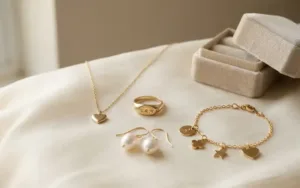
Building a Profitable Jewelry Collection for Retail
You want to build a jewelry collection that sells, but your pieces do not move. Retail jewelry can earn steady profit when you match style to a clear customer. This post will show how to pick a niche, design test pieces, control costs, and market to buyers.
Read on to learn how.
Table of Contents
ToggleDefining Your Niche
Defining your niche is key to success. Choose a style that speaks to a specific group of people and keeps up with trends.
Focus on a specific style or audience
Select one clear niche and style for your jewelry collection. Target customers buy more if you match their taste.
Use market research and product development to shape designs and messaging. Set pricing strategy and wholesale plans to protect profit, and then incorporate current trends to stand out.
Incorporate current trends to stand out
Watch market trends to stand out. Use trend data to shape product development and your collection. Track top searches on ecommerce platforms and social media. Aim designs at a clear target customer.
Test trend-driven designs in small batches. Price items with a smart pricing strategy to protect profit. Use trend posts in marketing to boost customer engagement.
Designing Your Jewelry Collection
Designing your jewelry collection is crucial for success. You should mix classic pieces with unique designs to attract customers.
Include a mix of core pieces and standout designs
Start with core pieces that sell steadily, like stud earrings, chain necklaces, and simple bands. Add one or two standout designs that catch the eye, such as a bold pendant or a mixed-metal cuff. Use market trends and product development data to pick pieces that match your target customer.
Price core items for retail and wholesale to secure profit and manage inventory. Promote standout items with strong photography and social posts to drive traffic. Track sales and adjust your collection to refine your jewelry business strategy.
Limit initial designs to test demand
Limit the initial designs to a small selection. This helps you gauge customer interest before investing too much time and money. Pick a small selection of signature pieces that reflect your brand’s unique style. Offer unique items alongside core designs to attract different buyers.
Testing demand allows you to see what sells best. Pay attention to feedback from customers. Adjust your collection based on their preferences. Use market research to inform your choices, and keep an eye on current trends in jewelry design.
Sourcing Materials and Managing Costs
Find reliable suppliers for high-quality materials. Keep track of all costs, including labor and fees, to ensure you stay profitable.
Find reliable suppliers for quality materials
Sourcing quality materials is key for your jewelry business. Start by researching suppliers who have good reviews and a solid reputation. Look for wholesalers that offer a variety of gemstones, metals, and other components you need.
Visit trade shows or online marketplaces to discover new options. Make sure to compare prices, but don’t sacrifice quality for cost. Building strong relationships with reliable suppliers helps ensure you get what you need on time and at the right price, which supports your profit margins in retail.
Calculate total costs, including labor and fees
Calculate total cost per piece before you set retail prices.
| Cost Component | How to Calculate | Example |
|---|---|---|
| Materials | Sum beads, metal, stones, and findings per unit. | $12.00 for sterling silver, glass beads, and clasp. |
| Labor | Multiply time to make one piece by hourly wage. | 30 minutes at $20/hour equals $10.00. |
| Packaging | Add box, pouch, tags, and labels per order. | Standard pouch and tag cost $1.50. |
| Shipping | Use average shipping cost per sale or pass to buyer. | Average domestic shipping equals $4.00. |
| Marketplace Fees | Apply listing and final sale fees as a percent. | 10% marketplace fee on sale price. |
| Payment Processing | Use processor rates, percent plus fixed cents. | 2.9% + $0.30 per transaction. |
| Overhead Allocation | Divide rent, utilities, tools, and software by units sold. | $3.00 allocated per piece monthly. |
| Tooling and Setup | Amortize costs for molds, dies, and equipment. | $0.50 per piece over 500 units. |
| Returns and Warranty Reserve | Set aside a percent for returns and repairs. | 5% reserve of sale price estimated. |
| Taxes and Duties | Estimate applicable sales tax and import duties per unit. | Sales tax varies by state, estimate 6% for planning. |
| Profit Target | Add desired margin after all costs are summed. | Target 40% margin on total cost. |
| Total Cost Example | Sum all fixed and variable costs. Then add fees and reserve. | Materials $12.00 + Labor $10.00 + Packaging $1.50 + Shipping $4.00 + Overhead $3.00 + Tooling $0.50 = $31.00. Add marketplace fee and processing on a $55 sale equals $6.05 and $1.90. Add 5% reserve $2.75. Total costs about $41.70. With 40% margin goal sell near $69.50. |
Next, apply effective pricing strategies to protect margin and stay competitive.
Apply effective pricing strategies to maintain profit margins
Set prices based on your costs, competition, and target customers. Start with the total cost of materials and labor. Add a markup to cover expenses and profit margins. A common approach is to use a keystone markup.
This means you double your wholesale price for retail. For example, if you buy jewelry for $20, sell it for $40.
Monitor your prices regularly. Adjust them as needed to stay competitive while ensuring good profits. Special promotions can attract new buyers too. Bundle offerings can also increase sales volume while maintaining profit margins.
Keep an eye on market trends to see how they affect pricing strategies in the jewelry business and collection management.
Marketing and Selling Your Collection
To market and sell your jewelry collection, invest in high-quality photos and videos. Use social media to connect with customers and promote your designs.
Professional Product Photography and Videos
Use professional product photography and videos to showcase your jewelry collection. High-quality images grab attention. They help customers see the details and sparkle of each piece.
One effective way to enhance your collection is by sourcing wholesale sterling silver pendants that align with your chosen niche. Good lighting can make a big difference. Clear, bright pictures highlight craftsmanship and design.
Videos can take this further by showing how the jewelry looks when worn. Customers appreciate seeing items from different angles. This builds trust in your brand. Use these tools on your website and social media platforms to attract more buyers.
Next, leverage social media to build customer interest in your products.
Leverage social media to build customer interest
Social media can attract more customers to your jewelry collection. It offers a direct way to connect with your audience.
1. Create engaging content. Show your jewelry in unique settings. Use bright, clear photos to highlight details and designs.
2. Share stories behind each piece. Explain what inspired the design or how you selected materials. This builds a personal connection with customers.
3. Use hashtags wisely. Choose popular tags related to jewelry and fashion. This helps potential customers find your work easily.
4. Collaborate with influencers. Partner with those who align with your style and brand values. They can showcase your collection to their followers, expanding your reach.
5. Host giveaways or contests. Offer free pieces in exchange for likes, shares, or follows. This generates excitement and increases visibility for your brand.
6. Post regularly on various platforms like Instagram, Facebook, and TikTok. Each platform has a different audience; adapt your content to fit their preferences.
You can automate social media posts to maintain a consistent publishing schedule while saving time for other marketing tasks.
7. Engage directly with followers through comments and messages. Answer questions about designs or materials promptly; this shows that you care about customer service.
8. Share customer testimonials and photos of them wearing your pieces. This social proof encourages others to trust your brand and make a purchase.
9. Use videos to demonstrate how the jewelry looks when worn or styled in outfits; movement brings the pieces to life for viewers.
10. Analyze results using insights from social media tools; adjust strategies based on what works best for engagement and sales.
Overall, building a strong social media presence can increase interest in your retail collection and help you connect with your target audience. As a result, engaging content, jewelry design trends, and direct customer interactions can support business growth and improve your overall sales strategy.
Choose the right sales channels, from marketplaces to dedicated stores
Choose sales channels that match your brand and goals.
| Channel | Why it works | Drawbacks | How to use it | Examples |
|---|---|---|---|---|
| Online marketplaces | Reach large audiences fast. | Fees reduce margins. | List best sellers first. Use clear tags. Offer fast shipping. | Amazon, Etsy, eBay |
| Own e-commerce site | Keep full control of brand. | You must drive traffic yourself. | Optimize pages for search. Add quality photos. Use email capture. | Shopify, WooCommerce |
| Pop-up shops | Test locations and meet buyers. | Short term and requires setup cost. | Choose high foot traffic spots. Train staff to sell features. | Local malls, markets, events |
| Wholesale to boutiques | Scale volume with partners. | Lower per-piece price. | Offer clear terms. Provide swatches and lookbooks. | Local boutiques, regional chains |
| Social commerce | Turn followers into buyers. | Algorithm changes affect reach. | Post video demos. Use shoppable posts and stories. | Instagram Shop, Facebook Shop, TikTok Shop |
| Consignment and galleries | Gain prestige and niche customers. | Payment waits until sale. | Choose venues that match your aesthetic. Track inventory closely. | Art galleries, curated stores |
| Events and trunk shows | Build direct relationships. | Require travel and planning. | Bring best sellers and story cards. Collect contact info. | Trade shows, bridal fairs |
| Subscription boxes | Create recurring revenue. | Must meet box timelines. | Design exclusive pieces. Negotiate clear terms. | Curated fashion boxes |
Move next to pricing, costs, and profit margin planning.
Conclusion
Building a profitable jewelry collection takes effort and strategy. Focus on your niche and keep up with trends. Create designs that balance core pieces and unique styles. Market your collection well using social media and great photos.
With the right planning, you can succeed in the retail space.
Frequently Asked Questions
- How do I start building a profitable jewelry collection?
Start by choosing a specific niche and target customer. Research current trends, create a small range of designs, calculate your costs, and test demand before investing heavily in inventory.
- How many jewelry designs should I launch initially?
It is usually better to start with a limited selection of carefully chosen pieces. A small collection makes it easier to manage costs, track sales, and identify which designs customers prefer.
- How do I calculate the cost of making a jewelry piece?
Include the cost of materials, labor, packaging, shipping, marketplace or payment fees, tools, overhead, taxes, and potential returns. Adding these expenses gives you a more accurate total cost per piece.
- How should I price jewelry for retail?
Set your price after calculating the complete cost of each piece. Consider your target profit margin, competitor prices, customer expectations, and whether you are selling directly to consumers or through wholesale channels.
- Where can I sell my jewelry collection?
You can sell through your own e-commerce website, online marketplaces, social commerce platforms, pop-up shops, local boutiques, wholesale partnerships, events, and other retail channels that match your target audience.
- How can social media help sell jewelry?
Social media allows you to showcase jewelry through photos, videos, styling content, customer reviews, and behind-the-scenes stories. Consistent content can help attract potential buyers and build trust in your brand.
- Why is product photography important for a jewelry business?
Good product photography helps customers see the details, finish, size, and design of each piece. Clear and attractive images can make your collection look more professional and encourage shoppers to consider a purchase.
- How can I test whether a jewelry design will sell?
Launch a small quantity and monitor sales, customer feedback, engagement, and repeat interest. Testing limited batches helps you understand demand before spending more money on larger inventory.