Hard Water Damage in Florida: How Sarasota and Charlotte County Homeowners Can Protect Their Plumbing
If you live in Sarasota or Charlotte County, chances are you have noticed the telltale signs of hard water in your home. Chalky white buildup on faucets, spotty dishes fresh out of the dishwasher, and a water heater that seems to be working harder than it should are all common complaints among Florida homeowners. What many people do not realize is that these small annoyances are often early warning signs of a much bigger issue: hard water plumbing damage in Florida. Left unaddressed, hard water can shorten the life of pipes, appliances, and fixtures, leading to costly repairs and replacements down the road.
This guide breaks down what causes hard water in this region, how it damages your plumbing system over time, and what practical steps you can take to protect your home.
Table of Contents
ToggleWhy Florida’s Water Is So Hard
Florida sits on a foundation of limestone, and much of the state’s groundwater is drawn from the Floridan Aquifer. As water travels through limestone deposits, it picks up dissolved minerals, primarily calcium and magnesium. These minerals are what make water “hard.” Because Sarasota and Charlotte County rely heavily on groundwater sources, homes in these areas often experience water hardness levels well above the national average.
Hard water is not necessarily unsafe to drink, but it is tough on your plumbing infrastructure. Over time, the minerals in the water do not just pass through your pipes. They accumulate, harden, and create a cascade of problems that can be expensive to fix.
How Hard Water Damages Your Plumbing System
Understanding the mechanics of hard water plumbing damage in Florida helps homeowners recognize problems early and take preventive action before small issues become major repairs.
Mineral Scale Buildup Inside Pipes
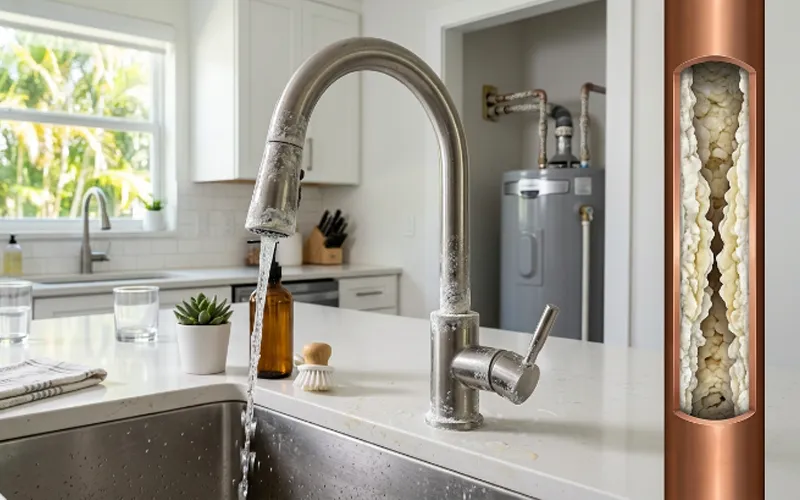
As hard water flows through your plumbing, calcium and magnesium deposits gradually coat the interior walls of pipes. This scale buildup narrows the diameter of the pipe, which reduces water flow and increases pressure on your plumbing system. Over years, this buildup can become so severe that pipes need to be replaced entirely.
Reduced Water Heater Efficiency and Lifespan
Hard water can take a serious toll on water heaters, causing mineral buildup that reduces efficiency and shortens their operating life. Mineral sediment settles at the bottom of the tank, forcing the unit to work harder to heat water. The extra workload can drive up energy costs while also shortening the water heater’s overall service life. In tankless systems, scale buildup inside the heat exchanger can cause overheating and premature failure.
Clogged Fixtures and Appliances
Hard water can quickly affect everyday plumbing fixtures, including faucets, showerheads, and aerators. Mineral deposits clog the small openings responsible for regulating water flow, leading to reduced pressure and uneven spray patterns. Dishwashers, washing machines, and coffee makers face similar issues, often requiring more frequent repairs or replacement.
Corrosion and Pipe Deterioration
While scale buildup is the most visible effect, hard water can also accelerate corrosion in certain types of pipes, particularly older galvanized steel plumbing common in older Florida homes. As corrosion progresses, the risk of leaks and pipe failure increases substantially.
Soap Scum and Reduced Cleaning Efficiency
When hard water mixes with soap, it can leave behind a stubborn film that settles on shower doors, tubs, and sinks, making everyday cleaning more difficult. It can also leave skin feeling dry and hair looking dull, which, while not a plumbing issue directly, is another daily reminder of the underlying water quality problem.
Signs You May Have Hard Water Damage
Homeowners in Sarasota and Charlotte County should watch for the following warning signs:
- White or chalky residue around faucets, drains, and showerheads
- Reduced water pressure throughout the home
- Dishes and glassware may develop cloudy spots or a thin film after washing
- Dry skin or dull hair after showering
- Rising water heating costs without a clear explanation
- Frequent need for plumbing repairs or appliance servicing
- Visible scale buildup inside kettles, coffee makers, or humidifiers
If you notice several of these signs at once, it is worth having your plumbing system inspected by a professional familiar with hard water issues in the region.
Protecting Your Plumbing from Hard Water Damage
The good news is that hard water plumbing damage in Florida is largely preventable with the right combination of equipment, maintenance, and awareness. Here are the most effective strategies for Sarasota and Charlotte County homeowners.
Install a Whole Home Water Softener
A water softener offers a straightforward way to tackle hard water issues. These systems use a process called ion exchange to remove calcium and magnesium from your water supply before it reaches your pipes and appliances. Installing a whole home softener protects every fixture and appliance in your house, extends the lifespan of your water heater, and reduces the frequency of clogs and scale buildup.
Consider a Salt-Free Water Conditioner
For homeowners who prefer not to use a traditional salt-based softener, salt-free conditioners are an alternative. These systems do not remove minerals from the water but instead alter their chemical structure so they are less likely to stick to pipe walls and fixtures. While they may not be as effective as traditional softeners for severe hardness, they can still reduce scale buildup significantly.
Flush Your Water Heater Regularly
Routine maintenance goes a long way toward minimizing hard water damage. Flushing your water heater at least once a year helps remove sediment that has settled at the bottom of the tank. This simple step improves efficiency, reduces strain on the unit, and can add years to its service life.
Clean Fixtures and Aerators Periodically
Soaking showerheads and faucet aerators in a vinegar solution can dissolve mineral deposits and restore proper water flow. Making this a regular part of your home maintenance routine prevents buildup from becoming severe enough to require replacement parts.
Schedule Regular Plumbing Inspections
Because hard water damage often develops gradually and out of sight, regular inspections by a licensed plumber are one of the best ways to catch problems early. A professional can check for scale buildup inside pipes, assess water heater condition, and identify any early signs of corrosion before they turn into leaks or pipe failures.
Upgrade Older Plumbing When Necessary
If your Sarasota or Charlotte County home still has original galvanized steel pipes, it may be time to consider repiping with materials that are more resistant to corrosion and scale buildup, such as PEX or copper. While this is a larger investment, it can prevent far more costly emergency repairs in the future.
Why This Matters More in Sarasota and Charlotte County
Compared to many other parts of the country, Sarasota and Charlotte County face a unique combination of factors that make hard water plumbing damage in Florida particularly relevant. The reliance on groundwater from the Floridan Aquifer means hardness levels tend to run high. Add in the age of plumbing systems in many established neighborhoods, along with Florida’s warm climate that encourages heavier water heater use for showers and daily activities, and the cumulative effect on plumbing infrastructure becomes significant over time.
Homeowners who take proactive steps now, rather than waiting for a leak or a failed water heater, tend to save considerably on repair and replacement costs in the long run.
Frequently Asked Questions
How do I know if my home has hard water?
The most reliable way is to have your water tested, either through a home testing kit or a professional plumber. Signs like chalky residue on fixtures, reduced water pressure, and soap that does not lather well are also strong indicators.
Is hard water safe to drink?
Yes, hard water is generally safe to drink. The minerals it contains are not harmful to health in typical concentrations. The primary concerns with hard water relate to plumbing damage and household maintenance rather than drinking water safety.
How much does a water softener cost to install?
Costs vary depending on the size of your home, the type of system chosen, and installation complexity. Whole home water softeners typically range from a few hundred to a few thousand dollars, with ongoing costs for salt or maintenance depending on the system type.
How often should I flush my water heater in a hard water area?
In areas with significant hardness, such as Sarasota and Charlotte County, flushing your water heater once or twice a year is recommended to prevent sediment buildup from reducing efficiency and shortening its lifespan.
Can hard water damage cause pipes to burst?
While hard water itself does not typically cause pipes to burst suddenly, the scale buildup and corrosion it contributes to over time can weaken pipes and increase the likelihood of leaks or eventual failure, especially in older plumbing systems.
What is the difference between a water softener and a water filter?
A water softener specifically targets calcium and magnesium to reduce hardness, while a water filter is generally designed to remove sediment, chlorine, or other contaminants. Some homes use both systems together for comprehensive water quality improvement.
Protecting Your Home for the Long Term
Hard water is simply a reality of living in Sarasota and Charlotte County, but the damage it causes to your plumbing does not have to be. By understanding how hard water affects pipes, water heaters, and fixtures, homeowners can take practical steps to prevent costly repairs before they happen. Whether that means installing a water softener, scheduling regular maintenance, or working with a trusted local plumber to inspect your system, addressing hard water plumbing damage in Florida proactively is one of the smartest investments you can make in your home’s long-term health.
Tags