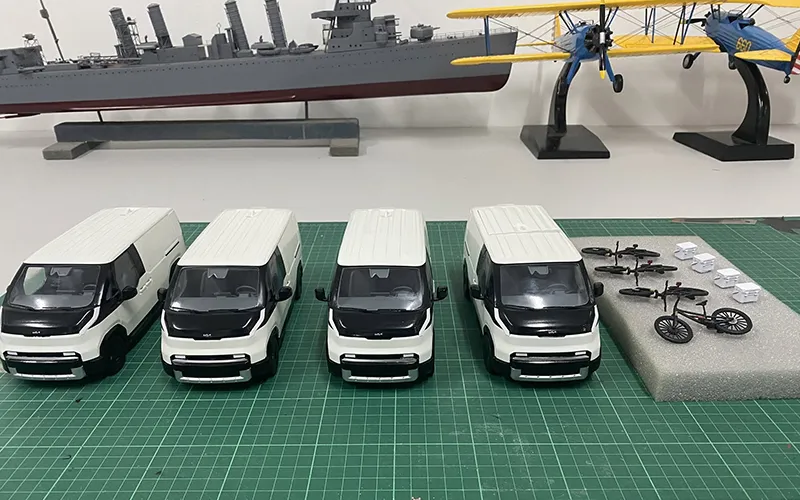
Interior design advice tends to focus on the same elements: furniture arrangement, colour palettes, lighting, textiles. These are legitimate concerns, but they share a limitation — they produce spaces that look considered without necessarily looking personal. The rooms that genuinely stop people in their tracks and prompt the question “where did that come from?” are rarely the product of careful adherence to a style guide. They are the product of someone deciding that what they love most should be visible in the space they inhabit.
Car enthusiasts, aviation fans, and maritime collectors have been quietly building some of the most visually striking and personally resonant rooms in their homes — not through conventional decorating wisdom but through the decision to display what actually matters to them rather than what a catalogue says should matter.
The Car Enthusiast’s Room — From Garage Fantasy to Living Space Reality
The most common version of the car enthusiast’s dilemma is this: the car they care most about — the model they grew up wanting, the vehicle they owned during the years that defined them, the classic they had to sell but never stopped thinking about — cannot live in the living room. It requires a garage, maintenance, insurance, and space that most homes don’t have to spare.
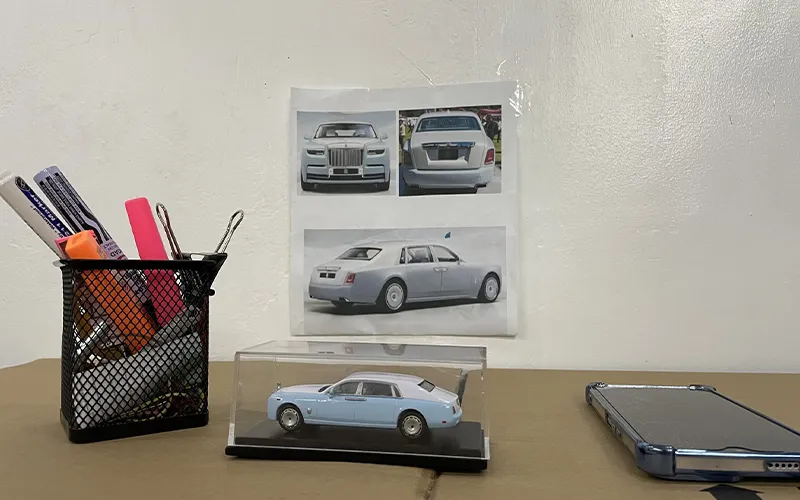
model cars
What an increasing number of enthusiasts are doing instead is commissioning a handcrafted scale replica of the specific car — built from their own photographs, in the correct colour, to the exact specification of the actual vehicle. Correctly built model cars at this level are not toys or desk ornaments. They are accurate three-dimensional documents of a specific vehicle, built with the kind of material quality and surface finish that holds up as a display piece in a well-designed room. A 1:18 scale replica of the specific Camaro someone drove for fifteen years sits on a shelf or in a display cabinet and becomes the most interesting object in any room it occupies.
The room that forms around a piece like this tends to develop its own character. Dark wood shelving. Directed lighting that shows the model’s finish properly. Perhaps a framed photograph of the actual car alongside. The object anchors the space in a way that generic art or generic furniture never quite achieves, because it is genuinely specific to the person who lives there.
Shelving, Lighting, and the Display Principles That Actually Work
The mistakes most collectors make when displaying significant pieces are predictable: insufficient lighting, shelving that is too shallow for the piece, a background that competes with the object rather than framing it.
Lighting is the most consistently underestimated factor. A well-built scale model under poor lighting looks flat and unimpressive. The same model under correctly directed LED lighting — warm white, in the 2700K–3000K range, aimed to catch the surface finish rather than wash it out — looks genuinely striking. A small LED strip along the front edge of a shelf or a pair of adjustable spotlights angled toward the piece makes a difference that no amount of shelving improvement can replicate.
Background matters more than most people expect. A pale wall behind a dark-coloured model makes both look washed out. A slightly darker backing — charcoal, deep navy, or a warm walnut wood tone — makes the model’s colours read correctly and gives the display visual depth. This is the single easiest change that produces the largest improvement in how a collection looks.
Aviation Collectors and the Art of the Suspended Display

model cars
Aviation collectors face a different display challenge from car enthusiasts: the best way to display an aircraft is in flight, not on a shelf. A correctly built set of airplane models mounted on adjustable stands or suspended from a ceiling mounting point reads as immediately more impressive than the same models sitting flat on a horizontal surface. The stand angle matters — a slight nose-up attitude with the wings level gives the impression of climbing under power, while a banking angle reads as turning. Both are more visually dynamic than flat horizontal placement.
The room that works best for an aviation display tends to have good ceiling height and clean wall space. Aviation models at serious scales — 1:48, 1:32, or larger — benefit from space around them rather than being crowded onto a shelf. A single large-scale model as a room centrepiece makes more impact than a dozen smaller pieces competing for visual attention on a crowded shelf.
The Broader Principle: Display What You Actually Care About
The rooms that design professionals describe as genuinely personal — spaces that communicate something specific about the people who inhabit them rather than the general taste of their era — share a quality that has nothing to do with style guides. They contain objects that the people who live there actually care about, displayed with enough care that the objects can be properly appreciated.
The car that defined someone’s twenties. The aircraft type that built a career. The vessel that carried a family through decades of coastal life. These are not generic display subjects — they are biographical ones, and the rooms built around them have a character that no purely aesthetic approach to interior design produces.
The most impressive rooms are rarely the most expensive ones. They are the ones where it is immediately clear that the person who lives there has thought carefully about what matters to them — and has found a way to make that visible.
Frequently Asked Questions
1. How can car enthusiasts decorate a room?
Car enthusiasts can decorate a room with scale model cars, framed photographs, automotive artwork, themed shelving, and focused display lighting. These elements can reflect personal memories and make the room feel more unique.
2. Are model cars suitable for home decor?
Yes, model cars can work very well as home decor. High-quality replicas can become attractive display pieces when placed on suitable shelves, cabinets, or dedicated stands.
3. What is the best lighting for displaying model cars?
Warm white LED lighting around 2700K to 3000K works well for displaying model cars. Adjustable spotlights or LED strips can highlight the model’s details without overwhelming the display.
4. How should collectors display airplane models?
Airplane models can be displayed on stands, shelves, or suspended from ceiling mounting points. Slightly angled or banking positions can create a more dynamic appearance.
5. What background works best for a collector display?
A darker background such as charcoal, deep navy, or walnut can help colourful or detailed models stand out. The background should complement the collection rather than compete with it.
6. How many collectible models should be displayed in one room?
There is no fixed number, but avoiding overcrowding usually creates a stronger visual effect. One or a few larger pieces can often make more impact than many small objects packed together.
7. Can a collection become part of an interior design?
Absolutely. Collectibles can serve as focal points around which shelving, lighting, furniture, and wall decor are arranged. This can make the room feel personal while still looking thoughtfully designed.
8. Why are personal collections important in home decor?
— — —
Handcrafted scale replicas of cars, aircraft, and maritime vessels are available from Modelworks Direct — each piece built from reference photographs to a specific brief.