


A pimple lasts a few days, but the mark it leaves can hang around for months. You look in the mirror, the breakout is long gone, and there it is, a stubborn red or brown patch that refuses to leave.
This guide shows you how to fade acne marks and dark spots at home in a safe, simple order. You will learn what type of mark you have, which ingredients truly work, which home remedies are worth trying, and what to skip so you do not make things worse.
Follow the steps in order, because each one builds on the last, and the whole plan works best when you stay consistent.
Why Pimples Leave Marks Behind
When a pimple forms, your skin sends inflammation to the area to fight bacteria and clogged oil. After the pimple heals, that inflammation can leave the skin overactive. In many people, the pigment cells keep making extra melanin, and the result is a flat patch that looks darker than the skin around it.
The longer the inflammation lasts, as with deep or painful pimples, the stronger the mark it leaves behind. Deeper skin tones also produce melanin more easily, so they show up more often. The good news is that these marks are surface-level, which means they can be faded with the right habits and some patience.
Spotting Red, Brown and Scarred Skin
Before you pick products, check what you are dealing with, because red marks, brown marks, and scars respond to different treatments. Acne marks on the face usually fall into three groups. Look at your face in natural light and gently run a fingertip over the spot.
Red or Pink Marks
Red or pink marks are called post-inflammatory erythema. They happen when the tiny blood vessels near a healed pimple stay widened and irritated. These marks feel completely flat, and on lighter skin they tend to look pink or purple. If you press one gently, it usually turns pale for a moment. They often fade sooner than brown marks, but they can still last for a few months without help.
Brown or Dark Patches
Brown, tan, or dark patches are called post-inflammatory hyperpigmentation. Here the extra melanin sits in the skin, so pressing the spot does not change its color. Because the pigment sits in the skin, these marks are more stubborn and can take many months to fade. It is also common to have red and brown marks side by side.
Pitted or Raised Scars
Scars are different because they change the texture of your skin. Pitted scars look like small dents, while raised scars feel thick or firm. These are caused by damage to collagen, so serums alone rarely fix them. If your spot is flat and smooth, you are dealing with a mark, and the rest of this guide is aimed at exactly that.
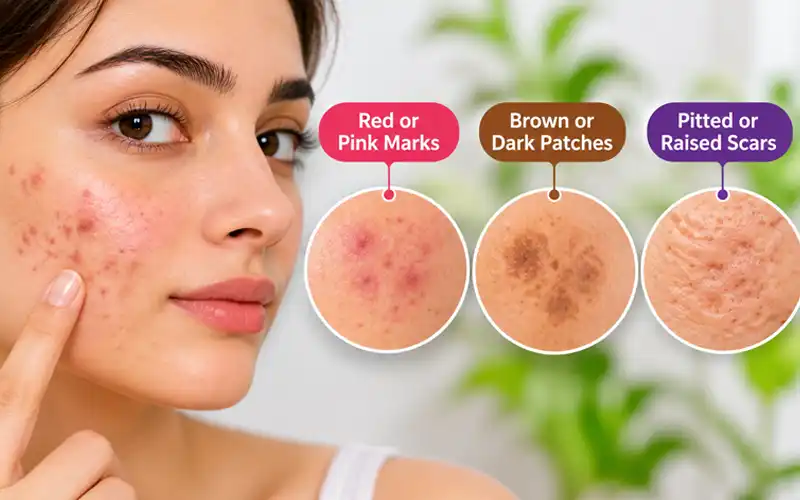
Learn to identify red acne marks, brown pigmentation, and pitted scars by understanding their appearance and skin texture.
Timelines You Can Actually Expect
Fading acne marks is a slow process, and anyone promising a fast fix is overselling. Red marks usually soften within a few weeks to about three months. Brown marks often need three to six months of steady care, and on deeper skin tones they can take a year or longer. Using the right treatments cuts this time noticeably.
The fastest results come from consistency, not from using everything at once. Most people notice a visible change after four to eight weeks of a steady routine, with improvement continuing after that. Taking a front-facing photo in the same light every two weeks helps you see progress that daily mirror checks can hide. Marks that keep getting irritated fade slowest, so calm your skin before expecting progress.
Getting Skin Ready First
Think of this as step one. Marks fade best on calm, healthy skin, so control active breakouts first and keep your skin barrier strong before adding any treatment.
Cleansing Without Stripping
Wash your face twice a day with a mild, fragrance-free cleanser and lukewarm water. Use only your fingertips, for about 30 seconds, then pat dry with a clean towel. Harsh foaming washes and rough cloths strip the skin, trigger more inflammation, and can darken existing marks. If your skin feels tight after washing, the cleanser is too strong.
Moisturizer and Patch Testing
A light, non-comedogenic moisturizer keeps the barrier intact, which lets stronger ingredients work without stinging or peeling. Gel creams suit oily skin, while richer lotions suit dry skin. Before using any new product or home remedy, dab a small amount on your inner forearm or behind your ear for two days. Redness, itching, or burning means it is not right for you.
Sunscreen, Your Daily Shield
Step two is the most important one. Ultraviolet light and even visible light stimulate pigment cells, so unprotected marks keep darkening and treatments lose their power. Without sunscreen, every other product in this guide works far less effectively.
Choose a broad-spectrum sunscreen with SPF 30 or higher, and apply about a teaspoon for the whole face. If you have medium to deep skin, a tinted formula with iron oxides gives extra defense against visible light. Look for labels that say non-comedogenic.
Reapply every two hours when you are outdoors, and again after sweating. Clouds and window light still let some UV through, so skip no days, even when you stay indoors. If a formula feels greasy or leaves a white cast, try two or three textures until you find one you enjoy, because the best sunscreen is the one you will actually wear.
Active Ingredients That Really Work
Step three is where the real fading happens. Start with one or two ingredients, not all six at once, because piling on actives is the fastest way to irritate your skin and create fresh marks.
Vitamin C for Brightness
Vitamin C is an antioxidant that interrupts melanin production and brightens dull skin. Look for a serum with 10 to 15 percent L-ascorbic acid, or a gentler derivative if your skin is sensitive. Apply it in the morning before sunscreen, where it also adds a layer of protection against daily environmental stress. Store it in a dark, cool place, because it breaks down in light and heat.
If you feel stinging, begin with a lower strength or apply it every second morning. Most people notice a brighter glow within four to six weeks.
Niacinamide for Even Tone
Niacinamide, a form of vitamin B3, reduces the transfer of pigment to skin cells and calms redness at the same time. It also helps regulate oil, which makes it useful if you still break out. A concentration of 4 to 5 percent works well for most people, and it pairs easily with the other ingredients here.
Because it is so well tolerated, it makes an excellent first ingredient for beginners. Visible improvement in tone usually appears after about eight weeks of daily use.
Azelaic Acid for Gentle Fading
Azelaic acid is a favorite for people with both pimples and marks, since it fights acne bacteria and slows pigment production. Over-the-counter versions come in 10 percent strength, and a doctor can prescribe 15 to 20 percent. It is generally gentle on sensitive skin, though a mild tingle during the first weeks is normal.
Apply a thin layer in the evening a few times a week, building up to daily use as your skin copes. Expect gradual change over two to three months rather than quick results.
Retinol and Adapalene Basics
Retinoids speed up skin cell turnover, which pushes pigmented cells to the surface and sheds them. Adapalene 0.1 percent gel is available without a prescription, while retinol is found in many serums. Use a pea-sized amount for the whole face and build up slowly, since going too fast causes irritation that can create new dark marks.
Expect mild dryness in the first few weeks, and give the product about twelve weeks before judging whether it is working.
Exfoliating Acids Done Safely
Glycolic, lactic, and mandelic acids loosen dull surface cells, and salicylic acid clears pores. Mandelic acid has larger molecules, so it is often kinder to deeper skin tones. Use a low-strength product once a week at first, never on the same night as a retinoid, and stop if your skin stings or looks shiny and tight.
Glycolic acid suits oily, resilient skin best, while lactic acid is better for dry or sensitive skin.
Alpha Arbutin and Tranexamic Acid
These two are targeted brighteners for stubborn brown marks. Alpha arbutin, usually at 2 percent, gently blocks the enzyme that makes melanin. Tranexamic acid, often at 2 to 5 percent, calms the signals that trigger pigment. Both are well tolerated, which makes them a smart addition once your base routine feels comfortable.
Apply them after cleansing and before moisturizer, and expect results over eight to twelve weeks.

Discover the skincare ingredients that really work to fade dark spots and achieve a brighter, more even skin tone.
Natural Remedies for Home Use
Many people want to fade acne marks and dark spots naturally, and a few home remedies can help calm skin. Be honest with yourself about the limits, though. Natural remedies mostly soothe inflammation and support healing, and the research behind their fading power is limited, so treat them as helpers rather than miracle cures.
Use any one of these two or three times a week rather than all together, and stop at the first sign of irritation.
Aloe Vera Gel
Pure aloe vera gel is cooling and hydrating, and it contains compounds that may slow pigment production. Apply a thin layer of fresh or pure gel on clean skin for 20 minutes, then rinse. Choose a product without added fragrance or alcohol, since those can irritate.
Green Tea Compress
Green tea is rich in antioxidants that calm redness and inflammation. Steep a bag in hot water, let it cool completely, and press it onto the marked area for ten minutes once a day. It is especially pleasant for red marks that still look irritated.
Honey and Turmeric Mask
Raw honey is a mild antibacterial, and turmeric contains curcumin, which has anti-inflammatory properties. Mix half a teaspoon of honey with a pinch of turmeric, apply for ten minutes, and rinse well with lukewarm water. Turmeric can leave a yellow tint, so use a small amount and avoid it right before an event.
Oatmeal Calming Mask
Finely ground oatmeal soothes itchy, sensitive skin and supports the barrier. Mix two tablespoons with enough water or plain yogurt to make a paste, leave it on for 10 to 15 minutes, and rinse. It will not bleach a mark, but it keeps skin calm while your main treatments do the work.
Overnight Boosts and Two Day Goals
Many searches ask how to fade acne marks and dark spots overnight, and it is only fair to say that pigment cannot disappear in one night. What a smart night routine can do is calm redness, reduce puffiness, and keep skin hydrated so marks look softer by morning.
If you want to remove spots from your face in two days naturally at home, aim for a smaller goal: less redness and fresher-looking skin. Cleanse gently, apply a thin layer of niacinamide or azelaic acid, then seal with moisturizer. A cold, clean compress held for five minutes can ease swelling around a fresh breakout.
For a pimple that has not healed, a hydrocolloid patch worn overnight absorbs fluid and shields the spot from touch. Drinking enough water and getting a full night of sleep also gives your skin the best chance to repair itself while you rest.
Scars in a Week, Fact or Fiction
If you are searching for how to remove acne scars naturally in a week, the honest answer is fiction. True scars involve changes in collagen, so no cream, mask, or oil can erase them in seven days. What you can do in a week is make flat marks look calmer and smoother with gentle care and steady hydration.
Over a longer stretch, a retinoid can improve mild texture, and silicone gel or sheets can soften raised scars with daily use for a few months. Deep pitted scars usually need professional treatment, which is covered later in this guide.
Myths That Make Marks Worse
Lemon juice tops the list of bad ideas. It is highly acidic and makes skin more sensitive to sunlight, so it can burn the skin and darken the very marks you are trying to treat. Formulated vitamin C serums are a safer way to get the same brightening benefit.
Toothpaste and baking soda are just as risky. Toothpaste contains ingredients meant for teeth, and baking soda has a pH far too high for skin, so both disrupt the barrier and cause irritation. Irritated skin responds by making even more pigment.
Aggressive scrubbing is the last big myth. Sugar scrubs and rough brushes do not buff marks away, they create tiny tears and more inflammation. A gentle chemical exfoliant used in moderation does the job far more safely.
Daily Routine You Can Follow
Step four is putting everything together. This simple plan uses the ingredients above without overloading your skin, so adjust the products to what you already own.
Morning Lineup
Cleanse with a mild face wash, then apply vitamin C serum or niacinamide on slightly damp skin. Follow with a light moisturizer and finish with sunscreen as the final layer. Four steps are plenty, and they take under five minutes.
Evening Lineup
Cleanse again, making sure all sunscreen is removed. Use a retinoid on two or three nights a week, applied to dry skin, and use azelaic acid on other nights. Finish every evening with a light moisturizer, and skip actives completely if your skin feels raw.
Weekly Extras
Once a week, swap the evening treatment for a gentle exfoliating acid. Another evening, use one of the soothing masks from the natural remedies section. Alpha arbutin or tranexamic acid can be added to the morning routine once your skin is comfortable.
Professional Help for Stubborn Marks
Home care has limits, and a dermatologist can speed things up safely when marks refuse to budge.
Peels, Lasers and Microneedling
Chemical peels use controlled acids to lift pigmented surface cells, and light-based or laser treatments target melanin directly. Microneedling stimulates collagen, so it helps both dark marks and mild pitted scars. Results build over a series of sessions, usually spaced several weeks apart. Choose a clinic that regularly treats your skin tone, because aggressive treatments on deeper skin can cause lasting dark or light patches.
Ask about downtime and total cost before you commit, and avoid tanning in the weeks beforehand.
Signs You Should See a Doctor
Book an appointment if marks are not improving after several months, if they are deep or widespread, or if they keep returning with new breakouts. A doctor can also prescribe stronger options such as prescription retinoids or short-term hydroquinone, along with treating the acne itself. Seek help sooner if you have painful cystic acne, since deep breakouts are the ones most likely to scar.
Preventing New Marks for Good
The best fade is the mark that never forms. Keep your hands off pimples, even when it feels tempting, because squeezing pushes bacteria and oil deeper and prolongs inflammation.
Treat breakouts early with a gentle benzoyl peroxide or salicylic acid product, since mild acne leaves far fewer marks than severe acne. A 2.5 percent strength is a good place to begin. Consistent treatment matters more than strong treatment.
Watch the things that touch your face. Change pillowcases every few days, wipe your phone screen, and wash caps and headbands regularly. If breakouts appear mainly along the forehead and hairline, oily hair products may be clogging pores, so switch to lighter, water-based ones.
Frequently asked questions
Here are quick answers to the questions readers ask most.
Is Vitamin C Safe With Niacinamide?
Yes. The old claim that they cancel each other out is outdated, and modern formulas work well together. Apply vitamin C first, wait a minute or two, then apply niacinamide, and drop one of them if your skin feels irritated.
Does Diet Affect Dark Spots?
No food can fade a mark directly, but diet can influence breakouts for some people. High-sugar foods and, in some studies, dairy have been linked to more acne, so fewer breakouts means fewer new marks. Eating plenty of fruit, vegetables, and water supports overall skin health without promising miracles.
Will Makeup Make Marks Worse?
Not if you choose carefully. Pick non-comedogenic or mineral formulas, and always remove makeup before bed so pores do not clog. A green corrector neutralizes red marks, while a peach or orange corrector under concealer hides brown marks, giving you coverage while your treatments work.
Are Dark Spots Always From Acne?
No. Sun damage, melasma, friction, eczema, and insect bites can all leave dark spots. Melasma often appears as symmetrical patches on the cheeks or upper lip and needs a different approach. See a doctor quickly if a spot changes shape, bleeds, or grows, since that needs professional checking.
Can Pregnant Women Use These Products?
Some, but not all. Retinol and retinoids, along with hydroquinone, are generally avoided during pregnancy and breastfeeding. Sunscreen, vitamin C, niacinamide, and azelaic acid are commonly considered safe, but always confirm your routine with a doctor first.
Could Hormones Keep Causing New Marks?
Hormonal acne often shows up along the jawline and chin and tends to return around the same time each month. Because the breakouts keep coming back, new marks keep forming. If you suspect hormones, a doctor can suggest treatments that calm the cycle, which protects your skin while you fade older marks.
Should Shaving Be Avoided Over Marks?
You do not need to stop, but shave carefully. Use a clean, sharp razor or an electric trimmer, shave in the direction of hair growth, and skip areas with active pimples. Razor burn and nicks cause fresh inflammation, which can darken marks that were starting to fade.
Final Thoughts
Fading acne marks and dark spots comes down to a few steady habits: protect your skin from the sun, choose one or two proven ingredients, treat your skin gently, and keep new breakouts under control. Natural remedies can soothe, while stronger treatments handle stubborn patches.
Be patient with yourself. Most marks fade, and the skin you have today is already doing its best to heal. Start tonight with a gentle cleanse, and let sunscreen be your first move tomorrow morning.
Also Read : Daily Skincare Routine Steps for a Fresh, Healthy and Glowing Complexion