

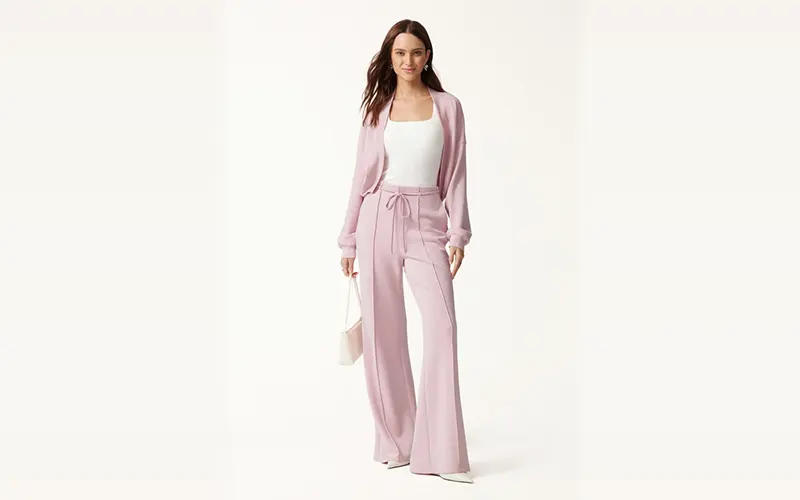
How to Layer Cardigans and Knitwear Without Adding Bulk This Autumn?
Autumn layering can begin with good intentions and end with crowded waistbands, twisted sleeves, and a cardigan that suddenly feels too small. The problem is rarely the number of layers alone. More often, it is the relationship between their weight, fit, neckline, and length.
Successful combinations create warmth without asking every garment to do the same job. Start close to the body, add texture selectively, and make sure each visible edge contributes to the silhouette.
Table of Contents
ToggleBegin With a Close-Fitting Foundation
A streamlined base gives heavier knitwear a stable surface. Loose tees and oversized shirts may feel comfortable alone, but beneath a substantial cardigan they can gather at the elbows, shoulders, and waist. Fine fabrics and fitted cuts allow the outer knit to keep its intended shape.
Close-fitting should not mean compressive. The base should follow the torso without pulling, and its sleeves should slide easily beneath the cardigan. Its hem should either tuck securely or finish away from the cardigan’s narrowest point.
Under chunkier cardigans, a close-fitting base helps prevent excess fabric from gathering around the waist and sleeves. An OGL bra top can provide a lighter foundation beneath buttoned knitwear, while a fitted tee or fine turtleneck offers more coverage in colder conditions. The right base depends on the temperature, the setting, and how much of it will remain visible.
What to Wear Under a Cardigan
The right base depends on temperature, coverage, and how much of it will remain visible.
- A bra top creates the lightest foundation for mild weather or heated interiors. It works best when the cardigan can remain comfortably buttoned and the neckline suits the setting.
- A camisole offers more torso coverage without sleeve bulk. Choose a clean neckline and straps that look considered if the cardigan will be worn open.
- A fitted tee adds easy coverage without the density of another knit. Its shoulder seam should sit neatly beneath the cardigan rather than competing with it.
- A fine turtleneck provides greater warmth and a deliberate neckline. Keep the fabric light, since a heavy roll neck beneath a chunky cardigan concentrates too much volume around the upper body.
- A button-down shirt introduces crisp contrast but is most likely to bunch. Choose a fluid fabric with narrow cuffs, or allow the collar and hem to remain intentionally visible.
Keep the Neckline Clear
Layered necklines should look connected rather than accidental. A crew-neck cardigan sits cleanly over a similar tee or a high neck, while a V-neck cardigan can frame a camisole, bra top, or shirt collar.
Avoid placing too many lines around the face. A ruffled collar, scarf, necklace, and textured cardigan can feel crowded. If the knit has an expressive collar or decorative buttons, keep the base quieter.
Prevent Bunching at the Shoulders and Waist
A cardigan with narrow armholes needs a fitted sleeve beneath it; a relaxed, dropped shoulder leaves more room for a shirt. If the knit rides upward when you raise your arms, the layers are competing for space.
At the waist, decide which hem should be visible. Tuck the base into high-rise trousers or a skirt beneath a cropped cardigan. With a longer cardigan, an untucked fitted layer can create continuity if it does not extend awkwardly below the knit.
Avoid stacking several hems, a waistband, and cardigan ribbing at one point. Moving one edge higher or lower can make the outfit feel lighter.
Balance Cropped and Long Cardigans
A cropped cardigan naturally complements high-rise trousers and skirts because the shapes meet around the waist. Worn buttoned, it can act as a knit top; worn open, it frames the base. Keep the foundation tucked or similarly short to preserve that proportion.
Long cardigans create a vertical line over straight trousers, narrow skirts, and simple dresses. Because their length already carries visual weight, the clothing underneath should remain streamlined. If a shirt extends below the cardigan, the difference in length should look clear and intentional.
Mid-length cardigans may finish at the widest part of the hip. A visible high waist or uninterrupted trouser line restores definition and prevents the silhouette from feeling heavy.
Pair Knitwear With the Right Bottoms
High-rise trousers provide a clean endpoint for fitted layers and cropped knits. Wide-leg cuts balance a close upper body, while straight trousers create a leaner column beneath a chunky cardigan.
With skirts, relate the cardigan hem to the skirt’s volume. Cropped knits work particularly well with A-line and full skirts because they preserve the waist. Longer cardigans tend to sit more cleanly over straight or softly fluid shapes.
Over a dress, the cardigan should complement rather than erase its structure. A short style preserves the waist of a fit-and-flare dress, while a long open cardigan follows the line of a column or slip dress.
Dress for Changing Temperatures
Autumn outfits must work outdoors and in heated rooms. Instead of piling on several medium-weight pieces, choose a light base, one cardigan, and weather-appropriate outerwear. The coat can come off first; the cardigan can then be opened or removed without leaving an unfinished outfit.
For this reason, the base should be presentable on its own. Each garment should have a distinct role: the base manages coverage, the cardigan supplies texture and adjustable warmth, and the coat handles the weather. When necklines align, hems remain separated, and volume is concentrated in one place, autumn layering feels composed rather than cumbersome.
FAQs
How do you layer a cardigan without looking bulky?
Wear a close-fitting base layer and choose one main knit layer to keep the outfit streamlined.
What should you wear under a cardigan?
You can wear a fitted tee, camisole, bra top, fine turtleneck, or lightweight button-down shirt.
Can you wear a turtleneck under a chunky cardigan?
Yes. Choose a lightweight turtleneck to avoid adding too much volume around the neck and shoulders.
What cardigan length is best for autumn layering?
Cropped cardigans work well with high-rise bottoms, while long cardigans create a clean vertical line with simple outfits.
How can you prevent cardigan layers from bunching?
Choose fitted sleeves underneath, avoid stacking multiple thick layers, and keep hems at different lengths.
What bottoms work best with chunky knitwear?
Straight or wide-leg trousers, high-rise pants, and simple skirts can balance the volume of chunky knitwear.
Can you layer a cardigan over a dress?
Yes. A short cardigan can define the waist, while a long open cardigan works well with column or slip dresses.
How should you dress for changing autumn temperatures?
Use a lightweight base, one cardigan, and weather-appropriate outerwear so you can easily add or remove layers.
Tags



