

A Hawaiian shirt can make you look relaxed and confident. It can also make you look like someone who just got off a cruise ship. The shirt is usually not the problem. Small choices make the difference: a loud print, a shirt that is too big, busy shorts, and some careless habits.
This guide shows you, step by step, how to choose a real aloha shirt, how to wear it, and how to spot a fake. You can jump to any section you need. After reading it, your shirt will look like your own choice, not a borrowed one.
Why Tourists Get It Wrong
Souvenir Shop Trap
Most tourist shirts come from gift shops on the beach. They are thin, made of polyester, and have cartoon parrots or huge palm trees. They are cheap and cut very wide to fit everyone, so they look good on nobody. A simple test: if the shirt would look normal on a postcard stand, it will make you look like part of the display.
Giveaways at First Glance
Often the problem is how you present yourself, not the shirt. Creases from a suitcase, shorts in the same print, a fanny pack on your chest and a camera hanging in front all say “first day of holiday.” Locals wear the shirt as the one loud item and keep everything else quiet. This gives the eye one place to look.
Aloha Shirt Basics
Origin in Brief
The aloha shirt started in Hawaii in the 1930s. Island tailors cut colorful fabric into short-sleeved shirts with buttons down the front. Visitors took them home as souvenirs, locals wore them on hot days, and the style spread across the world. This origin matters because real makers design their prints around island plants and patterns, not random beach pictures.
Camp Collar Anatomy
Look at the collar first. A real aloha shirt has a flat, open “camp” collar. It has no stand, so it lies softly against your neck. The bottom edge (hem) is straight, because you wear the shirt outside your trousers. Buttons go from top to bottom, and there is often one chest pocket. A normal printed shirt usually has a stiffer collar and a curved hem.
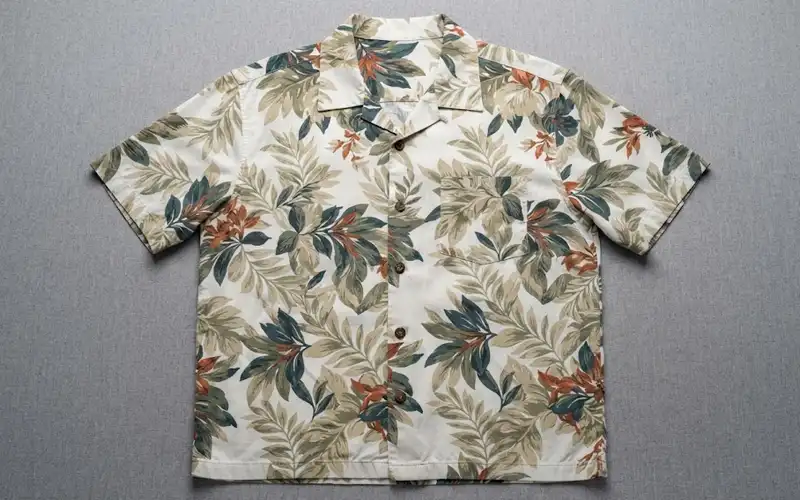
A flat camp collar and a straight hem are the first signs of a real aloha shirt.
Picking Your Shirt
Prints That Look Intentional
Choose prints with a clear pattern: tropical leaves in few colors, geometric shapes, or retro flowers with space between them. Medium-size prints are the safest. Avoid prints with words, cartoon animals or full beach scenes. They make the shirt look like a costume.
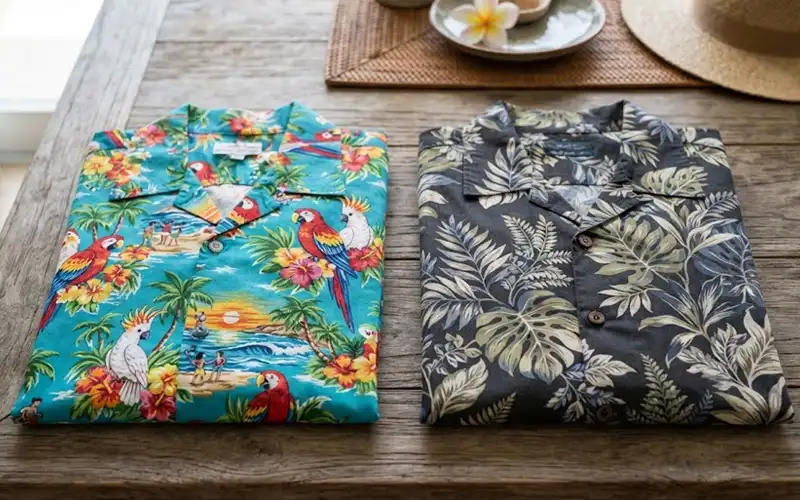
Medium-scale prints with space between the motifs look chosen, not borrowed.
Complexion-Friendly Colors
Choose colors that suit your skin. Darker skin looks great in coral, mustard and emerald. Fair skin looks better in ink blue, sage green and soft teal. If you are not sure, pick a main color you already own, like olive or charcoal. Then the shirt works with your current trousers and shoes.
Fabrics That Hang Right
Rayon hangs best and feels cool, which is why most vintage shirts use it. Cotton is crisper and easy to care for. Linen is the most breathable. Silk looks rich but needs gentle care. For a first shirt, choose rayon or a cotton blend. A matte finish usually looks better than a shiny one. Avoid thick fabric because it is hot and does not hang loosely.
Sizing That Flatters
The shoulder seam should sit at the edge of your shoulder. You should have about a hand’s width of space across the chest. The fit should be loose, but not like a tent. If you can pinch a big fold of cloth at your waist, go down a size. If the buttons pull when you lift your arms, go up a size.
Tourist move: Grabbing the loudest print on the rack.
Local move: Choosing a print you will still like in five years.
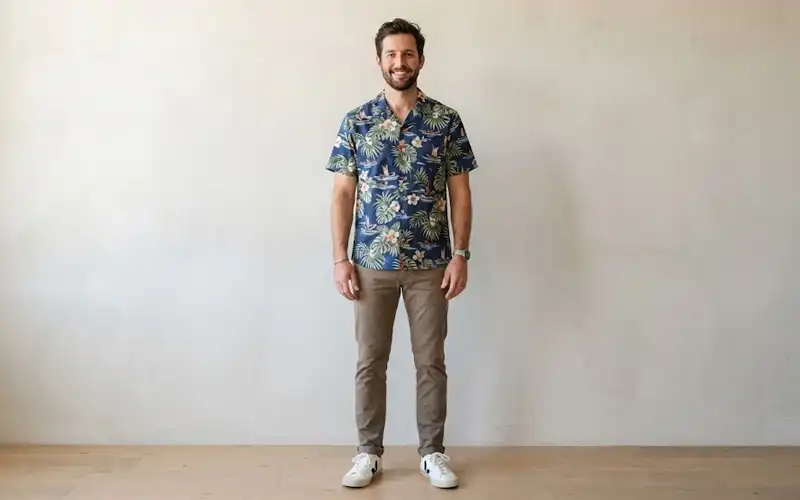
Loose is the goal, but a tent is not: check the shoulder seam, chest ease and hem.
Casual Outfit Formulas
Errand Run Look
For everyday errands, wear a quiet-print shirt, stone chinos and white leather sneakers. This works for coffee, shopping and a quick lunch. The calm colors stop the shirt from looking like a holiday that followed you home.
Barbecue Ready
Wear a charcoal print, khaki shorts and canvas slip-on shoes, plus sunglasses. This handles heat, smoke and small spills, because a dark shirt hides stains better than a light one. Shorts with side pockets help, because your phone and keys stay out of the shirt.
Beach to Bar Switch
In the day, wear a light rayon shirt with sand-colored shorts and sandals. At night, change only the bottom half: dark chinos and closed shoes. The same shirt now works for dinner. One shirt and two bottoms is also the easiest way to pack light.
Tourist move: A busy shirt with busy shorts.
Local move: One statement piece, everything else plain.
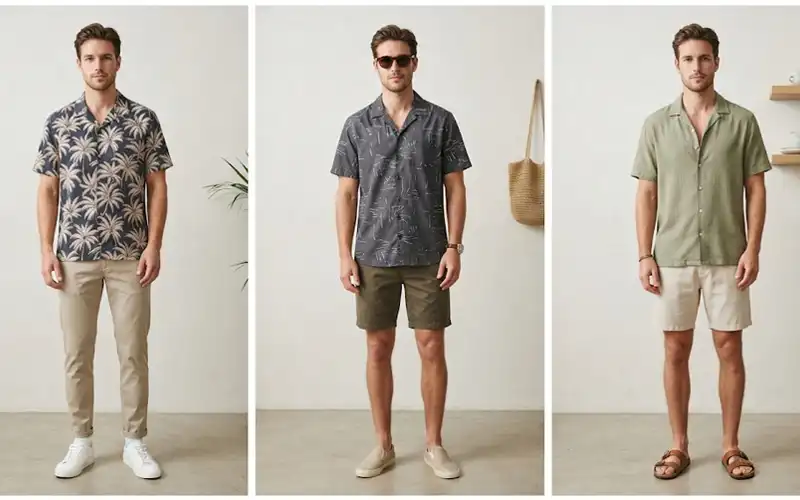
Errand run, barbecue, beach: one statement shirt, everything else quiet.
Jeans Without the Clash
Washes That Work
The jeans color (wash) matters. Dark blue is good for evenings and bold prints. Mid blue works almost always. Light blue goes well with quiet or pastel prints, but not with a very pale shirt, because that looks like too much holiday. Black jeans go well with dark prints that have white or red details.
Cuts Worth Choosing
Slim-straight jeans are the best choice because they balance the loose shirt. Tapered jeans look modern, and relaxed jeans are fine for weekends. Skinny jeans make the shirt look bigger. Very wide jeans make your whole body look shapeless.
Ripped Denim Rules
A small rip at the knee is fine with a calm print. Heavy rips plus a busy shirt means two loud things fighting each other. Keep rips small if the shirt is loud. Choose clean jeans for anything more than a casual weekend. Folding the bottom of the jeans once or twice shows your ankle and makes the look lighter.
Tourist move: Faded, baggy jeans with a bright shirt.
Local move: Dark, clean jeans that give the print space.
Shorts and Chinos Done Right
Length Rules for Shorts
Shorts should end just above the knee. A length of about seven inches (inseam) suits most men. Do not wear board shorts away from the water, or anything that looks like gym wear. Tailored cotton shorts with a flat front and a proper waistband make the shirt look planned.
Chino Colors to Trust
Four colors do most of the work: beige, stone, navy and olive. Navy goes well with orange or red prints. Beige goes well with blue and green. Olive goes well with brown and gold. A useful trick: pick the chino color from the lightest or darkest color in the print. White chinos also work, but mainly with dark prints, because a pale shirt with white trousers looks washed out.

Pick the chino color from the lightest or darkest tone in the print.
Linen Trousers Option
On hot evenings, light linen trousers in sand or off-white keep you cooler than jeans and look smarter than shorts. A few wrinkles are normal, so don’t press them flat. For dinner, choose trousers with belt loops, because drawstring waists look like home clothes.
Tourist move: Cargo shorts with full pockets.
Local move: Smooth, tailored shorts or chinos.
Details That Matter
Buttons Done Smartly
Button everything except the top button. You can open a second button only on warm days off. Lower than that, the collar falls open, your chest shows, and the shirt looks like swimwear. Sit down and check: the collar should still lie flat. This is the fastest test that the shirt and your buttoning work well together.
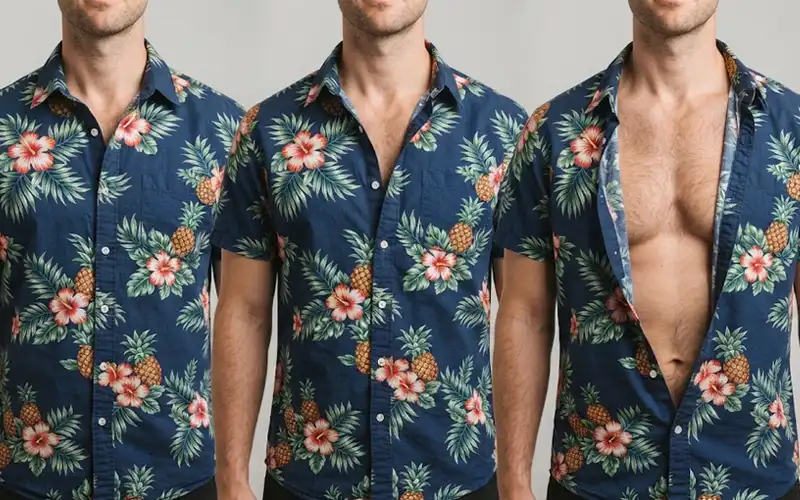
One button open, two at most. Any lower and the shirt looks like swimwear.
Tuck or Untuck
Wear the shirt untucked with jeans and shorts, because the straight hem is made for this. Tuck it only with chinos or trousers in the evening, and only if the hem is long enough to stay in when you sit or reach. A short, boxy shirt should never be tucked because it bunches at the belt.
Arm and Hem Length
Sleeves should end around the middle of your upper arm. Longer looks old-fashioned, and shorter feels tight. The hem should end near the middle of your zip. If it reaches your crotch, the shirt is too long. A tailor can shorten a rayon hem cheaply, so this is a quick fix for a shirt that almost fits.
Tourist move: Buttons open to the belly button.
Local move: One button open, two at the most.
Smart Upgrades for Evenings
Date Night Formula
Choose a dark shirt, black or deep green, with small plant patterns. Add slim charcoal chinos, brown suede loafers, a leather belt and a simple watch. Dark colors look smart in restaurant light, and small patterns look thoughtful, not silly. Keep perfume light, because a heavy smell clashes with a dark, rich look.

Dark ground, small motifs and a sharper bottom half turn the shirt into dinner wear.
Office Friday Rules
Only try this if your workplace allows casual Fridays, so check the dress code first. Choose a quiet, small print in dark green or ink blue, with chinos and leather shoes. Avoid pictures and neon colors. People should notice your outfit, not only the shirt. Test it on an easy Friday before wearing it to a client meeting, because every office is different.
Wedding Guest Tweaks
Wear a Hawaiian shirt to a wedding only if the invitation says beach, tropical or relaxed. Choose a crisp cotton or fine rayon shirt in a soft print. Add light trousers in cream or sand, and dressy sandals or suede shoes. If you are not sure, ask the couple, because a wrong guess is hard to hide in photos.
Tourist move: The same beach shirt you wore at noon.
Local move: A darker print and smarter bottoms.
Shoes and Extras
Sneakers, Loafers, Sandals
Clean, low sneakers in white or tan suit most casual looks. Thick, chunky soles look too heavy next to a light shirt. Wear loafers with no-show socks. Leather sandals are good for the beach or a resort. Flip-flops are only for the pool or sand. Always clean your shoes first, because dirty shoes ruin a good shirt faster than any print.
Eyewear and Watches
One pair of classic sunglasses, like wayfarers or aviators, is enough. Add a simple watch with a leather or canvas strap, because metal bracelets get hot in the sun. Skip many bracelets and necklaces, because the shirt already has a lot going on. Frame shape matters too: round frames soften a sharp jaw, and square frames add structure to a softer face.
Headwear Worth Wearing
A straw hat or a plain cotton cap in one color finishes the outfit and protects your face. Choose a brim that fits your body: wide enough to help, but not so wide that it makes your shoulders look small. Avoid caps with slogans and floppy souvenir hats, because they bring the look back to the gift shop.
Tourist move: Sports sandals with socks.
Local move: A clean, simple shoe in one color.
Layers for Cooler Days
Open Over a Tee
Wear the shirt open over a plain white or grey t-shirt for an easy street look. The tee should be a snug crew neck and shorter than the shirt, so no cotton shows below the print. At the beach, use a tank top instead of a tee and keep the shirt open.
Jackets on Top
An unlined denim jacket, an overshirt or a light bomber jacket in olive, tan or black works well. Keep the jacket plain and one shade darker than the shirt’s main color. Let the shirt collar sit outside the jacket collar so the print shows at the neck. Leave the jacket open, because a closed jacket hides the shirt.
Tourist move: A bulky hoodie with the shirt hem hanging out below.
Local move: One light, plain layer.
Girls Wearing Aloha Shirts
Knotted, Cropped, Tucked
The same balance rules apply for girls, with more ways to play. Tie the hem at your waist over a fitted tank top for a relaxed beach look, or tie it higher for a cropped look. Tuck only the front into high-waisted bottoms to show your waist while keeping the rest loose. Choose a shirt with a shorter hem for knotting, because long hems make big, bulky knots.
Bottoms That Pair Well
High-waisted denim shorts, straight jeans, a linen skirt or tailored trousers all work. Choose quiet colors like white, tan or denim so the print stays the star. Finish with simple sandals or white sneakers. The easiest version is a shirt worn open over a swimsuit, which needs nothing else.

Knot it, crop it or tuck the front: the same shirt gives three different shapes.
Body Type Tips
Shorter Frames
Choose small to medium prints. Wear similar colors on top and bottom to make one long line. Very big prints can overwhelm a small frame. Slim, plain trousers in the same color as your shoes make you look taller. Keep trouser hems clean, because bunched fabric at the ankle makes your legs look shorter.
Broader Builds
Dark backgrounds and prints with vertical lines make the upper body look slimmer. Choose designs with space between the shapes so the shirt does not look too busy across a wide chest. Avoid horizontal stripes and crowded borders, because they add width. Light rayon helps, because it hangs close to the body without sticking to it.
Lean and Tall
Larger prints and mid or light colors add visual weight. Border prints, with horizontal bands, help balance a long body. Relaxed trousers add width to the lower half. Very dark, matching outfits make you look even taller, so let the print break up the line. A chest pocket with a matching print adds some structure to a narrow chest.
Spotting a Real One
Pattern-Matched Pockets
On a real aloha shirt, the print continues across the chest pocket, so the pocket almost disappears. Cheap shirts ignore this, and the front buttons often do not line up either. Check both before you buy, and look at the side seams, where good shirts also keep the pattern continuous. Hold the fabric up to the light: even, dense printing with sharp edges means better dye work.
Labels and Coconut Buttons
Look for labels that name a maker in Hawaii and for buttons made of coconut shell or bamboo. These feel warmer and less perfect than plastic. Tight, even stitching and neat seams inside are also good signs. A care label that says rayon or cotton, not only polyester, usually means a better shirt. Fake labels can look real, so use the label as one clue, not as proof.
Price Reality Check
A good shirt usually costs more than a souvenir-stand shirt, but it lasts for years, so the cost per wear is lower. Be careful if the price is very low and the shirt says “made in Hawaii.” If the seller is not clear, ask where it was made. Sale racks from island brands and good second-hand shops are often the best places to find quality at a fair price.
Frequently asked questions
Is It Cultural Appropriation?
Wearing an aloha shirt is widely accepted when you buy real designs, ideally from Hawaii-based makers, and wear them with respect. Avoid prints that make fun of or misuse sacred images. Both locals and visitors have worn aloha shirts for a long time. If you are not sure, buy from the people whose culture the pattern comes from.
Should I Wash By Hand?
Rayon can shrink and lose color in hot water, so wash it by hand or on a gentle, cold cycle with similar colors. Dry it on a wide hanger, away from direct sun, and steam it lightly instead of pressing hard. Cotton can go in the machine on a cool setting. Never wring rayon, because it stretches the fibers. Press the water out between two towels instead.
Are Vintage Shirts Worth It?
Yes, if you want special prints and strong fabric in good condition. Check for stains under the arms, faded color and old rayon that tears when stretched. Measure the shirt yourself instead of trusting the tag, because vintage sizes run smaller. Reproductions from known brands copy old patterns on stronger modern fabric, so they are the safer choice for daily wear.
Does It Suit Older Men?
Absolutely. A quiet print, a clean fit and simple shoes look elegant at any age. Skip novelty graphics, and let good fabric and a good fit do the work. Wear the shirt with tailored trousers and leather shoes for a neat finish, and stay with quiet flowers or geometric patterns.
Final Thoughts
A great Hawaiian shirt outfit comes down to a few things: a well-chosen print, a fit that follows your shoulders, calm bottoms and one or two careful details. Once you know these, styling a Hawaiian shirt is not guesswork anymore. Pick one shirt, try one formula from this guide this weekend, and wear it like you meant it.