
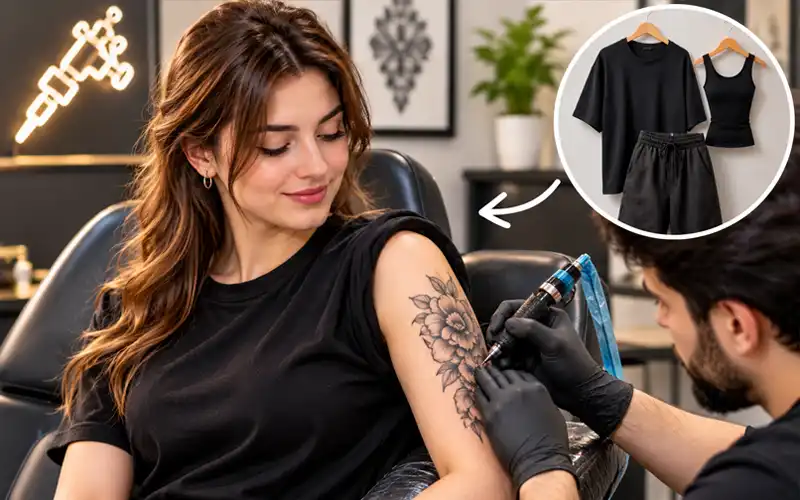
Knowing what to wear to a tattoo appointment can change how the whole day feels. The right outfit gives your artist clear access to the skin, keeps you relaxed through a long sitting, and protects your favourite clothes from stencil ink, pigment and ointment. A little planning before you leave home saves a lot of fuss once the session begins. Whether it is your first piece or your fifth, the goal is simply to make the session easier for you and for the person holding the machine.
This guide starts with the basics, then goes through each body area, looks for women and men, cold-weather dressing, common mistakes, what to pack and what to wear while the tattoo settles. Jump to the parts that match your placement, or read it all the way through if this is your first time in the chair.
Start With the Basics
Loose Fits Win
Choose clothes that sit away from the body. A tattoo session can last anywhere from thirty minutes to a full day, and anything that pinches at the waist, grips the arms or rides up when you lie down will bother you long before the needle does. Soft, stretchy fabric lets you shift position without fuss and gives your artist room to work without constant tugging. Comfort also keeps you still, which helps the lines come out cleaner.
Dark Shades Hide Ink
Stencil ink, pigment, soap and ointment all end up on fabric sooner or later, and dark colours hide those marks far better than light ones. Black, navy, charcoal and deep green are safe bets. Pick pieces you can throw straight into the wash, and treat the day as one where your outfit is allowed to get a little messy. Dark fabric also looks tidier after an hour of wipes and ointment.
Easy Access Pieces
Think about how quickly the skin can be uncovered. Front-opening shirts, zip layers, wide necklines and elastic waistbands move out of the way in seconds, while pullovers and fitted tops need to be wrestled around. If you ever have to hold fabric aside for long, that piece is the wrong choice for your session, however good it looks.
Arm Day Outfit Picks
Forearm and Wrist
If you are wondering what to wear to tattoo appointment arm designs need, start with a short-sleeved tee or a long sleeve that rolls cleanly past the elbow. Check that the cuff stays put once rolled, because a sleeve that slides down mid-session means constant stops. A loose knit or soft cotton works better than a stiff shirt with a snug cuff.
Upper Arm and Sleeve
Bigger arm pieces need more bare skin than a rolled sleeve can give. A tank top, a sleeveless tee or a very loose short-sleeved shirt works well, as long as the opening is wide enough to lift fully over the shoulder line. For a full sleeve, a button-up worn with one arm removed keeps the rest of your body covered and warm.
Shoulder and Collarbone
Shoulder work calls for a neckline that drops without a fight. Halter tops, racerbacks, wide scoop necks and cold-shoulder styles all expose the area, and a loose button-up lets you slip one side down between breaks. Collarbone designs sit close to the neckline, so a V-neck or open collar keeps the skin clear without pulling the whole top aside.
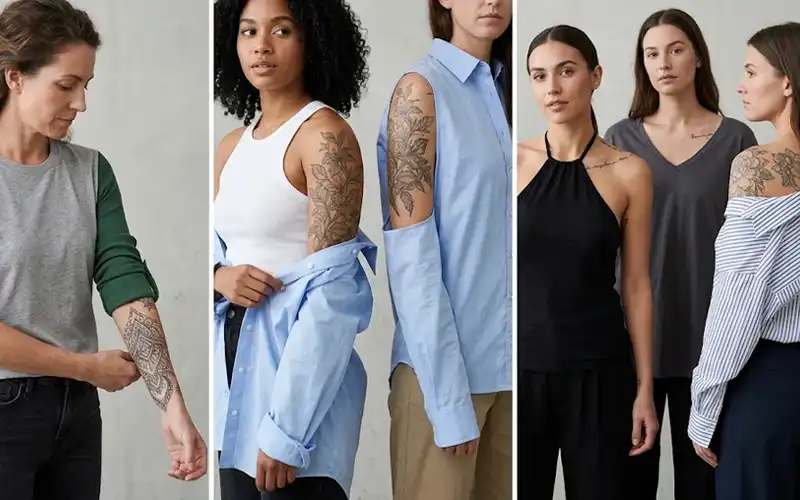
Comfortable clothing options for forearm, upper arm, shoulder and collarbone tattoo sessions.
Back Tattoo Dressing Tips
Reverse Shirt Trick
When you are choosing an outfit for your back tattoo, the backwards shirt is the easiest solution. Put a button-up or zip hoodie on with the opening at the back, so the front stays covered while the artist sees the full skin. Leave the top buttons open for the stencil, and tug the collar forward so it stays out of the way.
Lower Back Pieces
A lower back piece sits right where waistbands live, which is why elastic matters so much. Wear a stretchy skirt or soft pull-on shorts with a low, flat waistband that can be eased down a few centimetres without sliding to the knees. Skip belts and anything with a stiff waistband, since the pressure marks they leave can irritate skin that is about to be worked on.
Full Back Sessions
Large back pieces usually mean several hours lying face down, so plan for warmth and privacy as much as access. A soft robe, a kimono or a loose wrap lets you stay covered while the artist works in sections. Bottoms should be stretchy and easy to shift, because you will be adjusting your position far more often than you expect.
Bra Choices for Women
Here is what to wear for a back tattoo female clients can rely on, starting with the bra. A soft wireless style, a strapless one or no bra at all lets the stencil sit flat on the skin, while a hooked band across the back gets in the way. If you want coverage, a soft camisole you can slide down is simpler than stiff underwire.
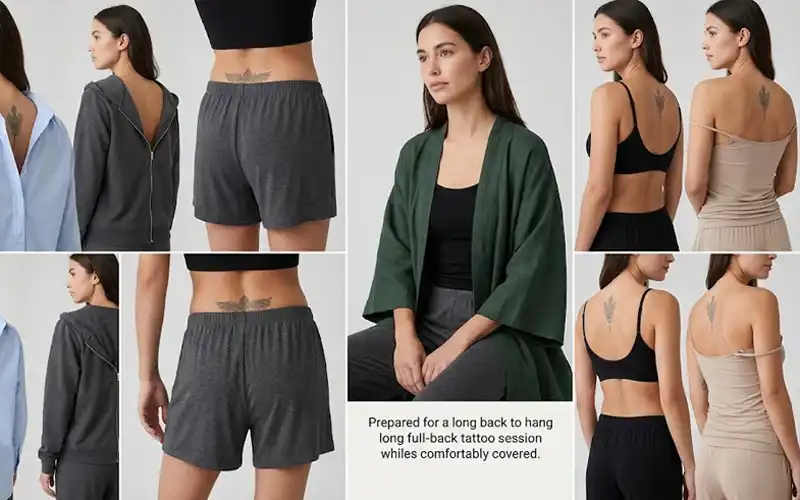
Comfortable clothing options that provide easy access to different back tattoo placements.
Hip Tattoo Outfit Ideas
Skirts and Slits
If you are planning what to wear to a tattoo appointment for your hip, a long flowy skirt with a high slit is one of the most comfortable options. It lets the artist reach the skin while the fabric drapes over everything else, which helps a lot when you are lying on your side. A wrap skirt that opens fully is another easy choice.
Stretchy Bottoms
Soft joggers, lounge pants and stretchy trousers can be pulled down or up to expose the hip without pressure on the skin. Look for a wide, flat waistband instead of a drawstring that digs in, and choose a fabric with real give. Extra room around the hip also stops the fabric from dragging whenever you change position.
Underwear That Stays Put
What you wear underneath matters more for hip work than most people expect. A thin side strap or a bikini-style bottom can be folded down or up and stay in place, while thick seams and high-cut briefs slide around. Wear something clean and comfortable in a colour you don’t mind marking, and avoid delicate lace edges that curl over the area.
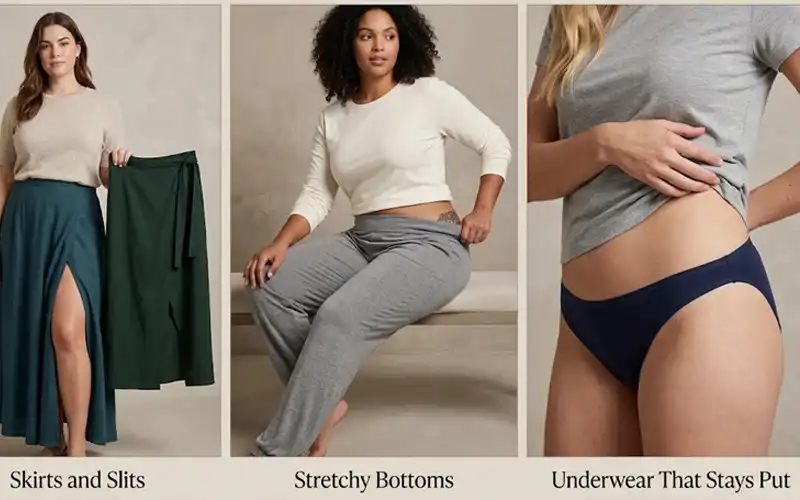
Comfortable clothing choices that provide easy access to the hip during a tattoo appointment.
Chest, Ribs and Stomach
Tuckable Tops
Loose tops that can be lifted and tucked or taped out of the way suit rib and stomach pieces well. A soft tee with wide sleeves, a button-up or a cropped sweatshirt all do the job. For chest or sternum work, choose a top you can slip your arms through the neckline of, so the fabric gathers at the shoulders and keeps your front covered.
Bandeaus and Tube Tops
A bandeau or tube top is a neat way to stay covered during chest and sternum sessions. The straight edge sits above or below the design, and you can slide it up or down as the artist moves around. Choose a stretchy band that grips lightly, because a slippery strapless top keeps creeping and becomes a distraction over a long sitting.
Pasties and Covers
If you want extra privacy for sternum or high rib work, small adhesive covers give coverage without any bulk. Choose a skin tone you like and test them at home first, so you know they stay in place and don’t irritate. Pack a spare pair in case one lifts during a long sitting.
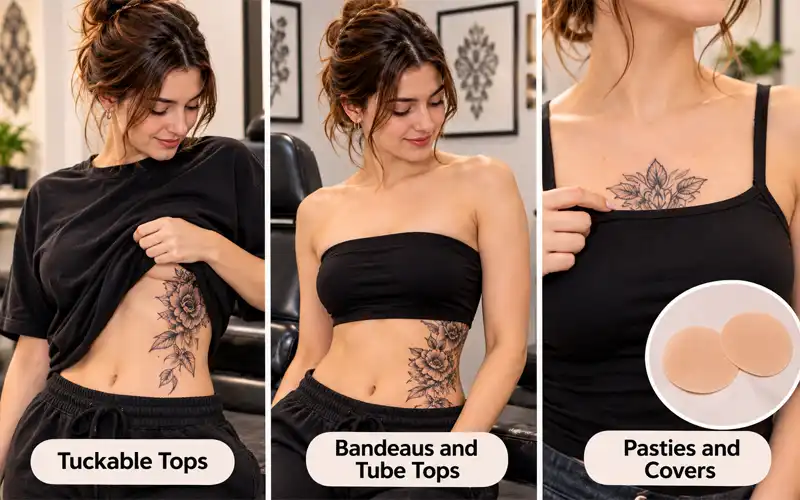
Comfortable clothing and coverage options for chest, sternum, rib and stomach tattoo sessions.
Legs, Ankles and Feet
Shorts and Wide Pants
For thigh, knee and calf designs, loose shorts are the simplest answer because the hem can be pushed high without a second thought. Wide-leg pants or soft pyjama bottoms that roll above the knee also work. Make sure the fabric rolls without bunching into a tight band, since a thick cuff squeezing the leg gets uncomfortable over several hours.
Socks and Boots
Ankle and lower-leg tattoos need a clear line from the knee to the foot, so skip tall socks, knee-high boots and snug boot cuffs. Short ankle socks, or none at all, keep the skin free. Choose trousers with a wide hem that lifts easily past the calf, because narrow ankles trap the fabric exactly where the artist needs space.
Sandals for Foot Work
Foot tattoos are quick to reach, but the walk out of the studio needs planning. Open sandals or flip-flops keep pressure off the fresh design and go on easily over a wrap. Avoid trainers and closed shoes for the day, since the tongue and laces rub exactly where the skin is most sensitive and puffy after the work.
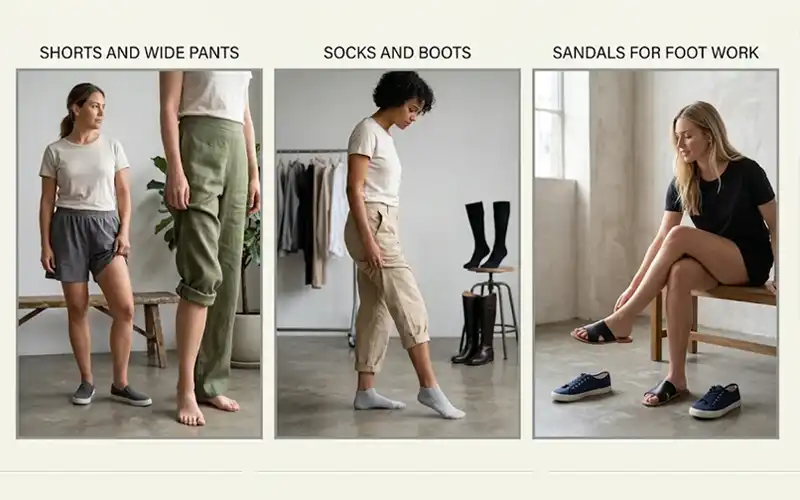
Comfortable clothing and footwear choices for thigh, knee, calf, ankle and foot tattoo appointments.
Winter Tattoo Day Dressing
Layers That Open Easily
When you plan what to wear to a tattoo appointment in the winter, build the outfit in layers that open from the front. A zip-front jacket, a flannel shirt or an open overshirt over a thin tee lets you expose only the working area and stay warm everywhere else. Avoid thick turtlenecks and tight sweaters, because pulling them over the head is awkward once the stencil is on.
Warm Fabrics Without Bulk
Fine wool, brushed cotton and fleece keep heat in without making you bulky. For a tattoo appointment in winter, a thermal base layer under a loose zip top is useful, provided the base layer is thin enough to push clear of the area. Skip heavy knits that are hard to move around, since they make every adjustment a small struggle.
Heading Home in the Cold
Once you are done, your tattoo will be wrapped and tender, so choose outerwear with a roomy sleeve or body. A loose coat, a poncho or an open parka can go on without dragging over the covered area. Wrap a scarf loosely if the tattoo is near the neck, and keep gloves and a hat within reach so you aren’t digging around at the door.
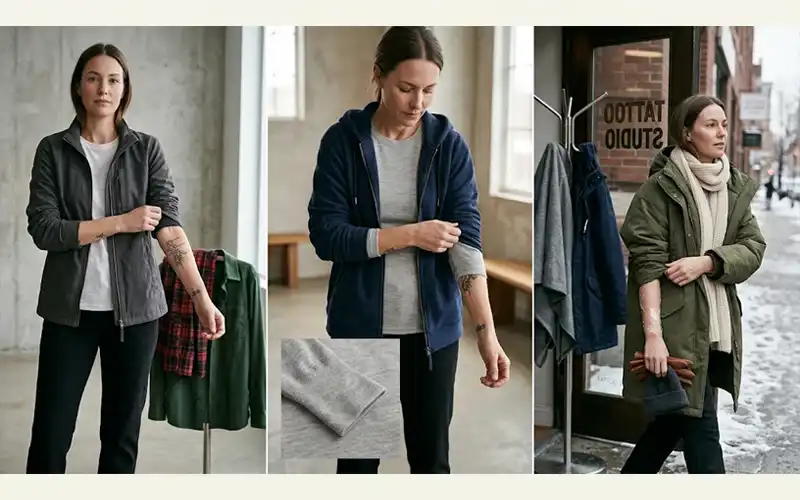
Comfortable winter layers that keep you warm while providing easy access to tattoo areas.
Skip These Outfit Mistakes
Tight and Clingy Pieces
Skinny jeans, compression tops and shapewear are the first things to leave in the wardrobe. They squeeze the skin and make it harder for the artist to see where the real design area starts. They also restrict movement, so every time you shift position the fabric pulls somewhere it shouldn’t.
One-Piece Outfits
Jumpsuits, rompers and bodysuits look neat but cause trouble on tattoo day. To expose one area, you often have to undress completely, and bathroom breaks turn into a long job. Separate pieces are far more forgiving, because you can move the top or bottom independently and put everything back quickly when the session ends.
Light Colours and Favourites
White, cream and pastel clothes show every drop of ink, and silk or delicate fabrics can mark permanently. The same goes for anything sentimental, like a gift or a vintage find. If you would be upset by a stain, leave it at home and wear it later to show off the finished tattoo once it has healed.
Accessories to Leave Home
Bracelets, watches, rings, long necklaces and chunky earrings near the work area can get in the way or snag. Anything tight can feel worse during a long sitting, so take off whatever you can’t remove easily. Go easy on strong perfume too, since the artist works close to your skin for hours and heavy scent can irritate both of you.
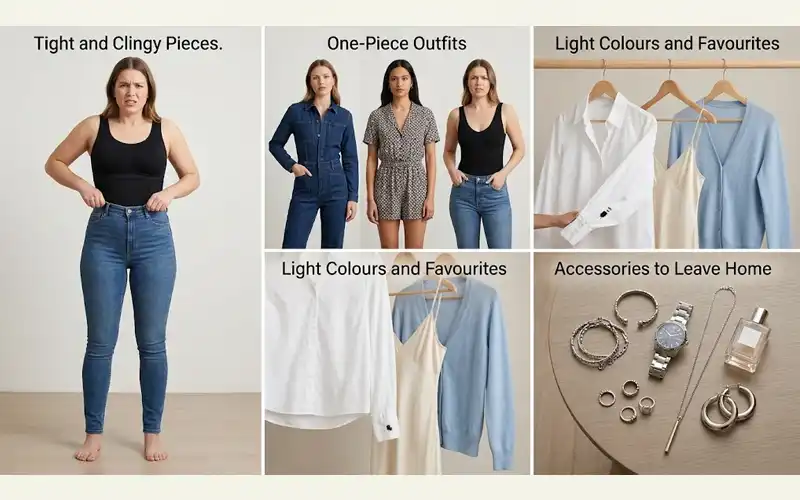
Avoid uncomfortable clothing, delicate fabrics, and unnecessary accessories on tattoo day.
Pack Your Tattoo Day Bag
Comfort Items
A small blanket, a phone charger, headphones and a hair tie are the best comfort items you can carry. The blanket helps if the room feels cold, so check first that the studio allows outside ones. Headphones take your mind off the buzzing, and a hair tie keeps long hair off the skin for neck, shoulder or back designs.
Snacks and Water
Eat a proper meal before you go, then pack a bottle of water and a snack that isn’t messy, such as a banana, a cereal bar or plain crackers. A small bite during a break keeps your energy steady and helps if you start to feel shaky. Avoid sticky or strongly scented food that you can’t finish in a few bites.
Extras for Long Sessions
Carry a government ID, since many studios check it at the desk, along with a payment method for the final balance and tip. A spare top is smart if you are heading somewhere else afterwards, and a plastic bag keeps stained pieces away from everything else in your bag. A small zip pouch stops loose items wandering around the studio.
After the Session Clothing
Soft Fabrics for Healing
For the first days, the best outfit is loose, clean and soft. Cotton, bamboo and linen let the skin breathe and don’t stick to the area as it settles. Wash new clothes before wearing them over a tattoo, and avoid lace, towelling, fluffy textures and rough seams that rub or leave fibres. Choose pieces with plenty of room so nothing pulls across the healing skin.
Work Outfits Over Fresh Ink
If you are going to work soon after, plan an outfit that covers the area without squeezing it. A loose long-sleeved shirt, wide trousers or a longer dress can hide a tattoo while leaving air space around it. Skip fitted blazers, pencil skirts and tight cuffs that press on the skin for hours, and check your workplace dress policy in advance if visible tattoos matter there.
Summer Sun Protection
In warm weather, choose light, breathable clothes that cover the tattoo from direct sun. Loose cotton sleeves, wide-leg linen trousers or a long skirt shield healing skin without trapping heat. Skip tight activewear and sweaty gym kit for the first days, since friction and moisture both irritate healing skin and leave the area feeling sore.
Frequently asked questions
1. What should I wear for my first tattoo?
Keep it simple: a dark, loose outfit with one easy layer. You don’t need anything special, only pieces that let the artist reach the skin and that you can sit in comfortably for hours. Choose your top and bottom to suit the placement, and keep a spare layer in your bag in case the studio feels cool.
2. Do I need a special outfit for a small tattoo?
Not a special one, but it still needs a little thought. A small design on the wrist or ankle may take only an hour or two, yet a tight cuff or a tall sock can still get in the way. Wear something you’d happily sit in for a while, and check that the sleeve or hem rolls clear of the area.
3. Can I wear a swimsuit to my appointment?
For some placements, yes. A dark bikini top or bottom can work for back, rib, chest or hip tattoos, because the straps and sides can be moved aside. Choose a secure style rather than thin ties that slip, and wear a loose cover-up over it for the journey.
4. Should I lay out my outfit the night before?
It helps. Try the outfit on with your placement in mind: roll the sleeve, lift the hem, slide the strap down. If it doesn’t move out of the way in a few seconds at home, it won’t at the studio either. A quick look at the forecast tells you whether to add a layer.
5. What should I wear for a neck or behind-the-ear tattoo?
Pick a wide or open neckline, such as a V-neck or a loose crew neck that can be folded down. Avoid turtlenecks, hoods and scarves, and tie long hair up so the skin stays clear. Leave necklaces and earrings off on the side being tattooed.
6. How do I get dressed again after the session?
Take your time. The tattoo will usually be covered, so start with the loosest piece and ease sleeves or hems over it gently instead of dragging them. Ask your artist to confirm the wrap is secure before you move around, and avoid buttons or zips that press on the area.
7. What if I turn up in the wrong outfit?
Don’t panic. Artists see this often and can usually work around it with drapes, clips or a quick swap of pieces. Tell them as soon as you arrive so they can adjust the setup, and use the spare layer in your bag to fix the rest.
Final Thoughts
Getting this right comes down to three things: comfort, access and a forgiving fabric. Now that you know what to wear to a tattoo appointment, check your placement, think about the weather and the plans you have afterwards, and choose pieces that move easily out of the way. Keep the day simple, tell your artist what you plan to wear, and you can spend the session relaxing instead of adjusting your clothes. Calm, comfortable clients usually get a smoother session.