
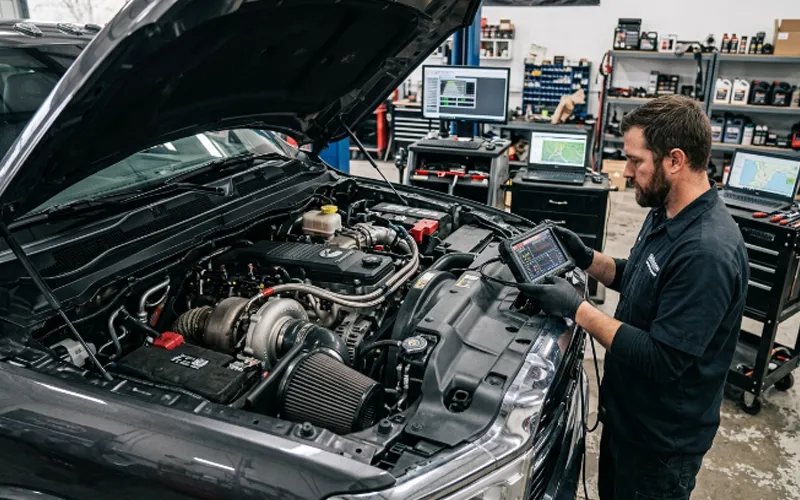
6.7L Cummins Tuning Basics: ECU Calibration, EGR System, and Supporting Hardware
Quick Answer: A good 6.7L Cummins tune should match the truck’s hardware, transmission, driving goals, and intended use. Tuning can improve throttle response, towing behavior, monitoring, and overall drivability, but calibration and supporting components need to work together. The strongest setups focus on compatibility, controlled power delivery, and long-term reliability rather than simply chasing the highest horsepower number.
The 6.7L Cummins has earned a strong reputation among Ram 2500 and Ram 3500 owners for torque, durability, and towing capability. It also responds well to carefully planned upgrades, which is why tuning is such a common topic among owners looking to improve drivability, towing performance, monitoring, or off-road performance.
But tuning a modern Cummins is not just about adding horsepower. The engine control unit, turbocharger, transmission, fuel system, airflow components, exhaust hardware, and emissions equipment all interact. A change in one area can affect how the rest of the truck operates.
The best approach is to build around a clear goal. A daily-driven tow rig needs a different calibration strategy from a dedicated off-road or competition truck, and both need hardware that matches the calibration being used.
Table of Contents
ToggleHow 6.7L Cummins ECU Calibration Works
The ECU controls many of the operating strategies that determine how a 6.7L Cummins responds under different conditions.
Depending on the calibration, the ECU can manage or influence:
- Fuel injection timing
- Injection quantity
- Turbocharger operation
- Torque delivery
- Throttle response
- Exhaust temperature management
- Transmission communication
- Other engine-protection strategies
A towing-focused calibration may prioritize smooth torque delivery, controlled exhaust gas temperatures, predictable shifts, and usable power at lower engine speeds.
A performance-focused calibration may place more emphasis on faster throttle response, stronger acceleration, and increased torque output.
The highest power setting is not automatically the best setting. Calibration should match how the truck is actually used and what the engine, transmission, cooling system, and supporting hardware can reliably handle.
What Does an EZ Lynk Tuner Do for a 6.7 Cummins?
Modern tuning platforms make calibration, monitoring, and diagnostics much easier than older handheld-only systems. An ez lynk tuner 6.7 cummins setup can support streamlined calibration access, real-time monitoring, diagnostics, and configuration-specific tuning while giving owners and technicians a convenient way to work with the truck through a connected platform.
Common capabilities may include:
- Reading and clearing diagnostic trouble codes
- Monitoring real-time engine data
- Loading compatible calibrations
- Viewing sensor information
- Supporting troubleshooting and data review
One of the biggest advantages of a modern tuning platform is flexibility. The calibration can be matched to the truck’s specific configuration, including:
- Stock or upgraded turbochargers
- Transmission upgrades
- Airflow improvements
- Exhaust configuration
- Towing requirements
- Daily-driving priorities
- Off-road or competition applications
The tuning device itself is only part of the equation. The quality of the calibration and how well it matches the truck’s hardware are more important than simply choosing the most aggressive tune available.
The Role of the EGR System in a 6.7L Cummins
The exhaust gas recirculation system sends a measured portion of exhaust gases back into the engine’s intake stream, helping lower nitrogen oxide emissions during engine operation.
Depending on model year, the EGR system operates alongside other emissions components such as:
- Diesel particulate filter (DPF)
- Diesel oxidation catalyst (DOC)
- Selective catalytic reduction (SCR)
- Diesel exhaust fluid (DEF) system
- Exhaust temperature and pressure sensors
Because exhaust gas is routed back through the intake path, soot and oil vapor can contribute to deposits over time. Owners often pay attention to intake cleanliness, airflow, EGR operation, cooling-system condition, and overall emissions-system performance when planning a build.
Any change to factory emissions hardware also affects how the ECU expects the engine to operate, which is why hardware and calibration should never be treated as completely separate decisions.
Matching EGR Hardware With the Correct Calibration
For off-road, competition-only, or export applications where local law permits, a properly matched 6.7 cummins egr delete kit with tuner configuration can combine compatible hardware, streamlined airflow, application-specific fitment, and calibration designed around the truck’s updated setup.
The key is compatibility. If airflow, exhaust routing, EGR hardware, or other engine systems change, the calibration should be designed for that configuration rather than relying on a generic file.
Before making any emissions-related modification, consider:
- Vehicle model year
- Engine and transmission configuration
- Hardware compatibility
- Calibration requirements
- Intended use
- Local emissions regulations
For street-driven vehicles, factory emissions equipment may be required under federal, state, or local law. Off-road or competition labeling does not automatically make an emissions modification legal for public-road use.
Choosing the Right Tune for How You Use the Truck
Not every 6.7L Cummins needs the same calibration. The right tune depends on how the truck is driven and what you expect from it.
Daily Driving
A daily-driven truck usually benefits from a balanced calibration that emphasizes:
- Smooth throttle response
- Predictable power delivery
- Good drivability
- Reasonable fuel economy
- Factory-like behavior
- Long-term reliability
For most daily drivers, a moderate tune is more useful than an aggressive file that constantly pushes the drivetrain harder.
Towing
A tow rig needs controlled torque and consistent operating temperatures more than maximum horsepower.
Important factors include:
- Exhaust gas temperature
- Transmission temperature
- Cooling-system performance
- Turbocharger response
- Transmission capability
- Torque delivery at usable RPM
A good towing calibration should make the truck easier to control under load instead of simply producing the largest peak power number.
Performance and Off-Road Builds
A performance-oriented build may combine tuning with supporting hardware such as:
- Higher-flow intake components
- Charge-air upgrades
- Turbocharger upgrades
- Transmission improvements
- Cooling-system enhancements
- Application-specific exhaust hardware
As power increases, the truck should be treated as a complete system. More torque affects the transmission, cooling system, turbocharger, fuel system, and drivetrain—not just the engine.
Hardware and Calibration Need to Work Together
One of the most common tuning mistakes is installing hardware first and figuring out calibration later.
Changing hardware can affect:
- Airflow
- Boost response
- Fuel requirements
- Sensor readings
- Exhaust flow
- Engine operating conditions
If the ECU is still operating around assumptions that no longer match the hardware, drivability and reliability can suffer.
A better approach is to plan the parts and calibration together from the beginning.
Common 6.7L Cummins Tuning Mistakes
Choosing the Highest Horsepower Tune First
More power is not always more usable power. Aggressive tuning increases demand on the engine, transmission, cooling system, and drivetrain.
For most trucks, the best calibration is the one that matches the intended use while maintaining predictable behavior and manageable temperatures.
Ignoring the Transmission
The transmission has to handle every additional pound-foot of torque the engine produces.
If engine output is increased without considering transmission capability, owners may notice:
- Harsh shifts
- Unexpected shift timing
- Converter behavior changes
- Increased clutch loading
- Reduced consistency under heavy load
Engine tuning and transmission strategy should be considered together.
Installing Parts Without Matching Calibration
Hardware and software need to agree with each other. A truck with upgraded airflow or exhaust components may require different calibration strategies from an otherwise stock truck.
Proper fitment and calibration matching are more important than simply installing more parts.
Ignoring Engine Monitoring
A tuned diesel should be monitored, especially when towing or operating at higher power levels.
Useful data can include:
- Exhaust gas temperature
- Boost pressure
- Coolant temperature
- Transmission temperature
- Fuel pressure
- Relevant diagnostic codes
Monitoring helps you see how the truck is actually responding instead of relying only on how it feels from the driver’s seat.
What Should You Monitor After Tuning?
Monitoring becomes more valuable as the truck moves farther away from its factory configuration.
| Parameter | Why It Matters |
| Exhaust Gas Temperature | Helps track thermal load, especially during towing or sustained power |
| Boost Pressure | Helps identify turbocharger response and possible airflow or boost-leak issues |
| Coolant Temperature | Shows how the cooling system is handling engine load |
| Transmission Temperature | Especially important when towing or increasing torque output |
| Diagnostic Codes | Can reveal developing electrical, sensor, airflow, or calibration-related issues |
How to Build a Reliable 6.7 Cummins Upgrade Plan
Step 1: Define the Goal
Start by deciding what you actually want the truck to do better.
- Daily driving
- Towing
- Fuel economy
- Monitoring
- Throttle response
- Off-road performance
- Competition use
Your goal determines the calibration and supporting hardware that make sense.
Step 2: Inspect the Truck Before Tuning
Do not use tuning to cover up an existing mechanical problem.
Check:
- Maintenance history
- Engine condition
- Transmission health
- Cooling-system condition
- Turbocharger operation
- Fuel-system health
- Existing diagnostic trouble codes
A healthy baseline makes future tuning much easier to evaluate.
Step 3: Choose Compatible Hardware
Choose parts based on proven fitment, compatibility, and intended use rather than assuming every popular upgrade belongs on every truck.
Model year matters, and so do transmission, turbocharger, emissions configuration, and existing supporting modifications.
Step 4: Match the Calibration to the Build
A calibration designed around the actual hardware configuration is generally more appropriate than choosing a generic tune based only on advertised horsepower.
The closer the calibration matches the real truck, the easier it is to maintain predictable drivability and performance.
Step 5: Monitor and Maintain the Truck
Tuning does not replace maintenance.
Continue to monitor:
- Oil condition
- Fuel filters
- Cooling system
- Transmission condition
- Turbocharger behavior
- Engine temperatures
- Diagnostic codes
Pros and Considerations of 6.7 Cummins Tuning
| Potential Benefit | What to Keep in Mind |
| Improved throttle response | Depends on calibration quality and truck configuration |
| Better towing behavior | Cooling and transmission capability still matter |
| More customization | Hardware and software need to remain compatible |
| Improved monitoring | Data still needs to be interpreted correctly |
| Higher power potential | Additional torque increases drivetrain demand |
FAQ
Is tuning a 6.7 Cummins worth it?
It can be when the calibration matches the truck’s hardware and intended use. Many owners tune for better throttle response, towing behavior, monitoring, or performance rather than simply chasing peak horsepower.
Can I tune a stock 6.7 Cummins?
Yes, stock trucks can be tuned, but the calibration should remain compatible with the factory hardware, transmission, cooling system, and operating limits.
Does tuning increase stress on a 6.7 Cummins?
Higher torque and horsepower can increase demand on the engine and drivetrain, particularly with aggressive calibration. Moderate tuning that matches the truck’s use and supporting hardware is generally easier on the complete system than constantly running maximum-output settings.
What should I monitor after tuning?
Useful information includes exhaust gas temperature, boost pressure, coolant temperature, transmission temperature, and diagnostic codes. Towing and higher-power applications benefit especially from regular monitoring.
Does every hardware upgrade require a new tune?
Not necessarily. Minor changes may not require significant calibration changes, while modifications that affect airflow, exhaust flow, fueling, boost control, emissions hardware, or transmission strategy may require a calibration designed for the updated setup.
Are emissions-related modifications legal on street-driven trucks?
Requirements vary by jurisdiction, but disabling or removing factory emissions equipment may violate federal, state, or local rules for vehicles operated on public roads. Off-road, competition, or export-only hardware should only be used where the application and applicable law permit it.
Final Thoughts
The 6.7L Cummins offers plenty of tuning potential, but the strongest builds are not necessarily the ones making the highest advertised horsepower. A well-planned setup starts with a healthy truck, clear performance goals, compatible hardware, and calibration designed around the actual configuration.
For daily driving and towing, smooth power delivery, controlled temperatures, transmission behavior, and reliability usually matter more than peak numbers. For off-road or competition builds, airflow, hardware fitment, calibration, and drivetrain capability become even more important as the truck moves farther from stock.
Treat the truck as a complete system. When the ECU calibration, airflow, turbocharger, transmission, cooling system, and supporting hardware all work together, the result is a more predictable and usable 6.7 Cummins setup.
Tags