
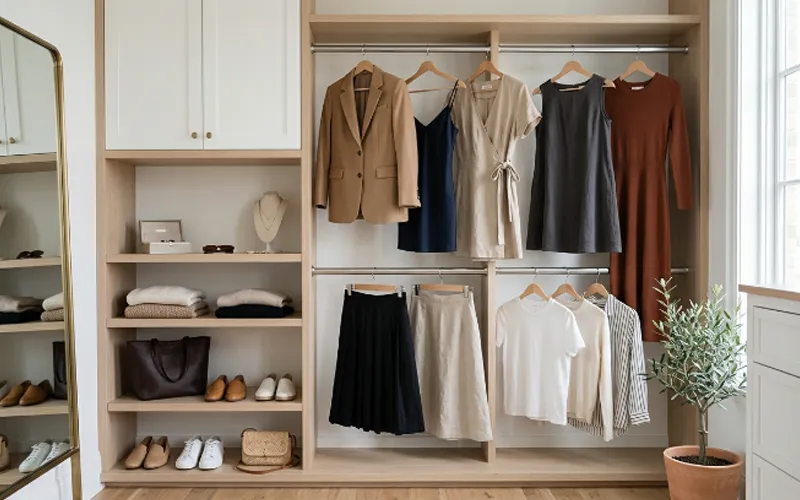
Building a Versatile Capsule Wardrobe Around Dresses and Skirts
A wardrobe built around a handful of well-chosen dresses and skirts can carry someone through a work week, a weekend trip, and an evening event without requiring a closet full of separates. The appeal is practical: fewer pieces to coordinate, fewer decisions to make each morning, and a higher likelihood that everything actually gets worn. Building that kind of capsule takes some intention, though, particularly around fabric choice, silhouette, and how easily a single piece can shift from one setting to another.
Table of Contents
ToggleWhy Dresses and Skirts Make Efficient Foundation Pieces
A dress solves the coordination problem that separates create because the top and bottom already match. This makes packing simpler, mornings faster, and the wardrobe smaller without reducing variety. A well-cut dress can look completely different with different shoes, jackets, or accessories. For example, a midi dress with sandals and a denim jacket creates a casual look. Pair the same dress with heels and a blazer for a professional or evening style.
Skirts offer a related but distinct advantage. Because they pair with multiple tops, a small number of skirts can multiply into far more outfit combinations than the piece count suggests. A neutral A-line skirt, for instance, works with a fitted knit for the office, a relaxed tee for weekend errands, and a silk blouse for something dressier. Building a capsule around these two categories means fewer total garments doing more actual work across different parts of daily life.
Choosing Silhouettes That Work Across Multiple Settings
Not every dress or skirt silhouette translates equally well across work, travel, and social settings. Shapes that stay relatively fitted through the waist and fall at a versatile length, roughly knee to midi, tend to move most easily between contexts. A silhouette too structured can feel out of place at a casual weekend gathering, while something too relaxed may not hold up in a client meeting.
Wrap dresses and A-line skirts are frequently recommended by stylists specifically because their shape reads as polished without appearing rigid, and because they tend to flatter a range of body types without requiring significant alteration. When comparing dresses from cabi, shoppers can assess how each silhouette works with the shoes, jackets, and accessories they already own, so a piece chosen for the office can also fit less formal plans later in the day. Choosing two or three core silhouettes rather than a wide variety keeps the capsule cohesive, since pieces that share a similar shape tend to layer and pair together more predictably.
Selecting Fabrics That Travel and Transition Well
Fabric choice determines how well a piece survives packing, wearing, and re-wearing across a busy schedule, and it matters as much as silhouette in a genuinely versatile capsule. Fabrics with a slight stretch or a wrinkle-resistant finish hold their shape after a day of travel or a long flight in a way that stiff cotton or unlined linen typically cannot. Ponte knit and certain jersey blends have become popular in transitional wardrobes for exactly this reason, since they resist creasing and move comfortably through a full day without requiring mid-day adjustment.
Weight is another consideration that often gets overlooked. A midweight fabric that works in an air-conditioned office in summer can also layer under a coat in cooler months, extending a single piece’s usefulness across seasons rather than limiting it to a narrow temperature range. A few fabric qualities worth prioritizing when building this kind of capsule include:
- Wrinkle resistance, particularly for anything packed in a suitcase
- A slight stretch for comfort during long days or travel
- Midweight construction that layers well rather than reading as strictly summer or winter
- A finish that holds color and shape after repeated washing, since capsule pieces get worn frequently
These fabric priorities help narrow the options when one piece needs to work across several settings, especially when travel and a full day of wear are part of the routine.
Styling the Same Piece for Work, Travel, and Evening Wear
The real test of a capsule wardrobe is whether the same handful of pieces can be restyled convincingly across different occasions, rather than sitting in the closet as a single-purpose item. A structured shirt dress, for example, works buttoned and belted for the office, then loosened and paired with sneakers for a travel day, and finally dressed up with statement jewelry and heels for an evening out. The dress itself never changes; only the accessories and layering around it do.
Skirts follow a similar logic. A midi skirt in a neutral tone can be paired with a tailored blazer for client meetings, a lightweight cardigan for a weekend market, and a fitted top with heels for dinner afterward. This approach to styling reduces the total number of garments needed while still producing outfits that feel intentional rather than repetitive, which matters particularly for travel, where luggage space and outfit variety are often in direct tension.
Building the Capsule Gradually Rather Than All at Once
A versatile capsule does not need to be built in one shopping trip. Buying too many pieces at once can make it harder to create matching outfits.
A more practical approach is to start with two or three foundation pieces in neutral tones. Then, add one or two new pieces each season. Choose items that work well with what you already own instead of buying pieces that stand alone.
This gradual build also allows for real-world testing. A dress that seemed versatile in the fitting room sometimes reveals limitations after a few actual wears, whether that is a fabric that wrinkles more than expected or a length that does not work well with existing shoes. Building slowly leaves room to adjust course before the capsule becomes too large or too specific to function as intended.
Key Takeaways
Dresses and skirts offer a practical foundation for a capsule wardrobe. A small number of well-chosen pieces can work for work, travel, and social occasions. This reduces the need for constant new purchases.
Silhouette and fabric are important for versatility. They help determine whether a piece can work in different settings or only for one occasion. Building the capsule gradually also gives you time to test each piece in real situations.
Focus on versatility rather than quantity. This can create a wardrobe that feels organized, practical, and easy to wear in everyday life.
FAQs
What is a capsule wardrobe?
A capsule wardrobe is a small collection of useful clothes that can be mixed and matched to create different outfits.
Why are dresses useful in a capsule wardrobe?
Dresses are useful because they combine a top and bottom in one piece and can be styled for different occasions.
Are skirts good for a capsule wardrobe?
Yes, skirts can work well because one skirt can be paired with different tops, jackets, and shoes.
What dress silhouettes work best for a versatile wardrobe?
Wrap dresses, A-line styles, and knee-to-midi lengths can work well across casual, work, and social settings.
Which fabrics are best for a capsule wardrobe?
Wrinkle-resistant, slightly stretchy, and midweight fabrics are practical because they are comfortable and easier to wear and pack.
How can I style one dress for different occasions?
You can change the shoes, jacket, belt, jewelry, and other accessories to create different looks with the same dress.
How many pieces should a capsule wardrobe have?
There is no fixed number. It is better to choose a small number of pieces that work well together and suit your daily needs.
Should I build a capsule wardrobe all at once?
Not necessarily. Building it gradually allows you to test each piece and make sure it works with the clothes you already own.
Tags