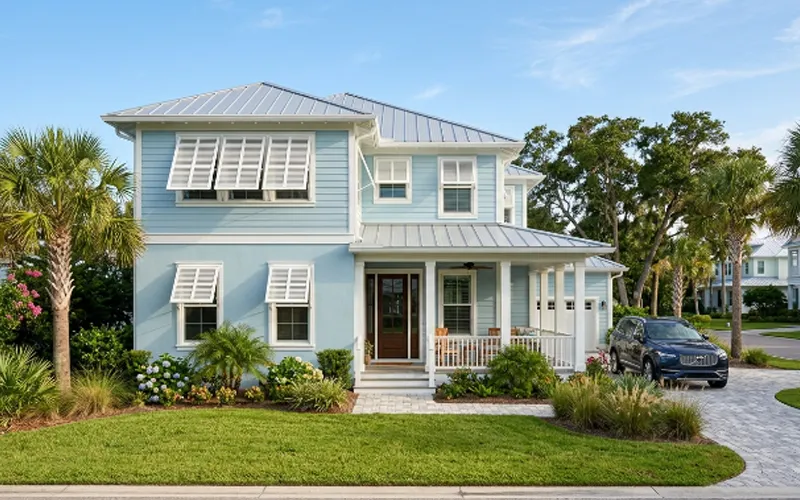
Can Bahama Shutters Add Shade and Storm Protection?
Bahama shutters are one of the few exterior window treatments that can serve both practical and visual purposes. Mounted above the window and angled outward, they can help block harsh sunlight while giving a home a distinctive coastal appearance. For homeowners considering decorative storm shutters, Bahama shutters can be especially appealing because they may provide shade, privacy, and storm protection when the right products are selected and installed correctly.
These shutters are commonly seen on homes in Florida and other coastal areas where intense sun and tropical weather are part of everyday life. During normal conditions, they remain propped open to create shade while still allowing light and airflow around the window. When severe weather approaches, qualifying hurricane-rated models can be lowered and secured over the opening.
Table of Contents
ToggleWhat Are Bahama Shutters?
Bahama shutters, sometimes called Bermuda shutters, are hinged at the top of a window rather than along the sides. The shutter extends outward from the house at an angle and is supported by adjustable arms or braces. This design gives the window a built-in awning effect while keeping much of the shutter out of the direct line of sight.
Unlike traditional colonial shutters, which swing inward from either side, Bahama shutters typically consist of a single panel or connected assembly positioned above the window. They can be made from aluminum and other materials, although products intended for hurricane protection must meet applicable structural and impact requirements.
Their distinctive profile is one reason they are so popular on coastal homes. They can complement tropical, Caribbean, Key West, beach cottage, and contemporary architectural styles without looking like temporary storm equipment.
How Do Bahama Shutters Provide Shade?
Shade is one of the biggest everyday benefits of Bahama shutters. Because the shutter projects outward above the glass, it can intercept direct sunlight before much of that solar energy reaches the window. This can be particularly useful on elevations that receive strong afternoon sun.
Reducing direct sunlight can make rooms feel more comfortable, especially during Florida’s warmer months. It may also help reduce glare on television screens, computer monitors, flooring, and furnishings near the window.
Bahama shutters can provide several everyday advantages, including:
- Reducing direct sunlight through windows
- Helping control glare inside the home
- Providing partial daytime privacy
- Adding architectural detail to exterior walls
- Creating shade without completely blocking natural light
- Protecting windows when properly rated and secured for storms
The adjustable design of some systems allows homeowners to change the shutter angle. This can help balance shade, visibility, and ventilation depending on the time of day and season.
Can Bahama Shutters Really Protect Against Hurricanes?
Some Bahama shutters can provide hurricane protection, but not every product is designed for that purpose. Decorative shutters that simply resemble storm shutters may not have the engineering, hardware, structural strength, or impact rating required for severe wind conditions.
Hurricane-rated Bahama shutters are designed to close over the window and lock securely into position. When properly tested, approved, and installed, they can help protect the glazed opening from windborne debris and extreme wind pressures.
Homeowners should never assume that a shutter is hurricane-rated based on its material or appearance. Product approvals, testing documentation, installation specifications, and local building requirements should all be reviewed before relying on a shutter for storm protection.
Decorative Bahama Shutters vs. Hurricane-Rated Shutters
The difference between decorative and hurricane-rated Bahama shutters is important. Decorative versions may provide excellent shade and curb appeal but might not be engineered to withstand hurricane conditions. They may use lighter materials, simpler fasteners, or installation methods designed primarily for appearance.
Hurricane-rated products are engineered as complete protection systems. The shutter panel, hinges, support arms, fasteners, attachment points, and locking mechanisms must work together under demanding wind and impact conditions.
When comparing products, homeowners should ask whether the shutters are intended for:
- Decoration only
- Sun and shade control
- General weather protection
- Hurricane and windborne debris protection
- A combination of these purposes
If storm protection is a priority, homeowners should choose a product specifically tested and approved for that use rather than assuming that all decorative storm shutters provide the same level of protection.
How Bahama Shutters Improve Curb Appeal
One reason Bahama shutters remain popular is that they look intentional throughout the year. Temporary storm panels disappear into storage when hurricane season ends, but Bahama shutters become a permanent architectural feature.
Homeowners can often choose from a range of colors and finishes to coordinate with siding, stucco, roofing, trim, and other exterior elements. A contrasting color can create a bold tropical look, while a color that closely matches the home’s exterior can produce a more understated appearance.
Bahama shutters can also help add depth to otherwise flat exterior walls. The angled installation creates shadows and visual dimension around the windows, which can make the facade feel more finished.
Are Bahama Shutters Good for Florida Homes?
Florida’s climate makes Bahama shutters particularly practical. The state experiences long periods of intense sunlight, high temperatures, and the possibility of tropical storms and hurricanes. A shutter that can contribute to both daily comfort and seasonal storm preparation can therefore offer more value than a purely decorative feature.
The style also fits naturally with many Florida architectural designs. Coastal homes, waterfront properties, ranch-style homes, Mediterranean-inspired houses, and newer construction can all incorporate Bahama shutters successfully when proportions and colors are chosen carefully.
However, the best shutter type still depends on the specific home. Window dimensions, roof overhangs, surrounding walls, accessibility, local wind requirements, and the homeowner’s preferred appearance should all influence the decision.
Bahama Shutters vs. Accordion Shutters
Accordion shutters are often selected primarily for storm protection. They remain permanently attached beside the window or door and fold together when not in use. When a storm approaches, homeowners pull them across the opening and lock them.
Bahama shutters provide a different combination of benefits. Instead of remaining folded beside the window, they stay positioned above it and can provide shade throughout the year.
Homeowners who prioritize fast deployment across large openings may prefer accordion systems. Those who want storm protection combined with everyday shade and coastal styling may find Bahama shutters more appealing for standard windows.
Bahama Shutters vs. Roll-Down Shutters
Roll-down shutters typically retract into a housing above the opening and lower along tracks when protection is required. They can be especially convenient for large windows, sliding glass doors, patios, and lanais.
Bahama shutters are more visible as an architectural feature. Their permanently angled design means they affect the home’s exterior appearance even when there is no storm threat.
For homeowners primarily concerned with convenience and minimal visual interruption, roll-down shutters may make more sense. For those who want a shutter to contribute to shade and exterior design every day, Bahama shutters may offer more overall value.
Do Bahama Shutters Block Too Much Light?
Bahama shutters reduce direct sunlight, but they do not necessarily make rooms dark. Because the shutter is tilted outward, daylight can often enter beneath and around the panel while direct overhead or angled sunlight is reduced.
The amount of light depends on the shutter’s angle, blade configuration, window orientation, and surrounding structures. Adjustable supports can give homeowners more control over the balance between shade and brightness.
Homes with already-dark interiors should consider this factor carefully before installation. Evaluating sun exposure at different times of day can help determine whether Bahama shutters will provide useful shading without limiting too much natural light.
What Should You Look for in Hurricane-Rated Bahama Shutters?
Homeowners shopping for storm shutters should evaluate more than color and style. Hurricane protection depends on product engineering and correct installation.
Important factors to review include:
- Product approval documentation
- Design wind pressure ratings
- Impact testing information
- Material and construction quality
- Proper fastening requirements
- Compatibility with the home’s wall construction
- Installation instructions
- Warranty coverage
- Local permit requirements
The shutter must also be correctly sized for the opening. A properly rated shutter installed with incorrect fasteners or inadequate structural attachment may not perform as intended.
How Much Maintenance Do Bahama Shutters Require?
Bahama shutters are generally straightforward to maintain, but permanent exterior products should still be inspected regularly. Salt, dirt, pollen, insects, and moisture can accumulate around hinges, brackets, fasteners, and moving components.
Homeowners should clean shutters according to the manufacturer’s recommendations and periodically inspect hardware for corrosion, looseness, or damage. Coastal properties may require more frequent attention because salt exposure can accelerate corrosion on certain metals and finishes.
Before hurricane season, each shutter should also be tested. Homeowners should confirm that the shutter lowers properly and that all locking or securing components can be operated without difficulty.
Are Bahama Shutters Worth the Cost?
Whether Bahama shutters are worth the investment depends largely on how many benefits the homeowner expects from them. If the goal is only inexpensive storm protection, removable panels may offer a lower-cost solution.
Bahama shutters become more compelling when homeowners value their everyday advantages. Shade, reduced glare, added privacy, exterior styling, and possible hurricane protection can all come from one permanent installation.
They may be particularly worthwhile for windows that receive intense sunlight throughout much of the day. Instead of purchasing a storm system that sits unused most of the year, homeowners can choose shutters that serve a practical purpose during ordinary weather as well.
Frequently Asked Questions About Bahama Shutters
Are all Bahama shutters hurricane rated?
No. Some Bahama shutters are decorative or intended only for shade. Homeowners should verify that a product is specifically tested and approved for hurricane protection.
Can Bahama shutters stay open all year?
Yes. They are designed to remain angled above the window during normal conditions and can be lowered when necessary.
Do Bahama shutters help keep a house cooler?
They can help reduce direct solar heat reaching the glass by shading windows. Actual indoor temperature and energy savings depend on the home, window orientation, insulation, and other factors.
Can Bahama shutters provide privacy?
Yes. Their angled position can reduce outside visibility into certain windows while still allowing some daylight and outward visibility.
Are Bahama shutters good for second-story windows?
They can be, especially because they remain permanently installed. However, homeowners should consider how the shutters will be secured for storms and whether the operating method is easily accessible.
Can Bahama shutters protect sliding glass doors?
Bahama shutters are generally more common on windows. Larger doors and wide openings may be better suited to accordion or roll-down systems depending on the structure and available products.
How long do Bahama shutters last?
Service life depends on material quality, installation, climate exposure, maintenance, and manufacturer specifications. Well-maintained aluminum systems can provide many years of use.
Combining Everyday Shade With Florida Storm Readiness
Bahama shutters offer something many storm protection systems cannot: usefulness even when the weather is calm. Their angled design provides shade and architectural character throughout the year, while properly rated models can be secured when severe weather threatens.
That combination makes them an attractive option for homeowners who do not want hurricane protection to look purely functional. Well-designed decorative storm shutters can complement the home’s architecture while still serving an important protective role when engineered for storm conditions.
The key is choosing shutters based on both appearance and performance. Homeowners should verify product ratings, understand local installation requirements, and work with experienced professionals who can recommend the right system for each opening. With the right product, Bahama shutters can deliver the coastal look many Florida homeowners want while adding practical shade and dependable storm preparedness.