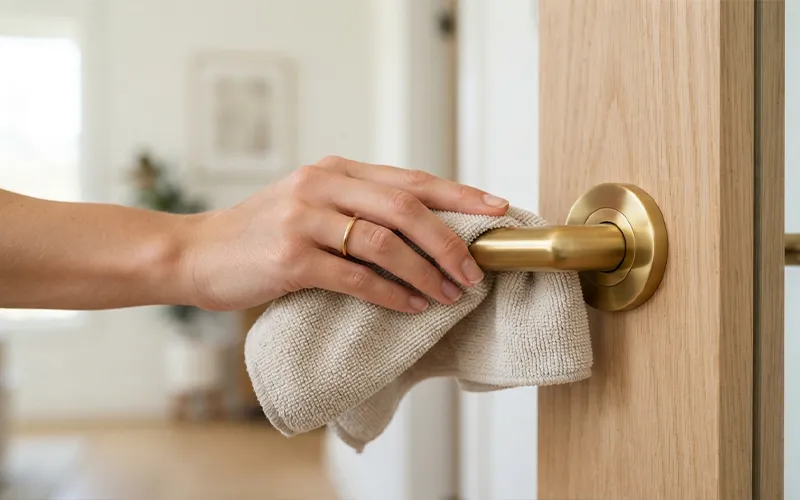
How to Clean High-Touch Surfaces Without Damaging Their Finish
High-touch surfaces become dirty for different reasons. A refrigerator handle may collect cooking grease, a painted door may show skin oils, a stair railing can develop a dull grip zone, and a brass knob may simply be changing naturally with age.
Those differences matter because not every dark or shiny patch is removable grime.
Before increasing the strength of a cleaner or scrubbing harder, decide whether the mark is sitting on the finish or whether the finish itself has changed. That one distinction can prevent unnecessary damage to paint, coatings, metals, and other frequently handled materials.
Table of Contents
ToggleFirst Decide Whether You Are Looking at Dirt or Wear
A mark that transfers to a clean cloth is probably surface grime. A spot that remains after gentle cleaning may be wear, discoloration, patina, or a change in sheen.
Paint around a door handle is a common example.
Repeated hand contact can leave oil behind, but years of rubbing can also polish a matte finish. Scrubbing harder will not restore damaged paint.
CJS Cleaning Solutions may encounter both conditions on the same door, so it is useful to separate what can be cleaned from what may need touch-up or repair.
The cleaner should remove soil without trying to erase the normal aging of the material.
Painted Doors Need Restraint Around Hand Zones
The few inches around a knob or lever usually receive more contact than the rest of the panel.
Begin with a soft cloth and a cleaning approach suited to the paint.
Avoid aggressive pressure, especially on flat or matte finishes. Repeated rubbing can create a shiny patch that stands out more than the original mark.
If the paint is already chipped, peeling, or softened, stop treating the problem as ordinary grime.
The same rule applies to painted trim around frequently used doors.
A slightly dirty finish can often be improved. A damaged finish cannot be cleaned back into new condition.
Cabinet Pulls Combine Hardware and Cabinet Finish
A cabinet handle may be durable while the door around it is much more sensitive.
That creates two cleaning zones only inches apart.
Wipe the pull according to its material, paying attention to the underside where fingers make the most contact.
Then handle the surrounding cabinet face separately.
In kitchens, the grime may include both skin oils and cooking film. Bathroom hardware may collect traces of lotions or personal-care products.
Do not let cleaner pools around mounting points or unfinished edges where moisture could seep into the cabinet material.
Light Switch Plates Need Controlled Moisture
Switch plates collect fingerprints quickly because people touch the same small section repeatedly.
The surrounding wall may show just as much grime as the plate itself.
Use minimal moisture and never spray cleaner directly toward the electrical fixture.
A lightly damp cloth gives better control.
If the wall beside the switch is painted, clean that patch according to the paint finish rather than treating the wall and plate as one surface.
This is a good example of why high-touch cleaning works better when each material is considered separately.
Stainless Steel Can Look Dirty Even After the Grease Is Gone
Stainless steel often shows streaks, fingerprints, and water marks long after the actual grime has been removed.
That makes it easy to over-clean.
Follow the care instructions for the appliance and wipe in the direction recommended for the finish when applicable.
Use a clean cloth for the final pass.
Too much product can leave another film behind, which may look like grease under angled light.
Before repeating the cleaning, let the surface dry fully and see whether the remaining mark is truly soil or simply streaking from the previous wipe.
Decorative Metals May Be Supposed to Change Over Time
Brass, plated hardware, antique finishes, and lacquered metals require particular care because their appearance may be intentional.
Some finishes develop patina naturally.
Others have a protective coating that can be damaged by polish, acids, or abrasive products.
Do not assume that a darker section needs to be restored to a bright shine.
Check the finish before using metal polish or a stronger cleaner.
Aged hardware can be permanently altered by aggressive polishing even when the original goal was simply to remove fingerprints.
Railings Show Both Grime and Repeated Friction
A stair railing is touched along the same path every day.
Skin oils can create a slightly tacky section, while long-term hand contact may also change the sheen of wood or paint.
Compare the most-used grip zone with a quieter section farther along the rail.
If gentle cleaning removes the difference, the issue is grime. If the surface remains visibly different but no residue transfers, wear may be part of the picture.
Wooden rails should not be saturated, and painted rails should not be scrubbed simply to force every section to look identical.
Appliance Controls Need More Precision Than Appliance Doors
Oven knobs, microwave buttons, refrigerator controls, and dishwasher panels collect grime in narrow places.
These parts often sit beside seams, displays, or openings where liquid does not belong.
Apply any approved cleaner to the cloth, not directly to the control panel.
CJS Cleaning Solutions can handle ordinary exterior buildup during a household cleaning visit while leaving internal components, damaged controls, and manufacturer-specific maintenance outside the scope of routine wiping.
The narrower the control area, the more useful it is to work with small amounts of moisture.
Remotes and Controllers Need Debris Removal Before Wiping
Remote controls and game controllers collect dirt around buttons, seams, and grips.
Start by removing loose material with a dry cloth or soft brush.
Then clean the outer casing with very limited moisture according to the device guidance.
Do not soak the buttons or allow the cleaner to run into openings.
A heavily handled electronic device does not become safer to clean simply because it looks grimy.
Its design still sets the limit.
Use a Fresh Cloth Before Blaming the Surface
Sometimes a surface appears streaky or greasy because the cloth is already carrying residue from somewhere else.
A cloth used on a greasy kitchen handle should not move directly to a painted door or polished metal railing.
Once it feels oily or visibly dirty, change it.
This is especially important when several high-touch surfaces are being cleaned during the same visit.
For professional house cleaning services charlotte nc, separating cloths by room or soil type can prevent grease, bathroom residue, and ordinary hand oils from being transferred between finishes that require different care.
A cleaner cloth often solves the problem before a stronger product is needed.
Know When to Stop Cleaning
A stubborn mark does not automatically mean the next step should be more pressure.
If paint starts changing sheen, plating looks uneven, a coating appears cloudy, or a mark remains without transferring anything to the cloth, stop and reassess.
The remaining issue may be wear rather than dirt.
High-touch surfaces last longer when cleaning respects that boundary.
The aim is to remove fingerprints, oils, food residue, and everyday grime while preserving the material underneath. Once the finish itself begins to change, stronger cleaning is no longer the answer.
Frequently Asked Questions
1. How do you clean high-touch surfaces without damaging the finish?
Use a soft, clean cloth and the mildest cleaning method suitable for the specific material. Avoid excessive pressure, abrasive tools, and strong chemicals unless the manufacturer recommends them. Always test an unfamiliar cleaner on a small, less visible area first.
2. What is the best way to remove fingerprints from painted doors?
Start with a soft cloth that is only slightly damp and gently wipe the affected area. Avoid vigorous scrubbing, especially on matte or flat paint, because repeated friction can create a shiny patch or alter the finish.
3. How often should high-touch surfaces be cleaned?
High-touch surfaces such as door handles, light switch plates, cabinet pulls, railings, and appliance controls should be cleaned regularly based on how frequently they are used and how quickly they become visibly dirty. Areas with heavy daily contact may need more frequent attention.
4. Can you use the same cleaner on every high-touch surface?
No. Different materials can react differently to cleaning products. Painted surfaces, stainless steel, brass, wood, plastic, and electronic controls may each require different care. Check the material and manufacturer recommendations before using a new product.
5. How do you clean stainless steel without leaving streaks?
Use a clean, suitable cloth and follow the care instructions for the appliance. Wipe in the recommended direction when applicable, use an appropriate amount of cleaner, and allow the surface to dry completely before deciding whether another cleaning pass is necessary.
Tags