
How To Plan A Meaningful Goodbye For A Pet
The death of a pet can create an awkward kind of grief. The loss feels immediate inside the home, yet the practical arrangements may be unfamiliar. Unlike human funerals, there is often no established family routine to follow and no relative who already knows what happens next.
For owners considering pet cremation in Singapore, it helps to begin with one practical question: what kind of farewell will feel right after the shock has passed? The answer may involve an individual cremation, a simpler arrangement or a private memorial at home. The important part is understanding what happens to your pet and what you would like returned afterwards.
Table of Contents
ToggleDecide What You Need Back
One of the first decisions is whether you want ashes returned.
That may sound obvious, but grief can make even simple choices difficult.
Some owners want an urn they can keep at home. Others prefer not to keep ashes and would rather remember the pet through photographs, a collar or a favourite toy.
There is no correct emotional response.
Make the decision according to what you expect will matter to you later, not according to what you think a pet owner is supposed to choose.
Ask About The Cremation Type
Not all cremation arrangements work in the same way.
If receiving your pet’s ashes is important, clarify how the cremation is carried out and how remains are identified throughout the process.
Questions worth asking include:
- whether the cremation is individual or communal
- whether ashes will be returned
- how collection or delivery is arranged
- what urn or container is provided
- how long the process usually takes
Clear answers can remove uncertainty at a time when owners are already dealing with enough emotion.
Avoid Making Every Choice At Once
A common mistake is trying to decide the final memorial immediately.
Owners may feel they need to choose an urn, photograph, inscription and final resting place before they have even processed the loss.
You usually do not need to solve every part of the memorial at once.
Handle the immediate arrangements first. Decisions about where the ashes will stay or whether you want a keepsake can often be made later.
This is especially useful for families with children who may need time to understand what the loss means.
Include Children Carefully
For a child, a pet may be the first death they experience closely.
Adults sometimes try to protect children by avoiding the subject or using vague phrases. That can create more confusion.
A simple explanation is often better. Tell them the pet has died, explain what will happen next in age appropriate language and allow them to participate if they want to.
They might choose a photograph, draw a picture or write a short note.
Giving them a small role can make the farewell more understandable without turning the process into something frightening.
Keep The Memorial Personal
A pet memorial does not need to resemble a human funeral.
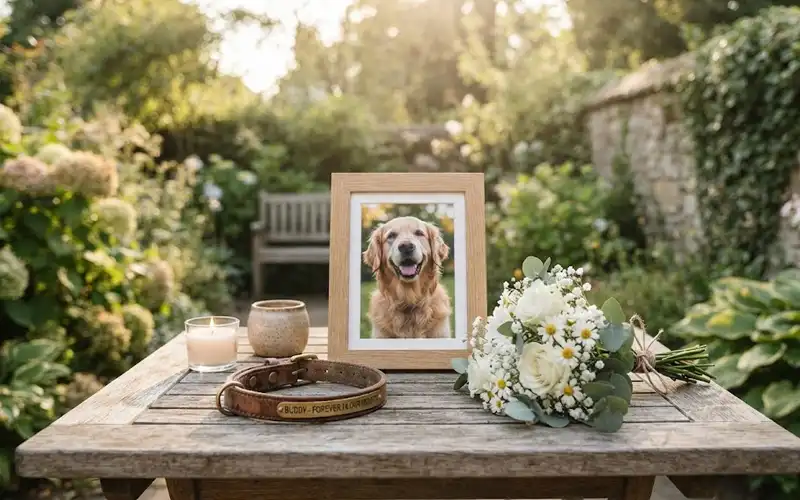
It might be a quiet gathering at home, a framed photograph or a favourite walking route revisited with family members.
The most meaningful detail is usually specific to the animal.
Perhaps the dog always slept beside one particular chair. Perhaps the cat appeared whenever someone opened a cupboard. Those ordinary details are often what families miss most.
Use them.
A memorial built around real memories usually feels more genuine than something formal created because grief seems to demand ceremony.
Give Yourself A Practical Plan
The period immediately after a pet dies can feel chaotic, especially when the death happens at home.
Knowing who will transport the pet, where the remains will go and how the ashes will be returned can remove some of that uncertainty.
The logistics matter because they protect the family from having to improvise while upset.
Pet cremation is ultimately a practical service around an emotional event. The best arrangement is the one that makes the process clear and leaves space for the family to remember the animal in its own way. A farewell does not have to be elaborate. It only has to feel recognisable as a goodbye to the particular companion you lost.
Frequently Asked Questions
1. What is pet cremation?
Pet cremation is a process in which a pet’s body is cremated after death. The ashes may be returned to the owner, depending on the cremation arrangement.
2. What is the difference between individual and communal pet cremation?
Individual cremation is arranged for one pet separately, while communal cremation involves multiple pets being cremated together. Ashes are generally not returned after communal cremation.
3. Can I get my pet’s ashes back after cremation?
Yes, ashes can usually be returned when you choose an individual cremation service. Always confirm the arrangements with the provider before booking.
4. How long does pet cremation take in Singapore?
The time depends on the service provider, pet size and cremation arrangement. Ask the provider for an estimated completion and ash collection time.
5. What should I do when my pet dies at home?
Keep your pet in a cool, quiet place and contact a veterinary clinic or pet cremation service for guidance on transportation and next steps.
6. How can I create a meaningful memorial for my pet?
You can create a memorial using framed photographs, your pet’s collar, favourite toys or a special gathering with family members to share memories.
7. How can I help children cope with the loss of a pet?
Explain the loss honestly using simple, age-appropriate words. Encourage children to share their feelings and participate in small memorial activities, such as drawing a picture or choosing a favourite photograph.