

Wavy hair is stuck in the middle. It is too bendy to act like straight hair, but too loose to follow the rules made for curls. That is why so many people fight frizz, flat roots, and waves that vanish by lunch.
The good news is that learning how to style wavy hair is simple once you know your pattern and follow the right order. This guide walks you through it step by step, for men and women, with heat and without it.
In short: Wash gently, put one light product on soaking-wet hair, scrunch, and let it dry without touching it. That single routine works for most waves. The rest of this guide helps you adjust it for your pattern, your hair length, and your daily schedule.
Understanding Your Natural Wave Pattern
Before you buy anything, see what your hair does on its own. A method that lifts one wave pattern can flatten another.
Telling 2A, 2B, and 2C Apart
Wash your hair, skip all products, and let it dry untouched. Then compare it with the table below.
| Type | What you see | Biggest need |
| 2A | A loose, gentle bend that starts near the ears | Lift and light hold |
| 2B | Clear S-shapes from mid-length down, with straighter roots | Definition and frizz control |
| 2C | Waves from the scalp, thick S-curves, and a few ringlets | Moisture and strong hold |
Many people have a mix, such as tighter waves at the nape and looser ones at the front. Style for the main pattern and give the rest a little extra care.
Porosity Test at Home
Porosity is how easily your hair soaks up and keeps water. Drop one clean strand into a glass of water. If it floats for a while, porosity is probably low. A slow sink means medium, and a fast sink means high. Treat this as a rough guide only, because leftover product can change the result.
Low-porosity hair needs light formulas that do not sit on top of the strand. High-porosity hair loses moisture quickly, so it likes richer creams that seal it in. Medium porosity is the easiest and handles most products.
Must-Have Tools and Products
You need less than the ads suggest. A short kit covers every look in this guide.
Mousse, Gel, and Cream Basics
Mousse is light and adds lift. Gel holds the shape and fights frizz. Cream adds softness and moisture, but it can weigh down thin hair. Start with one styler, not three, because wavy hair loses its shape under heavy layers. If you want to style wavy hair with mousse, pick an alcohol-free foam, since drying alcohols push waves toward frizz.

Pick one styler that matches your hair type instead of layering several.
When shopping for wavy hair products, use this table as your starting point.
| Hair type | Best first choice | Avoid |
| 2A or fine hair | Light mousse | Rich creams |
| 2B | Light gel or mousse | Heavy butters |
| 2C or thick hair | Gel or cream-gel | Mousse on its own |
Combs, Towels, and Diffusers
A wide-tooth comb detangles wet hair without breaking the waves. Swap your bath towel for a microfiber towel or an old cotton t-shirt, since rough terry cloth lifts the outer layer of the strand. A diffuser, which spreads airflow gently, is the only extra tool worth buying. A spray bottle is also handy for the refresh tips later in this guide.
Complete Step-by-Step Styling Routine
This routine is the simplest answer to how to style wavy hair for beginners. It takes about 15 minutes of work, plus drying time.
Cleanse the Scalp Gently
Put shampoo on your scalp only and massage with your fingertips. The foam that rinses down cleans the lengths, which stay softer when they are not scrubbed. Every three or four washes, use a clarifying shampoo to remove the build-up that makes waves heavy and flat.
Condition Mid-Lengths and Ends
Smooth conditioner from ear level down and detangle with your comb. Leave it on for two minutes. Finish with a cool rinse, which helps the outer layer of each strand lie flat and look shinier.
Squeeze Out Extra Water
Press sections of hair into your microfiber towel until it stops dripping. Do not rub. Rubbing roughs up the strand and creates frizz before you have even started.
Apply Products on Wet Hair
Wet hair spreads product evenly, so style straight after the shower while strands are still soaking. That is the easiest answer to how to style wavy hair after shower, and it is also how to style wavy hair when wet without it turning crunchy.
Apply a leave-in conditioner first, then your styler. Use an egg-sized amount of mousse or a coin-sized amount of gel for shoulder-length hair. Glide it over your hair from the ends upward and keep it away from the roots. Avoid raking your fingers through, because that pulls the waves apart.

Wet hair spreads product evenly, so style right after the shower.
Scrunch Upward for Shape
Cup a section in your palm and squeeze it toward your scalp, then let go. Repeat until you see the wave spring up. Scrunching teaches each strand to bend into its natural S-shape.
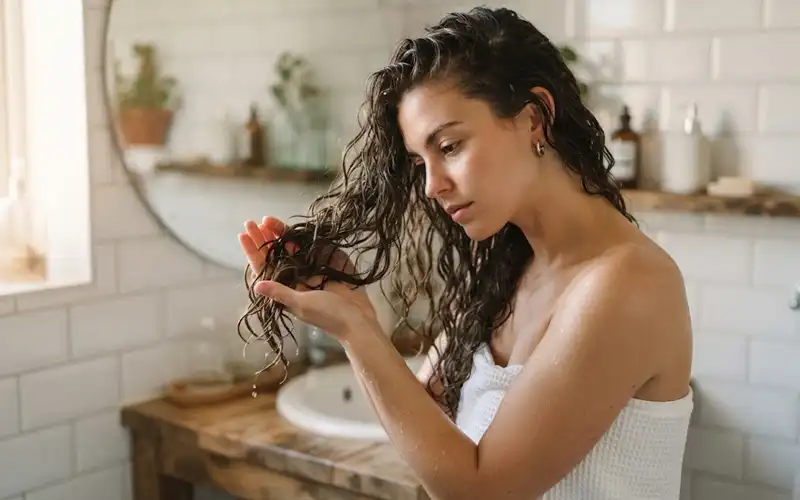
Squeeze upward toward the scalp until the wave springs up.
Dry With a Diffuser or Air
With a diffuser, use low heat and medium airflow. Rest the bowl against your head for ten to fifteen minutes, then move to the next section. To air dry, allow two to four hours depending on thickness. Either way, keep your hands out of your hair while it dries, because touching breaks up the waves.

Rest the diffuser bowl against your head and keep the heat low.
Shake Out the Cast
Dry hair may feel stiff from the product. That stiffness is called a cast, and it protects the wave while it dries. Flip your head over and gently crunch the hair to break it. Soft, separate waves appear in seconds.
Finish With Light Shine
Rub two drops of lightweight oil between your palms and glaze only the ends. Keep oil off the roots so they stay lifted.
Heat-Free Ways to Get Waves
To style wavy hair naturally and without heat, these three options protect your strands and cost almost nothing.
Plopping and Air Drying
Lay a cotton t-shirt flat on a bed or counter. Flip your product-coated hair onto the center, fold the fabric around it, and leave it for ten to twenty minutes. Unwrap and let your hair finish drying freely. The gentle pressure helps the waves form.

Ten to twenty minutes in a cotton t-shirt helps waves form.
Braids and Overnight Twists
Before bed, split slightly damp hair into two or three loose braids or twists and tie the ends with soft scrunchies. In the morning, undo them and run your fingers through the lengths. Thick braids give broad, relaxed waves, while thin ones give tighter texture.

Thicker braids give broad, relaxed waves by morning.
Going Without Any Products
You can also style wavy hair without products. Squeeze water through damp hair, tie it in a loose braid or clip, and let it dry. This works best on 2B and 2C hair, which clumps by itself. Fine hair may look softer and less defined, and many people like that relaxed result.
Straightener Waves in Minutes
A flat iron makes waves fast on days when your natural pattern will not behave. Here is how to style wavy hair with a straightener: the whole trick is the twist, and your hair must be fully dry.
Protecting Strands From Damage
Spray a heat protectant through your hair and let it dry. Pick a one-inch plate. For fine or colored hair, set the temperature between 300 and 350 degrees Fahrenheit. Thick hair can handle a little more, but stay below 380. One slow pass per section is enough.
Bending Sections Into Waves
Take an inch-wide section and clamp the iron near the roots. Turn it half a turn away from your face and glide down slowly. Switch the direction of the twist on each section so the waves look natural, not copied. Leave the last inch out of the iron for a softer end, then loosen everything with your fingers.
Fighting Frizz Without Heaviness
Frizz happens when the outer layer of a strand lifts and grabs water from the air. To style wavy hair without frizz, seal that layer without piling on heavy products. If your hair is wavy and frizzy, these two habits matter most.
Defending Against Humidity
Apply a flexible-hold gel or an anti-humidity cream to damp hair. It forms a light shield against moist air. Add a deep conditioning mask once a week as well, because hydrated strands grab less water. Dry or damaged hair frizzes first.
Smoothing Flyaways Gently
For stray hairs at the temples and crown, dampen your fingertips with a tiny bit of balm and press them down. A clean spoolie brush works too. Too much product turns flyaways into greasy streaks, so use less than you think you need.
Fresh Looks for Busy Mornings
You do not need a full restyle every day. This is how to style wavy hair in the morning when you only have five minutes.
Reviving Hair Between Washes
Mix water with one pump of leave-in conditioner in a spray bottle. Mist the flat sections and scrunch. Two or three minutes of diffusing adds lift. By day three, a little dry shampoo at the roots absorbs oil and brings back volume. These small steps are how to style wavy hair between washes without starting over.
Sleep Habits That Help
Use a silk or satin pillowcase to cut friction, or wear a loose bonnet. Pull your hair into a high, loose ponytail on top of your head so the waves are not crushed overnight.
Guys and Their Wavy Hair
If you want to know how to style wavy hair for men, start with the cut. For guys, the right haircut does half the work and one good product does the rest. Male waves also respond well to the eight-step routine above, so the tips below only cover what is different.
Haircuts That Suit Waves
Keep three to four inches on top so the waves have weight to form, and taper the sides for a clean outline. Layered cuts and textured crops work well because they remove bulk without removing the wave. Very short clipper cuts on top can leave waves flat and fluffy, so ask your barber to cut the top with scissors.
Pomade, Clay, or Sea Salt
Sea salt spray gives a loose, messy finish and suits relaxed 2A and 2B waves. Clay gives a matte look and strong hold for thick hair. Pomade adds shine and control for a neater style. Start with a pea-sized amount, because men with fine waves often use too much.
Quick Routine for Busy Men
Wash, towel-dry until damp, and work your styler through with your fingers. Scrunch once, then diffuse for a few minutes or let it air dry. The whole thing takes about five minutes.
Women’s Styles With Bangs and Layers
The cut changes how waves fall, so a few smart choices at the salon make daily styling easier for women who want less effort.
Wavy Bangs Done Right
Ask for bangs to be cut dry and slightly longer than you want, because waves spring up as they dry. Curtain bangs suit most wave types since they blend into the sides. To style wavy hair with bangs, use a small amount of mousse and shape them with your fingertips as they dry instead of combing them flat.
Layers That Add Movement
Long layers that start around the chin remove weight and let waves bounce. Face-framing pieces show off your pattern near the cheekbones. A heavy, blunt cut often creates a triangle shape, so ask for internal layers that keep the ends full.
Common Mistakes to Avoid
- Washing on a fixed daily schedule instead of when the scalp feels oily, which is usually two to four times a week.
- Using very hot water, which strips the natural oils waves depend on.
- Rinsing conditioner too quickly, which leaves residue that weighs the waves down.
- Pulling hair into tight elastics every day, which stretches waves and leaves dents.
- Judging a new product after one use, when most need about two weeks to show their real result.
- Copying a look made for another wave type without changing the product.
Frequently asked questions
Why does the top look flat?
Weight at the roots is the usual reason, and it comes from product or conditioner applied too close to the scalp. Keep both below ear level. While drying, clip the root section upward, or diffuse with your head tilted to one side so the roots lift.
Does brushing ruin waves?
Brushing dry waves splits the clumps and creates frizz, so it is best to style wavy hair without brushing. Detangle only while the hair is wet and coated in conditioner.
Do short waves need different care?
Yes. Short hair has less weight, so waves spring up tighter and look bigger. Use about half the amount of product and skip heavy creams, which can make short hair look limp.
Will my waves change over time?
They can. Hormone shifts, pregnancy, medication, and age sometimes make waves looser or tighter. If your routine suddenly stops working, repeat the pattern test from the first section.
Final Thoughts on Waves
Great waves come from a simple routine done the same way each time. Know your pattern, use one suitable product on wet hair, dry it gently, and protect it overnight. This weekly rhythm keeps results steady.
| When | What to do |
| Wash day (two to four times a week) | Follow the eight steps |
| Days between washes | Mist, scrunch, and refresh |
| Every four to six weeks | Trim the ends to keep waves even |
Within a few weeks, your waves should look softer and clearer, and they should take much less effort.
Also Read : The Best Wavy Hair Routine for Naturally Defined and Healthy Waves