
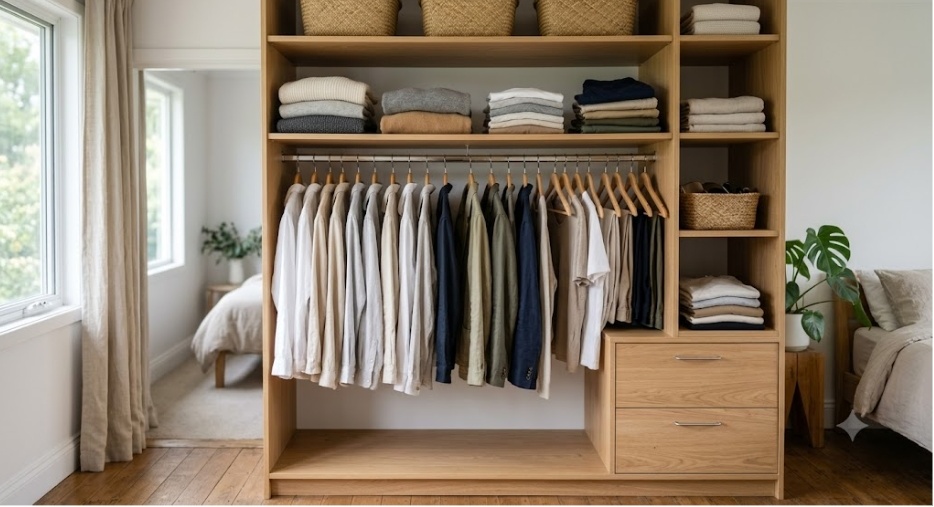
Organizing Your Wardrobe So You Actually Wear All of It
You own more than you wear, and the reason often isn’t the clothes, it’s the storage. When pieces are buried, crammed, or out of sight, they might as well not exist, so you cycle through the same visible third while the rest gathers dust. Good wardrobe organization isn’t about looking tidy, it’s about making every piece easy to see and reach so it actually gets worn. That single shift changes how much of your wardrobe you use. A great cole buxton piece does nothing buried at the back where you forget it exists. Let’s set your wardrobe up so everything gets its turn.
Table of Contents
ToggleWhy Organization Decides What You Wear
The core truth here is that visibility and accessibility drive what you wear far more than preference does, since you reach for what you can easily see and grab, not necessarily what you like most. So a piece buried at the back of a drawer or crammed on an overloaded rail effectively disappears, and you forget you own it. That’s why people wear the same small rotation despite owning much more, since only that rotation is actually visible and reachable.
The rest is technically owned but functionally invisible. My honest opinion? Most people’s wardrobe problems are organization problems disguised as wardrobe problems, since they think they have nothing to wear when really they have plenty they simply can’t see or access. So fixing the organization often reveals a wardrobe that was there all along. The principle is that good organization makes your whole wardrobe available to you, putting every piece within easy sight and reach so your choices expand to everything you own rather than just the visible portion. When everything is visible and accessible, you naturally wear a wider range, use more of what you own, and stop buying duplicates of things you forgot you had. So organization isn’t cosmetic, it’s what determines whether your wardrobe functions as the full resource it should be or just the fraction you can currently see.
Start By Seeing Everything You Own
The first step to a working wardrobe is getting everything visible, since you can’t use what you can’t see. So take everything out and look at the full picture, which sounds drastic but reveals what you actually own, including the pieces buried and forgotten. Most people are surprised by what surfaces. Then sort into categories as you go, grouping tops with tops, bottoms with bottoms, and so on, since organizing by type makes everything findable later.
This also reveals your imbalances, showing where you have too much and too little. As you sort, be honest about what you actually wear, setting aside pieces you never reach for, since those are candidates for clearing and they’re often what’s crowding out the pieces you do use. Clearing the dead weight makes room for everything else to be visible. Here’s the hands-on detail worth knowing: the pieces you’d forgotten you owned when you pulled everything out are exactly the ones your storage was hiding, so those are the strongest evidence of what to fix, since making them visible means they’ll actually get worn. One honest limitation: this full turnout takes real time upfront, an hour or two, so it’s not a quick fix, but it’s a one-time setup that pays off every morning afterward, so the upfront effort is worth it.
Setting Up for Visibility and Access
Once you know what you own, organize it so everything stays visible and reachable. Follow this order:
- Clear out anything you don’t wear, since dead weight crowds out and hides the pieces you use
- Group by category, keeping tops, bottoms, and layers together so everything is findable
- Store so everything is visible, avoiding deep stacks and crammed rails that hide pieces
- Put frequently-worn items at the most accessible spots, and less-used ones slightly further
- Leave breathing room, since an overcrammed wardrobe hides pieces and wrinkles everything
Step three is the crucial principle, since the whole goal is visibility, and deep stacks where you only see the top piece or rails so crammed you can’t flip through them defeat the purpose. So store in ways that keep everything in view. Step five matters more than people expect, since an overstuffed wardrobe hides pieces in the crush and wrinkles them, so leaving some space actually makes everything more usable and better-kept. That’s why clearing the excess in step one enables everything else. Step four uses the fact that accessibility drives use, so putting your most-worn pieces where you’ll reach them easily keeps them in rotation while placing occasional items slightly further keeps them available without cluttering the prime spots.
Fold or Hang: Getting It Right
How you store each type of item affects both its visibility and its condition, so getting the fold-versus-hang decision right matters. Hang structured pieces like shirts, jackets, and trousers, since they keep their shape better hanging and stay visible and accessible on a rail. So these belong on hangers. Fold heavy knits and fleece, since these stretch on hangers as gravity pulls them down over time, so folding preserves their shape, and they store well in visible stacks or on shelves. The key with folding is keeping stacks shallow enough to see everything, since a deep stack hides all but the top piece, defeating visibility. So fold in short stacks or use a filing method where pieces stand vertically and you can see each one.
Here’s the hands-on detail worth knowing: folding items vertically so they stand on edge in a drawer, rather than flat-stacking them, lets you see every piece at once instead of just the top of the pile, which dramatically increases how much of your folded clothing you actually use. A quality Hellstar hoodie fleece piece should be folded rather than hung to protect its shape, and stored where you can see it. My preference is hanging structured pieces and folding everything heavy vertically, since that combination keeps shapes intact and everything visible, which is the whole goal.
Systems That Keep It Working
A few organizing systems help maintain visibility and make getting dressed easier over time:
- Grouping by category, so you always know where to find each type of item
- Arranging by color within categories, which makes pieces easy to locate and combinations easy to see
- Keeping frequently-worn items most accessible, matching placement to how often you reach for things
- Using vertical folding for drawers, so every folded piece is visible rather than buried in a stack
- Seasonal rotation, storing off-season items elsewhere so the current wardrobe stays uncrowded
Arranging by color within each category is genuinely useful beyond looking neat, since it makes any specific piece fast to locate and helps you see your color balance and which combinations are possible at a glance. So color-sorting aids both finding and outfit-building. Seasonal rotation is worth doing if space is tight, since storing off-season pieces elsewhere keeps your active wardrobe uncrowded and fully visible, so you’re only looking at what’s currently relevant. That reduces the crush that hides pieces. The vertical folding system deserves emphasis since it solves the biggest visibility problem in drawers, turning a pile where you see one piece into a row where you see all of them. My preference is grouping by category, color-sorting within, and folding vertically, since together these keep everything findable and visible, which keeps the whole wardrobe in use.
Keeping It Organized
Setting up a wardrobe well is only half the job, since it drifts back to chaos without a few maintenance habits, which are simple. Put things back in their place after wearing or washing, since the whole system depends on pieces returning to where they belong, and a few minutes of this keeps everything findable. So resist the pile-on-the-chair habit that undoes organization. Do a quick tidy periodically, taking a few minutes occasionally to refold, rehang, and restore order, which is far easier than letting it collapse and redoing the whole thing.
Adopt one in, one out too, since bringing in new pieces without removing old ones eventually overcrowds the wardrobe and returns you to the crammed, hiding state you fixed. So keep the total stable. Also, notice pieces you’re not wearing and ask why, since if something’s still going unworn despite being visible and accessible, the issue is the piece rather than the storage, and it may be a candidate for clearing. That keeps the wardrobe honest. Over time these small habits keep your wardrobe in the state where everything is visible, reachable, and worn, which is the whole point. The maintenance is minor compared to the benefit, since a wardrobe that stays organized keeps making getting dressed easy and keeps all your pieces in use rather than slowly burying them again. So a little upkeep preserves the system that makes your whole wardrobe function.
Final Words
You wear the same small rotation not because you lack clothes but because the rest is hidden, so organization is what unlocks your full wardrobe. Take everything out to see what you own, clear the dead weight, and store so every piece stays visible and reachable, avoiding deep stacks and crammed rails. Hang structured pieces, fold heavy ones vertically so you see each one, and group by category and color. Then maintain it with a few simple habits and one in, one out. Do that and you’ll actually wear everything you own, which makes a full-looking wardrobe finally feel like enough.
FAQ BLOCK
Q: Why do I only wear a small part of my wardrobe?
A: Because you reach for what you can easily see and grab. Pieces buried in deep stacks or crammed on overloaded rails effectively disappear, so you cycle through the visible portion while the rest goes unworn.
Q: What’s the first step to organizing a wardrobe?
A: Take everything out to see what you actually own, including the buried and forgotten pieces. Sort into categories as you go, which reveals your imbalances and makes everything findable once you store it again.
Q: Should I fold or hang my clothes?
A: Hang structured pieces like shirts and jackets to keep their shape. Fold heavy knits and fleece, since they stretch on hangers. Fold them vertically so each piece stands visible rather than buried in a stack.
Q: How do I stop my wardrobe becoming a mess again?
A: Put things back after wearing, do a quick tidy periodically, and adopt one in, one out so it doesn’t overcrowd. These small habits preserve the system far more easily than letting it collapse and redoing it.
Q: What’s the biggest visibility mistake in drawers?
A: Flat-stacking, where you only see the top piece. Fold items vertically so they stand on edge and you can see every piece at once, which dramatically increases how much of your folded clothing you actually wear.
Tags