Smart Home Essentials That Keep Daily Life Running During a Power Cut
A power cut does not have to bring every part of a home to a standstill. The immediate impact may be obvious when lights go out, but an outage can also interrupt refrigeration, internet access, device charging, home working, ventilation, and security systems. Trying to keep every appliance operating, however, can require unnecessary battery capacity and increase the complexity of a backup system. A more practical approach is to identify the devices that support safety, communication, comfort, food preservation, and essential daily activities, then plan backup power around those priorities.
These devices are often referred to as essential loads. Prioritizing them allows homeowners and energy professionals to assess backup requirements based on actual needs rather than simply selecting the largest available battery. A small UPS, portable power station, or fixed home battery may each be appropriate depending on the equipment involved, expected runtime, electrical configuration, and installation requirements. Understanding which devices matter most is therefore the first step toward a practical power-outage plan.
Table of Contents
ToggleWhich Smart Home Essentials Should Stay Powered During an Outage?
A practical backup plan starts by identifying the devices that matter most during a power cut. Lighting provides basic visibility and safety, while phones and laptops support communication, information access, and remote work. Backing up Wi-Fi and networking equipment can help maintain internet connectivity when the service itself remains available.
Refrigeration is another priority because longer outages can put food at risk. Although a refrigerator cycles rather than continuously drawing its maximum rated power, the backup system should account for its operating and starting requirements. In warmer climates, fans and ventilation may also be important for maintaining indoor comfort.
For home-based workers, supporting a laptop, monitor, router, and basic lighting can preserve productivity. Security systems, including cameras and alarms, may also benefit from backup power. Households using essential medical devices require particularly careful planning because the backup system should be matched to the device’s specific electrical requirements, expected operating duration, and applicable manufacturer guidance.
A useful outage checklist includes:
- LED lighting
- Phones and laptops
- Wi-Fi equipment
- Refrigeration
- Fans and ventilation
- Home-office equipment
- Security systems
- Essential medical devices
How to Estimate Backup Power Needs for Essential Loads
Effective backup planning starts with understanding how much power essential devices require and how long they need to operate. Watts (W) measure the power a device uses while operating, while watt-hours (Wh) represent energy consumption over time. Larger energy requirements are generally expressed in kilowatt-hours (kWh), with 1 kWh equal to 1,000 Wh.
For example, a 60 W device running for four hours would theoretically consume 240 Wh before accounting for conversion losses and other system factors. Actual runtime can vary because of inverter efficiency, battery operating limits, temperature, and changes in a device’s power demand. Battery capacity should therefore be treated as an estimate of available energy rather than a guarantee of a specific runtime.
Battery capacity is only one part of the calculation. The inverter must also provide enough continuous output for the connected equipment and accommodate higher short-term demand where applicable. Refrigerators, pumps, and other motor-driven appliances can require significantly more power when starting than during normal operation. A simple voltage definition helps homeowners avoid connecting appliances to incompatible backup equipment. For larger systems, both total energy consumption and instantaneous power requirements should be considered during system planning.
Small UPS vs Portable Power Station vs Fixed Home Battery
The right backup technology depends on the equipment being supported, required runtime, portability, and how much integration the home needs. Each option has a different role, so the largest system is not necessarily the most suitable.
| Backup option | Best suited for | Main advantage | Main limitation |
| Small UPS | Computers, routers, networking | Immediate short-duration backup | Limited capacity |
| Portable power station | Selected appliances and electronics | Portable and flexible | Less integrated |
| Fixed home battery | Essential circuits and larger loads | Higher capacity and integration | More planning and installation |
A small UPS is practical for computers, routers, and networking equipment that need short-duration backup. Its limited capacity makes it less suitable for running larger household appliances for extended periods, and the unit should be matched to the connected equipment’s power requirements.
A portable power station provides flexible backup for selected lights, laptops, communication devices, and smaller appliances. Because it does not normally require permanent electrical modifications, it can be useful where portability and simple deployment are priorities.
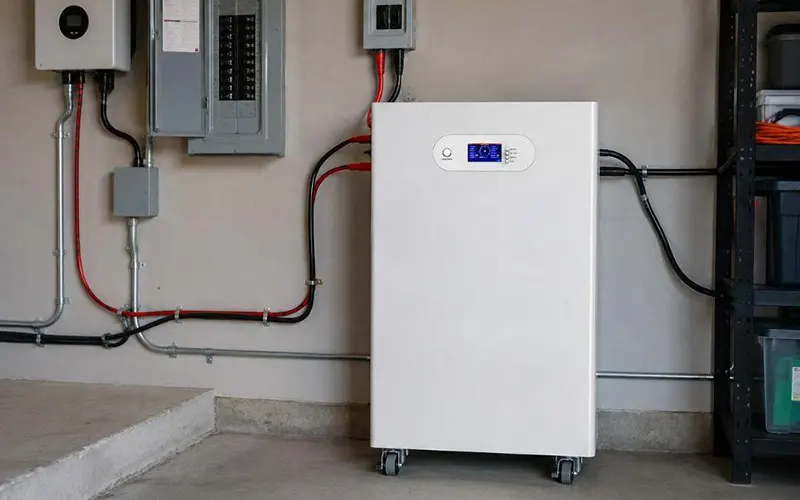
A fixed home battery is better suited to households requiring greater capacity or backup for selected circuits. Depending on the system design, it may also integrate with solar generation and other home energy equipment. For installers and distributors, factors such as capacity, inverter compatibility, installation conditions, scalability, and project requirements should be considered. Avepower is one option to evaluate when comparing LiFePO4 battery solutions for residential energy-storage applications.
How to Plan Runtime Around Essential Loads
Battery capacity should be planned around the loads that genuinely need to remain operational and the length of time they must run. A useful approach is to divide household devices into three priority levels: critical, important, and convenience. This prevents unnecessary appliances from increasing the required battery capacity and helps installers design systems around practical household needs.
Critical loads may include:
- Medical equipment
- Refrigeration
- Essential lighting
- Communication devices
- Security systems
Important loads can include Wi-Fi equipment, fans, laptops, and monitors, while convenience loads may include entertainment equipment, high-consumption appliances, and other non-essential devices.
This prioritization can make a significant difference to runtime. Instead of attempting to power every appliance continuously, a household can reserve available energy for the devices that provide the greatest value during an outage. Turning off convenience loads, reducing unnecessary consumption, and avoiding simultaneous operation of high-demand appliances can extend available runtime without increasing battery capacity.
Runtime planning should also account for actual usage patterns. A refrigerator, for example, normally cycles rather than operating continuously, while lighting and electronics may be used intermittently. Battery limits, inverter efficiency, temperature, and other system losses should also be considered when estimating how long essential equipment can remain operational.
Heat, Ventilation, and Where Backup Equipment Should Be Installed
The environment where backup equipment operates can affect performance, reliability, and service life. High ambient temperatures, humidity, dust, moisture, and direct sunlight can create additional challenges for batteries and power electronics. Adequate ventilation and the clearance specified by the manufacturer should therefore be considered when planning an installation.
Equipment should be placed in a location that meets the manufacturer’s environmental and installation requirements rather than simply using an available corner of the home. These considerations can be particularly important in hot and humid markets. Buyers considering a LiFePO4 solar battery Philippines should also check operating temperature, ventilation, and local installation support. The same principle applies to other climates where heat, moisture, or restricted airflow could affect equipment operation.
Installation location should also provide appropriate access for inspection and maintenance while protecting equipment from unnecessary exposure to water, dust, or direct sunlight. Following the manufacturer’s specified environmental limits is more reliable than assuming that a battery or inverter can operate safely in any available indoor or outdoor location.
When Does a Home Backup System Require Professional Installation?
Not every backup device requires the same level of installation. A small approved UPS connected to an existing outlet is fundamentally different from integrating a fixed battery system with a home’s electrical panel. Portable equipment may also require little permanent modification, depending on how it is used and the manufacturer’s instructions.
Professional installation may be necessary when a project involves electrical-panel connections, transfer equipment, fixed batteries, solar integration, wiring modifications, grounding and protection requirements, or higher-power loads. The complexity can also increase when backup power is intended to supply selected household circuits rather than individual plug-in devices.
Local electrical regulations may determine what work can be performed and who is qualified to complete it. Following manufacturer specifications and using appropriately qualified professionals for fixed electrical integration helps ensure that the backup system is selected, connected, protected, and operated safely. This is particularly important where battery storage, solar equipment, transfer equipment, or higher-power loads are involved.
Choosing the Right Backup Approach for Different Homes
The most suitable backup approach depends on the home’s layout, essential loads, expected outage duration, and level of electrical integration required. For an apartment or smaller home, a UPS or portable power station may be sufficient when the priority is keeping selected electronics, lighting, and communication equipment operational. A home office may benefit from a UPS for computing and networking equipment, with additional backup capacity when longer interruptions are expected.
In hot-climate households, fans and refrigeration can have a greater influence on backup requirements, making load assessment particularly important. Homes that already use solar generation may benefit from fixed storage that can provide a more integrated approach to essential-load backup. Where essential medical equipment is involved, the backup system should be selected according to the device’s specific power requirements, operating duration, and applicable professional guidance.
Conclusion
Preparing a home for a power cut starts with identifying the devices that genuinely need to remain operational rather than attempting to back up every appliance. Lighting, communication, refrigeration, cooling, security, home-working equipment, and essential medical devices can each have different priorities depending on the household. Matching these essential loads with an appropriate backup solution can help provide practical resilience without unnecessary capacity.
A small UPS, portable power station, or fixed home battery can each serve a different purpose. The right choice depends on power demand, required runtime, inverter capability, operating temperature, installation conditions, and potential future needs. For installers, distributors, and energy professionals evaluating residential storage projects, Avepower is one option to consider when comparing LiFePO4 battery solutions against specific load, runtime, and installation requirements.
FAQs
1. What should you keep powered during a power cut?
Essential lighting, phones, Wi-Fi equipment, refrigeration, fans, home-office equipment, security systems, and essential medical devices should generally be prioritized based on household needs.
2. How do you calculate backup power requirements?
Estimate each device’s wattage and expected operating time to determine its energy requirement in watt-hours. Then account for inverter efficiency, battery limits, temperature, and startup power where applicable.
3. What is the difference between a UPS and a portable power station?
A UPS is primarily designed for short-duration backup of equipment such as computers and networking devices, while a portable power station provides more flexible backup for selected electronics, lights, and smaller appliances.
4. When is a fixed home battery better than portable backup?
A fixed home battery can be more suitable when a household needs greater capacity, longer backup duration, or backup for selected electrical circuits, particularly when integrated with solar generation.
5. Does a home battery require professional installation?
Fixed batteries connected to electrical panels, household circuits, solar systems, or transfer equipment may require professional installation to meet manufacturer requirements and applicable electrical regulations.
Tags