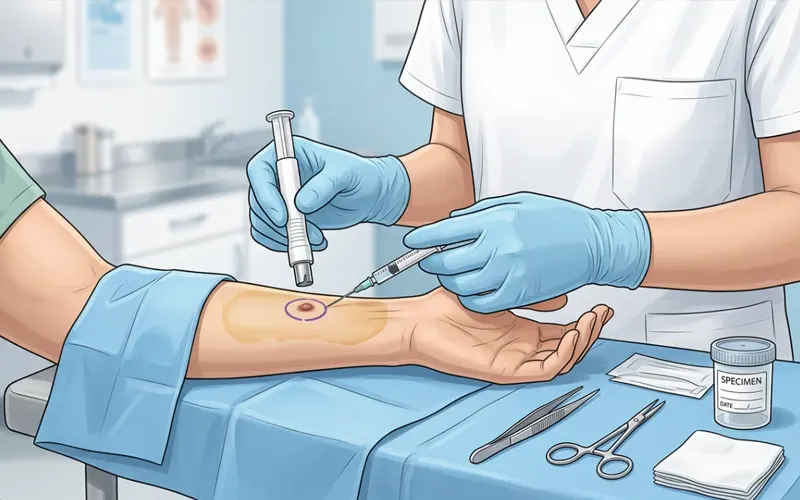
What Happens During a Skin Biopsy Procedure?
A skin biopsy is one of the most common procedures performed in dermatology. It allows doctors to examine a small sample of skin tissue under a microscope to diagnose conditions ranging from rashes and infections to skin cancer. If your doctor has recommended this procedure, you may be wondering what it actually involves. This guide covers the skin biopsy procedure, what to expect, and how to prepare, so you can walk into your appointment feeling informed and at ease.
Table of Contents
ToggleWhat Is a Skin Biopsy?
A skin biopsy is a minor surgical procedure in which a small piece of skin is removed for laboratory analysis. Dermatologists and other physicians use this method to identify the cause of unusual skin changes, such as suspicious moles, persistent rashes, unexplained lesions, or growths that do not heal. The tissue sample is sent to a pathology lab, where a specialist examines the cells to determine whether they are benign, cancerous, infectious, or related to another underlying condition.
Because the skin is the body’s largest organ and often reflects internal health issues, biopsies can help diagnose a wide range of conditions, including skin cancer, psoriasis, eczema, fungal infections, autoimmune disorders, and allergic reactions.
Why Would You Need a Skin Biopsy?
Doctors typically recommend a skin biopsy when a visual examination alone cannot provide a clear diagnosis.
Some of the main situations that may call for a skin biopsy include:
- A mole or growth that has changed in size, shape, or color
- A sore that bleeds, crusts, or does not heal within a few weeks
- Unexplained rashes or skin discoloration
- Suspected skin cancer, including basal cell carcinoma, squamous cell carcinoma, or melanoma
- Blistering or scaling skin conditions
- Signs of infection that have not responded to treatment
If your doctor has spotted something concerning during a skin exam, a biopsy is often the fastest and most reliable way to get answers.
Types of Skin Biopsy Procedures
There are several different biopsy techniques, and the one your doctor chooses depends on the size, location, and suspected cause of the skin abnormality.
Shave Biopsy
In a shave biopsy, the doctor uses a small blade to shave off the top layers of skin where the abnormality is located. This method is often used for raised lesions or growths that appear to be limited to the surface layers of skin. It is quick and typically does not require stitches.
Punch Biopsy
A punch biopsy involves a circular tool that removes a small, deeper section of skin, including layers beneath the surface. This technique is useful when a doctor needs to examine a full cross-section of skin, such as when diagnosing rashes or inflammatory skin conditions. A punch biopsy usually requires one or two stitches to close the wound.
Excisional Biopsy
An excisional biopsy removes an entire lesion or growth, along with a margin of surrounding healthy tissue. This method is often used when melanoma is suspected, since it allows the pathologist to examine the full depth and borders of the lesion. Excisional biopsies typically require stitches and leave a small scar.
Incisional Biopsy
Similar to an excisional biopsy, an incisional biopsy removes only a portion of a larger lesion rather than the entire area. This is generally used when a growth is too large to remove entirely during the initial procedure.
How to Prepare for a Skin Biopsy
Preparation for a skin biopsy is usually minimal, but there are a few steps that can help the procedure go smoothly.
- Tell your doctor about any medications or supplements you take, especially blood thinners like aspirin or warfarin
- Inform your doctor if you have a history of keloid scarring or slow wound healing
- Avoid applying lotions, makeup, or other products to the area being biopsied
- Wear loose, comfortable clothing that allows easy access to the biopsy site
- Ask whether you should avoid alcohol or certain medications in the days leading up to the procedure
Most skin biopsies are performed in an outpatient setting, such as a dermatologist’s office, and do not require any special dietary restrictions or fasting beforehand.
Skin Biopsy Procedure: What to Expect
Understanding the skin biopsy procedure and what to expect can help ease any anxiety about the appointment. While the exact steps vary slightly depending on the biopsy type, most procedures follow a similar general process.
Step 1: Cleaning and Marking the Area
Your doctor will begin by cleaning the skin around the area to be biopsied with an antiseptic solution to reduce the risk of infection. In some cases, they may mark the exact spot with a surgical pen, particularly if the lesion is small or difficult to see clearly.
Step 2: Numbing the Area
A local anesthetic is injected into the skin to numb the area. This injection may cause a brief stinging or burning sensation, but it ensures that the rest of the procedure is virtually painless. Most patients feel only slight pressure once the area is numb.
Step 3: Removing the Skin Sample
Depending on the type of biopsy being performed, the doctor will use a blade, punch tool, or scalpel to remove the tissue sample. This step typically takes only a few minutes. You may feel tugging or pressure, but you should not feel sharp pain.
Step 4: Controlling Bleeding
After the sample is removed, the doctor will apply pressure to control any bleeding. For shave biopsies, a chemical solution or electric current may be used to stop bleeding and seal the wound. For punch or excisional biopsies, stitches are often used to close the site.
Step 5: Bandaging the Site
Once bleeding is controlled, the area is covered with a sterile bandage. Your doctor will provide instructions on how long to keep the bandage on and how to care for the wound at home.
Step 6: Sending the Sample for Testing
The removed tissue is placed in a preservative solution and sent to a pathology laboratory. A pathologist examines the sample under a microscope to identify abnormal cells, infections, or other markers of disease.
The entire procedure, from numbing to bandaging, usually takes between fifteen and thirty minutes, depending on the biopsy type and the number of samples taken.
What Happens After the Biopsy
Recovery from a skin biopsy is generally straightforward, and most people can return to their normal activities the same day. Your doctor will give you specific aftercare instructions, but general guidelines often include the following.
- Keep the bandage clean and dry for the first twenty-four hours
- Avoid strenuous exercise or activities that stretch the skin near the biopsy site
- Watch for signs of infection, such as increased redness, swelling, warmth, or discharge
- Apply an antibiotic ointment if recommended by your doctor
- Follow up for stitch removal if applicable, usually within one to two weeks
Mild soreness, redness, or bruising around the biopsy site is normal and should resolve within a few days. More significant pain, fever, or spreading redness should be reported to your doctor right away.
How Long Does It Take to Get Results?
Biopsy results typically take anywhere from a few days to two weeks, depending on the complexity of the analysis and the laboratory’s workload. Your doctor’s office will usually contact you with the results and explain what they mean, along with any recommended next steps. If the biopsy reveals cancerous cells, your doctor will discuss treatment options, which may include further surgery, topical medications, or other therapies depending on the diagnosis.
Risks and Side Effects of a Skin Biopsy
Skin biopsies are considered low-risk procedures, but like any minor surgery, they carry a small chance of complications. Potential risks include:
- Infection at the biopsy site
- Excessive bleeding
- Scarring, which varies depending on the biopsy type and individual healing
- Allergic reaction to the local anesthetic
- Changes in skin pigmentation around the healed area
Most of these risks are minimal and can be managed with proper aftercare. Discuss any concerns with your doctor before the procedure so you know what signs to watch for during recovery.
FAQ: Common Questions About Skin Biopsies
Is a skin biopsy painful?
Most patients feel only minor discomfort during the numbing injection. Once the area is numb, the biopsy itself is generally painless, though you may notice pressure or tugging.
How long does a skin biopsy take?
Most skin biopsies take between fifteen and thirty minutes, including preparation, numbing, sample removal, and bandaging.
Will I have a scar after a skin biopsy?
Scarring depends on the type of biopsy performed and the size of the sample removed. Shave biopsies often leave minimal scarring, while punch or excisional biopsies may leave a small, thin scar.
Can I shower after a skin biopsy?
Most doctors recommend keeping the area dry for the first twenty-four hours. After that, gentle showering is usually fine, but you should avoid soaking the area in baths or pools until it is fully healed.
When will I get my biopsy results? Results typically take between a few days and two weeks, depending on the lab and the complexity of the analysis.
What if my biopsy comes back abnormal?
If results show cancerous or precancerous cells, your doctor will discuss next steps, which may include additional treatment, monitoring, or a follow-up procedure to remove any remaining abnormal tissue.
Can I drive myself home after a skin biopsy?
Yes, in most cases. Since only a local anesthetic is used, you should be able to drive yourself home and resume light activities the same day.
Final Thoughts
A skin biopsy is a quick, low-risk procedure that plays a critical role in diagnosing skin conditions accurately. By understanding what happens during a skin biopsy procedure, from preparation to recovery, you can approach your appointment with confidence rather than uncertainty. If you notice any unusual changes in your skin, don’t hesitate to speak with a dermatologist. Early detection through a simple biopsy can make a significant difference in treatment outcomes, especially when it comes to conditions like skin cancer.
Tags