

Walking into a room full of new faces can make anyone nervous, and choosing an outfit often adds to the stress. If you have ever stood in front of your wardrobe asking yourself what to wear to networking events, you are not alone. The invitation may not say much, the crowd may be mixed, and you still want to look sharp without feeling like you are dressed up for a costume party.
The good news is that a few simple rules solve most of the problem. This guide shows you how to read the dress code, build a reliable business casual base, and adjust your look for different venues and seasons. You will find clear ideas for men and women, along with practical tips on accessories, grooming and common questions. Let us begin with why your outfit deserves a little thought.
Why Your Outfit Matters
First Impressions in Seconds
People form an opinion about you long before they shake your hand. In a busy room they notice your outfit from across the space, from the side and sometimes even from behind. That quick glance tells them whether you take the event seriously and whether you care about details. It is not harsh judgment, it is simply how busy people sort through a crowd. When your clothes look neat and suit the setting, people stop thinking about what you are wearing and start listening to what you say, which is exactly what you want.
Comfort Builds Confidence
Networking usually means standing, walking and talking for hours. If your waistband digs in or your collar itches, your mind keeps drifting back to it, and your body language shows it. Clothes that move with you help you stay relaxed, smile naturally and hold eye contact. Choose pieces you have worn before and know you feel good in. Confidence is the best accessory in any room, and comfort is where it starts.
Finding the Right Dress Code
Clues in the Invite
Start with the invitation itself. Read the wording closely, because every dress code label carries a clear meaning, and we decode the common ones shortly. The venue gives hints too. A hotel ballroom usually calls for more polish than a coffee shop or a shared workspace. Even the time of day matters, because morning sessions tend to feel more formal than evening meetups.
Peeking at Past Events
If the invite says nothing useful, browse the organiser’s social media pages or website. Photos from earlier events show what most guests wore, and you can match that level easily. Notice the small details, such as whether people wore blazers, whether anyone chose jeans, and how dressed up the speakers looked. A few minutes of scrolling can save you a lot of second guessing and give you a clear picture before you open your wardrobe.
Messaging the Host
When you still feel unsure, a short message to the organiser is perfectly fine. Something simple works well, such as “Hi, I am looking forward to the event. Could you tell me what most guests usually wear?” Hosts are normally happy to help, and asking shows that you care about fitting in. You get a direct answer, and you also start building a friendly connection before the event even begins.
Business Casual Made Simple
Easy Tops and Layers
Business casual sits between a full suit and weekend wear. It looks neat and professional without feeling stiff, which makes it the safest starting point for most events. For the top half, choose a crisp button-down shirt, a plain blouse or a fine knit sweater. Then add a blazer, a cardigan or a structured jacket on top. A layer gives any outfit a pulled-together finish.
Bottoms That Look Sharp
Tailored trousers, dark chinos and a knee-length or midi skirt are your best friends here. Fit matters more than the price tag. Pieces should skim your body without pulling or hanging loose, and trousers should end neatly near the top of your shoe. Choose fabrics that hold their shape, because they stay smooth after hours of sitting and standing, and they make even a simple outfit look expensive.
Colours That Always Work
Navy, charcoal, grey, beige, olive and soft white blend well and look good in photos. Pick one or two of them as your base, then add a single lift of colour, such as a burgundy sweater or a pale blue shirt. This keeps the look calm without making it boring, and it makes mixing and matching your pieces almost effortless.
Decoding Dress Code Labels
Invitations love short labels, and they are easy to misread. Use this table as a quick translator, then match your outfit to the row that fits.
| Label | Formality | Quick formula |
| Business formal | Highest level | Dark suit, crisp shirt or blouse, leather shoes |
| Business professional | Smart and structured | Matching blazer with trousers or a skirt, plus a tidy top |
| Business casual | Relaxed corporate | The simple base you just built |
| Smart casual | Neat but easygoing | Good trousers, a quality top and one sharp piece |
| Cocktail | Evening dressy | A refined dress, or a sharp jacket with smart trousers |
| Casual | Most relaxed | Clean, plain pieces that still look cared for |
Outfit Ideas for Men
Blazer and Chino Combos
If you are wondering what to wear to networking events as a man, start with a navy blazer and grey or stone chinos. Add a white or pale blue shirt and you have a look that works from daytime conferences to evening drinks. Another easy choice is a charcoal blazer with dark trousers and an open-collar shirt, which feels polished without a tie. Save the tie for events that are clearly formal, and keep the rest of the outfit simple so the blazer does the talking.
Shirts and Polos
A well-fitted shirt is the heart of any male networking outfit. Oxford shirts feel relaxed and smart, while poplin shirts look sharper and more formal. A fine knit polo suits creative and tech crowds very well. Keep the sleeves at the right length, and tuck the shirt in if you are wearing a belt, because that small step makes the whole outfit look finished.
Shoes and Belt Pairing
Leather loafers and derby shoes are the best all-round picks, since they look dressy yet feel relaxed. Match your belt to your shoes, so a brown belt goes with brown shoes and a black belt goes with black. Socks in the same shade as your trousers keep the line from ankle to shoe smooth, and they stop bare skin showing when you sit down.

Looking for stylish men’s networking event outfits? Discover 3 polished outfit ideas, from classic blazer and chino combinations to smart shirts, polos, and perfectly matched shoes and belts. Dress confidently and make a great first impression!
Looks Women Can Wear
Dresses With Polish
A well-cut dress is the simplest answer for many women asking what to wear to a networking event. A wrap dress, a shirt dress or a knit sheath in a knee-length or midi cut looks smart on its own. Choose sleeves or add a blazer if the room is formal, and keep the neckline modest so the focus stays on the conversation. Fabrics with a little weight, such as crepe or ponte, drape well and do not cling.
Tailored Pants and Skirts
Wide-leg or straight trousers with a clean crease look modern and confident. A pencil or A-line skirt works well too, ideally ending at the knee or just above it, so you can sit and move freely. Pair either one with a fitted top that tucks in neatly. For a female networking outfit, steer clear of leggings and anything that looks like loungewear.
Blouses and Jackets
Satin or cotton blouses in solid shades keep things elegant, and a sweater blazer is a clever middle ground because it feels soft but looks sharp. A structured jacket gives simple pieces a sharp finish. If you want your face to be the centre of attention, pick a neckline that frames it, such as a soft V or a boat neck. Skip plunging, sheer or cut-out styles, since they pull attention away from your words.
Footwear and Bag Picks
Block heels, low pumps, loafers and sleek flats all work well for women at networking events. Choose shoes with a stable heel under about three inches, so you can walk and stand with ease. A small structured bag in a neutral shade matches almost every outfit and keeps your look tidy. If you prefer a tote, pick one with a firm shape so it does not slouch and spoil the line of your outfit.

Elegant and professional outfit ideas for women attending networking events, featuring stylish dresses, tailored trousers, sophisticated blazers, and comfortable footwear for a polished and confident look.
Matching Your Look to the Venue
Conferences and Seminars
Conference days are long and full of sessions, so aim for a smart outfit that moves easily between rooms. A blazer over a simple top, paired with trousers or a skirt, covers every situation from the main hall to the coffee queue. A light extra layer also helps when the room feels cooler than you expected.
Job Fairs
Recruiters meet hundreds of people in a single day, so go one step more formal here. Treat the day like a short interview and pick the most formal look from the table above. Keep everything plain and neutral so nothing distracts from your answers, and carry spare résumé copies in a slim folder so they stay crisp.
Evening Mixers
After-work events call for a little more style. These events often begin in daylight and end after dark, so choose pieces that carry through both. Sharper tailoring and a richer fabric like satin, velvet or fine wool lift your daytime outfit without making it look like party wear. The aim is to look relaxed and sophisticated, as if you planned to be there all along.
Online Meetups
On camera only your top half counts, so put your effort there. Wear a solid-colour shirt or blouse with a structured neckline, and avoid tiny stripes or busy patterns that can flicker on screen. Check your lighting and background as well, but still wear tidy trousers or a skirt, because standing up unexpectedly happens more often than you think.
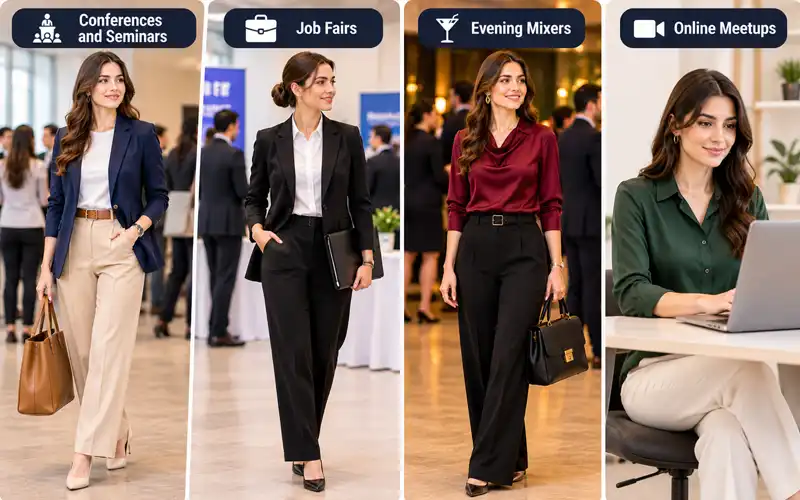
Professional outfit inspiration for conferences, job fairs, evening networking mixers, and online meetups, featuring elegant and practical styles for every occasion.
Dressing for a Casual Event
Dark Jeans Done Right
A casual networking event, such as a coffee meetup, a creative workshop or a start-up social, gives you more freedom, but not total freedom. Dark, plain jeans with no rips or heavy fading are fine when styled well. Pair them with a solid, wrinkle-free top and a leather belt, and keep everything else tidy so the look sits clearly above weekend wear.
Relaxed Layers
An overshirt, a cardigan or an unlined jacket creates a laid-back but put-together outfit. Clean leather loafers or minimal white sneakers finish it nicely. Keep sneakers plain and low-profile, because chunky or brightly coloured designs look sporty rather than smart. The goal is to appear easygoing while still showing that you made an effort.

Smart casual networking outfit ideas featuring dark jeans, stylish tops, relaxed layers, and clean sneakers for a comfortable yet polished look.
Staying Cool in Summer
Breathable Fabrics
Hot weather makes smart dressing harder, but the right fabric helps a lot. Linen, cotton, chambray and lightweight wool blends let air move around your body and keep you feeling fresh. Pure linen wrinkles easily, so choose a linen blend that stays smoother for longer. It is best to avoid heavy synthetic fabrics, since they trap heat and make you feel sticky within minutes.
Light Colours and Prints
Pale shades such as pastel blue, sage, sand and cream reflect heat and look fresh in daylight. Subtle prints, like fine stripes or small florals, keep summer outfits interesting without making them look too casual. A lightweight blazer in a pale tone over a short-sleeve top still looks professional and stays breathable, which makes it a great choice for a summer networking event.
Handling Heat and Humidity
Arrive looking fresh even when it is hot outside. Travel in your coolest layer and arrive a few minutes early so your body temperature can settle. Light grey can show sweat quickly, so choose textured weaves or soft prints that hide small marks. Wear thin socks or liners with loafers to keep your feet dry, and carry cooling wipes in your bag for a quick refresh before you walk in.

Stay cool and look professional at summer networking events with breathable fabrics, light colours, and stylish business casual outfits for men and women.
Warming Up for Winter
Layers That Stay Slim
Cold weather should not ruin a sharp silhouette. Slip a thin thermal top under your shirt and wear thermal leggings or long johns beneath trousers, since both add warmth without bulk. With skirts and dresses, choose opaque or fleece-lined tights in a neutral shade.
Coats and Boots
Choose a smart coat in a plain colour and a length that covers your jacket. Many venues have a coat check, so you can arrive warm and walk in looking polished. Swap heavy snow boots for leather ankle boots with a low heel, and carry your outdoor pair in a bag if the walk is long.
Fabrics for Cold Days
Wool, flannel, tweed and cashmere blends keep you warm and look smart at the same time. Fuzzy or fluffy sweaters feel cosy but tend to look casual, so save them for the weekend.
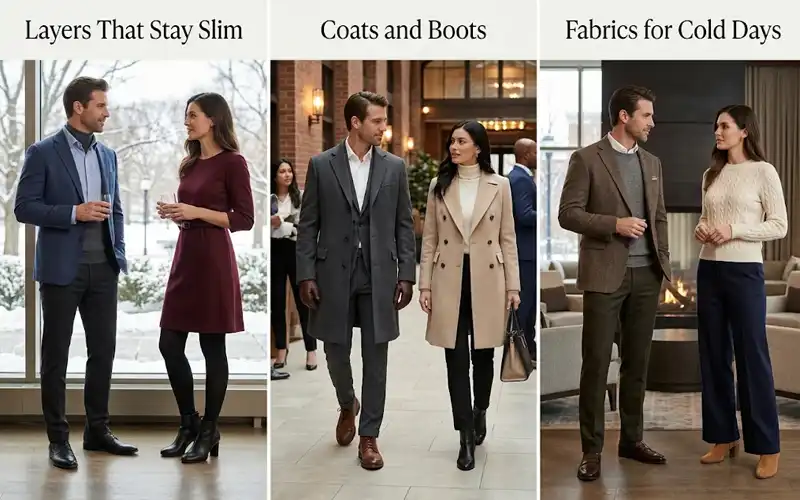
Stay warm and look effortlessly professional with stylish winter networking outfits featuring slim layers, elegant coats, leather boots, and sophisticated cold-weather fabrics.
Accessories That Add Polish
Jewellery and Watches
Accessories are where your personality shows. Choose one standout piece, such as a bold necklace, a pair of drop earrings, a pocket square or a watch with character. Keep everything else simple and in one metal tone so the look feels cohesive rather than busy. A piece with a story also makes a wonderful conversation starter.
Carrying Cards and Bags
Keep a few business cards in a slim holder, along with a pen and a small notebook for quick notes. Store them somewhere you can reach with one hand, such as a jacket pocket or an outer pocket of your bag. Fumbling around for a card makes you look unprepared, while a smooth handover feels professional and leaves a lasting impression.

Elegant networking accessories, including stylish jewellery, watches, business card holders, and structured handbags, that add a polished finishing touch to professional outfits.
Grooming Touches That Count
Good grooming finishes the outfit. Neat hair, clean nails and a tidy beard or fresh shave make your clothes look sharper. If you wear makeup, keep it fresh and balanced, with a defined brow or a soft lip colour. Tie long hair back or style it so you are not fiddling with it all evening. As for fragrance, choose a light scent applied once, because strong perfume or cologne can bother people in a crowded room.
Small Slips to Skip
Even a great outfit can be spoiled by small details, and these are the ones people notice most.
- Wrinkled clothes that look as if they were slept in.
- Scuffed or dirty shoes.
- Brand-new shoes you have never walked in.
- Gym wear, beachwear or clothes with large logos.
- Tags, lint, loose threads or a dangling hem.
- Faded, pilled or stained fabric.
- Heavy sparkle or sequins in the daytime.
- Loud, rainbow-patterned or fishnet tights and socks.
- Flip-flops or open-toe sandals.
- Hats or sunglasses worn indoors.
Two minutes of careful checking removes every one of these problems.
Quick Outfit Checklist
Before you leave the house, run through these simple checks.
- Sit down in your outfit and make sure nothing rides up or gapes.
- Look at yourself from the back and the side, not just the front.
- Use a lint roller on dark fabrics.
- Empty your pockets so your jacket hangs smoothly.
- Charge your phone so you can share contacts instantly.
- Take one last look in the mirror and smile.
Frequently asked questions
Can I Repeat an Outfit?
Yes. Most people will not remember exactly what you wore, especially if the guest list changes. If you see the same crowd often, simply swap the shirt, blouse, accessories or outer layer to make the look feel new.
How Early Should I Plan?
Plan your outfit at least two or three days ahead. That gives you time to try everything on together and fix anything that needs a missing button or a quick trip to the cleaner.
Should I Overdress When Unsure?
A slightly smarter outfit is usually safer. You can remove a jacket, roll up your sleeves or loosen a collar button on the spot, but you cannot add formality once you arrive. Aim to be among the best dressed rather than the most casual.
Are Sleeveless Tops Acceptable?
Yes, as long as the cut is structured, the straps are wide and the fabric looks smart. Thin straps and casual cotton vests belong to the weekend.
Where Should My Name Badge Go?
Place it on your right shoulder, because people’s eyes naturally land there when they shake your hand. Avoid pinning it on delicate fabric, and use a magnetic or clip holder whenever you can.
Will Industry Change My Outfit?
Yes, it can. Finance, law and corporate events lean formal, so a suit or a blazer with a collared shirt is common. Tech, design and creative gatherings welcome smart casual looks and rarely expect a tie. If you are unsure, ask a friend or colleague who works in that field.
Could Budget Be a Problem?
Not at all. Start with two or three versatile pieces, such as a blazer, a pair of dark trousers and a neat shirt or blouse, and mix them in different ways. Second-hand shops, sales and borrowing from friends can give you quality pieces for far less. A small tailoring fix on a cheaper piece often looks better than an expensive one that does not sit right.
Closing Thoughts
Choosing what to wear to networking events does not have to be stressful. Read the dress code, begin with a simple business casual base, and adjust the details for the venue, the season and your own style. Add one thoughtful accessory, keep your grooming neat, and check the small details before you walk out of the door.
When your outfit feels right, you stop thinking about it and start focusing on people. That is the real goal. Walk in with a smile, start a friendly conversation, and let your outfit quietly support the impression you want to make.