

Choosing the right belt may seem like a small part of getting dressed, but it can make a noticeable difference in how an outfit looks. A belt is not only useful for keeping trousers in place. It also connects different parts of an outfit and can help create a more balanced appearance. When the color, material, and style of a belt work well with the rest of your clothing, the whole look can feel more polished and complete.
Many people follow one simple rule when choosing a belt: match it with your shoes. This is a useful starting point, especially for formal outfits, but there is more to good belt coordination than choosing two identical colors. The type of clothing, occasion, shoe material, trouser color, and overall style can all affect which belt works best.
Learning how to match belt color does not have to be complicated. Once you understand a few basic style principles, you can choose a suitable belt for jeans, chinos, suits, dress trousers, casual outfits, and even more relaxed summer looks. The goal is not to make every part of an outfit exactly the same. Instead, the goal is to create a natural connection between the different pieces.
Why Belt Color Matters in an Outfit
A belt often sits in the middle of an outfit, which makes it more visible than people realize. It separates the upper and lower parts of the body while also adding another color or texture to the look. If the belt strongly clashes with the shoes or trousers, it can make an otherwise well-planned outfit feel disconnected.
On the other hand, a well-chosen belt can quietly bring an outfit together. A dark brown belt with brown leather shoes can create a smooth transition between the upper and lower parts of a formal outfit. A black belt with black shoes can provide the same effect with a darker combination. For casual clothing, the rules can be more relaxed, allowing belts made from leather, canvas, woven fabric, or other materials.
The right choice also depends on how formal the outfit is. Formal clothing usually benefits from closer color coordination, while casual outfits allow more freedom. Understanding this difference is important because a belt that looks perfect with a suit may feel too formal with jeans and sneakers.
How to Match Belt Color With Black Shoes
Black shoes are one of the easiest footwear choices to coordinate because a black belt is usually the natural option. This combination works particularly well with black dress shoes, black trousers, charcoal trousers, and many formal suits.
For a traditional formal outfit, black shoes and a black belt create a clean and consistent appearance. A black leather belt is usually the safest choice for office wear, business meetings, formal dinners, and other occasions where a polished appearance is expected.
The texture and finish also matter. A smooth black leather belt generally works better with polished dress shoes than a heavily textured or casual belt. If the shoes have a shiny finish, a belt with a similar finish can make the outfit look more coordinated.
With casual clothing, black shoes and a black belt can still work, but you do not always need a formal leather belt. A simple black casual belt can pair well with jeans, black chinos, or other relaxed trousers.

how to match belt color
Brown Belts and Different Shades of Brown Shoes
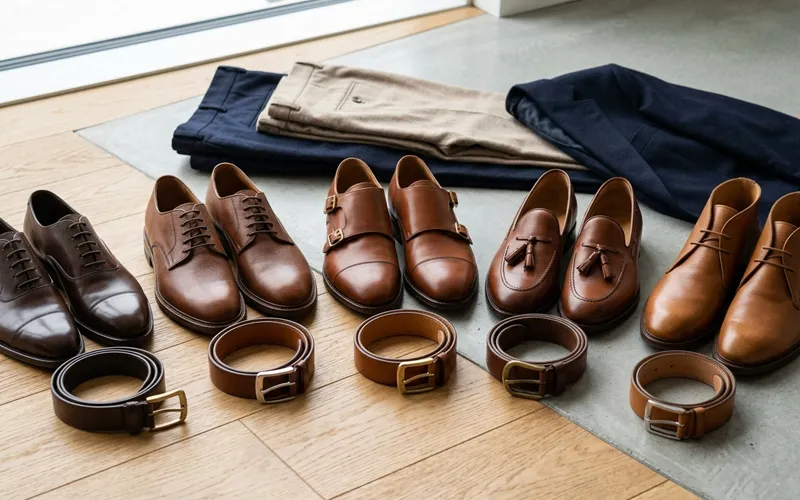
Brown is more complicated because it comes in many different shades. You may find dark chocolate brown, medium brown, chestnut, cognac, tan, and several other variations. Because of this, matching brown accessories does not always mean finding the exact same shade.
When dressing formally, try to keep your belt and shoes reasonably close in color. Dark brown shoes usually look better with a dark brown belt, while lighter brown shoes can work with medium or light brown belts. The closer the colors are, the more formal and coordinated the outfit tends to appear.
For casual clothing, you can be more flexible. A medium brown leather belt can work with different brown shoes, especially when jeans or chinos are involved. The rest of the outfit can help connect the colors together.
It is also worth considering the warmth of the color. A reddish-brown belt may look different from a neutral brown belt even if both are technically brown. Looking at the overall tone can help you make a more natural choice.
how to match belt color
Choosing a Belt for Tan and Beige Shoes
Tan and beige shoes are popular for casual and smart-casual outfits because they have a lighter and softer appearance. They can work particularly well with chinos, jeans, linen trousers, and summer clothing.
A tan or light brown belt is often a natural choice with these shoes. You can choose a leather belt that is slightly darker or lighter than the shoes as long as the combination does not look accidental.
For example, tan loafers with a medium-light brown belt can create a relaxed but coordinated outfit. Beige sneakers may not require the same strict matching rule because sneakers are generally more casual. In that situation, the belt can coordinate with another part of the outfit instead of the footwear.
This is a good example of why belt matching should be treated as a guideline rather than an unbreakable rule.
Matching Belts With Jeans
Jeans give you much more freedom when choosing a belt. Because denim is casual, you do not need to follow the same strict coordination rules used for suits and formal trousers.
A brown leather belt is a classic option with blue jeans. It can create a warm contrast against the cool tone of denim while working naturally with brown boots, loafers, or casual shoes. A black belt can also look excellent with blue jeans, especially when paired with black shoes or a darker top.
The width and design of the belt are important too. A very thin formal belt may look unusual with relaxed jeans, while a wider casual leather belt can fit the style better. A woven or canvas belt can also be a good option for a laid-back outfit.
When wearing jeans, think about the overall personality of the outfit rather than trying to make every accessory identical.

how to match belt color
Matching Belts With Chinos
Chinos sit between formal and casual clothing, which makes them one of the easiest trousers to style with different belts. Navy, khaki, beige, olive, and grey chinos can all work with several belt colors.
Brown leather belts are especially versatile with khaki and beige chinos. A darker brown belt can create a stronger contrast, while a lighter brown belt can give the outfit a softer appearance. Navy chinos can work with both brown and black belts depending on the shoes and shirt.
For a more relaxed look, woven belts can add texture without making the outfit feel too formal. Canvas belts can also work well with casual shirts and sneakers.
The important thing is to consider the entire outfit. A belt should support the look rather than become the main focus.
How to Match Belt Color With a Suit
When wearing a suit, belt coordination becomes more important because suits are structured and formal. The safest approach is to coordinate the belt with the shoes and keep the material and finish at a similar level of formality.
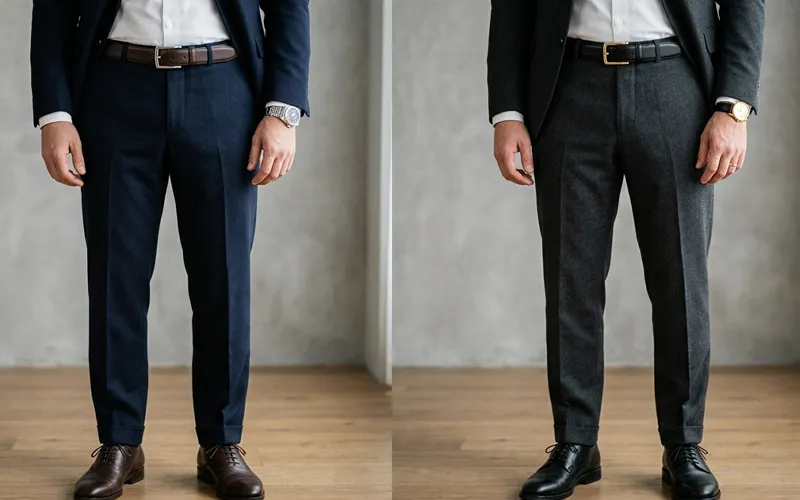
A black suit is traditionally paired with black shoes and a black belt. Navy suits can be worn with either black or brown footwear, depending on the desired style and occasion. Grey suits can also work with black or brown shoes, although the shade of grey and overall formality can influence the final combination.
Brown suits and lighter-colored suits can provide more room for brown accessories. In these cases, the belt and shoes should still have a natural relationship.
It is also important to avoid mixing very formal shoes with an extremely casual belt. Even when the colors match, the difference in materials and design can make the outfit look inconsistent.
Leather Finish Is Just as Important as Color
Color is only one part of belt coordination. The finish of the belt can also affect how well it works with the rest of an outfit.
Smooth, polished leather usually feels more formal. It works well with dress shoes and business clothing. Suede and textured leather generally create a softer and more casual appearance. Woven belts and fabric belts are even more relaxed.
For a formal outfit, matching the general finish of the belt and shoes can make the combination look more deliberate. A glossy dress shoe with a rough, heavily textured belt may not create the same polished effect as a smooth leather belt.
This does not mean every accessory needs to have exactly the same texture. Instead, the materials should make sense together.
Should Your Belt Match Your Watch?
Your belt does not have to match your watch perfectly, but coordinating leather accessories can make an outfit feel more complete. If you are wearing a brown leather belt and brown leather watch strap, for example, the combination can look naturally connected.
The same principle can apply to other leather accessories such as shoes, bags, or briefcases. You do not need every item to be identical, but keeping the main leather tones within a similar family can create a more organized appearance.
With casual outfits, this becomes much less important. A fabric watch strap or metal bracelet gives you more freedom because it does not create the same leather-matching expectation.
Silver or Gold Buckle: Which One Should You Choose?
The buckle is another small detail that can influence the appearance of a belt. Silver-tone buckles are versatile and often work well with modern and formal outfits. Gold-tone buckles can create a warmer and more traditional appearance.
The buckle does not need to match every piece of metal you are wearing, but coordinating metals can create a more polished look. For example, a silver watch and silver-tone belt buckle can look naturally connected.
For everyday casual outfits, there is more room to experiment. The main goal is to make sure the buckle fits the style of the belt and the outfit.
how to match belt color
Common Belt Matching Mistakes to Avoid
One common mistake is thinking that the belt and shoes must always be exactly the same shade. In casual clothing, this can make an outfit feel unnecessarily rigid. A close color relationship is often enough.
Another mistake is choosing a belt only because its color looks good by itself. A belt may look attractive in isolation but still clash with the shoes, trousers, or overall style of an outfit.
Wearing a formal belt with very casual clothing can also create an awkward combination. Similarly, a wide casual belt may not be appropriate for a highly formal suit.
Another issue is ignoring the belt buckle. A large or decorative buckle can change the character of an outfit even when the belt color is suitable.
Finally, avoid thinking of belt coordination as a complicated set of rules. The purpose of these guidelines is to make dressing easier, not harder.
How to Build a Versatile Belt Collection
You do not need a large collection of belts to cover every outfit. A few versatile options can handle most situations.
A black leather belt is useful for formal and business outfits, especially when you regularly wear black shoes. A medium or dark brown leather belt can cover many smart-casual and casual combinations. A lighter brown or tan belt can be useful for summer clothing, light chinos, and casual footwear.
For a relaxed wardrobe, adding a woven or canvas belt can give you another option for jeans, shorts, and casual trousers.
Instead of buying belts in every possible color, focus on the shoes you wear most often. Your belt collection should support your existing wardrobe.
When You Do Not Need to Match the Belt and Shoes
There are situations where strict matching is unnecessary. Sneakers, boots, casual sandals, and other relaxed footwear can make traditional belt rules less important.
For example, if you are wearing blue jeans, white sneakers, and a casual shirt, you can choose a brown leather belt even though the sneakers are white. The belt can coordinate with your watch strap, bag, or another warm-toned detail in the outfit.
Similarly, a woven belt can introduce a different texture without needing to match the shoes exactly. Casual fashion gives you more room to experiment with color and materials.
The key difference is the level of formality. The more formal the outfit, the more closely you should coordinate your belt and shoes. The more casual the outfit, the more freedom you have.
Final Thoughts
Learning how to match belt color becomes much easier once you understand the relationship between the belt, shoes, trousers, and occasion. For formal outfits, coordinating the belt closely with the shoes is usually the simplest and most reliable approach. Black shoes generally work with black belts, while brown shoes can be paired with brown belts in similar or complementary shades.
Casual clothing gives you more freedom. Jeans, chinos, sneakers, boots, and relaxed shirts allow you to experiment with different colors and materials without following strict matching rules. In these situations, the belt can coordinate with another accessory or simply complement the overall outfit.
The most important thing is to think about balance rather than perfection. A belt does not need to be an exact copy of your shoes to look good. When the colors, materials, and level of formality work together, even a simple belt can make an outfit look more complete and stylish.
Frequently Asked Questions
1. How to Match Belt Color With Shoes?
The easiest way is to choose a belt that is close in color and formality to your shoes. Black shoes usually work with a black belt, while brown shoes can be paired with brown belts in similar or complementary shades.
2. Should Your Belt Match Your Shoes Exactly?
No, your belt does not always need to be an exact color match. For formal outfits, keeping the belt and shoes close in color creates a polished look, while casual outfits allow more flexibility.
3. What Color Belt Goes With Black Shoes?
A black belt is the most natural choice with black shoes, especially for formal outfits. A black leather belt works particularly well with black dress shoes, black trousers, and suits.
4. What Color Belt Should You Wear With Brown Shoes?
The belt should generally be in a similar brown family as the shoes. Dark brown shoes can work with dark brown belts, while lighter brown, tan, or cognac shoes can be paired with lighter brown belts.
5. What Color Belt Goes With Blue Jeans?
Blue jeans can be worn with both brown and black belts. A brown leather belt gives blue denim a classic casual appearance, while a black belt works especially well with black shoes or darker clothing.
6. Should Your Belt Match Your Watch Strap?
It does not have to match, but coordinating leather tones can make an outfit look more organized. For example, a brown leather belt and brown leather watch strap can create a natural connection between accessories.
7. Can You Wear a Brown Belt With Black Shoes?
For formal outfits, a brown belt with black shoes is usually an unusual combination because the colors create a strong contrast. With casual clothing, however, fashion rules are more relaxed and the combination can sometimes work depending on the rest of the outfit.
8. How Do You Choose the Right Belt for an Outfit?
Consider the shoes, trousers, occasion, material, and overall style of the outfit. For formal clothing, coordinate the belt closely with the shoes. For casual outfits, you have more freedom to experiment with different belt colors, textures, and materials.