Why More NC/VA Offices Are Installing Point-of-Use Filtration
Walk into almost any modern office in North Carolina or Virginia, and you will notice something new near the break room sink or coffee station: a sleek filtered water tap or a compact dispenser tied directly into the building’s plumbing. Businesses from Charlotte and Raleigh to Richmond and Virginia Beach are turning to point-of-use water filtration systems to improve taste, address quality concerns, and cut down on plastic bottles. The trend is driven by practical needs, from aging pipes and seasonal water changes to employee expectations around wellness and sustainability. This post explains what point-of-use filtration is, why it is gaining ground across the region, and how to decide whether it fits your workplace.
Table of Contents
ToggleWhat Point-of-Use Filtration Actually Means
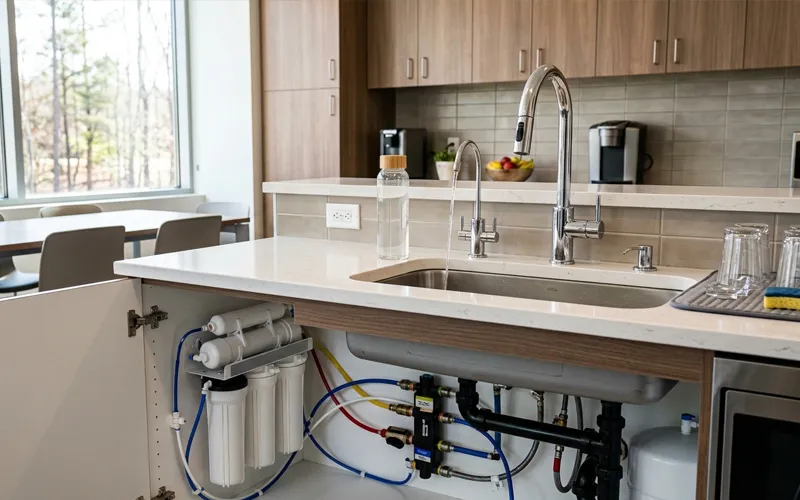
Point-of-use filtration treats water at the exact spot where people drink it, rather than at the building’s main entry. Instead of trying to change the quality of every drop that enters the property, these units filter only the water that will be consumed, such as at a kitchen faucet, a bottle filling station, or an under-sink dispenser. This targeted approach keeps costs manageable while delivering the improvement employees notice most. Point-of-use water filtration systems come in several common forms:
- Under-sink filtration units connected to a dedicated faucet
- Wall-mounted bottle filling stations with built-in filters
- Countertop or freestanding bottleless dispensers with hot and cold options
- Filtered water taps integrated with coffee machines and ice makers
- Multi-stage reverse osmosis units for higher purification needs
Because each unit works independently, offices can start with one location and expand as needs grow.
The Water Quality Picture in NC and VA
Both states draw on a mix of surface water, groundwater, and regional reservoirs, and quality can differ noticeably from one community to the next. Municipal utilities in the Carolinas and Virginia work to meet federal and state standards, and most public water is considered safe to drink. Still, what comes out of a tap in an office is not always the same as what left the treatment plant. Water travels through miles of distribution pipes and then through your building’s own plumbing before reaching a glass. Common concerns that push local businesses toward filtration include:
- Chlorine or chloramine tastes and odors used for disinfection
- Sediment and rust from older pipes and fixtures
- Hard water and mineral buildup in coastal and Piedmont areas
- Seasonal shifts in taste caused by algae, runoff, or temperature changes
- Lead risk from older service lines or solder in pre-1990s buildings
- Awareness of contaminants such as PFAS that have received attention in the Cape Fear region
Filtration does not replace the role of your utility, but it adds an extra layer of protection and polish right where employees drink.
Aging Buildings and Plumbing Realities
Many offices in the Carolinas and Virginia occupy renovated mills, historic downtown properties, or mid-century buildings. Charm aside, older structures can have plumbing that affects water long after it leaves the treatment plant. Corroded pipes may add metallic tastes, cloudiness, or particles, and replacing an entire plumbing system is rarely practical for a tenant or even an owner. Point-of-use filtration offers a far less disruptive fix. Installers can place a unit at the fixtures that matter most without tearing into walls or interrupting operations. For tenants who do not control the building’s infrastructure, this flexibility is a major selling point, and many systems can be relocated or replaced when a lease ends.
Taste and Employee Satisfaction
Ask employees why they skip the tap, and the answer is usually simple: it does not taste good. Chlorine flavors, mineral notes, and odd smells discourage people from drinking enough water. Filtered water tastes cleaner and fresher, which encourages healthier habits. When a workplace offers cold, crisp water on demand, more staff refill reusable bottles and fewer reach for soda or energy drinks. The result is a small but meaningful boost to comfort, hydration, and morale. Businesses competing for talent in growing markets like the Triangle, Charlotte, and Northern Virginia also find that visible wellness amenities strengthen their employer brand.
Cost Savings Over Bottled Water
For many offices, the financial case is just as compelling as the health case. Buying cases of bottled water or scheduling regular jug deliveries adds up quickly, and storage space, ordering time, and lifting all carry hidden costs. Point-of-use systems connect to an existing water line, so the ongoing expense is mainly filter replacement and periodic service. Over time, that usually costs far less per gallon than bottled options. Financial advantages often include:
- Lower cost per gallon compared with bottled or delivered water
- Less staff time spent ordering, receiving, and storing supplies
- No lost floor space for stacked jugs or cases
- Predictable maintenance plans with scheduled filter changes
- Reduced waste disposal and recycling handling
Upfront installation is a real expense, but many businesses see a payback window measured in months rather than years, depending on usage.
Sustainability and Corporate Goals
Environmental commitments are increasingly part of doing business in the region. Companies in both states are setting waste reduction targets, pursuing green building certifications, and responding to customers who care about their footprint. Replacing single-use plastic bottles with filtered tap water is one of the most visible and measurable steps an office can take. Fewer deliveries also means fewer truck trips and less packaging. Filtration supports sustainability efforts in several ways:
- Dramatically fewer plastic bottles entering the waste stream
- Lower transportation emissions from reduced deliveries
- Support for LEED, WELL, and similar building initiatives
- A clear story to share with clients, investors, and job candidates
Pairing filtered stations with reusable bottles or branded tumblers reinforces the message and gives employees an easy way to participate.
Health, Compliance, and Peace of Mind
Facility managers and business owners carry a responsibility to provide a safe, comfortable environment. Reliable filtration helps reduce sediment, chlorine byproducts, and certain contaminants, depending on the filter type. Look for units certified by NSF International or the American National Standards Institute against relevant standards, such as those covering taste, chlorine reduction, lead reduction, and specific contaminants. Certification tells you that independent testing has verified the product’s claims. It is also wise to review your local utility’s annual water quality report, often called a Consumer Confidence Report, to understand what is present in your supply and choose filters that address those specific issues. For offices with particular concerns, a professional water test can guide the right system selection.
Ease of Installation and Maintenance
One reason adoption is growing is that modern systems are simpler than many people expect. A qualified technician can often complete an under-sink or wall-mounted installation in a few hours, with minimal disruption to the workday. Ongoing care is straightforward as well. Filter cartridges need replacement on a schedule based on time or gallons used, and many providers offer service plans that handle this automatically. Keeping up with maintenance matters because an overdue filter can lose effectiveness and, in some cases, affect taste or flow. A good service program typically includes:
- Scheduled cartridge replacement and system checks
- Sanitization of dispensers and faucets
- Water quality testing when appropriate
- Fast response for leaks, pressure changes, or equipment issues
How to Choose the Right System for Your Office
Selecting a solution starts with understanding your needs. Consider headcount, daily water usage, available space, and whether you want hot, cold, sparkling, or ambient options. Then match the filtration technology to your water conditions and goals. Questions worth asking include:
- What contaminants or taste issues are we trying to address?
- Are the filters independently certified for those concerns?
- What are the installation requirements and total upfront cost?
- How often are filters replaced, and who handles it?
- Is the equipment leased or purchased, and what does service include?
- Can the system scale if we add staff or move locations?
Working with a local provider familiar with regional water conditions in the Carolinas and Virginia can make the process smoother and ensure faster support.
Frequently Asked Questions
What are point-of-use water filtration systems?
They are filtration units installed at the location where water is consumed, such as a faucet, bottle filler, or dispenser. They treat only the drinking water rather than the entire building supply.
Is tap water in North Carolina and Virginia safe to drink?
Public water systems in both states must meet federal and state standards, and most supplies are considered safe. Filtration can still improve taste and add protection against issues that arise within building plumbing.
How is point-of-use different from whole-building filtration?
Whole-building systems treat water as it enters the property, which is a larger and costlier project. Point-of-use units focus on drinking and food-prep water at specific locations, making them more affordable and flexible.
Will filtration remove chlorine and improve taste?
Most carbon-based filters reduce chlorine taste and odor very effectively. Check the product’s certification to confirm it addresses the specific issues you care about.
How often do filters need to be replaced?
It depends on the model and usage, but many cartridges are changed every six to twelve months. High-traffic offices may need more frequent changes, and service plans can automate the schedule.
Do these systems remove lead or PFAS?
Some do. Look for units certified to standards covering lead reduction, and ask about reverse osmosis or specialized media if PFAS is a concern in your area.
Can tenants install filtration in leased space?
Often yes, with landlord approval. Under-sink and countertop units typically require little modification, and many can be removed or moved when the lease ends.
How much do these systems cost?
Prices vary widely by type and capacity. Expect an upfront installation cost plus ongoing filter and service fees, which usually come out lower per gallon than bottled water.
How long does installation take?
Most standard installations take a few hours. Larger or multi-station projects may require a day or more.
Final Thoughts
The rise of point-of-use filtration across North Carolina and Virginia reflects a broader shift toward workplaces that value health, sustainability, and smart spending. By treating water right where people drink it, offices can enjoy better taste, added peace of mind, lower long-term costs, and a meaningful reduction in plastic waste. Whether you manage a small startup, a medical practice, or a multi-floor corporate headquarters, point-of-use water filtration systems offer a flexible way to elevate your building’s amenities without a major renovation. Start by learning about your local water quality, compare certified options, and choose a service partner who can keep everything running smoothly. Your team will notice the difference with every sip.
Tags