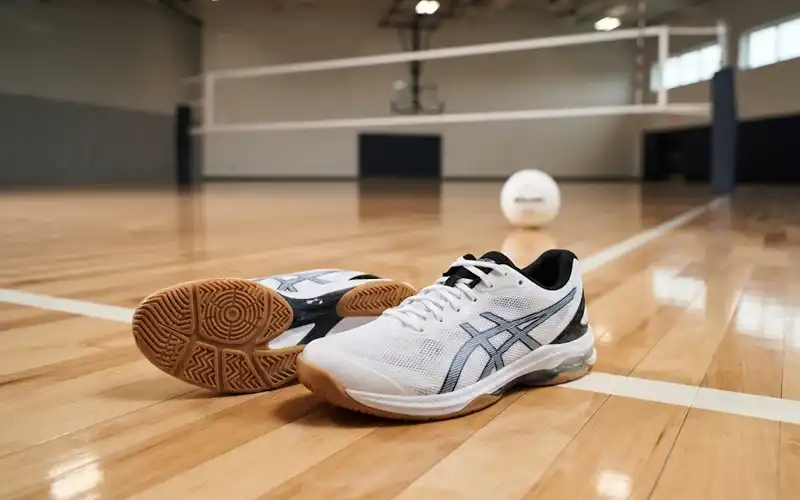
Finding the best shoes for volleyball can feel confusing when every pair promises higher jumps and better grip. The truth is simple. A good pair should hold your foot, grip the floor, soften every landing, and still look great on court.
This guide explains what to look for, which shoe styles exist, and what suits each position and skill level. It also covers women, men, youth players, basketball shoes, the latest 2026 trends, care tips, and honest answers to common questions. By the end, you will know what to pick and why.
Why Volleyball Needs Special Footwear
Volleyball looks calm from the stands, but your feet work nonstop. Players shuffle, stop, spin and push sideways many times in a single rally. Everyday sneakers are made for walking or running in a straight line, so they often roll or slip when you change direction fast.
The sport also asks for repeated jumping. Every block and spike ends with a landing that sends force through your feet, ankles and knees. The floor adds another challenge, since indoor courts are smooth and the sole must grip without sticking too hard.
Shoes made for the sport handle all of these jobs at once. A poor pair does not only feel bad. It can make you hesitate before every move, and hesitation costs points.
Smart Buying Points to Check First
Start with the sole. Look for a gum rubber outsole that grips indoor floors and does not leave marks. A pattern with clear grooves under the forefoot helps you stop quickly and push off cleanly.
Next, think about cushioning and stability together. Foam, gel and air units all soften landings, but too much softness can feel wobbly. The best shoes for volleyball pair a springy midsole with firm sides and a strong heel cup, so your ankle stays steady when you land awkwardly.
Finally, check weight, airflow and fit. A lighter shoe helps quick feet, and a mesh upper keeps heat down in long matches. Your toes need a little room to spread, so leave about a thumb width between your longest toe and the front. Try pairs later in the day, when feet are slightly larger.
Terms You Will See on Shoe Tags
Shoe tags are full of words that sound technical. An outrigger is a flared edge on the sole that widens your base and resists rolling. A torsion plate is a stiff piece in the middle of the shoe that stops the foot from twisting and helps pass energy from your heel to your toes.
Heel drop is the height gap between the heel and the forefoot. A bigger drop pushes you forward and helps quick starts, while a smaller drop feels flatter and closer to the floor. A midfoot strap is a band across the arch that pulls the foot back into the shoe, which adds hold without extra bulk.
Shoe Styles Every Player Should Know
Low Top Shoes for Speed
Low tops sit below the ankle bone, which gives your feet full freedom to bend and turn. They are light and quick, so they suit players who dash across the court. The trade off is less built in hold, so you need strong ankles and a secure lacing method.
Mid Top Shoes for Extra Hold
Mid tops rise slightly above the ankle bone and wrap the lower leg. Many players like the snug feel, especially when they want more confidence after a minor tweak. They are a good middle road between freedom and cover.
High Top Shoes for Added Cover
High tops reach well above the ankle and give the most coverage. They can feel secure, yet they may limit how far your foot bends during an approach jump. Try them for a full session before deciding, since comfort matters more than the look.
Cushion Heavy Shoes for Big Jumpers
Players who jump often, or who carry more body weight, put extra force through each landing. Shoes with thick foam, gel or air pockets in the heel and forefoot soak up that impact. They feel softer underfoot, but they can sit higher off the floor.
Wide Base Shoes for Defenders
Shoes with strong outriggers keep your foot steady when you slide into a dig. This design helps players who move low and sideways more than they leap. The extra width adds a little weight, which is a fair price for confidence in every slide.
Outdoor Court Footwear
Grass and hard outdoor courts wear indoor soles down quickly. Look for tougher rubber and a pattern made to bite into turf. Sand play is usually done barefoot or in thin socks, so indoor shoes should stay off the sand.
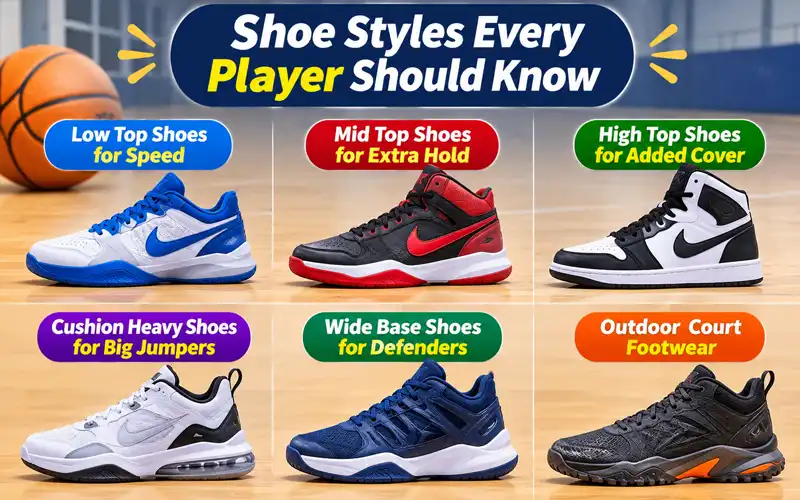
Explore six basketball shoe styles designed for different playing needs, including speed, support, cushioning, stability, and outdoor court performance.
Skill Level Changes the Right Pick
Your level of play changes what deserves your attention.
Beginners Should Keep It Simple
New players do not need the most advanced pair. A balanced shoe with decent grip, moderate cushioning and a comfortable upper is enough while your footwork develops. Fancy technology can wait until you know how you like to move.
Club Players Need Durability
Players who train several times a week wear out soles and uppers fast. Look for thicker rubber, reinforced toe areas and sturdy stitching so the pair survives a full season. Reliable comfort matters more than the lightest weight.
Elite Players Chase Fine Tuning
Competitive players notice small details, such as plate stiffness, foam bounce and heel drop. Many keep different pairs for different roles or court conditions. At this level, tiny differences in feel can change how a player moves.
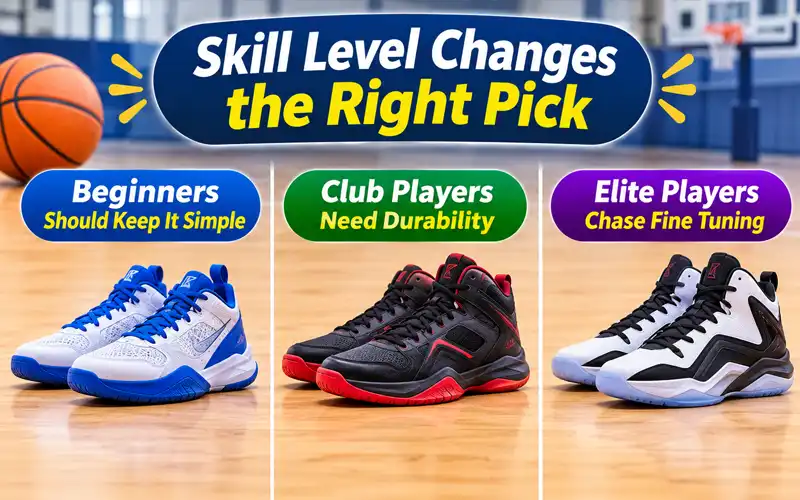
Basketball shoe recommendations for beginners, club players, and elite athletes, highlighting the importance of comfort, durability, and performance at every level.
Best Volleyball Shoes for Hitters
Hitters ask the most from their shoes, because every swing begins with a fast run up and ends with a hard landing. The right pair depends on where you attack from.
Outside Hitters Need Bounce
Outside hitters attack from the left side and take long approaches. A springy forefoot and a smooth heel to toe roll help turn the run up into height. A rounded outsole edge also makes the last two steps feel natural and quick.
Blockers Need Balance
Middle blockers jump straight up again and again close to the net. Their shoes need midfoot support that stops the foot from twisting when they land beside another player. Strong sideways grip also helps them shuffle along the net quickly.
Opposite Hitters Need Power Support
Opposite hitters swing hard from the right side and often block as well. Look for a sturdy midfoot and a good lacing system, so power travels cleanly from the floor to the hand. A foot that slides inside the shoe wastes energy on every big swing.
Back Row Attackers Need Grip
Back row attacks start from behind the three meter line, so the run up begins from a near stop. A sticky outsole lets these players push off without slipping. Grip matters more here than extra height in the sole.

Four volleyball hitter positions and their footwear needs, including bounce for outside hitters, balance for blockers, power support for opposite hitters, and grip for back-row attackers.
Setters and Liberos Need Different Shoes
These two positions spend far less time in the air than hitters, so their needs are very different.
Smooth Footwork for Setters
Setters move constantly to get under the ball with their hands ready. They gain the most from a flexible, lightweight shoe that lets them glide and pivot without catching the floor. Because their jumps are small, heavy cushioning is less important.
Reflexes for Liberos
Liberos stay low and change direction in a blink. A close to the ground feel, a grippy outsole and firm sides help them dive, slide and recover quickly. They also slide across the floor often, so a tough upper that resists scuffs is a smart bonus.
Women’s Best Shoes for Volleyball
Narrow Heel and Fit Concerns
Women’s feet are often narrower at the heel compared to the front of the foot, so a shoe built on a wider shape can let the heel slide. Look for models made in women’s sizing, with a firm heel cup and laces that can be tightened in zones. If your heel lifts during a jump, the shape is wrong for your foot.
Some women choose men’s or unisex sizes, which is fine when the fit is truly comfortable. Just remember that size conversions are not exact.
Knee Comfort During Long Matches
Tournament days can mean many matches with little rest, and your knees feel every landing. A midsole that absorbs impact without feeling mushy can make long days easier. If knee pain keeps coming back, speak with a doctor or physiotherapist instead of relying on shoes alone.
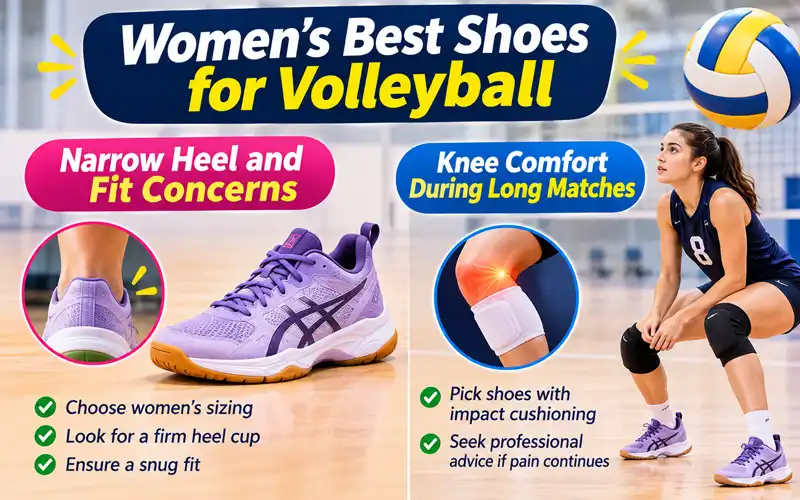
Explore women’s volleyball shoe features, including a secure heel fit, supportive design, and impact cushioning for greater comfort during long matches.
Men’s Best Shoes for Volleyball
Roomy Toe Box Options
Men’s feet are often wider through the front, and a squeezed forefoot causes pain during fast stops. Pick a shoe with a roomy front section, or a wide version if one is offered. A lacing setup that loosens over the forefoot while staying firm at the midfoot gives comfort and hold together.
Moving Up From Youth Sizes
Teens who reach adult sizes can move to adult models, which usually offer stronger support and cushioning for a heavier frame. It is also a good moment to rethink the shoe style, since many teens start to specialize in a position around this age.
Choosing the Best Shoes for Volleyball Youth Players
Younger players change fast, so their needs shift every season.
Growing Feet and Fit Checks
Young feet grow fast, so check the fit every few months instead of once a year. Kids often say nothing while their shoes pinch, so ask them directly. Avoid buying far too large, because a loose shoe hurts balance and can cause blisters.
Easy Wear for Little Kids
Younger children do best in light shoes with simple laces or a strap and a flexible sole. Heavy shoes tire small legs quickly. Simple designs also let kids put them on without help, which keeps practice moving.
Safe Habits for Young Athletes
Teach players to warm up before every session and to tie their laces firmly. Encourage them to speak up when their feet or knees hurt, rather than playing through pain. Good habits at a young age protect them for years.
Using the Best Basketball Shoes for Volleyball Play
Many players wonder whether the best basketball shoes for volleyball are worth wearing, and the honest answer is that it depends on the pair.
When Basketball Shoes Work Well
Basketball shoes share many needs with volleyball, such as grip, cushioning and ankle support. Plenty of players wear them with great results, especially when they also play basketball and want one pair. Low and mid cuts with a flat, grippy sole tend to feel closest to a true volleyball shoe.
Where They Fall Short
They are usually heavier and thicker, which can slow your feet. Thick heels can also feel high when you plant for a block. Many basketball soles are not shaped for the quick forward roll you use on an approach.
Trial Tips Before You Switch
Wear them through a full practice, not only a warm up. Check that they feel stable on landing and that your foot stays put inside. If you notice tired legs or slipping, a dedicated pair will serve you better.
Style Meets Support on the Court
Clean Looks With Strong Hold
Style and support no longer compete. Sleek mesh uppers, bold soles and fresh two tone designs now sit on top of real stabilizing features. Choose the look you love only after the fit and grip pass your test.
Matching Team Colors
Matching your shoes to the team uniform gives a sharp, united look in photos and on court. Many players pick a neutral pair, such as white or black, which goes with every kit. Bold colors work well for players who want to stand out.
Care Tips to Make Shoes Last
Wipe the Sole Often
Dust is the enemy of grip. Wipe the bottom with a slightly damp cloth before each match and between sets if the floor is dirty. Never press the sole on a dirty surface to clean it, because that spreads grit.
Dry Them Properly
After play, loosen the laces, pull out the insoles and let the shoes air dry away from direct heat. Heat can warp glue and foam, and damp shoes grow odor quickly. A little paper inside helps absorb moisture.
Know When to Replace
It is time for a new pair when the sole feels smooth and you slip, when the cushion feels flat, or when the sides no longer hold your foot. Playing in worn shoes raises the chance of sore feet and awkward landings.
Mistakes Players Make When Buying
Many buyers choose by look alone, then find the shoe fights their foot shape. Others copy a favorite player’s pair without checking whether it suits their position and body. Both habits lead to a pair that looks great and feels wrong.
Another common slip is ignoring the return policy. Even a well chosen shoe can feel off after a few sessions, so buy from a seller that lets you swap it. A flexible policy turns a costly mistake into a small delay.
Frequently asked questions
Is It Okay to Buy Used Pairs
Used pairs can work for casual play if they are fairly new and have been looked after. Foam can harden with age even in lightly worn shoes, so ask how long the pair has existed. Check inside for stains or damage, and make sure they smell fresh.
Can I Wear Them Outside
It is best to keep them for indoor use. Pavement and gravel wear the gum rubber fast and clog the grip pattern. Carry a casual pair for the walk and change at the gym door.
Do Insoles Help
They can help with comfort, arch feel and fit, especially if the stock insole is thin. Remove the original first instead of stacking two. Pick a thin, firm option so it does not crowd your foot or lift your heel.
What Socks Work Best
Choose snug, moisture wicking socks that reach above the ankle. Thick cotton holds sweat and bunches inside the shoe, while a smooth sock cuts blister risk. Wear your match socks whenever you test a new pair.
How Much Should I Spend
Prices span a wide range, and a higher price does not always mean a better fit. Set a budget first, then compare fit, grip and cushioning within it. A mid priced pair that fits well beats an expensive pair that does not.
Will Shoes Raise My Jump
Good shoes help you jump safely, but they will not add much height alone. Grip and a springy feel let you use your strength better. Real gains still come from strength training, practice and smooth technique.
Should New Pairs Be Broken In
Yes, a gentle break in prevents blisters and shows whether the fit is right. Wear them for short sessions and light drills for a few days before a match. If they still hurt after that, they probably do not suit your foot.
Final Thoughts
The best shoes for volleyball are the ones that grip well, land softly and hold your foot with confidence. Match the shoe style to your position, think about your body and age, and test the fit before you commit.
Style is a bonus, not the starting point. When support comes first and looks come second, you will feel quicker and play with more freedom. Take your time, try a few pairs, and enjoy the game.