A Five-Outfit Wardrobe Audit for Choosing a Jelly Bra
Bra shopping often begins with a category and ends with a fitting-room mirror. A more practical route begins in the closet. The tops and dresses already worn most often reveal which necklines, colors, strap placements, and closures a bra needs to work with. That turns the decision from “Which style sounds best?” into “Which style solves the most important wardrobe situations?”
Soft Intention’s Jelly Bra collection includes different necklines, coverage levels, strap formats, and pull-on or back-clasp constructions. A five-outfit audit can narrow those choices without expecting one bra to disappear beneath every fabric or serve every activity.
Table of Contents
ToggleSelect Five Representative Outfits
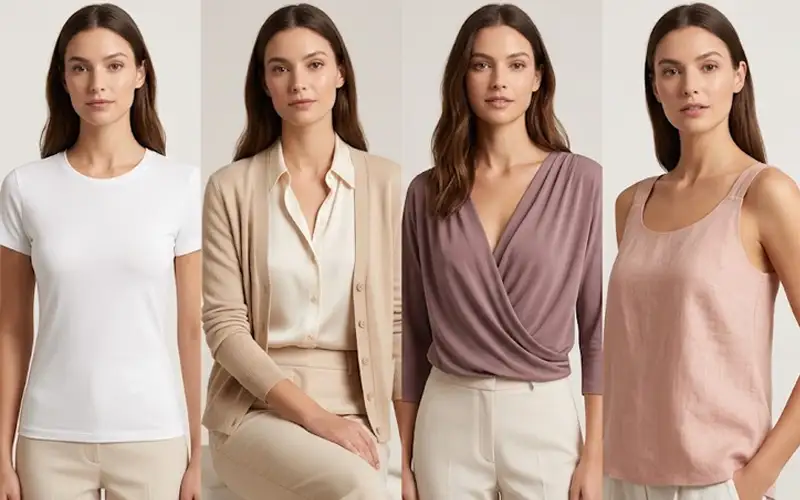
Choose garments that expose different demands rather than five versions of the same T-shirt:
- the thinnest fitted tee or knit worn regularly;
- a work blouse, sweater, or button-front shirt;
- the lowest everyday neckline in the closet;
- a sleeveless, wide-neck, or narrow-shoulder top;
- a dress or outfit worn for long seated periods, travel, or social plans.
Include the real underlayers and outer layers. A camisole can change opacity. A blazer can add shoulder pressure. Shapewear can change where a bra band meets the torso. The purpose is to evaluate a complete clothing system rather than a bra in isolation.
Outfit 1: Use the Fitted Tee to Check Visibility Priorities
The most revealing everyday top helps establish what “smooth enough” means for the wardrobe. Put the top on over the bra and look at the cup boundary, center front, underband, back, and straps in ordinary indoor light and indirect daylight.
Name the source of anything visible. A strong color contrast calls for another shade, while a ridge at the upper cup may point to fit or cup shape. A closure outline is different from a fabric texture. Keeping those causes separate prevents an unnecessary size change.
This outfit should guide surface and color priorities, but it should not dictate every other choice. A bra that works beneath a fine white tee may have more coverage than a low neckline allows.
Outfit 2: Add the Layers Used for Work
Start with the blouse, knit, or shirt, then add the usual jacket or cardigan. Sit as if working at a desk, lean forward, reach, and stand. Check whether the neckline remains covered and whether several shoulder layers crowd the straps.
For button-front shirts, look between the buttons while seated and reaching. A bra can remain hidden at the collar and become visible across the bust. A camisole may address sheerness or gaping, but it also changes warmth and adds another edge under the outfit.
The back-clasp versus pull-on decision may also become clearer here. A pull-on design removes closure hardware, while a back clasp offers band adjustment. The better wardrobe choice depends on clothing, dressing preference, and fit rather than on one feature alone.
Outfit 3: Let the Lowest Neckline Set a Boundary
Wear the lowest V-neck, scoop, or wrap top that appears in normal rotation. Stand, sit, and reach forward. If the bra shows, note whether exposure occurs at the center, upper cup, or side of the neckline.
Do not size down to hide a cup edge. That changes tension and volume without changing the basic geometry enough to make a full-coverage design into a plunge. Compare a lower or differently shaped Jelly neckline instead. If the garment is unusually low, open-backed, or asymmetrical, another bra category may be more appropriate.
This single outfit can eliminate otherwise appealing options early and keep the search focused on silhouettes that fit the actual wardrobe.
Outfit 4: Check Straps Against the Shoulder Line
A sleeveless, wide-neck, or narrow-shoulder top reveals strap placement. Raise the arms and turn from side to side. Wide straps can feel stable but sit outside a narrow garment panel; more centrally placed straps may remain covered but interact differently with the neckline.
Fixed straps must match the wearer’s torso without sliders, while adjustable straps add a correction point. Neither is universally better. The garment determines how much placement flexibility is needed, and the wearer determines whether the strap length is workable.
If exposed shoulders are central to the wardrobe, treating visible straps as a size problem will not solve it. A purpose-built strapless or convertible option deserves its own evaluation.
Outfit 5: Include the Longest Realistic Sitting Period
Use a dress, travel outfit, or social look that is worn while sitting for extended periods. Sit in a firm chair, lean forward, and stand again. Check whether the lower band folds, the cup position changes, or hardware presses differently against the body.
Torso length matters here. A broad lower edge may feel settled while standing and crowded while seated. A softer pull-on back may suit one routine, while another wearer may value the adjustment of a hook-and-eye band. Ease of dressing also belongs in this decision, especially for a bra intended for frequent use.
Score Compatibility Instead of Searching for Perfection
Create a simple grid with the five outfits across the top and the following questions down the side:
- Is the neckline concealed during normal movement?
- Are the straps compatible with the garment’s shoulder line?
- Is the color acceptable beneath the fabric?
- Are cup, band, and closure transitions acceptable?
- Does the bra remain appropriately positioned while sitting and reaching?
- Is the dressing method practical for regular use?
Use “yes,” “no,” or “acceptable with a layer.” A result does not need to be invisible to be useful. The audit is meant to show where a style works, where it needs a camisole or different top, and where another silhouette is required.
Read One Product Through the Wardrobe Lens
Soft Intention’s Jelly Wireless T-Shirt Bra is currently described as a full-cup, U-neck, pull-on style with wide non-adjustable straps, foam cups, an elastic band, and a seamless back. Those details can be translated into wardrobe questions: Are the tops high enough for full cups? Are their shoulder panels wide enough for the straps? Is a pull-on closure practical? Does the wearer want a smooth back more than band adjustment?
The specification list narrows the likely role; the five outfits decide whether that role is useful.
Build a Small Rotation Around Unsolved Needs
If one Jelly Bra works with four outfits but not the low neckline, a second bra may only need to solve that one gap. If work layers favor a smooth pull-on back but long seated wear favors a different band depth, the rotation can reflect those contexts. There is no need for every bra to do every job.
A wardrobe-first audit keeps the decision grounded in clothing already owned. By comparing five distinct outfits, a shopper can choose a Jelly Bra for a clear role, identify the compromises that are acceptable, and reserve specialized necklines or activities for a design built around them.
Frequently Asked Questions
1. How do you choose the right Jelly Bra for everyday outfits?
Choose a Jelly Bra based on the necklines, fabrics, and strap placements of the clothes you wear most often. Check whether the cups remain concealed, the straps fit beneath your tops, and the band feels comfortable during normal movement.
2. Which Jelly Bra is best for wearing under a fitted T-shirt?
A Jelly Bra with smooth cups and seamless construction may work well under a fitted T-shirt. Choose a suitable color to reduce contrast beneath the fabric, and check for visible cup edges, band lines, or closure outlines.
3. Can you wear a Jelly Bra under a low-neck top?
Yes, but the neckline design matters. A full-cup Jelly Bra may show beneath a deep V-neck or wrap top. Compare different neckline shapes and choose one that stays concealed when you sit, bend, and reach.
4. Are Jelly Bras suitable for sleeveless tops?
Jelly Bras can work well with sleeveless tops when their straps remain within the garment’s shoulder coverage. Check strap width and placement before choosing a style. Strapless or convertible bras may be more suitable for narrow-shoulder or off-shoulder clothing.
5. What is the difference between a pull-on Jelly Bra and a back-clasp bra?
A pull-on Jelly Bra slips over the head and usually has no back closure, creating a simple design with fewer hardware components. A back-clasp bra uses hooks and eyes that may provide additional band adjustment. The better option depends on fit, comfort, and dressing preference.
6. How can you check whether a Jelly Bra fits properly?
Check that the cups contain the breast tissue without spilling or gaping, the band feels secure without digging into the skin, and the straps stay in place without excessive pressure. Move your arms, bend forward, and sit down to see whether the bra remains comfortable and positioned correctly.
7. Should you choose a Jelly Bra based on clothing color?
Color is worth considering, particularly when wearing thin, light-colored, or semi-sheer fabrics. A bra close to your skin tone may be less visible beneath some light garments than a bright white or dark bra. Always test it under the actual fabric because opacity and lighting affect visibility.
8. Can one Jelly Bra work with every outfit?
Not necessarily. A bra that works well under fitted T-shirts may show beneath deep necklines or sleeveless tops. Building a small rotation of bras with different neckline shapes, strap configurations, and closure styles can make dressing easier.
9. Is a Jelly Bra comfortable for long hours of sitting?
Comfort depends on the bra’s fit, band construction, materials, and your body shape. Sit, lean forward, and stand while checking for pinching, folding, pressure, or shifting. A style that feels comfortable while standing may feel different after several hours of sitting.
10. How many outfits should you test before buying a Jelly Bra?
Testing five representative outfits is a practical starting point. Include a fitted T-shirt, work blouse, low-neck top, sleeveless garment, and dress or travel outfit. This helps you identify the bra’s strengths, limitations, and suitability for your regular wardrobe.
Tags