

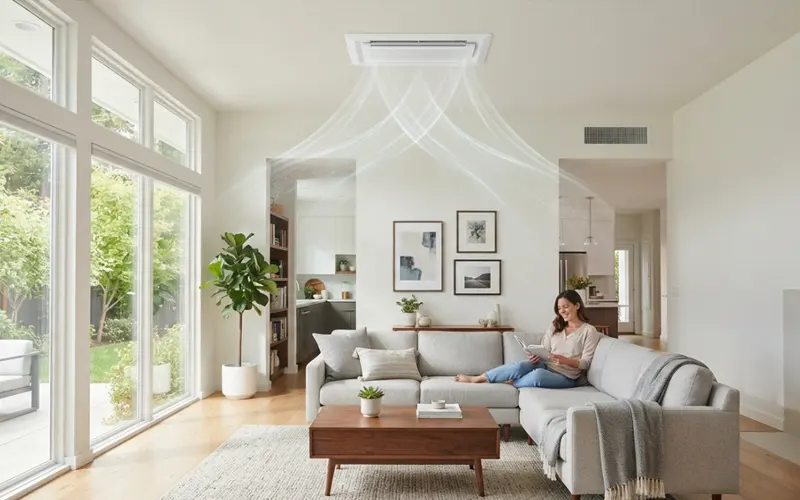
Creating a Cleaner and More Comfortable Indoor Environment
The air inside a home directly affects everyday comfort. However, homeowners often overlook indoor air quality because many problems develop gradually. Dust, lingering odors, excess moisture, poor ventilation, airborne particles, and uneven airflow can affect comfort.
HVAC systems also influence these conditions. They circulate air throughout the home while controlling temperature and, in some cases, humidity. Poor maintenance can reduce system performance. Ineffective ventilation and filtration can also make indoor air concerns more noticeable.
A proactive approach helps homeowners identify potential problems early. It can also improve HVAC performance and energy efficiency. Regular attention to indoor air quality can support greater comfort throughout the property.
Table of Contents
ToggleUnderstanding Indoor Air Conditions
Indoor air conditions are affected by many different factors. This means there is no single solution for every home. Outdoor air can enter through doors, windows, vents, and small gaps. It can bring dust, pollen, and other particles into living spaces.
Daily household activities can also affect indoor air. Cooking may produce smoke and fine particles. Cleaning products can release chemical vapors. Pets can add hair and dander to the air. Showering and bathing can also increase indoor humidity.
In tightly sealed homes, these substances and moisture may stay indoors longer. Poor ventilation can make this problem worse. Fresh air exchange helps remove stale air and excess moisture.
Understanding these sources is important. Addressing only one factor may not provide the expected improvement. A complete evaluation should consider the building and HVAC system. Filtration, ventilation, humidity, and airflow should also be examined. This helps professionals recommend solutions based on the property’s actual conditions.
How HVAC Systems Influence Air
Heating and cooling equipment plays an important role in maintaining a comfortable indoor environment because it moves air through the property while regulating temperature. As air passes through the HVAC system, filtration components can capture certain airborne particles before the air is redistributed through the living areas. However, the effectiveness of this process depends on proper filter selection, regular replacement, adequate airflow, and overall equipment condition. A filter that becomes excessively dirty can restrict airflow and force the system to work harder, while an unsuitable filter may not provide the level of particle capture needed for the household.
Other HVAC components can also become dirty or experience mechanical problems that reduce system performance. Regular professional maintenance gives technicians an opportunity to inspect equipment, identify developing concerns, check airflow, and make sure the system is operating as intended. Maintaining the HVAC system is therefore not only about preventing unexpected breakdowns but also about supporting the quality and comfort of the environment the system serves.
The Importance of Proper Filtration
Filtration is one of the most practical ways to maintain cleaner indoor air. HVAC filters capture particles as air passes through the system. However, filters offer different levels of filtration and airflow resistance. Choosing the right filter depends on the HVAC equipment and the manufacturer’s recommendations. Household conditions and airflow requirements should also be considered. Using the most restrictive filter is not always the best option. Excessive resistance can place additional strain on equipment that was not designed for it. Filters should also be replaced at recommended intervals. Their effectiveness can decrease as dust and particles build up. Homes with pets, frequent occupancy, renovations, or high dust levels may need more frequent filter changes. A professional HVAC technician can help homeowners select the right filter. They can also determine whether the current filtration system is suitable for the property.
Ventilation and Fresh Air Exchange
Ventilation is another major part of maintaining a comfortable indoor environment because it helps remove stale air, odors, moisture, and certain airborne contaminants while allowing fresh air to enter. Kitchens and bathrooms are particularly important because activities in these rooms can produce substantial amounts of moisture and airborne particles. Exhaust fans should be used appropriately during cooking, bathing, and other activities that generate moisture or odors, and they should be maintained so they can move air effectively.
Natural ventilation through windows may also be useful under suitable outdoor conditions, but it may not provide consistent air exchange in every property. Mechanical ventilation can offer a more controlled approach when a home requires additional air exchange. Proper ventilation should be balanced with the property’s heating and cooling requirements because bringing in excessive outdoor air can increase the workload placed on HVAC equipment. A professional evaluation can help determine whether ventilation limitations may be contributing to stuffiness, lingering odors, condensation, or other concerns.
Managing Humidity for Better Comfort
Humidity has a significant effect on how indoor spaces feel and can influence both comfort and building conditions. Excessive moisture can make rooms feel warmer and more uncomfortable, while prolonged high humidity may contribute to moisture-related problems within certain areas of a property. On the other hand, excessively dry air can also cause discomfort and may affect wood products, furnishings, and other materials. Maintaining a reasonable humidity balance requires understanding how moisture enters the home and how effectively it is removed. Everyday activities such as showering, cooking, drying clothes, and even normal breathing contribute moisture to indoor spaces.
Air conditioning systems naturally remove some moisture while operating, but they may not always provide sufficient humidity control under every condition. Depending on the property, a dedicated dehumidifier or humidifier may provide additional control. Professional assessment is useful because humidity equipment needs to be correctly sized and integrated with the existing HVAC system to operate efficiently and provide the intended results.
Addressing Dust and Airborne Particles
Dust is one of the most common indoor concerns and can come from both outdoor sources and everyday household activities. Foot traffic, fabrics, pets, building materials, and normal movement can cause settled particles to become airborne again. Regular cleaning can reduce the amount of dust that accumulates on surfaces, but cleaning alone does not address every particle circulating through the air. Vacuuming carpets and upholstery, washing bedding, cleaning hard surfaces, and maintaining appropriate HVAC filtration can all help reduce accumulation. Homeowners should also pay attention to areas where dust appears unusually heavy or returns shortly after cleaning because this may indicate an airflow, filtration, or building-related issue that deserves further evaluation. Professional HVAC maintenance can help determine whether equipment or ductwork may be contributing to the problem. In some properties, improving filtration or correcting airflow issues may provide more meaningful long-term benefits than simply increasing cleaning frequency. For targeted relief, introducing a high-performance solution like Molekule helps break down microscopic pollutants and organic allergens that standard HVAC filters often miss
Examining Ductwork and Air Distribution
The condition of ductwork can influence how effectively conditioned air reaches different areas of a home. Ducts that are damaged, disconnected, poorly sealed, or improperly configured may contribute to airflow problems and inconsistent temperatures. When air distribution is uneven, some rooms may feel comfortable while others remain too warm, too cool, or noticeably stuffy. Ductwork can also be affected by insulation problems, physical damage, or other installation-related concerns. A professional inspection can help identify whether duct issues are affecting HVAC performance and whether sealing, repair, insulation improvements, or other corrective measures may be appropriate. The goal should be to improve the overall performance of the air distribution system rather than automatically replacing components without identifying the actual cause of the problem. When ductwork, filtration, equipment, and ventilation operate together properly, the HVAC system has a better opportunity to maintain consistent conditions throughout the property.
Why Professional HVAC Evaluation Matters
Many basic practices can be handled by homeowners, but persistent indoor environmental concerns may require professional assessment. Experienced HVAC technicians can examine heating and cooling equipment, filters, airflow, ductwork, ventilation, and humidity-control components to determine whether one or more systems may be contributing to the problem. This is particularly useful when symptoms continue despite regular cleaning and filter replacement. Unusual odors, excessive dust, condensation, inconsistent temperatures, poor airflow, or rooms that repeatedly feel stuffy can have several possible causes. A professional can investigate these conditions rather than relying on assumptions and can explain which improvements are most appropriate for the property. Professional recommendations should be based on the actual equipment and building conditions because every home has different construction characteristics, occupancy patterns, HVAC requirements, and ventilation needs. A detailed evaluation can therefore help homeowners avoid unnecessary upgrades while focusing attention on improvements that are more likely to provide meaningful results.
Maintenance Supports a Healthier Home
Routine HVAC maintenance is an important part of long-term home care because heating and cooling equipment operates for extended periods throughout the year. During maintenance, technicians can inspect major components, check system operation, examine filters, evaluate airflow, and identify developing mechanical issues. Addressing smaller problems early can help prevent more significant performance issues later while supporting reliable heating and cooling. Maintenance can also help ensure that the system is not operating under unnecessary strain caused by restricted airflow, dirty components, or mechanical problems. Since HVAC equipment continually circulates air, keeping the system clean and properly maintained can support a more comfortable indoor environment as well. Seasonal service is particularly useful because equipment may experience increased demand during periods of extreme heating or cooling. Preparing the system before heavy-use periods provides an opportunity to address concerns before they interfere with comfort.
Choosing Appropriate Air Improvement Services
Homeowners considering improvements should avoid assuming that every property needs the same equipment or service. One home may benefit from better filtration, another may need improved ventilation, while another may have a humidity problem or an HVAC performance issue that needs to be addressed first. In some situations, several improvements may work together to produce better results. A qualified service provider can evaluate the existing system and explain the available options based on the property’s requirements. This approach helps homeowners understand why a particular solution is being recommended rather than simply purchasing equipment without knowing whether it is suitable. Professional installation is also important for equipment such as humidifiers, dehumidifiers, filtration systems, and ventilation components because incorrect installation can reduce performance and create additional problems. Proper sizing, placement, airflow considerations, and system integration should all be taken into account when making improvements.
Everyday Steps That Support Cleaner Air
Professional HVAC services are valuable, but daily household practices also contribute to maintaining a comfortable environment. Homeowners can support their HVAC systems by keeping supply and return vents unobstructed, replacing filters as recommended, using bathroom and kitchen exhaust fans, controlling moisture, and maintaining reasonable cleanliness throughout the property. Regular vacuuming and dusting can help reduce settled particles, while washing bedding and cleaning fabrics can limit the accumulation of dust and other materials. Pet owners can also benefit from consistent grooming and cleaning routines because hair and dander can accumulate throughout living spaces. Household products that produce strong fumes should be used according to their instructions, and appropriate ventilation should be provided when necessary. These habits may appear simple, but when combined with professional maintenance and properly functioning HVAC equipment, they can contribute to a more consistent and comfortable indoor environment.
Creating a Long-Term Indoor Comfort Plan
Improving indoor air quality should be an ongoing process. It should not be treated as a one-time project. Homes change over time. Renovations, new furnishings, pets, and changes in occupancy can affect indoor conditions. Aging HVAC equipment can also influence air quality. Seasonal weather may create additional challenges.
A long-term plan can include regular HVAC maintenance and timely filter replacement. Homeowners can also monitor humidity and improve ventilation when needed. Ductwork should be inspected when necessary. Professional evaluations can help identify new concerns early.
This approach helps homeowners address potential problems before they become more serious. It also allows them to make gradual improvements over time. Homeowners can avoid waiting for equipment failure or major discomfort.
Professional HVAC services can help identify areas that need attention. Technicians can also explain how heating, cooling, filtration, and ventilation systems work together. This can help homeowners maintain better comfort and indoor air quality.
Improving Comfort Through Professional Service
A comfortable home depends on more than simply setting the thermostat to a preferred temperature. Air movement, humidity, filtration, ventilation, odors, and equipment performance can all influence how a space feels. When one of these elements is out of balance, occupants may notice stuffiness, inconsistent temperatures, excessive moisture, or other concerns even when the HVAC system appears to be running normally. This is why a complete evaluation can be more useful than focusing on a single symptom. A professional technician can inspect the relevant systems and determine whether maintenance, repair, installation, or equipment upgrades may be appropriate. Property owners can then make informed decisions based on actual conditions rather than relying on generic solutions. Working with an experienced HVAC service provider can also make it easier to maintain equipment over time and identify opportunities to improve comfort as the property’s needs change.
Conclusion
A comfortable indoor environment is created through the combined performance of HVAC equipment, filtration, ventilation, humidity control, ductwork, and everyday household practices. Dust, odors, moisture, poor airflow, and airborne particles can have different causes, so identifying the underlying factors is an important part of choosing an effective solution. Regular maintenance provides an opportunity to keep heating and cooling equipment operating properly, while professional evaluations can identify problems that may not be obvious to homeowners.
Proper filtration, effective ventilation, balanced humidity, clean airflow pathways, and well-maintained HVAC equipment can all contribute to a more pleasant home environment.For homeowners who want to take a proactive approach, professional HVAC services can provide practical guidance based on the property’s specific conditions. Instead of relying on temporary fixes or unnecessary equipment, homeowners can address the factors that are actually affecting comfort and system performance. With consistent maintenance, appropriate improvements, and attention to ventilation, filtration, airflow, and humidity, it becomes easier to maintain a home environment that feels fresh and comfortable throughout the year. Investing in indoor air quality is ultimately an investment in the performance of the home’s HVAC system and the everyday comfort of the people who use the space.
Frequently Asked Questions
What is indoor air quality?
Indoor air quality refers to the condition of the air inside a home, including factors such as dust, odors, humidity, ventilation, and airborne particles.
How does an HVAC system affect indoor air quality?
HVAC systems circulate air throughout the home and can help filter airborne particles while controlling temperature and, in some cases, humidity.
How often should HVAC filters be replaced?
Filter replacement depends on the filter type, HVAC system, household conditions, pets, and dust levels. Homeowners should follow the manufacturer’s recommendations and check filters regularly.
Can poor ventilation affect indoor comfort?
Yes. Poor ventilation can allow stale air, odors, moisture, and certain airborne contaminants to remain indoors for longer periods.
Why is humidity control important in a home?
Balanced humidity can improve comfort and help reduce problems associated with excessively damp or excessively dry indoor conditions.
Can dirty ductwork affect indoor air quality?
Damaged, poorly sealed, or improperly configured ductwork can contribute to airflow problems and may affect how effectively conditioned air is distributed throughout the home.
When should I have my HVAC system professionally inspected?
A professional inspection may be useful when you notice excessive dust, unusual odors, poor airflow, condensation, inconsistent temperatures, or rooms that frequently feel stuffy.
What can homeowners do to improve indoor air quality?
Homeowners can replace HVAC filters as recommended, keep vents unobstructed, use kitchen and bathroom exhaust fans, control humidity, clean regularly, and schedule routine HVAC maintenance.