When choosing jewelry, the difference between cubic zirconia and diamond can be easy to overlook. Both can look beautiful, but they differ greatly in price, durability, sparkle, and composition.
In 2026, buyers also have options like moissanite and lab-grown diamonds. If you want an affordable diamond-like look, cubic zirconia is a good choice. If durability and long-term wear matter more, diamond may be the better option.
What Is Cubic Zirconia?
Cubic zirconia, commonly called CZ, is a man-made gemstone designed to look similar to a diamond. It is made from zirconium dioxide and is produced under controlled conditions. Unlike a natural diamond, it does not form deep inside the Earth over millions or billions of years.
Cubic zirconia became popular because it offers a diamond-like appearance at a much lower cost. A well-cut CZ can have strong brilliance and a clean, bright appearance. This makes it popular for fashion jewelry, affordable engagement-style rings, earrings, necklaces, and pieces that people may not want to wear every day.
One important point is that cubic zirconia is not a fake diamond in the sense of being worthless glass. It is a separate gemstone with its own physical and optical properties. It simply does not have the same chemical composition, hardness, or rarity as diamond.
Cubic Zirconia vs Diamond Side by Side
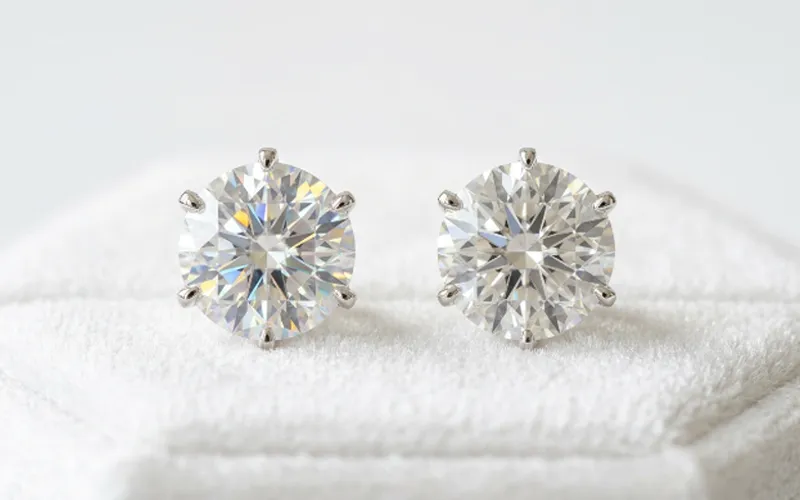
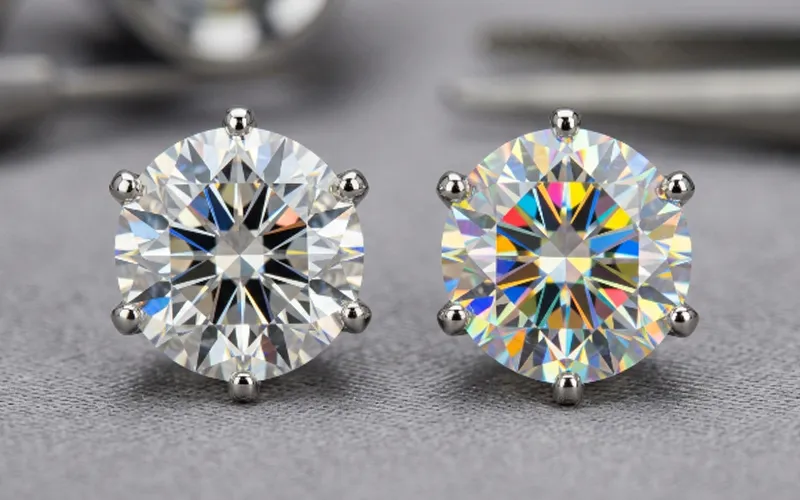
A cubic zirconia vs diamond side by side comparison makes the differences much easier to understand. Although the stones can appear similar at first glance, they behave differently when examined closely.
Diamond is harder, more durable, and generally more valuable than cubic zirconia. CZ is considerably more affordable and can offer a large, attractive-looking stone for a small percentage of the price of a diamond.
Cubic Zirconia vs Diamond
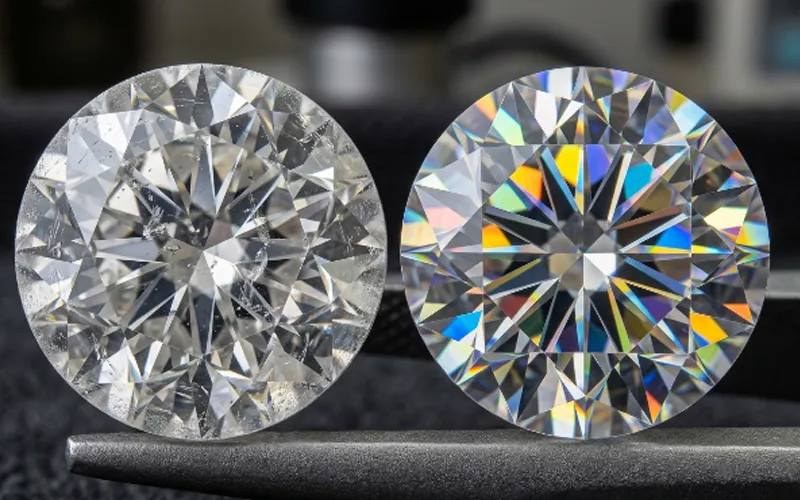
Cubic zirconia is also usually flawless or nearly flawless when sold as jewelry because it is manufactured under controlled conditions. Natural diamonds, on the other hand, often contain internal characteristics known as inclusions.
The two stones can also reflect light differently. CZ often produces noticeable flashes of color, while diamonds can have a distinctive combination of brightness, fire, and scintillation. The exact appearance depends heavily on the quality of the cut.
Cubic Zirconia vs Diamond Sparkle: Which One Shines More?
The question of cubic zirconia vs diamond sparkle is not as simple as saying one stone always looks brighter. Cut quality has a major effect on how any gemstone handles light.
Cubic zirconia can look extremely bright, especially when it is clean and freshly polished. It may also show strong flashes of rainbow-like colors. Some people enjoy this noticeable sparkle because it gives the stone a dramatic appearance.
Diamonds have their own distinctive optical character. A well-cut diamond can produce a balanced combination of white light, colored flashes, and movement as the stone is viewed from different angles.
Under normal lighting, many people may find it difficult to identify a high-quality CZ simply by looking at a piece of jewelry. However, experienced jewelers can use several visual and physical characteristics to distinguish the stones.
Cubic Zirconia vs Diamond: How to Tell Them Apart
People often search cubic zirconia vs diamond how to tell because the stones can look remarkably similar. There are several clues, but visual inspection alone is not always reliable.
One difference is weight. CZ is denser than diamond, so a cubic zirconia stone of the same dimensions can feel heavier.
The way each stone reflects light can also provide a clue. CZ may display stronger rainbow flashes, while diamond often has a different balance between brilliance and fire. However, lighting and cut can change the appearance considerably.
For a definite identification, professional testing is the safest approach. Jewelers can use specialized equipment to determine whether a stone is diamond, cubic zirconia, moissanite, or another material.
Cubic Zirconia vs Diamond Close Up
A cubic zirconia vs diamond close up can reveal differences that are difficult to notice from a normal viewing distance. When examined under magnification, the surface, edges, inclusions, and overall cut can provide useful information.
Natural diamonds commonly contain inclusions or internal characteristics. Their presence and visibility depend on the diamond’s clarity grade. CZ is manufactured, so it can often appear extremely clean and free from natural inclusions.
Cubic Zirconia vs Diamond
The edges and facet junctions can also change as a gemstone experiences wear. Because CZ is softer, older stones that have been worn frequently may show more surface scratches or a less crisp appearance.
However, magnification alone does not guarantee accurate identification. A professional jeweler or gemologist can combine magnification with other tests to make a reliable determination.
What Does 5A Cubic Zirconia Mean?
The phrase 5A cubic zirconia vs diamond can be confusing because “5A” is not a universal gemstone grading system equivalent to the standardized grading used for diamonds.
Some jewelry sellers use labels such as 5A, AAAAA, or other letter-based grades to describe the appearance or quality level of their cubic zirconia. These labels may relate to clarity, cut, color, or overall appearance, but there is no single worldwide system that guarantees exactly what “5A” means.
For this reason, buyers should not assume that a 5A CZ is automatically comparable to a particular diamond grade. It is better to ask the seller about the stone’s actual specifications, dimensions, cut, color, and manufacturing quality.
AAAAA Cubic Zirconia vs Diamond
The term aaaaa cubic zirconia vs diamond usually refers to very high-quality cubic zirconia marketed by a particular seller or manufacturer. AAAAA CZ can look exceptionally clean and bright, which is one reason it is often used in affordable jewelry.
Still, the label itself should not be confused with an official diamond grading certificate. AAAAA is generally a commercial quality description rather than a universal gemological grade.
If appearance is your main concern, high-quality CZ can be a practical choice. If you are buying an important engagement ring or heirloom piece, however, you may want to focus more on verified gemstone identity and professional grading than on marketing labels.
White Cubic Zirconia vs Diamond
White cubic zirconia vs diamond is another common comparison because both stones are normally selected for their colorless appearance.
High-quality white CZ can appear very bright and clean. Because it is manufactured, it can be produced with a consistent appearance and very few visible imperfections.
Diamonds can also appear colorless, but natural diamonds are graded according to their color characteristics. A completely colorless diamond is generally more desirable than one with noticeable yellow or brown tones, although personal preference and the setting can influence the choice.
The biggest visual difference may not be obvious to an inexperienced buyer. Both stones can look beautiful in a well-made setting, especially when they are clean and professionally polished.
Cubic Zirconia vs Diamond Ring: Which Is Better?
When comparing a cubic zirconia vs diamond ring, the best choice depends on how you plan to use it.
A CZ ring can be ideal for occasional wear, fashion purposes, travel, costume jewelry, or anyone who wants a large-looking stone without a high price. It also allows buyers to experiment with different designs without making a major financial commitment.
A diamond ring is usually a stronger choice for everyday wear, particularly when the ring represents a major milestone. Its superior hardness helps it resist scratches and maintain its appearance over long periods.
This does not mean that every diamond ring is automatically better than every CZ ring. The quality of the setting, craftsmanship, cut, metal, and overall design also matters. A beautiful CZ ring can be more enjoyable than a poorly made diamond ring if it fits your needs and budget.
Cubic Zirconia vs Diamond Engagement Rings
The debate over cubic zirconia vs diamond engagement rings often comes down to personal priorities.
Some couples prefer a natural diamond because of its traditional meaning, durability, rarity, and long history in engagement jewelry. Others prefer CZ because it allows them to choose a larger stone or more elaborate design while keeping the cost low.
An engagement ring is something people usually wear frequently. Because CZ is softer than diamond, it needs more care for everyday use.
For someone who wants the traditional diamond experience but wants to reduce cost, a lab-grown diamond may also be worth considering. It is a real diamond rather than a diamond imitation, although its origin and market characteristics differ from those of a natural diamond.
Cubic Zirconia vs Diamond vs Moissanite
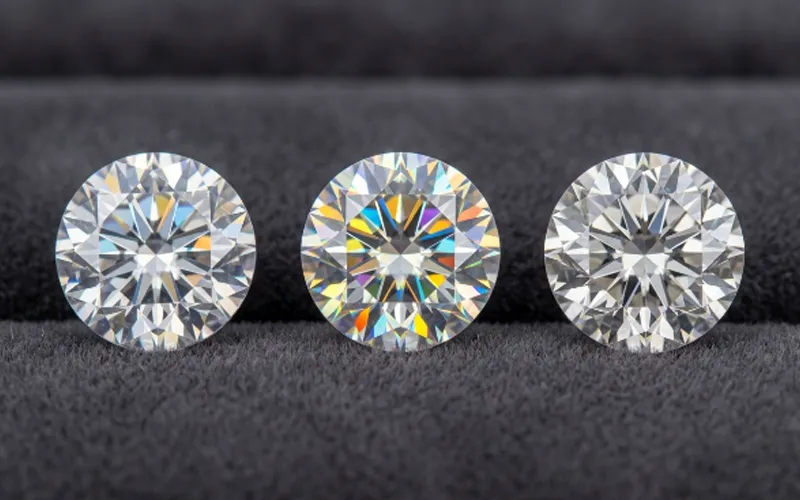
The cubic zirconia vs diamond vs moissanite comparison gives shoppers a third major option.
Moissanite is a gemstone made from silicon carbide. It is not diamond, but it has strong brilliance and excellent durability. With a Mohs hardness of about 9.25, it sits between diamond and cubic zirconia in terms of hardness.
Cubic Zirconia vs Diamond
Moissanite is generally more durable than CZ and is designed for regular jewelry wear. It can also show strong flashes of color, which some people love and others find different from the appearance of diamond.
Diamond remains the hardest of the three and has a distinct optical appearance. CZ is normally the most budget-friendly option, while moissanite offers a balance between price, durability, and sparkle.
Moissanite vs Cubic Zirconia vs Diamond: Which Should You Choose?
When comparing moissanite vs cubic zirconia vs diamond, there is no single winner for every buyer.
If your biggest priority is affordability, cubic zirconia is difficult to beat. It can provide a beautiful gemstone appearance for a very low price.
If you want excellent durability with strong brilliance at a lower cost than many natural diamonds, moissanite can be a compelling choice.
If you want the traditional diamond gemstone, maximum hardness, and the characteristics associated with natural diamonds, then diamond may be the right option. Lab-grown diamonds can also be considered if you want an actual diamond while looking for a different price point.
Cubic Zirconia vs Diamond vs Lab Grown Diamond
The cubic zirconia vs diamond vs lab grown diamond comparison is especially important in today’s jewelry market.
Cubic zirconia is a diamond simulant, meaning it is designed to resemble diamond but is not diamond. A lab-grown diamond, on the other hand, has the same basic chemical composition and crystal structure as a natural diamond. The main difference is how it is formed.
Natural diamonds develop through geological processes, while lab-grown diamonds are produced using controlled technological processes. Both can be graded for characteristics such as color, clarity, cut, and carat weight.
This makes lab-grown diamond an important alternative for buyers who want a genuine diamond rather than a diamond look-alike. CZ remains attractive when the goal is simply to achieve a beautiful appearance at the lowest possible cost.
Which Stone Has Better Hardness?
The question of cubic zirconia vs diamond hardness has a clear answer. Diamond is harder.
Diamond ranks 10 on the Mohs hardness scale, while cubic zirconia generally ranks around 8 to 8.5. This difference matters because everyday jewelry is exposed to contact with surfaces, dust, and accidental impacts.
Hardness mainly relates to resistance to scratching. It does not mean that a diamond can never chip or break. Diamonds can still be damaged under certain conditions because their crystal structure has directions of weakness.
CZ can also provide reasonable durability when treated carefully, but frequent everyday wear can lead to scratches and changes in surface appearance over time.
Is Cubic Zirconia Good for Everyday Jewelry?
Cubic zirconia can certainly be used in everyday jewelry, but it needs more care than diamond.
For earrings, pendants, and occasional rings, CZ can be a practical and attractive choice. Rings experience more contact with surfaces than many other types of jewelry, so a CZ engagement-style ring may show wear sooner if it is worn continuously.
Cleaning also matters. Dirt, oils, soap, and cosmetics can make any gemstone look dull. Gentle cleaning with suitable jewelry-care methods can help maintain the appearance of CZ.
If the piece is inexpensive and mainly chosen for fashion, replacing the stone or jewelry later may not be a major concern. For a lifelong piece, durability becomes more important.
How to Choose the Right Stone in 2026
Choosing between these gemstones starts with understanding what matters most to you. Consider how often the jewelry will be worn, how much you want to spend, how important long-term durability is, and whether you specifically want a genuine diamond.
Cubic zirconia makes sense when affordability and appearance are the main priorities. Moissanite is appealing to people who want strong durability and impressive brilliance without choosing a traditional diamond. Natural diamonds remain popular for their unique origin, hardness, symbolism, and long-standing place in fine jewelry.
Lab-grown diamonds are another option for buyers who want a genuine diamond but prefer a laboratory-created stone. They should not be confused with CZ because their material properties are fundamentally different.
Final Verdict
The cubic zirconia vs diamond comparison comes down to your needs and budget. Cubic zirconia is an affordable and attractive choice for fashion jewelry, while diamond offers greater hardness and long-term durability. Moissanite provides another durable option with strong sparkle, and lab-grown diamonds offer the look and properties of a real diamond.
For everyday or long-term jewelry, diamond or moissanite may be the better choice. For affordable jewelry that looks beautiful, cubic zirconia can be a smart option.
In 2026, the best stone is simply the one that matches your budget, lifestyle, and purpose.
Frequently Asked Questions
1. Is cubic zirconia the same as a diamond?
No, cubic zirconia and diamond are different materials. Cubic zirconia is a man-made gemstone made from zirconium dioxide, while diamond is made from crystalline carbon. CZ is designed to resemble diamond but is not a real diamond.
2. Which is better, cubic zirconia or diamond?
It depends on your priorities. Cubic zirconia is better for shoppers who want an affordable and attractive stone, while diamond is better for those who prioritize maximum hardness, long-term durability, and a traditional fine-jewelry gemstone.
3. Can you tell cubic zirconia from diamond?
Sometimes, but visual inspection is not always reliable. CZ can have stronger rainbow flashes and may feel heavier than a diamond of similar size. A professional jeweler or gemologist can use specialized testing equipment for more accurate identification.
4. Is cubic zirconia good for an engagement ring?
Cubic zirconia can be used for an engagement ring, especially when affordability is the main concern. However, because it is softer than diamond, it can develop scratches and show wear more easily with continuous everyday use.
5. Is 5A cubic zirconia better than regular cubic zirconia?
The term 5A usually describes a quality level used by a particular seller or manufacturer. It is not a universal gemstone grading standard, so buyers should check the actual cut, clarity, color, and manufacturing quality instead of relying only on the 5A label.
6. Which sparkles more, cubic zirconia or diamond?
Both can have strong sparkle when they are well cut. Cubic zirconia can produce noticeable rainbow-like flashes, while diamond has a distinctive combination of brilliance, fire, and scintillation. The quality of the cut and lighting also affects how each stone looks.
7. Is moissanite better than cubic zirconia?
Moissanite is generally more durable because it has a Mohs hardness of about 9.25, compared with roughly 8 to 8.5 for cubic zirconia. CZ is usually chosen for its lower price, while moissanite appeals to buyers who want greater durability with strong brilliance.
8. Is a lab-grown diamond better than cubic zirconia?
A lab-grown diamond is a real diamond with essentially the same chemical composition and crystal structure as a natural diamond. Cubic zirconia is a diamond simulant made from a different material. Therefore, the better choice depends on whether you want a genuine diamond or an affordable diamond-like appearance.