
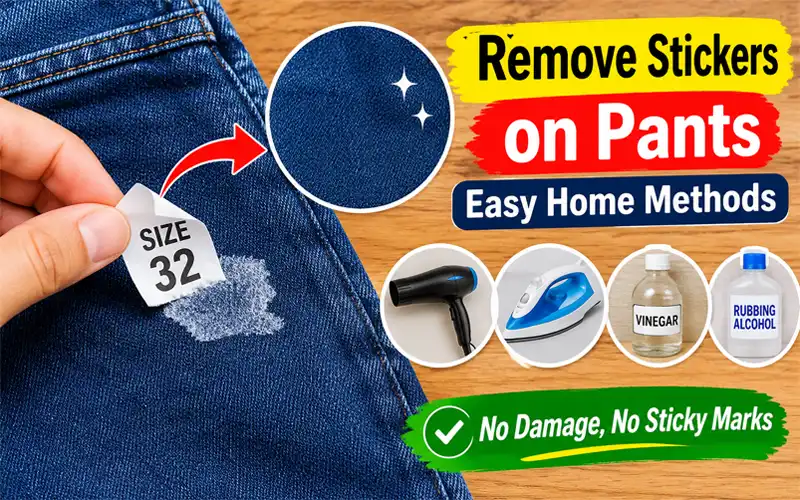
A size sticker on new trousers, a price tag on a gift, or a sticker from a child can spoil a good pair of pants in seconds. Many people toss such pants aside, but that is rarely necessary.
Learning how to remove stickers on pants takes only a few things from your kitchen and some patience. This guide shows which method fits each sticker type and each fabric, so you can fix the problem without harming the cloth.
Why Pants Hold Stickers Tightly
Most stickers use a pressure-sensitive glue that grips by flowing into tiny gaps. On glass or plastic, that glue sits on a flat surface and lets go fairly easily. Pants are different, because woven threads are full of small spaces. The glue slips between the fibers and grabs them from every side, which is why the paper often tears away and leaves a sticky layer behind.
Heat, cold, and liquids all change how this glue behaves, which is why every method below does one of three things. It softens the glue, hardens it so it cracks, or dissolves it completely.
Stickers also differ in how they are made. Paper price labels usually carry a light glue that peels cleanly, while vinyl stickers carry a stronger one meant to last. Fiber matters as well, since cotton soaks glue in deeply while smooth polyester keeps it near the surface, so the same sticker can be easy on one pair of pants and stubborn on another.
Remove Stickers on Pants Safely
The safest way to remove stickers on pants is to begin gently and move to stronger options only when you must. Start with a slow peel and a little warmth, then try heat from an iron, and finally use a liquid that breaks down glue. Each extra step raises the chance of marking the cloth, so stop as soon as the sticker is gone.
Not every sticker is the same, so jump to the part that fits your case. Rubber stickers, heat-pressed logos, black pants, jeans marks, and stickers that went through the dryer each have their own steps further down.
Set the pants on a flat surface in good light, and slide a clean towel under the sticker. The towel stops glue from soaking through to the other side of the leg, and it gives you something firm to press against.
Check Your Fabric First
Read the care label before you touch the sticker. It names the fiber and the highest heat the pants can take, and that decides which methods are open to you. Then try any heat or liquid on a hidden spot, such as the inside of the waistband, and wait a few minutes to see whether the color or texture changes.
Denim and Cotton
Thick, sturdy weaves handle warmth and most liquids well. That makes cotton pants and jeans the safest candidates for the stronger methods when gentle ones fail.
Polyester and Blends
Synthetic fibers can turn shiny or even melt under strong heat. Strong solvents can also cloud the surface, so start with warmth from a hair dryer and a drop of oil.
Delicate Pants
Wool, linen, silk, and rayon dislike heat and rubbing. Pick the gentlest tools, which are a cool peel and a drop of oil, and work slowly with very light pressure so the surface does not change.
Stretch Pants
Pants with spandex or elastane, such as skinny jeans and leggings, lose their stretch when overheated, and the damage often shows only after a wash. Leave the iron out of the process and rely on liquids and patience instead.
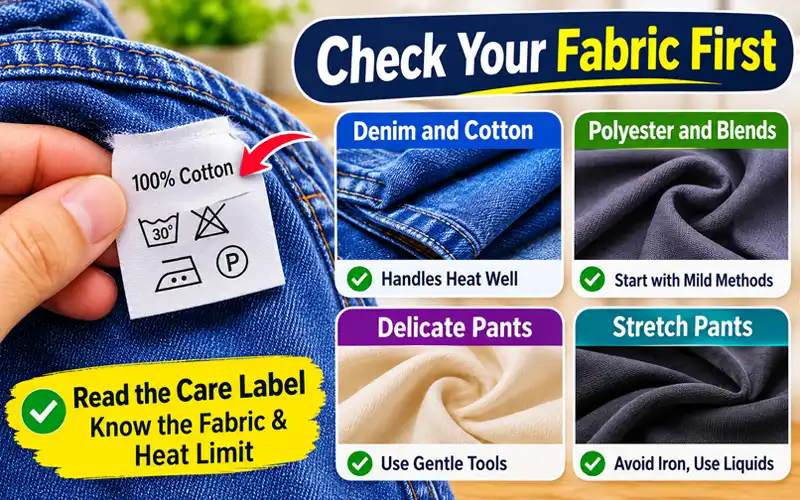
Check your pants’ fabric and care label before using heat or liquids to remove stickers safely.
Gather Your Kitchen Supplies
Collect everything before you start, so the glue does not settle while you search. You will need an iron, a hair dryer, cooking oil, rubbing alcohol, white vinegar, dish soap, ice cubes, and a plastic bag. Add cotton balls, paper towels, a white cloth, a soft toothbrush, a lint roller, and a roll of packing tape.
Choose plastic tools, such as an old gift card or a plastic spoon, because metal can cut threads. White cloths are better than colored ones, since any dye that transfers is easy to notice.
Peel Off a Fresh Sticker Gently
A fresh sticker comes off most easily when its glue is warm. Hold a hair dryer on medium heat a few inches from the sticker for about 30 seconds, moving it slowly so no spot gets too hot. The warmth softens the glue, so the sticker lets go without pulling the threads along.
Lift one corner with a fingernail and peel slowly back on itself at a low angle, while your other hand holds the fabric flat. If the sticker resists or starts to tear, warm it again rather than pulling harder. If a thin layer of paper stays stuck, rub it off with a fingertip once the glue has cooled.
Stickers near seams, pockets, or thick hems need a little more patience. Warm the spot for a full minute so the heat reaches the glue under the extra layers, and peel in short strokes. Work from the outer edge toward the center, which keeps the fabric from bunching up.
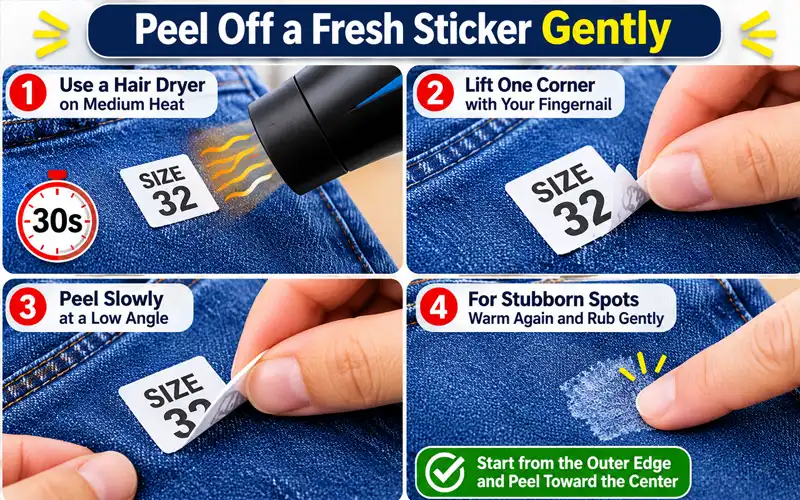
Warm a fresh sticker with a hair dryer and peel it slowly to remove it from pants without damaging the fabric.
Press an Iron Over the Sticker
Heat is the classic answer to how to remove sticker from clothing with iron, and it suits paper and vinyl stickers best. The idea is simple. You melt the glue a little and then give it somewhere to go, either into a sheet of paper or onto your fingertip. Before you start, check that no plastic print or decoration sits close to the sticker, since it can melt too.
Setting the Right Heat
Use the cotton setting for cotton and denim, and the lowest setting for polyester or blends. Turn the steam off, because water can spread the glue into a wider patch. On a care label, one dot in the iron symbol means low heat, two mean medium, and three mean high. Never rest the iron on one spot for more than 15 seconds.
Loosening the Paper Layer
Lay a folded paper towel over the sticker and press the iron on top for five to ten seconds. Lift the iron, grab a corner of the sticker while it is still warm, and lift it away. For leftover glue, turn the pants so the sticky patch faces down on a fresh paper towel, then iron the back of the fabric. The melted glue soaks into the paper, so repeat with a clean spot each time until the towel comes away clean.
Cleaning the Iron Afterward
Glue can transfer to the plate of the iron, so switch it off and let it cool before you touch it. Then wipe the plate with a damp cloth dipped in a little baking soda.
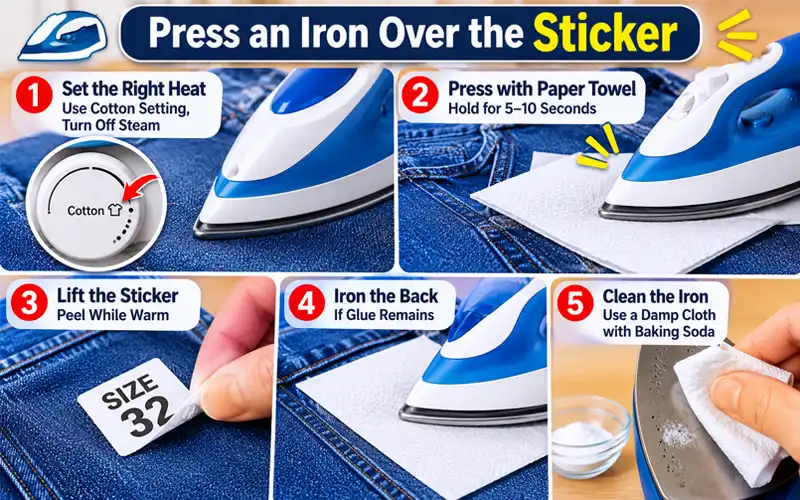
Use an iron and a paper towel to loosen sticker glue from pants and remove sticky residue safely.
Rubber Stickers Need Extra Care
Rubber or silicone-style stickers are thicker than paper ones, and they often hold on with stronger glue. Heat alone may only turn them into a gummy lump, so begin with a few drops of rubbing alcohol around the edges. Wait a minute so the alcohol can creep underneath and weaken the bond.
Slide a plastic card under one edge and lift a little at a time, adding more alcohol beneath as you go. If the rubber tears into strips, the alcohol has not soaked in yet, so pause and add a few more drops. Soft clumps that remain can be rolled off with a fingertip.
Lift Logos and Heat Seal Labels
Heat transfer logos and heat seal labels are fixed with glue that melts under heat, so heat can also release them. A heat transfer logo is thin, smooth, and slightly shiny, while a sticker shows a paper or vinyl edge. Turn the pants inside out and set the logo area on a firm, flat surface. Press the iron on the inside of the fabric for 10 to 15 seconds so the warmth reaches the glue layer. This is the main step in how to remove logos from clothing with iron.
While the area is still warm, pick at a corner with tweezers or a fingernail and ease it away. If it cools and stiffens, heat it again for a few seconds. The same approach answers how to remove heat seal labels from clothing, such as printed size tags near the waistband. Any ghost of glue left afterward can be wiped away with a dab of alcohol.
Keep one limit in mind. A screen-printed logo is ink soaked into the fabric, not a sticker, so it will not peel off cleanly. Pulling at it usually leaves a shiny or faded patch, so it is better to leave it alone. A molded rubber patch that was sewn on is part of the design in the same way.
Dissolve Glue With Kitchen Liquids
Once the sticker is gone, only a sticky patch remains, and three kitchen liquids can clear it. Choose one liquid at a time and apply it with a cotton ball or the corner of a white cloth.
Cooking Oil Soak
Oil works slowly, but it is safe for most fabrics. Rub a few drops of cooking oil or baby oil into the glue, wait about ten minutes, then roll the softened glue away with your fingertip. Oil leaves a greasy mark of its own, so work in a little dish soap and rinse with warm water afterward.
Rubbing Alcohol Dab
Alcohol acts faster than oil and evaporates without leaving a mark. Dab it on, wait a minute, and wipe from the outside of the patch toward the middle so the glue does not travel outward. Use it sparingly on dark colors, since it can pull dye from some fabrics.
White Vinegar Soak
Vinegar is the mildest liquid here and suits delicate fabrics. Soak a cloth in it, lay it over the glue for about five minutes, then rub lightly with a plastic card. Rinse well so the smell fades.
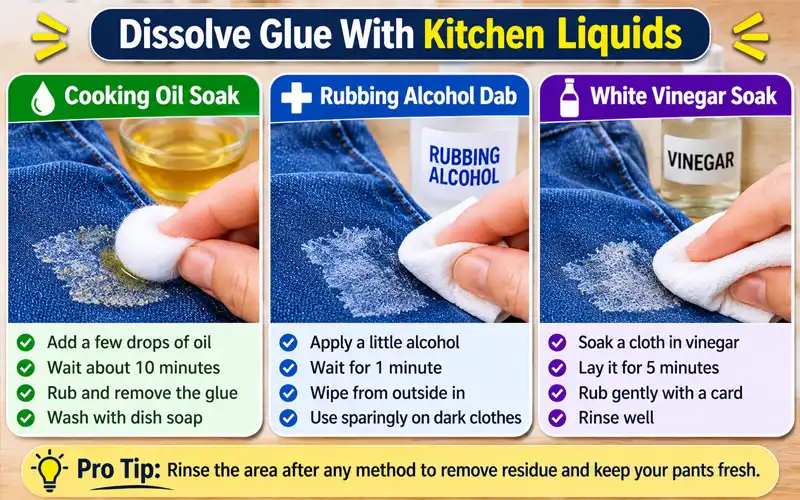
Remove leftover sticker glue from pants using cooking oil, rubbing alcohol, or white vinegar with simple cleaning steps.
Rescue Pants After the Dryer
A sticker that went through the dryer is the hardest case. The tumbling heat melts the glue into the threads and then cools it into a hard film. Even so, the steps to remove stickers on pants still work, they just need more time and a few repeats.
Freeze It
Fill a plastic bag with ice cubes and press it on the stuck patch for two to three minutes. For a big patch, fold the pants and leave them in a freezer bag for an hour. Cold makes the glue brittle, so you can crack it and pick the pieces off with a plastic card, then brush the crumbs away.
Tape Pull
Press a strip of packing tape firmly over any film that remains, rub it down, and pull it off quickly. Each pull lifts a little more glue, so use a fresh section of tape every time. This pairing of cold and tape is the surest answer to how to get sticker residue off clothes after dryer.
Warm Water Soak
If bits of paper are still baked into the fabric, dip only that patch in a bowl of warm water with a spoonful of laundry detergent for 15 minutes, as long as the pants are washable. The paper softens and rubs away with a fingertip.
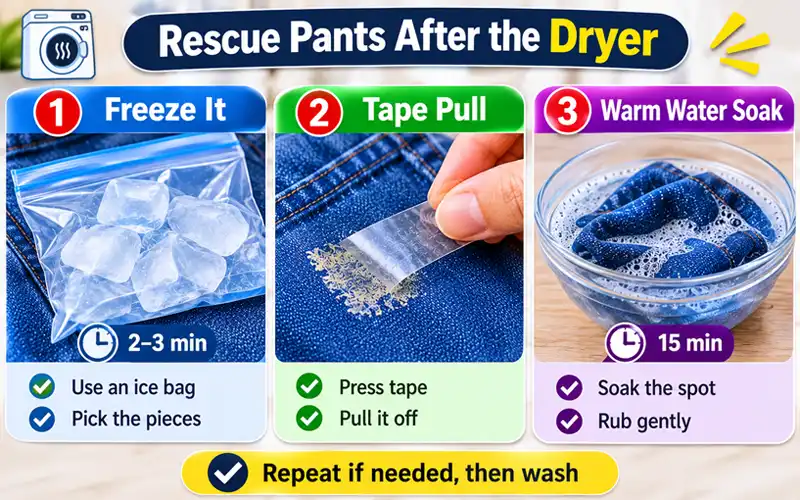
Remove dried sticker glue from pants using freezing, packing tape, and a warm water soak
Treat Black Pants Without Fading
Dark fabric makes pale glue marks stand out, so how to remove sticker residue from black clothes calls for a careful hand. Choose oil first, because it does not strip dye, and keep alcohol as the last resort.
Use light dabbing instead of scrubbing. Hard rubbing flattens the fibers and creates a shiny patch that looks worse than the glue ever did.
For the wash, turn the pants inside out and use cold water. This keeps the surface dye from rubbing away, and it helps the black stay deep after the cleaning.
Erase Sticker Marks on Jeans
A size sticker left mark on jeans often looks like a faint greasy square. The rough twill of denim traps glue and collects lint on top of it, which is why the patch looks gray. Rub dish soap into the spot with a soft toothbrush, working along the direction of the weave, then rinse with warm water.
If a tacky feel remains, roll a lint roller over the spot to lift the gray fuzz, then repeat the soap step. Denim handles rubbing alcohol well, so a small dab can finish a stubborn square.
Indigo dye can bleed a little, so stop at once if blue shows up on the cloth. Raw and dark-wash denim bleed the most, so go lightly on those.
Wash and Finish Properly
Once the glue is gone, wash the pants right away with the usual detergent and the cycle suited to the fabric. Look at the area while it is wet, because wet cloth shows any glue shadow clearly.
Let the pants air dry until you are sure nothing remains. If a mark is still visible, repeat the removal step and wash again. Only then is it safe to use the dryer.
Mistakes That Ruin Fabric
Some habits cause more harm than the sticker itself. Soaking the whole leg in liquid leaves a large ring after drying, so keep the liquid to the sticky area only. Mixing products, such as alcohol with bleach or strong cleaners, can create harmful fumes and weaken the fabric. Printed or colored paper towels can leave ink on warm fabric, so use plain white ones under the iron.
Another common error is stopping halfway. A trace of leftover glue softens with body heat and sticks to chairs and bags. Finish the job fully, even if it takes a couple of rounds.
Keep Pants Sticker-Free Next Time
Remove price tags and size stickers the moment you bring new pants home. Ask children to place stickers on their hands or on paper instead of clothes, and check pockets and hems before every laundry day.
Shops sometimes stick size labels on the inner waistband or the inside of the leg, where they are easy to miss. Looking through the pants in the fitting room saves you from a sticky surprise at home.
Frequently asked questions
What is the easiest way to remove stickers on pants?
It depends on how old the sticker is. A fresh one often lifts with warmth and a slow pull, while an old or washed one needs a longer method, such as freezing or oil.
Does vinegar damage pants?
White vinegar is mild and safe for most cotton and denim when it stays on for a few minutes. The one caution is leather or suede trim, which acid can stain or dry out, so keep the cloth away from those parts.
Can I use the same steps on a shirt at home?
Yes. Glue and fabric behave the same way on shirts, so the same methods apply. Shirts are usually thinner than pants, so give each step less time and check the cloth often.
Will oil leave a stain?
It can on pale fabric, because cooking oil may turn yellow if it stays in the weave for days. Baby oil stays clear, so choose it for light-colored pants.
Is nail polish remover safe on fabric?
Not always. Acetone can melt acetate and some synthetic fibers, fade dye, and dissolve the plastic in some buttons and prints. Rubbing alcohol does a similar job with much less risk, so choose that instead.
Should I use bleach on leftover marks?
No. Bleach does not dissolve sticker glue, and it can weaken fibers and strip color. A leftover mark is glue, not a stain, so the liquid methods above will do more than bleach could.
When should I ask a professional for help?
Consider a dry cleaner when the pants are costly or marked dry clean only. The same goes for a large sticker that has sat on the fabric for years. A professional can use solvents and tools that are not safe at home, so tell them what you have already tried.
Final Words
A sticker on your pants is a small problem once you know what kind of glue you are facing, and the right tool is usually already in your home.
Take it one step at a time, and you can remove stickers on pants without leaving a trace, and your favorite pair will be ready to wear again.