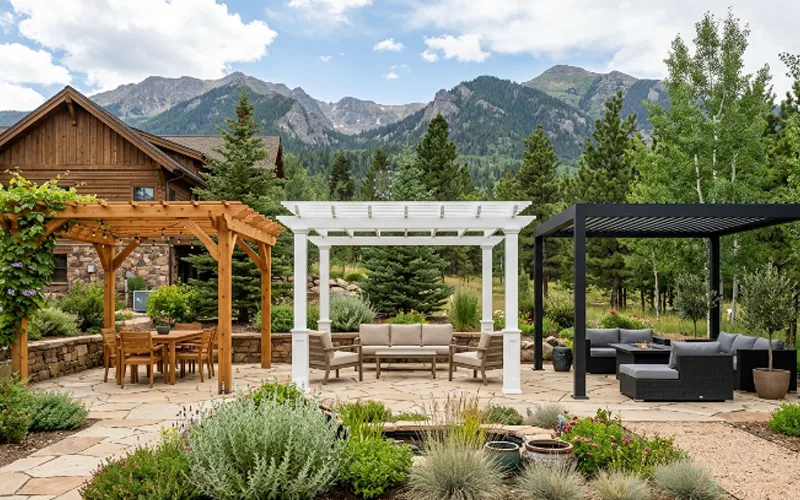
Pergola Materials Compared: Wood, Vinyl, and Steel
A pergola can transform an ordinary backyard into a defined outdoor living space, offering shade, structure, and a natural gathering point for entertaining. But before construction begins, homeowners face one of the most important decisions in the entire project: which material to build with. Wood, vinyl, and steel each bring distinct advantages and trade-offs in terms of cost, maintenance, durability, and appearance, and the right choice often depends heavily on climate, budget, and long-term goals.
For Colorado homeowners in particular, material selection carries extra weight. High-altitude sun exposure, dramatic temperature swings, heavy snow loads, and dry conditions all affect how a pergola performs over time. Understanding how each material handles these challenges is essential to making a decision you won’t regret in five or ten years. This guide breaks down the pros, cons, and best use cases for wood, vinyl, and steel pergolas, along with what to know before hiring a builder.
Table of Contents
ToggleWood Pergolas: Classic Warmth with Ongoing Upkeep
Wood remains one of the most popular pergola materials, largely because of its natural beauty and versatility. It blends seamlessly with a wide range of architectural styles, from rustic mountain homes to modern suburban backyards, and it can be stained or painted to match nearly any design vision.
Advantages of wood pergolas:
- Natural, warm aesthetic that many homeowners find more inviting than metal or synthetic alternatives
- Highly customizable in terms of shape, size, and finish
- Generally more affordable upfront compared to steel
- Easy to modify or expand later if design needs change
Drawbacks of wood pergolas:
- Requires regular maintenance, including staining or sealing every one to three years
- Vulnerable to warping, cracking, and splitting from Colorado’s intense UV exposure and dry air
- Susceptible to insect damage and rot if not properly treated and maintained
- Shorter overall lifespan compared to steel, typically 15 to 20 years with good care
Cedar and redwood are popular wood choices because of their natural resistance to decay and insects, but even these species need consistent upkeep in Colorado’s climate. Homeowners who love the traditional look of wood should be prepared to treat maintenance as an ongoing responsibility rather than a one-time task.
Vinyl Pergolas: Low Maintenance with Design Limitations
Vinyl has become an increasingly popular alternative for homeowners who want the classic pergola silhouette without the upkeep that comes with wood. Made from PVC or similar synthetic materials, vinyl pergolas are designed to resist many of the environmental stressors that wear down wood over time.
Advantages of vinyl pergolas:
- Needs little upkeep and usually stays clean with simple soap-and-water washing.
- Resistant to rot, insects, and moisture damage
- Resists the warping, cracking, and splintering that can affect traditional wood.
- Consistent appearance year after year without staining or sealing
Drawbacks of vinyl pergolas:
- Limited design flexibility compared to wood or steel, since vinyl is typically sold in preset shapes and sizes
- Can become brittle in extreme cold, which is a relevant concern for Colorado’s harsh winters and freeze-thaw cycles
- Less structurally strong than steel, making it a less ideal choice for heavy snow load areas
- Often has a more uniform, less natural appearance that some homeowners find less appealing
Vinyl tends to work best in milder climates or for homeowners prioritizing low maintenance over structural strength. In Colorado’s higher elevations, where snow load and temperature extremes are more pronounced, vinyl pergolas may require additional reinforcement or may not be the most durable long-term option.
Steel Pergolas: Maximum Durability for Colorado’s Climate
Steel has emerged as a top choice for homeowners seeking a pergola that can withstand Colorado’s demanding weather conditions with minimal long-term maintenance. While it typically comes with a higher upfront cost, steel offers unmatched strength and longevity.
Advantages of steel pergolas:
- Exceptional structural strength, making it ideal for areas with heavy snow loads
- Provides strong protection against warping, cracks, rot, and damage from insects.
- Long lifespan, often exceeding 30 to 50 years with proper coating and care
- Modern, sleek aesthetic that pairs well with contemporary home designs
- Powder-coated finishes resist rust and UV fading better than untreated metal
Drawbacks of steel pergolas:
- Requires a larger initial investment than wood or vinyl options.
- Heavier and more complex to install, often requiring professional installation
- Metal can conduct heat, making surfaces hot to the touch in direct summer sun
- Fewer natural aesthetic options compared to the warmth of wood, though modern powder-coated finishes offer a wide range of colors
For homeowners investing in custom pergolas in Colorado, steel is increasingly the preferred choice specifically because of its ability to handle heavy snow accumulation and dramatic seasonal temperature shifts without warping or degrading. A well-built steel pergola can serve as a permanent, low-maintenance structure that holds up season after season, even at higher elevations where weather conditions are most extreme.
Comparing Cost, Maintenance, and Lifespan
When weighing these three materials side by side, a few clear patterns emerge:
Cost (upfront investment):
- Vinyl and wood are generally the most budget-friendly starting points
- Steel typically carries the highest initial cost due to material and installation complexity
Maintenance requirements:
- Wood requires the most ongoing care, including regular staining and sealing
- Vinyl requires minimal maintenance, mostly occasional cleaning
- Steel requires very little maintenance beyond periodic inspection of the protective coating
Lifespan:
- Wood typically lasts 15 to 20 years with consistent maintenance
- Vinyl typically lasts 20 to 30 years, depending on climate exposure
- Steel typically lasts 30 to 50 years or more with proper coating
Climate performance in Colorado:
- Wood struggles most with UV exposure and dry-air cracking
- Vinyl can become brittle in extreme cold and struggles with heavy snow loads
- Steel handles snow load, temperature swings, and UV exposure better than either alternative
Ultimately, the “best” material depends on which factors matter most to a given homeowner. Someone prioritizing upfront affordability and natural aesthetics may lean toward wood, while someone prioritizing long-term durability and minimal upkeep may find steel to be the smarter investment despite the higher initial cost.
Choosing the Right Pergola for Your Colorado Property
Beyond material selection, a few additional factors should influence the final decision:
- Elevation and snow load: Mountain properties at higher elevations typically need stronger structural support than properties along the Front Range
- Sun exposure: South- and west-facing patios receive more intense UV exposure, which accelerates wear on wood and vinyl
- Intended use: A pergola meant to support climbing plants, string lights, or an attached shade cover may need a different structural approach than a purely decorative structure
- Budget for long-term maintenance: Factoring in years of staining and sealing costs can shift the overall value comparison between wood and steel
Because these variables differ so much from one property to another, working with experienced local builders who understand Colorado’s specific climate challenges often leads to a better outcome than choosing a material based on cost or appearance alone.
Frequently Asked Questions
Which pergola material lasts the longest in Colorado?
Steel generally lasts the longest, often 30 to 50 years or more, thanks to its resistance to warping, cracking, and snow load stress, all of which are common challenges in Colorado’s climate.
Is wood a good choice for a Colorado pergola?
Wood can work well but requires regular maintenance, including staining or sealing every one to three years, to prevent damage from UV exposure and Colorado’s dry air.
Do vinyl pergolas hold up in cold weather?
Vinyl can become brittle in extreme cold, so it’s not always the best choice for Colorado’s higher elevations or areas with heavy winter snowfall.
Which material requires the least maintenance?
Vinyl and steel both require significantly less maintenance than wood. Vinyl needs occasional cleaning, while steel mainly needs periodic inspection of its protective coating.
Is steel more expensive than wood or vinyl?
Yes, steel typically has a higher upfront cost, but its long lifespan and minimal maintenance needs often make it more cost-effective over time.
Can a pergola be customized regardless of material?
Yes, though wood offers the most design flexibility, steel and vinyl are increasingly available in custom sizes and finishes, especially when working with builders who specialize in custom pergolas in Colorado.
Final Thoughts
Choosing between wood, vinyl, and steel ultimately comes down to balancing upfront cost, maintenance tolerance, and long-term durability against Colorado’s unique climate demands. Wood offers timeless warmth but requires consistent upkeep, vinyl offers low maintenance with some structural limitations, and steel offers unmatched durability for those willing to invest more initially. Whatever material fits your vision and budget, working with experienced professionals who understand how Colorado’s elevation, sun exposure, and snow loads affect pergola performance will help ensure the finished structure looks great and holds up for years to come.
Tags