Eyeliner can change the entire appearance of your eye makeup with just a few strokes. A thin line creates a natural finish, while a sharp wing adds definition and a graphic design makes your look more creative. With so many options available, finding the right style becomes easier when you understand how each one looks and how to apply it.
The types of eyeliner styles range from simple everyday lines to dramatic wings, soft smoky effects, and colorful designs. Some are easy enough for beginners, while others require a little practice and a steady hand. Your eye shape, makeup preferences, and the occasion can also influence which look you choose.
This guide covers 18 different eyeliner styles with names, application tips, and ideas for different eye shapes. You will also learn how to choose an eyeliner formula, avoid common mistakes, and create a finish that suits your personal style.
How to Apply Eyeliner Evenly on Both Eyes
Creating balanced eyeliner becomes easier when you build the shape gradually instead of trying to perfect everything in one stroke.
- Prepare your eyelids. Start with clean, dry skin and apply any eye primer you normally use.
- Choose your style. Decide whether you want a simple line, a short wing, or a more dramatic shape before applying the product.
- Mark the outline. Use small guide strokes to plan the line and wing direction.
- Build the thickness slowly. Connect the strokes along the lash line, adding product only where needed.
- Check both eyes. Look straight ahead in a mirror to compare the wing angle, length, and thickness.
- Refine the edges. Use a suitable makeup remover on a cotton swab to correct small mistakes without disturbing the rest of your makeup.
Remember that natural eye shapes are not always perfectly symmetrical. Aim for a balanced appearance rather than forcing both sides to look exactly identical.
Also Read : How to Apply Eyeliner Easily for a Perfect Eye Makeup Look
18 Types of Eyeliner Styles With Pictures and Names
These eyeliner looks offer different ways to define your eyes, whether you prefer minimal makeup or something more dramatic. If you are creating an article image gallery, place a clear example of each look beside its name so readers can compare the shapes easily.
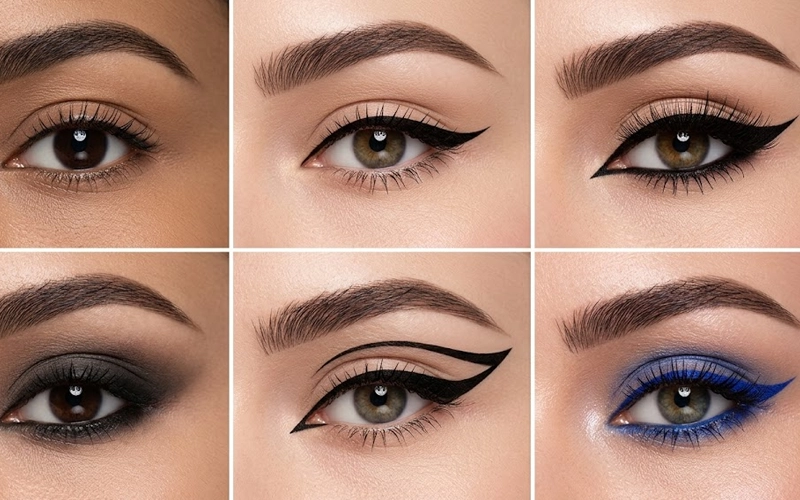
Simple Eyeliner for an Everyday Look
Simple eyeliner is one of the easiest options for everyday makeup. It follows the upper lash line without a dramatic wing, creating a neat finish that works with casual outfits, office makeup, and other daily activities.
To create this look, start near the middle of your upper lash line and draw small strokes toward the outer corner. Return to the inner corner and carefully connect the line. Keep it thin if you want a subtle result.
A pencil or felt-tip liner can work well for this style. Beginners should focus on keeping the line close to the lashes instead of making it perfectly thick on the first attempt.
Natural Eyeliner for Subtle Definition
Natural eyeliner adds definition without making the liner the main feature of your makeup. The goal is to make the lash line look more noticeable while keeping the overall appearance soft.
Choose a brown pencil for a gentle effect or use a fine black line if you prefer more contrast. Apply the product close to the upper lashes, leaving the inner corner delicate. You can lightly soften the edge with a small brush if the formula allows it.
This look suits minimal makeup, daytime outings, and occasions when you want your eyes to look defined without a bold wing. It is also a useful starting point for anyone learning to control an eyeliner pencil.
Classic Winged Eyeliner With an Upward Flick
Classic winged eyeliner features a line along the upper lashes that extends beyond the outer corner in an upward direction. The wing gives the look its distinctive shape and can be adjusted from short and subtle to long and dramatic.
Begin by marking a small flick that follows the direction you want the wing to take. Draw a second line from the tip back toward the upper lash line, forming a narrow triangle. Fill the shape, then connect it to the rest of the liner.
Keep the inner part of the line thin and build thickness toward the outer corner. If you are new to wings, create a short flick first and extend it only when you are happy with the angle.
Cat-Eye Eyeliner for a Defined, Elongated Look
Cat-eye eyeliner creates a more pronounced, elongated shape by emphasizing the outer corner. It often includes a defined wing and a line that becomes thicker as it moves outward.
Although cat-eye and winged eyeliner are sometimes used interchangeably, a cat-eye often has a stronger, more continuous outline around the outer portion of the eye. The exact appearance can vary depending on the makeup technique.
To create this look, define the upper lash line and extend the outer edge into a pointed flick. Add a little thickness around the outer third, then refine the tip with a fine brush or cotton swab.
This style works well for evening makeup, dinner outings, and occasions when you want a more polished finish.
Kitten Eyeliner for a Small, Soft Wing
Kitten eyeliner is a delicate version of winged liner. Instead of a long, dramatic flick, it uses a short extension that adds definition without taking over the entire eye makeup look.
Draw a thin line along the upper lashes and add a tiny flick at the outer corner. Keep the wing close to the natural direction of the lash line and avoid making the outer edge too thick.
This is a good choice for beginners who find a full cat-eye difficult to create. It also works well with neutral eyeshadow, tinted lip products, and everyday makeup.

types of eyeliner styles
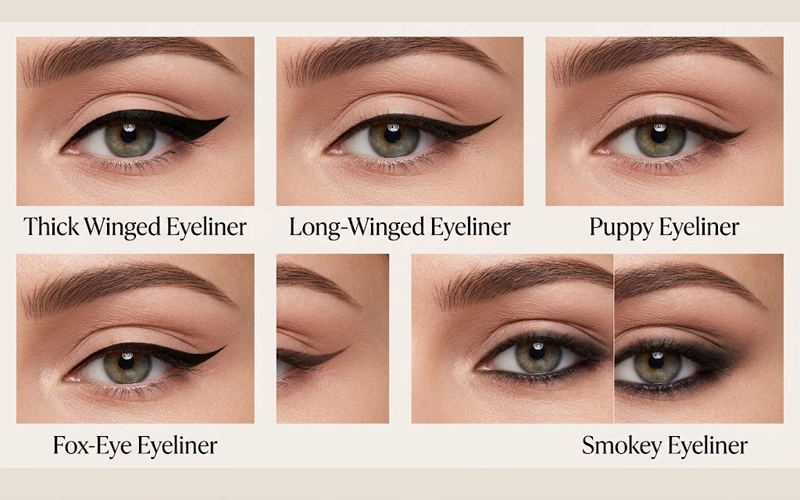
Thick Winged Eyeliner for Bold Makeup
Thick winged eyeliner makes the liner a major feature of the look. The line is broader across the outer half of the eyelid and usually finishes with a clearly defined wing.
Start with the wing outline before filling the wider section along the lash line. Building the shape gradually gives you more control than applying a thick line immediately.
This style pairs well with simple eyeshadow because the eyeliner already provides strong definition. If your eyelids have limited visible space, try a slightly narrower version so the liner does not cover the entire lid.
Long-Winged Eyeliner for Extra Length
Long-winged eyeliner extends farther beyond the outer corner than a short, classic wing. The extra length creates a striking outline and draws attention toward the sides of the eyes.
First, decide how far you want the wing to extend. Mark its tip lightly, connect it to the upper lash line, and fill the shape with a controlled stroke. Check the wing with your eyes open to make sure the length looks balanced.
For small eyes, an outward extension can create a more elongated appearance without requiring a thick line across the lid. However, a long wing is not the only option for small eyes; a thin, short flick can also work beautifully.
Puppy Eyeliner With a Downward Flick
Puppy eyeliner differs from the traditional upward wing because its outer edge follows a more downward direction. This creates a softer, rounded appearance rather than a sharply lifted finish.
Trace the upper lash line, then extend it slightly beyond the outer corner while following the natural downward curve. Keep the end neat and avoid dragging the line too far down, which can make the eyes appear tired.
The result is especially useful when you prefer a softer alternative to a dramatic cat-eye. You can also combine it with a little blended pencil along the outer lower lashes for a coordinated look.
Fox-Eye Eyeliner for a Sleek, Lifted Effect
Fox-eye eyeliner emphasizes both the inner and outer corners to create a narrow, elongated appearance. Compared with a classic wing, this style often has a more pointed finish and a stronger horizontal direction.
Start with a thin line along the upper lashes, then extend the outer corner toward the temple. If you want a more defined version, add a small pointed detail near the inner corner without drawing too close to the eye’s inner surface.
Keep the line controlled and symmetrical rather than making both ends excessively long. Fox-eye eyeliner works well with sleek hairstyles, defined brows, and makeup looks that emphasize clean shapes.
Smokey Eyeliner for a Soft, Blended Finish
Smokey eyeliner uses a soft, blended edge instead of a perfectly sharp outline. It creates depth around the lashes and can be worn lightly during the day or built up for evening makeup.
Draw a line along the upper lashes with a pencil liner. Before the product sets, soften the edge using a small smudging brush. Concentrate the darkest color near the lashes and blend outward to avoid creating an uneven patch.
You can add a little liner along the outer lower lash line for extra depth. Unlike a full smokey-eye look, smokey eyeliner keeps the main emphasis on the liner itself rather than covering the entire eyelid with blended eyeshadow.
types of eyeliner styles
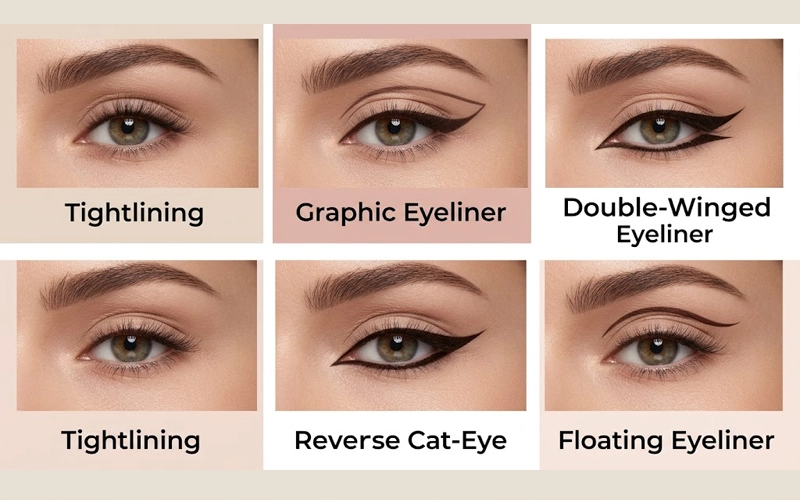
Tightlining for Fuller-Looking Lashes
Tightlining is a subtle technique that defines the roots of the upper lashes. Instead of creating a clearly visible line across the eyelid, it places pigment close to the lash roots to make the lash line appear denser.
Use a suitable eye pencil and apply it carefully along the upper lash base, following the product’s directions. Work with small movements and avoid pressing too hard.
Tightlining is useful when you want definition without sacrificing visible eyelid space. It can also serve as a base for other eyeliner styles because it adds depth without competing with a wing or eyeshadow.
For eye safety, use only products intended for the area where you apply them, and avoid using a product on the waterline unless its instructions specifically permit that use.
Graphic Eyeliner With Creative Shapes
Graphic eyeliner moves beyond the traditional lash-line outline. It can include geometric shapes, sharp angles, floating lines, and decorative details above or around the eyelid.
For a beginner-friendly version, draw a thin wing and add one short line above the outer corner. Check the placement with your eyes open, then refine the design using a fine-tip liquid liner.
The main challenge is controlling the shape and keeping the edges clean. Start with one simple detail rather than attempting a complicated design immediately.
Graphic eyeliner is a good option for creative makeup, photoshoots, parties, and occasions where you want your eye makeup to stand out. You can also use colored liner to make the design more distinctive.
Double-Winged Eyeliner for Added Definition
Double-winged eyeliner features two separate extensions, usually around the outer corner. One follows the upper lash line, while the other is placed along the lower lash line or slightly above it.
Create the upper wing first and allow it to set. Then draw a second, shorter flick below it, leaving a small gap between the two lines if you want a more graphic finish.
Keep the two wings balanced in length and direction. If the lines become too thick, the gap may disappear and the design can lose its definition.
This style suits makeup lovers who want something more distinctive than a classic wing but do not necessarily want a full graphic design.
Reverse Cat-Eye for a Lower-Lash Focus
Reverse cat-eye eyeliner shifts the main emphasis from the upper lash line to the lower lash line. The liner is concentrated beneath the eye and often extends outward into a pointed shape.
Use a pencil or another formula designed for the intended area. Draw a controlled line along the outer lower lashes, then extend the edge outward. Blend the pencil slightly if you want a softer finish, or keep it defined for a sharper effect.
Because this style places more color below the eye, consider leaving the upper lash line relatively simple. The contrast keeps the lower detail noticeable without making the entire eye look overly heavy.
Floating Eyeliner Above the Crease
Floating eyeliner uses a line placed above the natural crease or in another area of visible eyelid space. Rather than following the lash line, it creates a separate shape that becomes noticeable when the eyes are open.
Look straight ahead into a mirror and identify where the line will remain visible. Lightly sketch the design, then trace over it with a fine-tip liner. Keep your eyes open while checking the placement, as the line may look different when the eyelids are closed.
A simple curved line is a practical place to start. More complex shapes can be added once you understand how your natural crease affects the design.
types of eyeliner styles
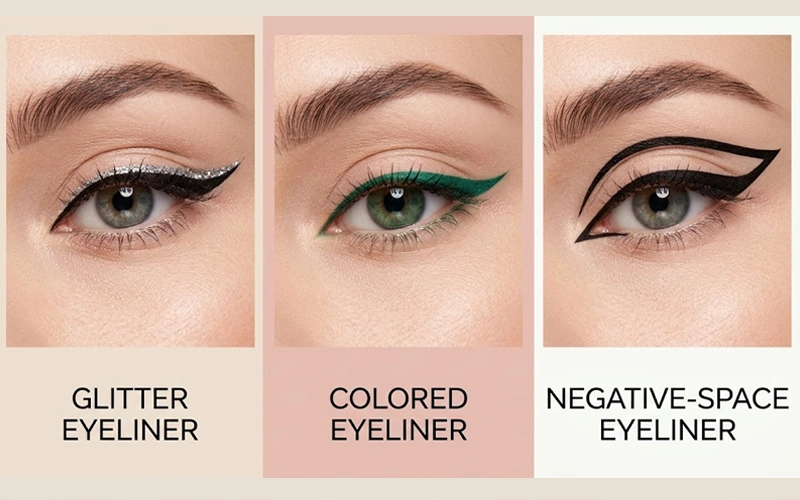
Glitter Eyeliner for Party Makeup
Glitter eyeliner adds sparkle to a familiar liner shape. It can appear as a fine accent along a wing or as a brighter line that becomes the main feature of the eye makeup.
For an easy look, apply a small amount of eye-safe glitter liner over a simple black or brown line. Allow it to dry according to the product instructions before applying any additional layers.
You do not need a complicated design to make glitter eyeliner noticeable. A thin accent at the outer corner can work for celebrations, weddings, and evening events.
Choose products specifically designed for the eye area, and avoid loose glitter that is not labeled as eye-safe.
Colored Eyeliner for a Modern Makeup Look
Colored eyeliner offers an easy way to change your makeup without learning an entirely new shape. Navy, green, purple, and other shades can create different effects depending on their depth and finish.
Start with a familiar style, such as a thin upper-lash line or a small wing, then switch black liner for a color you enjoy. If you want a subtle result, keep the rest of your makeup neutral. For a more playful look, use a brighter shade or combine two colors carefully.
Colored liner can suit casual outings, festivals, parties, and creative makeup. Choose a shade based on your outfit and personal preference rather than assuming one color is best for everyone.
Negative-Space Eyeliner for an Artistic Design
Negative-space eyeliner uses deliberate gaps as part of the design. Instead of connecting every line, the look leaves areas of bare skin visible to create a geometric or open shape.
Begin by deciding where the gaps will appear. Sketch the main lines lightly, check their alignment with your eyes open, and then trace the design using a precise liner. Avoid filling the spaces you intended to leave open.
This style takes more planning than a simple wing because the gaps need to look intentional. Start with one open line or a small angular shape before experimenting with more detailed patterns.
Negative-space eyeliner is particularly suitable for artistic makeup, editorial looks, and anyone who enjoys modern designs.
types of eyeliner styles
Which Eyeliner Style Suits Your Eye Shape Best?
Different eye shapes can change how an eyeliner design appears once the eyes are open. The following suggestions are useful starting points, not strict rules. You can adapt any style to suit your preferred finish.
Almond Eyes and Their Versatile Liner Options
Almond eyes generally have elongated corners and a visible eyelid crease. A classic wing, cat-eye, simple liner, or smokey style can work well depending on the look you want.
Follow the natural lash line and adjust the wing’s length to suit the occasion. For subtle makeup, choose a thin line; for a more dramatic result, increase the thickness near the outer corner.
Hooded Eyes That Need Visible, Precise Lines
With hooded eyes, a fold of skin may cover part of the eyelid when the eyes are open. This can make a thick liner disappear into the fold or transfer onto the skin above it.
Keep the lash-line portion relatively thin and check the wing while looking straight ahead. A small outer-corner flick or a carefully adjusted wing can remain visible without covering too much lid space.
For long-lasting wear, choose a suitable transfer-resistant formula and allow it to dry before blinking normally.
Round Eyes That Benefit From Elongated Lines
Round eyes often have a more circular appearance. If you want a longer-looking outline, focus the eyeliner on the outer part of the upper lash line and extend it outward.
A classic wing or a fox-eye-inspired shape can create this effect. Avoid making the entire upper and lower lash lines equally thick if your goal is a more elongated finish.
Small Eyes That Look Defined With Careful Placement
For small eyes, a thin line close to the upper lashes can provide definition without taking up too much visible lid space. A short wing may add length while keeping the overall look balanced.
You can also try tightlining for subtle lash definition. If you prefer a darker lower-lash look, keep the line soft and concentrated near the outer corner rather than automatically outlining the entire eye.
Monolid Eyes With Flexible Liner Placement
Monolid eyes have little or no visible natural crease. A thin line may become less noticeable when the eyes are open, so you can experiment with a slightly more visible line along the lashes or an extended wing.
Check the result with your eyes open and adjust the thickness to your preference. Graphic designs and soft smudged liner can also work, depending on the finish you want.
Upturned and Downturned Eyes With Different Wing Angles
Upturned eyes naturally angle upward at the outer corners, so a classic wing can follow that direction. Downturned eyes have outer corners that angle downward, and a wing that extends slightly upward may create a more lifted appearance.
The key is to adjust the angle instead of copying the same wing on every eye shape. Small changes in placement can make a noticeable difference to the final outline.

types of eyeliner styles
Pencil, Liquid, Gel or Felt-Tip: Which Eyeliner Works Best?
The right formula depends on the finish you want and how comfortable you feel applying it. These products are tools for creating different looks rather than eyeliner styles in themselves.
| Eyeliner type | Main advantage | Suitable looks |
| Pencil | Easy to control and soften | Natural, simple, and smokey liner |
| Liquid | Creates crisp, defined edges | Classic wings and graphic designs |
| Gel | Can offer both precise and blended finishes | Defined wings and softer looks |
| Felt-tip pen | Offers pen-like control | Simple lines, kitten wings, and classic wings |
If you are a beginner, a pencil or felt-tip pen may feel easier to handle. Liquid liner can be useful when you want a sharp, clean edge, while gel provides flexibility depending on its formula and application tool.
Always follow the product instructions, close the cap properly, and avoid sharing eye makeup products.
Eyeliner Mistakes That Can Affect Your Final Look
Even a good eyeliner product can be difficult to work with if the placement or technique does not suit your intended look.
- Making the wing too thick too early: Start with a thin outline and build it gradually.
- Drawing both wings with closed eyes: Check the shape with your eyes open, particularly if your eyelids are hooded.
- Dragging the outer corner downward unintentionally: Plan the wing angle before filling in the line.
- Using too much pressure: Small, controlled strokes give you more control than one heavy movement.
- Ignoring product transfer: If liner prints onto your upper eyelid, try a thinner line and a suitable long-wear formula.
- Using unsuitable products near the eyes: Follow the label and use cosmetics specifically intended for the area where you apply them.
Practice makes it easier to recognize which adjustments improve your particular look. You do not need to change every part of your technique at once.
Frequently Asked Questions
- What are the most popular types of eyeliner styles?
Popular options include simple eyeliner, classic winged liner, cat-eye, kitten eyeliner, smokey liner, graphic eyeliner, and colored liner. Each creates a different finish, from subtle everyday definition to bold, artistic makeup.
- Which eyeliner style is easiest for beginners?
Simple eyeliner is a good starting point because it follows the upper lash line without requiring a wing. Natural liner and a short kitten flick are also useful choices for practising control.
- How many different types of eyeliner styles are there?
There is no fixed number because makeup artists and beauty publications use different names for similar looks. This guide covers 18 styles, including classic shapes, blended finishes, and creative designs.
- Which eyeliner style is best for hooded eyes?
A thin lash-line style, short wing, or carefully adjusted wing can work well for hooded eyes. Check the shape with your eyes open so the liner remains visible and does not disappear into the crease.
- How can eyeliner make round eyes look more elongated?
Concentrating liner toward the outer portion of the upper lash line and extending it outward can create a more elongated appearance. A classic wing is one option, but the length and angle should suit your preferred look.
- What is the difference between cat-eye and winged eyeliner?
Winged eyeliner describes a line that extends beyond the outer corner into a flick. Cat-eye often uses a more pronounced, elongated outline around the outer part of the eye. The terms overlap, and the exact distinction varies by makeup technique.
- Which eyeliner is easiest to apply for everyday makeup?
Pencil and felt-tip eyeliners are useful options for many beginners. A pencil works well for soft definition, while a felt-tip pen can make it easier to create a neat line or small wing.
- How do I make both eyeliner wings look even?
Mark the intended wing tips first, then connect each one to its lash line. Compare the wings while looking straight ahead and adjust their length or thickness gradually. Remember that your natural eye shapes may differ slightly.
Final Thoughts
The best eyeliner style is one that suits your preferences, feels comfortable to apply, and works for the occasion. A simple line can be just as effective as a dramatic wing, while graphic and colored designs offer more room for creative expression.
Explore different types of eyeliner styles one at a time rather than trying to master every look at once. Begin with a shape you find easy, adjust its thickness and angle, and experiment as your confidence grows. With practice, you can build a collection of eyeliner looks for everyday makeup, special events, and any occasion when you want to try something different.