
A well-chosen accessory can make a simple outfit look more polished, practical, and personal. From everyday handbags and belts to statement jewelry and elegant scarves, accessories help people express their style without replacing their entire wardrobe. A useful clothing accessories list makes it easier to identify different items, understand their purposes, and choose the right pieces for different occasions.
Some accessories serve a practical purpose, such as protecting your eyes from sunlight or keeping your belongings organized. Others add color, texture, detail, or personality to an outfit. Many do both. Whether you are building a wardrobe, exploring fashion terminology, or looking for new styling ideas, understanding the available options can help you make better choices.
What Are Clothing Accessories and Why Do They Matter?
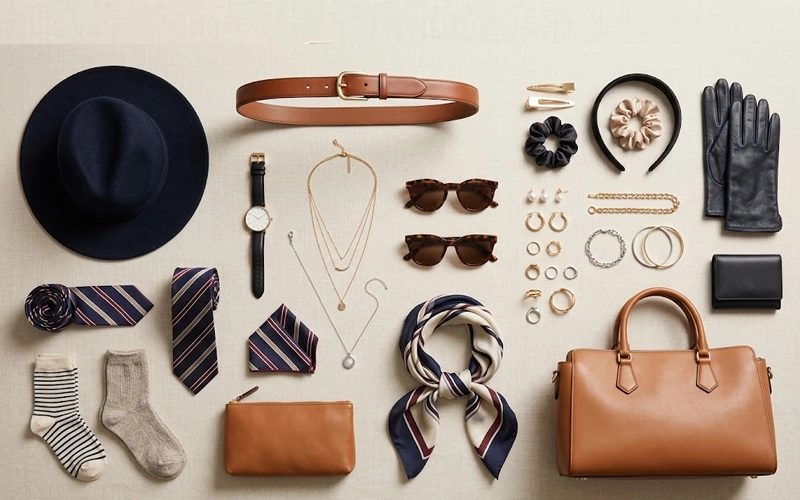
Clothing accessories are additional items worn with an outfit to improve its appearance, function, or overall style. They can include jewelry, handbags, belts, hats, scarves, watches, eyewear, and various hair accessories. Some are worn directly on the body, while others are carried or attached to clothing and bags.
Clothing usually refers to the main garments, such as shirts, trousers, dresses, skirts, and jackets. Accessories complement these garments rather than replace them. For example, a white shirt and black trousers create a simple outfit, while a leather belt, wristwatch, and structured bag can make the combination look more complete.
Accessories generally fall into two broad groups. Functional accessories help with comfort, organization, protection, or convenience. Decorative accessories focus more on appearance and personal expression. A handbag can carry daily essentials while adding color to an outfit, whereas a brooch may mainly serve as a decorative detail.
30 Essential Clothing Accessories and Their Uses
The following items cover a range of everyday needs, personal styles, and special occasions. Each has a distinct purpose, so you can decide which ones make sense for your wardrobe.
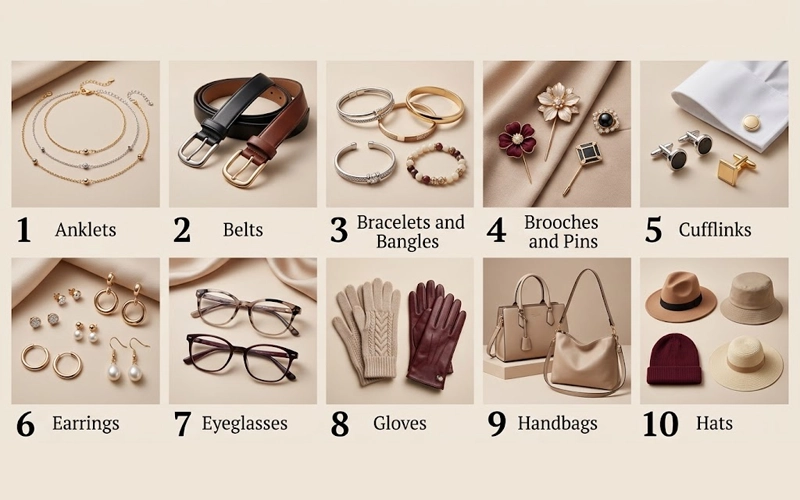
Anklets
Anklets are worn around the ankle and are often made from metal chains, beads, or other decorative materials. Delicate designs work well with sandals, cropped trousers, and summer outfits. More detailed styles can complement beachwear or festive clothing. Choose a design that feels comfortable and does not catch on footwear.
Belts
Belts help secure trousers and can also change the shape of an outfit. A simple leather belt suits jeans, chinos, and many office looks, while a wider belt can add definition to a dress or long shirt. Match the belt’s width and style to the garment rather than treating every belt as interchangeable.
Bracelets and Bangles
Bracelets are flexible wrist accessories, while bangles are generally rigid or structured. Both come in simple metal, leather, beaded, and decorative designs. A single bracelet creates a subtle finish, whereas a small coordinated stack adds more visual interest. Keep comfort in mind when wearing several pieces together.
Brooches and Pins
Brooches attach to garments and provide a decorative focal point. They can be placed on blazers, coats, scarves, and some bags, depending on the material and fastening. A small pin adds a restrained detail to formal clothing, while a larger design can stand out against a plain jacket. Use a fastening that will not damage delicate fabric.
Cufflinks
Cufflinks fasten the cuffs of compatible dress shirts and are commonly associated with formal or business attire. Metal designs offer a classic appearance, while colored or patterned options introduce personality. They are most useful when a shirt has the appropriate cuff construction, so check compatibility before choosing a pair.
Earrings
Earrings include studs, hoops, drops, and other designs worn on or around the ears. Small studs are suitable for understated everyday looks, while larger hoops or drop earrings can add movement and visual emphasis. Consider the occasion, comfort, and any metal sensitivities when selecting earrings for regular use.
Eyeglasses
Prescription eyeglasses support vision needs and can also contribute to personal style. Frame shapes, colors, and materials create different effects, from understated professional designs to bold contemporary looks. A comfortable fit and suitable prescription should come first; appearance can guide the final choice.
Gloves
Gloves protect the hands from cold weather and can add a refined finish to an outfit. Knitted gloves suit casual winter clothing, while leather styles pair naturally with structured coats. Lightweight gloves also serve specific activities. Choose a material suited to the temperature and the tasks you need to perform.
Handbags
Handbags carry everyday essentials such as a phone, keys, wallet, and personal items. Structured designs often work well for offices or formal settings, while softer bags suit relaxed outfits. Size, strap comfort, internal compartments, and durability are practical considerations. A bag should meet your daily needs before you focus on its appearance.
Hats
Hats include fedoras, bucket hats, beanies, baseball caps, and wide-brimmed styles. Their purposes range from warmth and sun protection to completing a particular look. A beanie is useful in cold weather, while a breathable sun hat can suit outdoor activities. Select a shape and material appropriate for the weather and occasion.
clothing accessories list
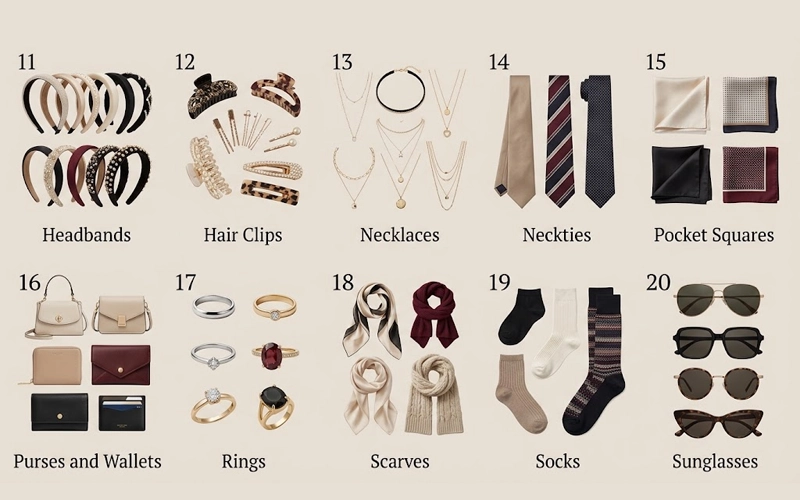
Headbands
Headbands keep hair away from the face and can add a neat detail to an outfit. Slim bands often create a subtle finish, while padded or embellished designs make a stronger statement. They work with loose hair, ponytails, and several updos. A comfortable fit is important, especially if you plan to wear one for several hours.
Hair Clips
Hair clips secure sections of hair and help create simple or elaborate hairstyles. Claw clips can hold larger sections, while small clips are useful for securing individual strands or adding decoration. Choose the clip size according to hair thickness and the style you want to achieve.
Necklaces
Necklaces range from short chains and chokers to long pendants and layered designs. Their length and shape influence how they work with necklines. A simple chain can complement a crew-neck top, while a pendant may stand out against a plain shirt. Avoid adding too many competing pieces when the outfit already has a detailed neckline.
Neckties
Neckties are commonly worn with business, formal, and smart-casual clothing. Solid colors create a restrained appearance, while stripes and patterns introduce contrast. The tie should work with the shirt, jacket, and occasion. Proper length and a suitable knot help the finished outfit look balanced.
Pocket Squares
Pocket squares are fabric accessories placed in the breast pocket of a suit or blazer. They can coordinate with a tie or introduce a contrasting color. Matching every detail exactly is not necessary; a shared color or complementary pattern often creates a more natural result. They are decorative rather than essential for everyday dressing.
Purses and Wallets
Purses and wallets organize money, cards, identification, and other small essentials. Compact cardholders suit people who carry few items, while larger wallets provide more storage. Materials, closure types, and pocket layouts affect daily convenience. Choose a size that fits your routine instead of carrying unnecessary bulk.
Rings
Rings are worn on the fingers and can be simple, symbolic, or decorative. Plain bands suit understated styles, while gemstone or statement rings attract more attention. Some people wear one ring, while others combine several. Check the fit carefully because fingers can change slightly in size with temperature.
Scarves
Scarves provide warmth, color, and texture. Lightweight cotton or silk styles can suit mild weather, while wool and knitted versions are useful in colder conditions. A scarf can be wrapped around the neck, draped over the shoulders, or styled with outerwear. Fabric weight should suit the temperature and the rest of the outfit.
Socks
Socks protect the feet, absorb moisture, and improve comfort inside footwear. Ankle socks work with many casual shoes, crew socks provide more coverage, and longer styles suit certain boots or formal outfits. Colorful or patterned socks can add personality, but fabric thickness should also fit the shoes you plan to wear.
Sunglasses
Sunglasses reduce glare and can help protect the eyes when they provide appropriate UV protection. Aviator, square, round, and cat-eye frames offer different appearances. For outdoor use, check the lens’s UV protection rather than judging quality by darkness alone. A secure, comfortable fit makes sunglasses more practical for everyday wear.
clothing accessories list
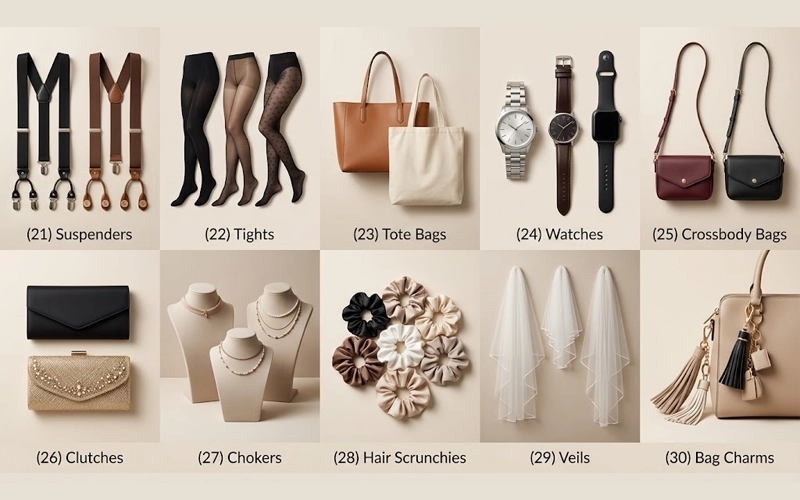
Suspenders
Suspenders hold trousers up using straps that attach to the waistband. They can be a practical alternative to a belt and are also used as a deliberate style detail. Some attach with clips, while others require buttons. Because suspenders and belts generally serve a similar trouser-support function, wearing both is usually unnecessary.
Tights
Tights cover the legs and are commonly worn under dresses, skirts, and some longer tops. Opaque versions offer more coverage, while sheer designs create a lighter finish. Patterned tights can add contrast to a plain outfit. Consider thickness, comfort, and weather when deciding which type to wear.
Tote Bags
Tote bags typically have an open main compartment and two handles, although some include zippers or internal pockets. They are useful for shopping, work supplies, books, or everyday essentials. A structured tote can suit an office outfit, while a canvas version works well for casual errands. Check the weight capacity and handle comfort before carrying heavy items.
Watches
Watches display the time and can complement casual, business, or formal clothing. Metal bracelets often create a polished look, while leather straps provide a classic finish. Smartwatches add digital functions such as notifications and activity tracking. Select a watch based on your daily needs, preferred features, and comfort.
Crossbody Bags
Crossbody bags use a strap worn across the body, leaving the hands free. They are useful for shopping, commuting, sightseeing, and other activities where easy access matters. Compact designs carry a few essentials, while larger versions provide additional storage. Adjustable straps and secure closures are worth considering for daily use.
Clutches
Clutches are small handbags designed to carry a limited number of items. They are often chosen for weddings, dinners, parties, and evening events. Some have wrist straps or detachable chains, while others are held in the hand. Check that the bag can fit your essential belongings before choosing a design for an event.
Chokers
Chokers are necklaces designed to sit close to the neck. They may be made from fabric, metal, beads, or other materials. A simple choker can complement an open neckline, while an embellished style can serve as a focal point. Fit matters: the necklace should sit comfortably without restricting movement or breathing.
Hair Scrunchies
Scrunchies are fabric-covered hair ties that secure ponytails and buns. Satin versions offer a smooth finish, while cotton and other fabrics provide different textures and appearances. They are useful for casual hairstyles and can coordinate with an outfit’s color palette. Choose an elastic that holds your hair securely without excessive pulling.
Veils
Veils are fabric coverings worn over or around the head and face for bridal, ceremonial, religious, or cultural purposes, depending on the design and context. Length, transparency, material, and decoration vary widely. Since veils can carry personal or cultural significance, their use and styling should suit the occasion and the wearer’s preferences.
Bag Charms
Bag charms attach to handbags, backpacks, or totes to personalize their appearance. They can include tassels, miniature decorative objects, fabric pieces, or key-ring designs. A small charm can add a touch of color to a plain bag without requiring a new purchase. Keep the weight and attachment secure to avoid damaging the bag.
clothing accessories list
Men’s Clothing Accessories List for Everyday and Formal Wear
A men’s clothing accessories list often combines practical items with details that help create a coordinated outfit. The best choices depend on personal style, workplace expectations, and the occasion.
For office wear, a leather or understated fabric belt, a suitable watch, and a wallet can cover everyday needs. Formal outfits may call for a necktie, pocket square, cufflinks, or tie clip, depending on the shirt and dress code. These pieces should complement the suit rather than compete for attention.
Casual clothing allows more flexibility. Baseball caps, sunglasses, bracelets, crossbody bags, and simple necklaces can work with jeans, T-shirts, polos, or relaxed jackets. Socks and footwear also influence the overall look, even though footwear is often classified separately from accessories. Aim for a balanced combination instead of adding every available item.
Clothing Accessories for Ladies
A clothing accessories list for ladies can include jewelry, handbags, hair pieces, scarves, eyewear, belts, and other items selected for different needs. There is no single set of accessories that every woman must own; the useful choices depend on wardrobe, lifestyle, and personal taste.
For everyday outfits, small earrings, a comfortable handbag, sunglasses, and a practical watch can be enough. Office clothing may pair well with a structured bag, a simple necklace, and a belt that works with the outfit’s proportions. For weddings or evening events, a clutch, statement earrings, or an embellished hair accessory may create a more dressed-up appearance.
Seasonal choices also matter. A warm scarf and gloves can support winter outfits, while a lightweight scarf or sun hat may suit warmer weather. Instead of buying items for every trend, consider which accessories work with several garments already in your wardrobe.
Designer Accessories and Signature Pieces
A designer clothing accessories list usually includes premium or fashion-led versions of familiar items rather than a completely separate set of accessory types. Designer handbags, watches, jewelry, belts, sunglasses, scarves, and small leather goods may stand out through their materials, construction, finishing, or distinctive design.
Price alone does not guarantee durability or suitability. When comparing designer accessories, consider the quality of the materials, stitching, hardware, comfort, maintenance needs, and how often you will use the item. A well-made accessory that fits your wardrobe may provide more practical value than a highly recognizable piece that rarely leaves the closet.
Signature accessories can also help create a consistent personal style. Some people prefer a particular watch shape, a classic leather bag, or simple metal jewelry. Others enjoy colorful designs and seasonal statement pieces. The aim is to choose items that reflect your preferences, not to collect expensive accessories simply because they carry a designer label.
How to Choose Accessories That Suit Your Outfit
Choosing accessories becomes easier when you start with the purpose of the outfit rather than the item you want to wear. A formal event, a workday, and a relaxed weekend may require different levels of decoration and practicality.
Consider the occasion. A simple watch and structured bag may suit a professional setting, while a clutch and statement jewelry can work for an evening event. Always follow any dress code that applies.
Balance colors and patterns. Accessories can coordinate with the main outfit or create a deliberate contrast. If clothing already contains bold prints, a few simpler pieces can keep the overall look from feeling crowded.
Pay attention to proportion. Large accessories can become a focal point, while smaller pieces provide subtle detail. Consider the garment’s shape, neckline, and fit when selecting necklaces, belts, bags, or earrings.
Prioritize comfort and function. Shoes should fit properly, bags should be comfortable to carry, and jewelry should not interfere with daily activities. For outdoor use, select hats and sunglasses suited to the conditions.
Think about care and budget. Some materials need special cleaning or careful storage. Before buying an accessory, consider how often you will use it and whether it works with several outfits. Versatile items can be a practical starting point for a new wardrobe.
Frequently Asked Questions
What Is the Difference Between Clothing and Accessories?
Clothing refers to main garments such as shirts, trousers, dresses, skirts, and jackets. Accessories are additional items worn, carried, or attached to complete an outfit or provide extra functionality. A jacket is clothing, for example, while a brooch pinned to it is an accessory.
Which Accessories Are Useful for Everyday Wear?
Useful everyday options may include a comfortable bag, a belt, a watch, sunglasses, a wallet, and simple jewelry. The best combination depends on your routine, local weather, clothing style, and personal preferences. You do not need every accessory to create a complete outfit.
What Are Common Men’s Clothing Accessories?
Common choices include belts, watches, wallets, neckties, pocket squares, cufflinks, sunglasses, caps, and bags. Formal accessories depend on the dress code, while casual outfits allow more variety in materials, colors, and designs.
Which Accessories Are Popular for Ladies?
Popular options include earrings, necklaces, bracelets, handbags, scarves, belts, sunglasses, hair clips, headbands, and watches. The right pieces depend on the outfit and occasion rather than a fixed set of rules.
How Can You Organize Clothing Accessories Alphabetically?
Start by writing down each item’s commonly used name, then arrange the entries from A to Z. Keep related terms together where helpful, and distinguish broad categories from specific designs. If a letter has few familiar examples, use only accurate terms rather than adding unrelated words to fill the list.
Final Thoughts
The right accessories can make a wardrobe more versatile without requiring a complete change of clothing. A practical clothing accessories list helps you discover different types, understand their uses, and choose pieces that suit your daily routine, personal style, and special occasions.
Start with items you will genuinely use, such as a comfortable bag, a suitable belt, or a few versatile jewelry pieces. Add more distinctive accessories as your needs and preferences develop. A thoughtful selection is more useful than a crowded collection, and the best accessories are the ones that make your outfits feel comfortable, complete, and true to your style.