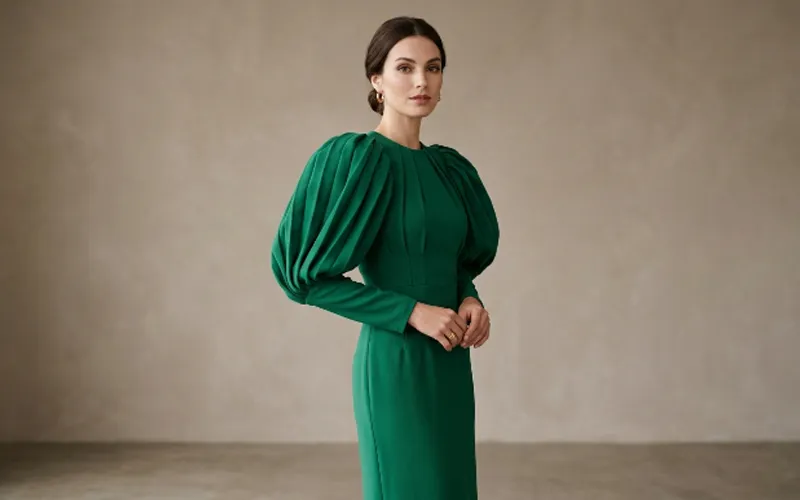
Sleeves can completely change the appearance of an outfit. A simple dress can look elegant, romantic, casual, or dramatic depending on the sleeve design. From short and fitted sleeves to long and flowing styles, there are many types of sleeves available in modern fashion. Each style has its own shape, purpose, and visual effect, which makes sleeve selection an important part of choosing clothing.
Sleeves are not only about covering the arms. They can add structure to a garment, create movement, highlight the shoulders, or make an outfit look more balanced. The right sleeve can also make a dress or top more comfortable for a particular season or occasion. This is why understanding different sleeve designs can help you make better fashion choices.
Whether you are shopping for a casual top, a formal shirt, an evening gown, or a wedding dress, knowing the names and characteristics of popular sleeve styles can make the process much easier. In this guide, we will explore popular sleeve designs, where they are commonly used, and how to choose a style that works well for your body shape and personal taste.
What Are Sleeves in Fashion?
A sleeve is the part of a garment that covers some or all of the arm. Its length, shape, fabric, and construction can vary greatly depending on the type of clothing and the look the designer wants to create.
Some sleeves end above the shoulder or upper arm, while others extend all the way to the wrist. Certain designs fit closely around the arm, whereas others are loose and flowing. There are also decorative sleeves that use gathers, pleats, lace, ruffles, or extra fabric to create a distinctive appearance.
The design of a sleeve can influence the entire silhouette of an outfit. For example, a fitted sleeve can create a neat and polished appearance, while a wide sleeve can give an outfit a relaxed or artistic feel. Because of this, sleeves are an important design feature rather than simply a practical part of clothing.
Why Sleeve Style Matters
The sleeve style you choose can affect how an outfit looks and feels. A well-chosen sleeve can complement the neckline, waistline, fabric, and overall shape of a garment. It can also help create visual balance between the upper and lower parts of the body.
Sleeves are especially important in occasion wear. A wedding dress with delicate lace sleeves can create a romantic appearance, while a sleeveless or short-sleeved design may feel lighter and more modern. Similarly, a formal shirt with structured sleeves can look professional, while a loose sleeve can make the same type of garment feel more relaxed.
Personal comfort is another reason to pay attention to sleeves. Long sleeves can provide extra coverage during colder months, while short and lightweight styles can be more comfortable in warm weather. The best choice depends on the occasion, season, fabric, and your individual style.
Cap Sleeves
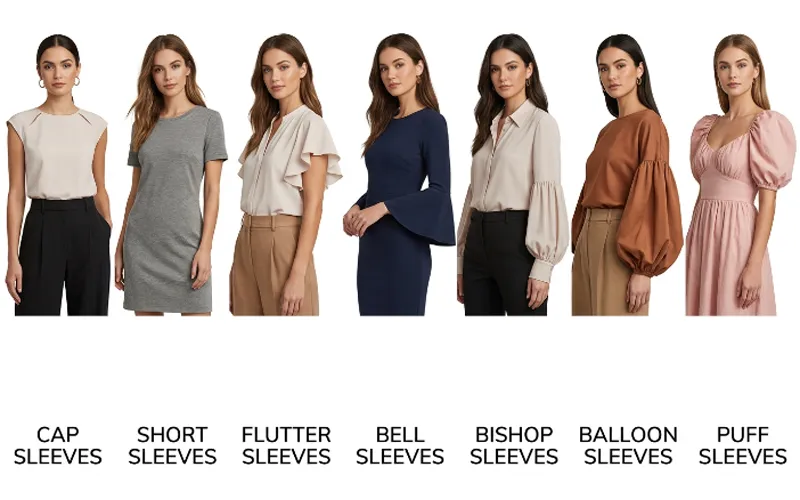
Cap sleeves are one of the shortest sleeve designs. They cover only the top part of the shoulder and upper arm without extending very far down the arm. The sleeve usually has a small, rounded shape that resembles the edge of a cap.
This style is common on summer dresses, blouses, bridal gowns, and formal tops. Cap sleeves provide slightly more coverage than a completely sleeveless garment while maintaining a light and delicate appearance.
They work particularly well with fitted and feminine clothing. Because they are small and close to the shoulder, they can also draw attention to the upper part of the body. Cap sleeves are a popular choice for people who want a soft look without wearing a full sleeve.
types of sleeves
Short Sleeves
Short sleeves are among the most common sleeve styles in everyday clothing. They generally extend from the shoulder to somewhere around the upper or middle part of the arm.
You can find short sleeves on T-shirts, casual dresses, shirts, blouses, and many summer outfits. Their simple shape makes them highly versatile and suitable for different body types and occasions.
The exact length can vary from one garment to another. Some short sleeves sit close to the shoulder, while others extend farther down the arm. This small difference can change the overall appearance of a garment.
Flutter Sleeves
Flutter sleeves are known for their soft and flowing appearance. Instead of fitting closely around the arm, the fabric usually extends outward and falls gently from the shoulder or upper arm.
This style creates movement whenever the wearer moves. Flutter sleeves are often made from lightweight fabrics such as chiffon, georgette, or soft cotton, making them popular for warm-weather dresses and feminine tops.
They can give an outfit a romantic and graceful appearance. Flutter sleeves are also useful when you want a little arm coverage without the structured feeling of a fitted sleeve.
Bell Sleeves
Bell sleeves become wider toward the bottom, creating a shape similar to a bell. The sleeve may start relatively fitted near the upper arm and gradually become wider toward the wrist or forearm.
This style has appeared in different periods of fashion and continues to return in modern clothing. Bell sleeves can be subtle or extremely dramatic depending on the amount of fabric used.
They are often seen on dresses, blouses, and stylish tops. A simple garment with bell sleeves can instantly look more interesting because the sleeve itself becomes a major design feature.
Bishop Sleeves
Bishop sleeves are long, loose sleeves that usually gather at the wrist. The fabric creates a soft, full shape through the arm before becoming narrower near the cuff.
This design has a romantic and slightly vintage character. Bishop sleeves are commonly used in blouses, dresses, and formal garments. They can be especially attractive when made from lightweight or semi-transparent materials.
The gathered cuff helps control the volume of the sleeve and creates an elegant contrast between the loose upper section and the fitted wrist area.
Balloon Sleeves
Balloon sleeves have a rounded, voluminous shape that creates a dramatic effect around the arm. They are generally fuller than ordinary sleeves and may be gathered at the shoulder, cuff, or both.
This style has become popular in contemporary fashion because it adds visual interest without requiring complicated details throughout the garment.
Balloon sleeves can work well with simple dresses and tops. When the sleeve is already large and dramatic, keeping the rest of the outfit relatively simple can create a more balanced appearance.
Puff Sleeves
Puff sleeves are gathered to create volume around the shoulder or upper arm. They can be short, medium, or long, depending on the design.
This style has a playful and feminine appearance and has been used in fashion for centuries. Modern puff sleeves can range from small and subtle to oversized and dramatic.
They are frequently seen on dresses, blouses, tops, and special occasion clothing. Puff sleeves can make the shoulders appear more prominent, so they are especially useful when you want to add structure or visual volume to the upper body.
Dolman Sleeves
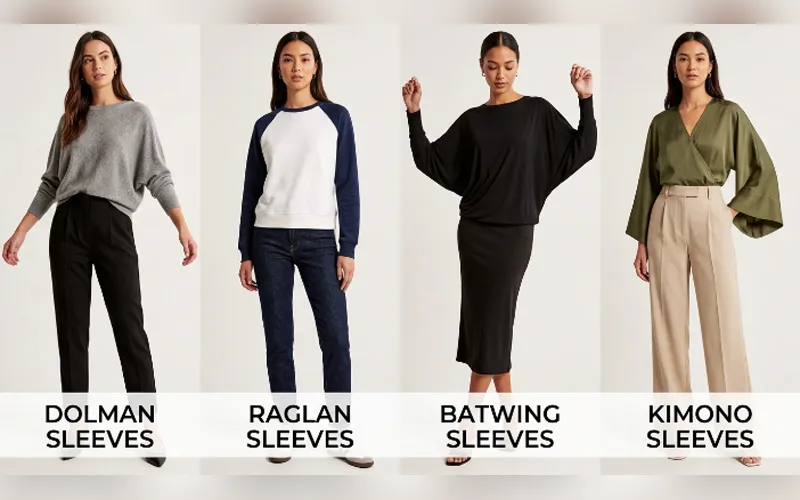
Dolman sleeves have a wide armhole and a relaxed shape that extends from the body of the garment. Instead of having a clearly defined seam around the shoulder, the sleeve often forms part of the main body.
This creates a comfortable and loose silhouette. Dolman sleeves are commonly used in casual tops, sweaters, dresses, and relaxed shirts.
They are a good choice when comfort and movement are priorities. The relaxed construction also gives clothing a modern and effortless appearance.
Raglan Sleeves
Raglan sleeves are attached to the garment using a diagonal seam that runs from the neckline toward the underarm. This makes them easy to recognize compared with traditional sleeves that usually have a seam around the shoulder.
Raglan sleeves are widely used in sportswear, sweatshirts, casual shirts, jackets, and everyday clothing. The construction provides good freedom of movement around the shoulders.
Although they are strongly associated with casual fashion, designers can also use the raglan construction in more fashionable garments.
Batwing Sleeves
Batwing sleeves are extremely loose under the arm and become narrower toward the wrist. The large amount of fabric between the body and sleeve creates a shape that resembles a bat’s wings.
This design is comfortable and dramatic at the same time. Batwing sleeves are often found in relaxed tops, dresses, and evening garments.
Because of their generous shape, they can create a flowing silhouette. They are particularly suitable for people who enjoy loose clothing and want an alternative to traditional fitted sleeves.
types of sleeves
Kimono Sleeves
Kimono sleeves are inspired by traditional Japanese clothing and are generally wide, straight, and connected smoothly to the body of the garment.
Modern fashion uses kimono-inspired sleeves on dresses, jackets, tops, and robes. Their wide shape gives clothing a relaxed and elegant appearance.
They can work particularly well with flowing fabrics. A kimono sleeve may also create a strong visual line around the upper body without making the garment feel restrictive.
Three-Quarter Sleeves
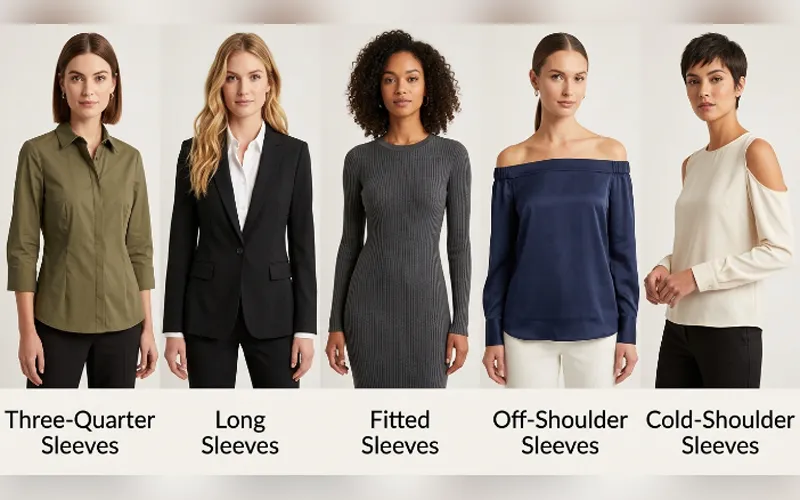
Three-quarter sleeves usually finish between the elbow and wrist. They provide more coverage than short sleeves but leave part of the lower arm exposed.
This makes them practical for transitional seasons when full-length sleeves may feel too warm. Three-quarter sleeves are also popular because they create a balanced and polished appearance.
They can be found on dresses, blouses, shirts, casual tops, and formal clothing. Their versatile length makes them suitable for many different occasions.
Long Sleeves
Long sleeves extend from the shoulder or upper arm down toward the wrist. They are among the most practical and traditional sleeve styles.
Long sleeves can be fitted, loose, gathered, flared, or decorated depending on the garment. They are commonly used in shirts, dresses, sweaters, formalwear, and winter clothing.
A simple fitted long sleeve can create a clean and sophisticated look, while a loose long sleeve can provide a softer and more relaxed appearance.
Fitted Sleeves
Fitted sleeves follow the natural shape of the arm. They do not contain much extra fabric and usually create a neat, structured appearance.
This style is common in formal shirts, blouses, jackets, dresses, and eveningwear. Fitted sleeves can make an outfit appear polished and refined.
The fabric is particularly important with this design. Stretch fabrics can make fitted sleeves more comfortable, while stiff materials may require more precise tailoring.
Off-Shoulder Sleeves
Off-shoulder designs expose both shoulders and sit below the shoulder line. Depending on the garment, the sleeve may be short, long, fitted, or loose.
This style is popular for summer dresses, evening outfits, party clothing, and wedding-related fashion. It creates an attractive neckline and draws attention toward the shoulders and collarbone.
Off-shoulder sleeves can look elegant and feminine, especially when paired with flowing fabrics or delicate details.
Cold-Shoulder Sleeves
Cold-shoulder sleeves cover most of the upper arm but have an opening around the shoulder. The cutout gives the garment a modern appearance while maintaining more sleeve coverage than an off-shoulder design.
This style has been used on tops, dresses, and casual occasionwear. It can add a fashionable detail to an otherwise simple garment.
Cold-shoulder designs are especially useful for people who like shoulder details but do not want completely bare shoulders.
types of sleeves
Different Types of Sleeves on Shirts
The different types of sleeves on shirts can help define whether the garment looks formal, casual, sporty, or fashionable.
A fitted long sleeve is often associated with professional and formal clothing. Short sleeves are more common in casual and warm-weather shirts. Rolled sleeves can create a relaxed appearance, while wider sleeves can give a shirt a contemporary silhouette.
When selecting a shirt, consider both sleeve length and sleeve width. Two shirts can have the same length but look completely different because one has a fitted sleeve and the other has a loose construction.
Types of Sleeves With Names and Pictures
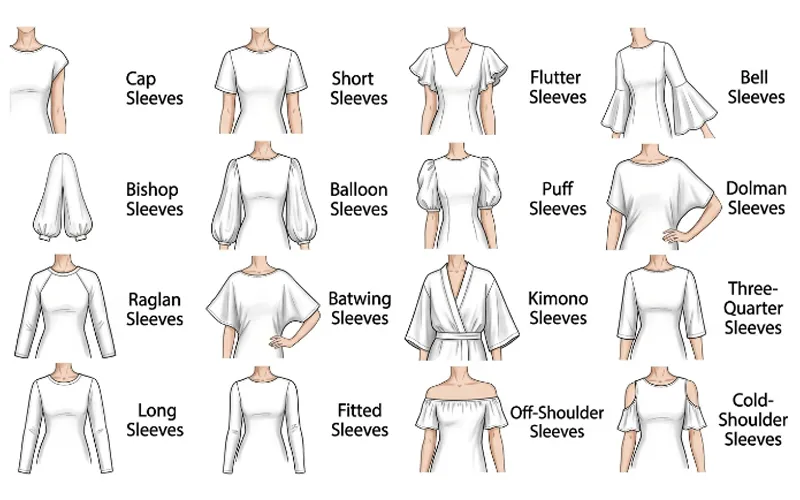
People often search for types of sleeves with names and pictures because sleeve shapes can be difficult to understand from names alone. A visual reference makes it much easier to compare the length, volume, and construction of each design.
When identifying a sleeve from a picture, look at where it begins, where it ends, how much fabric it contains, and how it connects to the shoulder. These details can help distinguish similar styles.
types of sleeves
For example, a puff sleeve and balloon sleeve may both look voluminous, but their construction and placement of volume can be different. Looking closely at the shape helps you understand the difference.
How to Choose the Right Sleeve for Your Body
Choosing a sleeve should not be based only on trends. Your comfort, proportions, personal style, and the shape of the garment all matter.
If you want to make the shoulders appear more prominent, sleeves with volume around the shoulder can help create that effect. Puff sleeves and structured designs can add visual width to the upper body.
If you prefer a softer and less structured appearance, flowing sleeves such as flutter, bishop, or batwing styles may be more suitable. Fitted sleeves can create a streamlined look, while loose sleeves can provide a relaxed silhouette.
However, these are styling ideas rather than strict rules. Anyone can wear any sleeve style. The most important consideration is whether the garment makes you feel comfortable and confident.
Choosing Sleeves Based on the Occasion
The occasion should always influence your sleeve choice. Everyday clothing usually benefits from practical designs that are comfortable and easy to maintain.
For office clothing, fitted long sleeves, three-quarter sleeves, and structured short sleeves can create a polished appearance. For parties, dramatic puff, bell, or balloon sleeves can make an outfit more memorable.
Wedding and formal dresses allow more freedom. Lace, illusion, long, off-shoulder, and decorative sleeves can add elegance without changing the entire shape of the gown.
Choosing Sleeves for Different Seasons
The weather is another important factor. Short and lightweight sleeves are generally comfortable during hot weather because they allow more airflow around the arms.
During cooler months, long sleeves provide additional coverage and warmth. Fabrics such as wool, knit, velvet, and heavier cotton can make long-sleeved clothing more suitable for winter.
Spring and autumn offer more flexibility. Three-quarter, fitted, flutter, and lightweight long sleeves can work well when temperatures change throughout the day.
Sleeve Fabric Makes a Big Difference
The same sleeve design can look completely different when made from different fabrics. Fabric determines how much structure, movement, and volume the sleeve will have.
Chiffon and georgette create soft, flowing sleeves. Lace can make a sleeve look delicate and romantic, which is why it is common in bridal fashion. Cotton usually creates a more casual appearance, while satin and structured fabrics can make sleeves look more formal.
Before choosing a sleeve, consider how the fabric will behave. A very full sleeve requires a material that can create the desired shape without becoming uncomfortable or excessively heavy.
Final Thoughts
Understanding the types of sleeves makes it easier to choose outfits that match your style, comfort, and occasion. From simple short sleeves to elegant puff, bell, bishop, and fitted designs, each style creates a different look.
When choosing a sleeve, consider the garment, fabric, season, and occasion. The best sleeve is one that feels comfortable, looks balanced, and suits your personal style.
Frequently Asked Questions
1. What are the most popular types of sleeves?
Some popular types of sleeves include cap, short, flutter, bell, bishop, puff, balloon, dolman, raglan, batwing, kimono, three-quarter, long, fitted, off-shoulder, and cold-shoulder sleeves.
2. What are the different types of sleeves for dresses?
Common sleeve styles for dresses include cap, flutter, puff, bell, bishop, long, fitted, off-shoulder, and three-quarter sleeves. The best choice depends on the dress style, occasion, and personal preference.
3. What types of sleeves are best for wedding dresses?
Popular choices for wedding dresses include lace long sleeves, cap sleeves, off-shoulder sleeves, puff sleeves, fitted sleeves, and illusion sleeves. The right option depends on the gown design and desired level of coverage.
4. What are the different types of sleeves on shirts?
Common shirt sleeve styles include short, long, three-quarter, fitted, and rolled sleeves. Formal shirts often use structured sleeves, while casual shirts may have looser designs.
5. Which sleeve style is best for a casual outfit?
Short, three-quarter, raglan, dolman, and simple fitted sleeves are good choices for casual outfits. They offer comfort while keeping the look easy to style.
6. Which sleeve style can make an outfit look more elegant?
Long, bishop, fitted, bell, and lace sleeves can give an outfit a more elegant appearance. The fabric and overall garment design also play an important role.
7. How do I choose the right sleeve for my body?
Consider your body proportions, comfort, personal style, and the overall shape of the garment. Sleeves with volume can add visual interest, while fitted styles can create a more streamlined appearance.
8. Why are sleeve names important when choosing clothes?
Knowing sleeve names makes it easier to understand clothing descriptions, search for specific designs, communicate with tailors, and compare different styles when shopping online.