What Is a Burst Fade?
A burst fade is a men’s haircut technique in which the hair gradually transitions from very short to longer lengths in a semicircular pattern around each ear. The shortest area is usually positioned close to the ear, with the surrounding hair blended outward to create a rounded, fan-like effect. Unlike a conventional fade that continues around the head, the burst fade concentrates its transition along the sides.
The technique can be applied at different heights and cutting lengths without changing its basic structure. The upper sections are shaped separately, allowing the barber to control how much hair remains near the crown and neckline. A well-executed burst fade has a smooth progression between lengths, without visible steps or harsh boundaries.
Burst Fade vs Drop Fade Explained
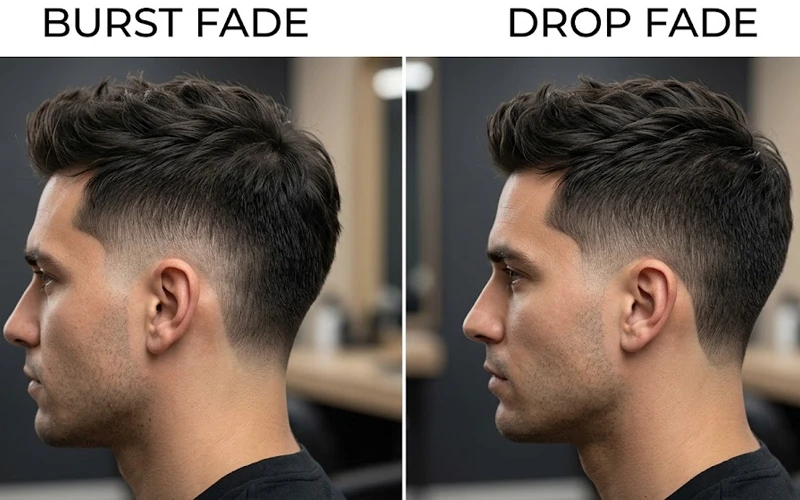
The main difference in burst fade vs drop fade is the direction and distribution of the fading pattern. A burst fade concentrates the curved transition around each ear, usually preserving more hair through the central back. A drop fade, however, travels around the head while gradually descending toward the rear, creating a lower outline behind the ears.
Both haircuts can feature smooth blending and curved elements, but their overall silhouettes are different. A drop fade generally maintains a connected fading pattern around the head, whereas a burst fade emphasizes a more localized, rounded area near the ears.
| Feature | Burst Fade | Drop Fade |
| Fade pattern | Rounded around the ears | Descends toward the back |
| Main focus | Ear and surrounding area | Sides and rear |
| Back hair | Often retains more length | Usually follows a continuous blend |
| Overall appearance | Circular, concentrated contrast | Flowing, descending transition |
| Common combinations | Mohawk, mullet, curls | Crop, quiff, waves, textured top |
what is a burst fade
Key Differences Between Burst, Taper and Skin Fades
A taper fade usually concentrates gradual length reduction around the temples, sideburns, or neckline while leaving much of the surrounding hair relatively full. A burst fade creates a broader rounded transition around the ears. Although both styles can produce subtle results, their fading areas and overall shapes are not identical.
A skin fade describes how short the hair becomes rather than the shape of the fade. Its shortest section is shaved down to the skin, and it can be combined with low, mid, high, or burst fading patterns. This means a burst fade can also be a skin fade when the barber removes the hair completely from the shortest part of its curved design.
| Feature | Burst Fade | Taper Fade | Skin Fade |
| Main focus | Rounded fade around the ears | Gradual shortening around the temples, sideburns, or neckline | Hair fades down to bare skin |
| Fade pattern | Curved, semicircular shape | Concentrated around specific edges | Can follow different fade shapes |
| Hair around the ears | Shortened in a rounded pattern | Usually kept fuller outside the tapered areas | Depends on the chosen fade design |
| Shortest length | Varies from a short guard to skin | Usually leaves some hair | Reaches bare skin |
| Common combinations | Mullet, mohawk, curly styles | Classic cuts, textured tops, side parts | Crops, quiffs, burst fades, and other styles |
Popular Burst Fade Styles and Variations
Burst fades can be adapted to different haircut preferences by adjusting the fade height, contrast, and remaining hair length. Some variations produce a neat everyday appearance, while others place greater emphasis on volume or an unusual silhouette.
Low Burst Fade
A low burst fade places the curved transition closer to the ear and keeps more coverage above it. The smaller fading area creates a softer appearance that can work particularly well for people who prefer understated haircuts.
Mid Burst Fade
The mid burst fade positions the rounded transition higher along the side of the head. It creates a noticeable contrast without removing as much surrounding hair as a high variation, giving the haircut a balanced profile.
High Burst Fade
A high burst fade extends the curved blending farther upward, exposing a larger portion of shorter hair around the sides. This version creates stronger separation between the faded area and the longer upper sections.
Burst Fade Mullet
The burst fade mullet combines closely blended areas around the ears with noticeably longer hair toward the back of the head. It maintains the familiar length distribution of a mullet while giving the side profile a more defined finish.
Burst Fade Mohawk
A burst fade mohawk keeps a central section of longer hair running from the front toward the back. Unlike a traditional mohawk with dramatically shaved sides, this version uses gradual blending to connect the shorter side sections to the remaining hair.
Curly Burst Fade
A curly burst fade combines the rounded fading pattern with natural curls above and around the crown. The contrast emphasizes the curl pattern while removing some bulk around the ears. Curl length and density determine how prominent the final shape appears.

what is a burst fade
What to Tell Your Barber Before Getting a Burst Fade
Before getting a burst fade, explain how much contrast you want around the ears, how short the faded area should be, and how much length you want to keep on top and at the back. Bringing a reference photo can help your barber understand the shape and finish you have in mind.
If you prefer a subtle look, ask for a low burst fade with a gradual blend and enough length above the ears. For a sharper appearance, request a mid or high burst fade with more contrast between the sides and the top. If you want a burst fade mullet or mohawk, make it clear that you want to preserve the length through the back or the central strip of hair.
Also, tell your barber whether you want the fade to reach the skin or retain a little hair at its shortest point. Discuss your hair texture, natural growth patterns, and how often you plan to get a trim. These details help your barber adjust the shape to suit your preferences rather than copying a reference photo exactly.
Choosing the Right Fade for Your Hair Type
Hair texture affects how clearly a burst fade’s transition appears. Straight hair often reveals the blending lines more easily, making precise clipper work particularly important. Wavy hair can produce a softer outline, while naturally curly or coily hair creates a stronger visual contrast between the shorter sides and textured upper sections.
Hair density is equally important. Thick hair offers enough fullness to create pronounced differences between lengths, whereas fine hair may benefit from a lower, more gradual transition that preserves the appearance of volume. Someone with uneven growth patterns may also require adjustments to the curve so that the finished haircut looks balanced from different angles.
Face Shapes That Suit a Burst Fade
A burst fade can be adjusted to complement different face shapes through the placement of volume and the height of the surrounding blend. Round faces may benefit from additional height on top, which can create the impression of a longer face. Square faces often work well with textured upper sections that complement an angular jawline.
People with longer faces may prefer less height above the forehead and greater fullness toward the sides to avoid emphasizing facial length. Oval faces can accommodate many variations, although individual features, forehead proportions, and hair growth patterns remain important. Face shape should guide styling decisions rather than determine whether someone can wear the haircut.
Inside the Barber’s Burst Fade Technique
A barber usually begins by examining the client’s hair growth, existing haircut, and desired fade height. After establishing the general outline, the barber creates a curved guideline around the ear using clippers or a trimmer. This initial guideline establishes the boundaries of the shorter section and helps maintain consistency on both sides.
The barber then blends outward using progressively longer clipper settings and controlled cutting movements. Different guard lengths reduce visible steps between sections, while clipper-over-comb techniques can refine areas where the short hair meets longer sections. The finishing stage involves checking the overall balance, adjusting the neckline, and inspecting the fade from several angles to identify uneven transitions.
Reading Clipper Guards and Fade Numbers
Understanding clipper guard numbers makes it easier to explain how short you want your hair. A number-one guard commonly leaves around 3 millimeters (⅛ inch) of hair, but the exact cutting length can vary by clipper brand, guard design, and blade adjustment. If you want a specific result, ask your barber to confirm the intended length before cutting.
When someone asks for a number-one fade, they generally mean a fade that reaches approximately a number-one guard length in its shortest guarded section. A zero setting cuts closer to the scalp, although it does not necessarily expose bare skin. A skin fade, by contrast, blends the hair down to bare skin at its shortest point.
A number-one burst fade keeps the same rounded fading pattern around the ears while leaving a little more hair in the shortest guarded area than a skin burst fade. Tell your barber whether you prefer visible hair coverage or a closer finish, and use a reference photo if you want to communicate the exact look you have in mind.
Adding Lines and Designs to a Burst Fade
Burst fade lines are intentionally shaved patterns added to a finished haircut. These may include a single curved line, a short geometric detail, or a more elaborate design positioned near the temple or behind the ear. Such details are optional and do not define the haircut itself.
Design lines should be distinguished from the temporary guidelines barbers use during blending. A completed fade should not have unintended harsh steps between clipper lengths, whereas a shaved design is deliberately visible. Because these details require accuracy, an experienced barber can help position them without disrupting the haircut’s overall proportions.
Maintaining a Burst Fade Between Haircuts
Proper maintenance begins with a haircare routine suited to your scalp and hair texture. Use a gentle shampoo when necessary, followed by conditioner appropriate for your hair. People with longer or textured upper sections may benefit from a lightweight leave-in conditioner to keep the hair manageable and reduce dryness.
Styling products should match the desired result. Matte clay can add structure to short or straight styles, curl cream may help define natural curls, and a light styling mousse can support movement in wavy hair. Avoid applying excessive product near the faded areas, as buildup can make short hair appear greasy. Between professional appointments, focus on cleaning and styling rather than trying to reshape the curved fade yourself.
Common Mistakes That Change the Burst Fade Shape
One common cutting mistake is allowing the fade to extend too far across the back of the head. Removing excessive hair from that area can eliminate the fuller rear silhouette that distinguishes many burst fade styles. Another mistake is positioning the curved guideline too high, which may create unwanted contrast or interfere with the intended upper hairstyle.
Uneven blending can also affect the haircut’s appearance. Visible steps, mismatched curves on either side, and inconsistent transitions near the temples may make the shape appear unfinished. Correcting these problems often requires careful blending, and attempting to erase a harsh line by repeatedly cutting higher can result in a shorter haircut than originally intended.
Frequently Asked Questions
Is a Burst Fade the Same as a Mohawk?
No. A burst fade is a blending technique focused around the ears, while a mohawk is a hairstyle defined by a central strip of longer hair. The two can be combined, but a burst fade does not automatically create a mohawk.
Can Straight Hair Work With This Cut?
Yes. Straight hair can work well with a burst fade, particularly when the upper section has enough length to create the desired style. Precise blending is important because uneven transitions and cutting marks can be more noticeable in straight hair.
Does a Burst Fade Require Skin Exposure?
No. A burst fade can use a short clipper guard without exposing the scalp. The haircut is defined by its curved transition around the ears, so you can choose how short the faded area should be.
Will the Back of My Hair Stay Longer?
Usually, a burst fade leaves more length through the central back than many conventional fades. However, the final shape depends on whether you choose a mullet, mohawk, or shorter hairstyle.
Are Burst Fades Suitable for School or Work?
Yes, depending on the setting and its grooming expectations. A low burst fade with a tidy top generally creates a more understated appearance than a high skin fade with shaved design lines.
Can a Beard Blend Into the Burst Shape?
Yes. A barber can blend the sideburns into the beard while maintaining the rounded fade around the ear. The result depends on beard density, sideburn length, and how the facial hair connects to the haircut.
What Is a Burst Fade, and How Do You Choose the Right One?
If you’re asking what is a burst fade, it’s a haircut featuring a rounded fading pattern around the ears. Choose a low, mid, or high variation based on your preferred contrast, hair texture, and the amount of length you want to keep at the back.
Final Thoughts
If you’re wondering what is a burst fade, it’s a versatile men’s haircut defined by a rounded fade around the ears and a smooth transition between shorter and longer hair. Different fade heights and hairstyle combinations allow you to customize the look to suit your hair texture, personal style, and preferred level of maintenance.
Understanding the haircut’s structure, clipper lengths, and grow-out requirements can help you choose the right variation. With a suitable style and precise blending, a burst fade can create a clean, balanced appearance that complements a wide range of hair types.