
How Acne Marks, Sun Spots and Pigmentation Differ in Look
Not all discolouration on the skin looks the same, even though it often gets grouped under one general label. Acne marks, sun spots and general pigmentation each form through different underlying processes, and recognising which one is present is usually the first step before considering a skin whitening treatment or any other approach to managing them.
Table of Contents
ToggleHow Acne Marks Typically Appear
Acne marks, also known as post-inflammatory hyperpigmentation, develop after a pimple or breakout heals, leaving behind a flat area of discolouration where the inflammation occurred. The colour can range from pink or red to brown or dark grey, depending on skin tone and how the original breakout healed.
- The mark generally follows the exact shape and size of the original blemish.
- Colour tends to be flat, without raised or indented texture, distinguishing it from a scar.
- Marks are usually concentrated in areas where acne was most active, such as the cheeks, jawline or forehead.
These marks often fade gradually on their own over weeks or months, though the pace of fading varies between individuals.
How Sun Spots Typically Appear
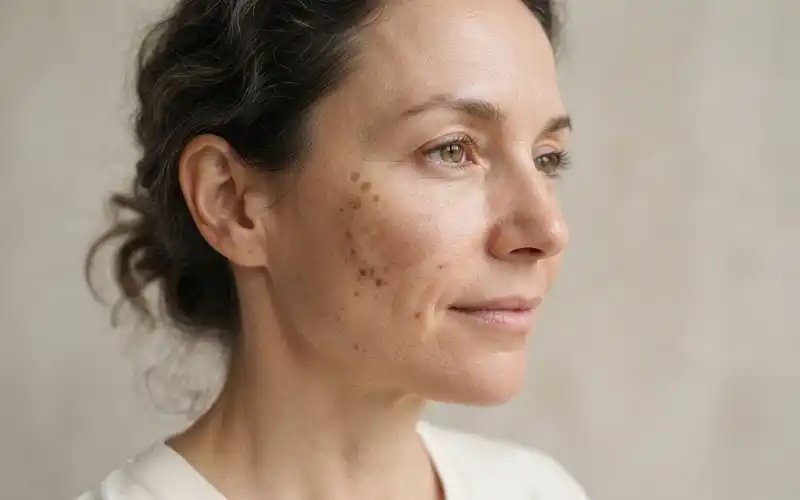
Sun spots, also called solar lentigines, are flat brown spots that develop from cumulative sun exposure over time rather than from any specific breakout or injury. They typically have well-defined edges and a consistent brown colour throughout each spot.
- Commonly found in areas with the most long-term sun exposure, such as the face, hands, shoulders and forearms.
- Tend to appear as discrete, individual spots rather than a single connected patch.
- Generally increase in number gradually with age and continued sun exposure, rather than fading on their own.
Unlike acne marks, sun spots do not typically resolve without some form of intervention, since they are not tied to a healing process.
How General Pigmentation or Melasma Typically Appears
General pigmentation, including melasma, tends to present as larger, less clearly defined patches rather than individual spots. It is often influenced by hormonal factors and can be affected by sun exposure, though its underlying cause differs from both acne marks and sun spots.
This type of pigmentation commonly appears in a somewhat symmetrical pattern, such as across both cheeks, the forehead or above the upper lip. The borders tend to be blurred rather than sharply outlined, and the affected area is usually larger and more diffuse than a typical sun spot or acne mark.
Key Visual Differences to Look For
| Feature | Acne Marks | Sun Spots | General Pigmentation |
| Shape | Follows original blemish shape | Discrete, well-defined spots | Larger, diffuse patches |
| Border | Flat, matches blemish outline | Sharp and clearly outlined | Blurred, less defined |
| Common location | Areas with prior breakouts | Sun-exposed areas | Often symmetrical, both sides of face |
| Typical pattern over time | Gradually fades on its own | Persists, may increase with age | Can fluctuate with hormones and sun exposure |
This comparison highlights why the same word, discolouration, can describe several distinct conditions with different appearances and different underlying causes.
Why Identifying the Type Matters
Since acne marks, sun spots and general pigmentation form through different processes, the approach suited to one may not apply to another. A mark expected to fade naturally requires a different response from a sun spot or a patch of melasma that will not resolve without addressing it directly.
Correctly identifying which type of discolouration is present helps determine whether a skin whitening treatment is a relevant option, or whether the more appropriate step is simply allowing time for marks to fade while maintaining smooth skin through general skincare practices
Visit Musee to find out which type of pigmentation you’re actually dealing with before choosing a treatment.
Frequently Asked Questions
1. What is the difference between acne marks and sun spots?
Acne marks develop after pimples or breakouts heal, while sun spots form due to long-term exposure to sunlight. Acne marks usually follow the shape of a previous blemish, whereas sun spots appear as separate brown patches.
2. How can you tell if a dark spot is an acne mark?
An acne mark usually appears where a previous pimple or breakout occurred. It is generally flat and may look pink, red, brown or dark grey depending on your skin tone.
3. What do sun spots look like on the face?
Sun spots typically appear as flat, brown patches with clear and well-defined edges. They are commonly found on sun-exposed areas such as the cheeks, forehead and nose.
4. How does melasma look different from sun spots?
Melasma usually appears as larger, irregular brown or greyish patches with blurred edges. Sun spots are generally smaller, separate marks with more defined borders.
5. Do acne marks fade on their own?
Yes, many acne marks gradually fade over several weeks or months. However, deeper or more persistent pigmentation may take longer to improve.
6. Can sun exposure make skin pigmentation darker?
Yes, sunlight can increase melanin production and make existing pigmentation more noticeable. Sun exposure can also contribute to the development of new sun spots and worsen melasma.
7. Why is it important to identify the type of skin pigmentation?
Different types of pigmentation have different causes and may need different approaches. Identifying whether a mark is caused by acne, sun exposure or hormonal changes helps determine the most suitable skincare or professional treatment.