


Most closets hold plenty of clothes and very little confidence. You own jeans that almost fit, a jacket you bought on impulse, and a dress you keep saving for a day that never comes. Then you stand there every morning thinking, “I have nothing to wear.”
The problem is rarely the clothes. It is that nobody ever showed you how to decide what suits you. Learning how to find your personal style is a skill, like cooking or driving. You practice, you pay attention, and you get better. This guide walks you through seven clear steps, from studying your own closet to describing your look in just a few words. Along the way you will get simple colour tests, fit checks, a small wardrobe plan, and answers to common questions. You do not need a big budget or a stylist. You only need a little curiosity and an honest eye.
What Personal Style Really Means
Personal style is where three things meet: your taste, your body, and your daily life. Taste is what you are naturally drawn to, such as colours, textures, and shapes. Your body decides what fits and moves well. Your daily life decides what you can actually wear to work, on the bus, or at a family dinner. Leave out any one of these and the outfit feels wrong. A stunning jacket that restricts your arms is not your style, and neither is a comfortable hoodie that makes you feel invisible.
It also helps to separate style from fashion. Fashion is a moving crowd. It changes every season and tells everyone to like the same thing at the same time. Style is your own steady direction. You can borrow from fashion whenever a trend fits that direction, and ignore it when it does not. This is why two people can wear the same viral piece and look completely different.
Three beliefs stop people before they even begin. The first is that some people are born with style. In truth, it is a habit of noticing and choosing, and anyone can build it. The second is that good style needs money. A clear idea beats an expensive label. The third is that you must settle on one look forever. Your style can have several sides, and it is allowed to grow.
Step 1. Read Your Closet Like a Clue Book
Your closet is the most honest data you have. Wishes can lie, but laundry does not. Start by pulling out the ten pieces you reach for most often and laying them on the bed. Finish this sentence for each one: “I keep choosing this because…” The answers are usually things like soft, structured, easy to layer, or makes me stand taller.
Next, pull out five pieces you almost never wear and look for the reason. Was it the colour, the fit, or the occasion? Or did you buy it for an imaginary version of yourself who goes to more parties and wakes up earlier? Spotting that imaginary person is one of the quickest ways to stop wasting money.
Now compare the two piles with these questions.
| Question | What it tells you |
| Are my favourites loose, fitted, or a mix? | Your natural shape preference |
| Which fabrics do they share? | Your texture taste |
| Which colours repeat? | Your starting palette |
| What do the ignored pieces have in common? | What to stop buying |
Write the answers on one page. This page is your first style profile, and it came entirely from facts instead of guesses.
Step 2. Map the Life You Actually Live
This step is the one most guides skip, and it is where many wardrobes go wrong. Take a piece of paper and divide a typical week into slices: work or school, time at home, social plans, exercise, and special events. Give each slice a rough percentage.
Now look at your closet through that lens. If seventy percent of your week is casual but seventy percent of your clothes are party outfits, you have just found the reason you feel you have nothing to wear. Your wardrobe should be weighted the same way your life is.
Add practical limits too. Think about your climate, your commute, your dress code, and how much time you really have for ironing. A style that needs a steamer every morning will not survive a busy month. The best test is the ordinary Tuesday. If a look works on a plain Tuesday, it will work on the days that matter.
Step 3. Collect Inspiration the Smart Way
Now look outward, but with a plan. Over one or two weeks, save around thirty images that make you stop scrolling. Pull from more than one app. Magazines, films, shop windows, and people on your street all count. Do not explain your choices yet, because a bigger pile shows your taste more honestly than a handful of favourites.
Then study the pile like a detective. Which colours return again and again? Are the outfits layered or simple? Are the shapes sharp or soft? Circle the repeats. Remove any image that fails the Tuesday test, meaning you would never wear it in your real week. What remains is your taste speaking, not the feed.
Choose three role models whose climate, budget, and body proportions are close to yours. Take one idea from each rather than copying a whole outfit, since a cold-city look rarely works in a warm one.
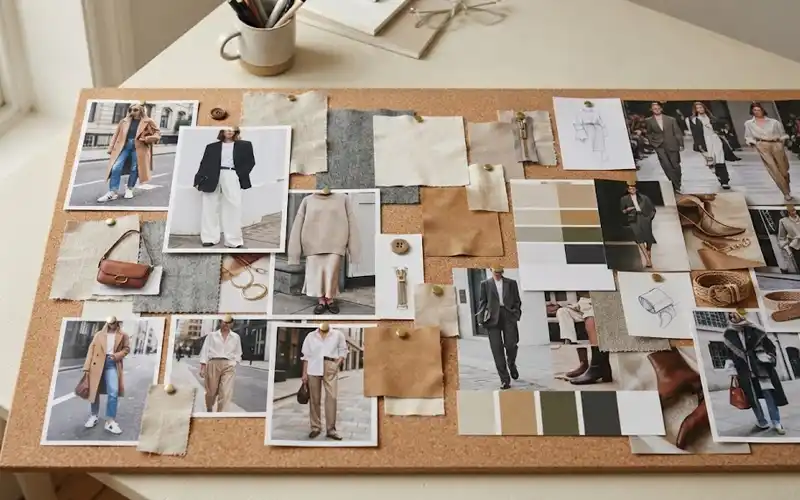
Collect outfit inspiration and identify the colours, fabrics, and designs you naturally like.
One more habit helps. Browse shops without buying anything, then ask what pulled you in. Was it the piece itself, or the lighting, the model, and the styling around it? Would you still want it from a brand you dislike? If the piece survives those questions, note exactly what you liked, such as the colour, the texture, or the cut.
Step 4. Match Your Style Archetype
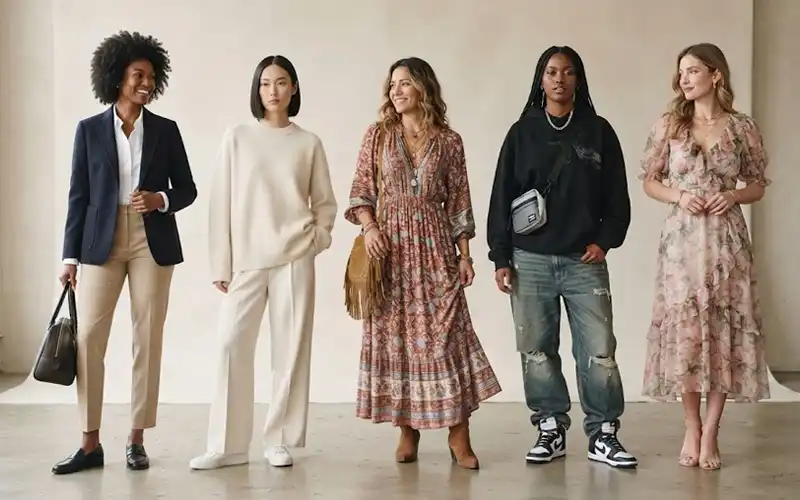
Explore different fashion styles to discover which one matches your personality.
An archetype is a simple label for a style personality. It turns a messy pile of likes into something you can act on. Most people fit one or two of these.
- Classic loves clean lines, neat fits, and pieces that never age, such as a trench coat or tailored trousers.
- Minimalist wants few items, calm neutrals, and no extra detail.
- Bohemian leans toward loose shapes, earthy tones, layers, and handmade touches.
- Streetwear lives in sneakers, hoodies, and oversized cuts.
- Romantic chooses soft fabrics, florals, ruffles, and gentle details.
- Edgy reaches for black, leather, and sharp contrast.
- Preppy enjoys blazers, stripes, and polished casual looks.
- Eclectic mixes eras, prints, and surprises on purpose.
To find yours, count how many of your saved images and closet favourites fit each label. The top one or two are your result. If you land between two, call one your main style and the other your accent. A mostly minimalist person might add a soft scarf or a small floral print. The main style keeps the closet organised, and the accent keeps it fun.
You will also see online labels like cottagecore, Y2K, and dark academia. These are aesthetics, which are moods with a ready-made uniform. They tend to fade within a season or two, while an archetype stays with you for years. Treat aesthetics as a menu. Borrow one piece, like a lace collar, and place it inside your own archetype.
Step 5. Choose Colours That Work for You

Compare different clothing shades to find colours that make your complexion look fresh and bright.
Colour changes how rested and bright you look, so it deserves a little testing. Start with your undertone, the soft tint beneath your skin, which is warm, cool, or neutral. Try these checks in daylight.
- Look at the veins on your wrist. Greenish veins point to warm, bluish or purple ones point to cool, and a mix points to neutral.
- Hold gold and silver jewellery near your face. Whichever makes your skin glow is your clue.
- Drape a garment under your chin in front of a mirror. The right shade makes your face look lively, and the wrong one makes you look tired or grey.
No test is a strict rule, so trust the mirror most. Warm undertones often shine in cream, olive, rust, and mustard. Cool undertones tend to love navy, emerald, plum, and icy grey. Neutral undertones can borrow from both sides.
Also notice your contrast, which is the difference between your hair, skin, and eyes. High contrast looks great in sharp pairings like black and white, while softer contrast looks better with gentle blends such as cream and camel.
To build outfits with ease, use the 60-30-10 rule. Let a base colour cover about sixty percent of the outfit, a supporting colour thirty, and a bold accent ten. If you adore a shade that does not suit your face, keep it far away from your face, on trousers, shoes, or a bag.
Step 6. Get the Fit and Proportions Right
A modest piece that fits well beats an expensive one that does not. Check a few spots. Shoulder seams should sit at the edge of your shoulders. Sleeves should end near the wrist bone. Hems look best at a purposeful point, such as just above the knee, at the ankle, or at the hip for jackets. A simple balance rule is to pair something loose with something fitted, like a wide shirt with slim trousers.

Balance loose and fitted clothing pieces to create comfortable and well-proportioned outfits.
Fabric deserves the same attention. Stiff fabrics hold a shape, soft ones drape, and thin ones may cling or crease. Natural blends often breathe better in heat. Read the label and feel the cloth before you decide.
Then try the move test in the fitting room. Sit down, raise your arms, and walk a few steps. If you keep tugging or adjusting, the piece will end up unworn at the back of the cupboard.
Body shape guides are useful as a starting point, but treat them as suggestions. Choose clothes that show off the features you like, and ignore any rule that makes you feel boxed in. Breaking a rule on purpose can even become part of your signature. Finally, remember that a tailor can adjust hems, waists, and sleeves for a small fee. It is the cheapest upgrade in fashion.
Step 7. Test, Score, and Name Your Style
Now put your ideas to work without risking much money. Borrow a piece from a friend, try one on in a shop and take mirror photos, or rent something for a one-time event. Make small swaps for a week, such as a new scarf colour or boots in place of sneakers. Small tests are easy to undo, so you can be brave.
Score each experiment from 1 to 5 for comfort and from 1 to 5 for confidence, and save the scores in your phone notes. Anything that scores 4 or higher twice belongs in your style. A low score is not a failure, it is information. If you like, add a short “no” list too. Writing down three to five things you will never wear, such as scratchy fabric or mid-calf skirts, removes a lot of choices at once.
When your notes are full, choose three words that capture the feeling of your best outfits, such as clean, bold, and relaxed. Two words feel too tight, and more than three become vague. Put the note where you get dressed and let it guide your choices. It is a draft, so edit it whenever you grow.
Build a Small Wardrobe Around Your Style
Once your three words are clear, build around them. A capsule is a small set of ten to fifteen pieces that all match your words and mix easily. Think of a few tops, two or three bottoms, a jacket, a coat for your climate, and one pair of shoes you trust. It gives you many outfits with little effort and quickly shows which gaps are worth filling.
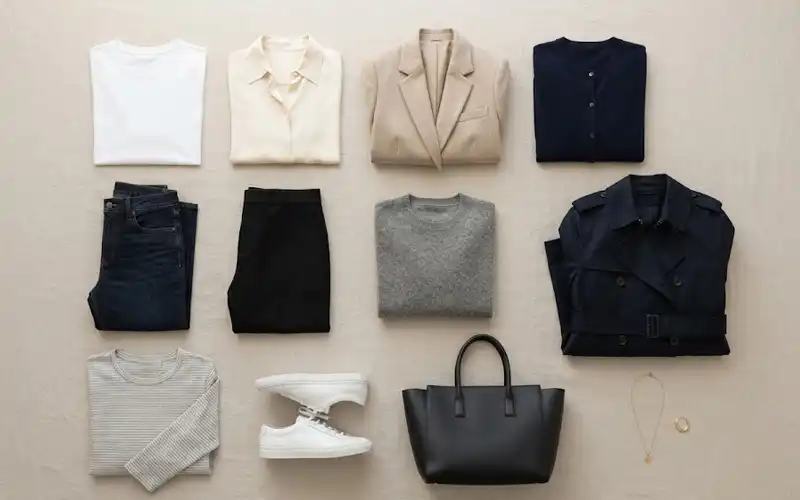
Build a practical capsule wardrobe with versatile pieces that easily work together.
Before buying anything new, ask three questions. Does it match my three words? Can I make at least three outfits with what I already own? Would I still want it at full price? A no to any of them means leave it on the shelf.
Cost per wear is another helpful measure. A jacket that costs 100 and is worn fifty times costs 2 each time. A trendy top that costs 30 and is worn three times costs 10 each time. Spend more on the things you wear daily, like shoes, coats, and jeans, and save on novelty pieces.
Good style is possible on a small budget too. Thrift shops, clothing swaps, local markets, end-of-season sales, and resale apps all offer pieces with character, and they often bring home something no one else owns.
Adjusting Your Style for Different Stages of Life
Teenagers have a wonderful advantage because mistakes are cheap. Try a different mood each month, check the school dress code, and explore a parent’s or sibling’s wardrobe for hidden finds. In your twenties, you can play with bold shapes. In your thirties and forties, many people prefer better fabrics and pieces that move from work to dinner. Later, comfort and personality often take the lead. A new job, a wedding, or a new baby can change what you need, so keep two or three anchor pieces that still feel like you and adapt the rest for real life.
Men can follow the same seven steps with a few extra fit notes. Shoulder seams should meet the edge of your shoulders, sleeves should end at the wrist bone, and trousers should touch the top of your shoes with only a slight fold. A white tee, an oxford shirt, dark jeans, chinos, a simple jacket, and clean sneakers make a safe starter kit for almost any archetype. Match your belt to your shoes, and tidy grooming will finish the outfit better than any extra layer.
Common Mistakes That Slow You Down
Shopping too early. A big haul before you know your direction only fills the closet with guesses. Wait until your three words are clear.
Copying too closely. Wearing someone else’s exact outfit gives you their style, not yours. Borrow one idea and adjust it to fit your life.
Clearing out in a rush. Pieces you doubt may look different once your style is clearer. Box them up and check again after three months. Whatever you never reach for can go to a swap or a donation.
Expecting instant results. Style grows through many small tests. A few wrong choices along the way are part of the process, not proof that you are failing.
Frequently Asked Questions
Can my style change over time?
Yes. Jobs, moods, and ages all shape what you like. Treat your three words as a draft and review them once a year.
How long does it take to find my style?
Many people spot clear patterns within a few weeks. Fine-tuning can take months, and that is perfectly normal.
Do I need a stylist?
Not at all. A stylist can help if you feel stuck or face a big life change, and even one session can be enough.
Is a free style quiz accurate?
A quiz is a good starting point, but it is not a final answer. Always check the result against what you actually wear.
Conclusion
You now have seven steps, simple tests, and a plan for a smarter wardrobe. Do one small thing today. Take photos of your three favourite outfits and write down what they share. That tiny list is where your personal style begins.