

Long dresses are easy to wear, but creating a well-balanced outfit takes more than choosing a dress you like. The shoes, outerwear, fabric, waist placement, and accessories all influence how the final look comes together. A simple change, such as switching bulky sneakers for slim flats or adding a cropped jacket, can make the same dress feel completely different.
The best way to style a long dress is to consider its shape, the way it moves, and where you plan to wear it. A loose cotton dress may work beautifully with everyday sneakers, while a structured maxi dress might look more polished with a fitted blazer and pointed-toe shoes. You do not need a completely new wardrobe to create different outfits; you need combinations that work well together.
This guide explains how to style long dresses with suitable footwear, balanced layers, practical accessories, and outfit combinations for different body proportions. You will also learn how to adapt your favorite dresses for casual outings, work, weddings, warmer weather, and colder days without making every outfit look the same.
Start With the Right Fit, Fabric, and Silhouette
Before adding accessories or choosing shoes, look at the dress itself. Its silhouette determines how much volume the outfit already has and where you can introduce structure. A fitted dress follows the body’s shape, a tiered design adds movement and volume, and an A-line silhouette gradually widens toward the hem. Understanding these differences makes it easier to select complementary layers and footwear.
Fabric matters just as much. Lightweight cotton, linen, and viscose often suit relaxed daytime outfits because they move naturally and feel comfortable in warm weather. Jersey dresses offer stretch and flexibility, while satin, chiffon, and other fluid fabrics can create a more refined appearance. Heavier knits and structured fabrics provide more coverage and can work well when you want a dress to hold its shape.
Pay attention to the hem as well. Ideally, a long dress should allow you to walk comfortably without dragging across the ground or catching beneath your shoes. If the hem hides your footwear entirely, consider whether a small alteration would improve the fit. The goal is not to follow one universal dress length but to choose a length that works with your height, shoes, and everyday activities.
Choose Shoes That Complement Your Dress
Shoes influence the overall mood of a long dress. They can make a flowing silhouette look relaxed, give a simple outfit a sporty feel, or add a more formal finish. Instead of automatically pairing every maxi dress with heels, consider the fabric, hemline, and amount of volume in the skirt.
Sneakers and Flats for Everyday Outfits
Sneakers work well with cotton T-shirt dresses, relaxed shirt dresses, and casual maxi dresses. Choose streamlined sneakers for dresses with a narrow silhouette, or chunkier styles when the skirt has more volume. If the dress features a bold print, plain shoes can keep the outfit visually balanced.
Ballet flats create a softer look, while loafers add structure to simple shirt dresses and knit styles. Pay attention to the hem length when choosing flat shoes: the dress should allow you to walk freely without dragging or bunching around your feet.
Sandals and Espadrilles for Warm-Weather Looks
Flat sandals pair naturally with lightweight dresses, especially those made from cotton, linen, or breathable blends. Minimal leather sandals can complement a solid-colored dress without competing with its shape. Strappy sandals work particularly well with sleeveless or ankle-length designs when you want a lighter appearance.
Espadrilles and low wedges add height without creating the formal look of traditional high heels. They can work with a flowing floral dress, a linen maxi, or a simple summer dress with a defined waist. If the dress has substantial volume, a shoe with some visual weight can help balance the hem. For a narrow, lightweight dress, delicate sandals may be enough.
Boots and Heels for a More Refined Finish
Ankle boots can give a long dress a stronger, more defined look. They work particularly well with knit dresses, denim styles, and dresses layered with leather or denim jackets. A dress with a side slit can show the boots as you walk, while a fuller skirt creates a softer contrast. If the hem falls over the top of the boots, make sure the fabric does not bunch awkwardly around the ankle.
Heels are useful when you want a dress to feel more formal, but the shape of the shoe should suit the outfit. Pointed-toe pumps can complement a sleek dress for work or an evening event, while block heels offer additional stability with fuller skirts. For a wedding or formal dinner, consider the venue and how long you will be standing before choosing a heel height. A polished outfit should also be comfortable enough to wear confidently.
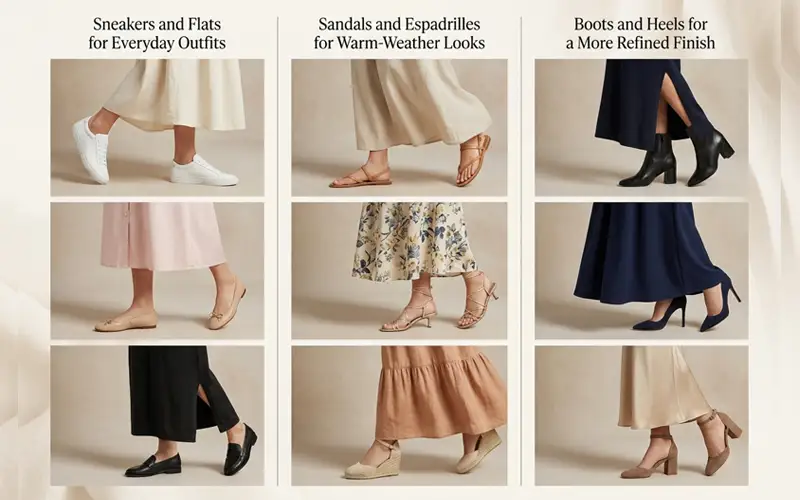
Discover how to pair long dresses with sneakers, ballet flats, sandals, espadrilles, ankle boots, and heels for casual and elegant outfits.
Layer Smartly With Jackets, Blazers, and Cardigans
Layering changes the proportions and personality of a long dress. The best combination depends on the dress’s volume, waist placement, and fabric weight. Choose outerwear that complements the existing silhouette instead of adding unnecessary bulk. Small details, such as a belt or the right bag, can also help bring the outfit together.
Cropped Jackets for Balanced Proportions
A cropped jacket works well with a long dress that has a high waist, an A-line skirt, or a flowing hem. Because it ends higher on the body, it creates a visual break between the upper and lower portions of the outfit. This can help define proportions when a loose maxi dress feels oversized.
For a weekend outfit, pair a floral cotton maxi with a cropped denim jacket, white sneakers, and a crossbody bag. Choose a bag that sits comfortably without bunching the dress around the waist. If the dress already has puff sleeves, ruffles, or substantial shoulder volume, choose a simpler jacket to keep the overall silhouette balanced.
Denim Jackets and Leather Jackets for Casual Outfits
Denim jackets add structure to softer fabrics. A medium-wash style complements printed dresses, while dark denim creates a sharper contrast with a plain black or cream maxi. For warmer days, wear a linen maxi with flat leather sandals and a woven bag; this combination keeps the outfit relaxed without relying on extra layers.
Leather and faux-leather jackets create a stronger contrast with jersey, floral, and softly draped dresses. A black jacket can give a light floral maxi a more contemporary feel, while brown pairs naturally with earthy shades. Keep the jacket relatively neat through the shoulders when the dress has a full skirt to avoid excessive volume. Simple hoop earrings or a delicate necklace can finish the look without competing with a bold print.
Blazers and Long Coats for Polished Styling
A tailored blazer can make a long dress suitable for smart-casual meetings, dinners, and many workplaces. For a polished daytime outfit, pair a solid-colored knit maxi with a well-fitted blazer, loafers, and a structured handbag. Choose a blazer that sits comfortably at the shoulders and does not pull across the bust or waist.
A slim belt can define the waist of a loose-fitting dress when the fabric gathers smoothly beneath it. However, if the dress already has a well-placed waist seam or built-in tie, you may not need an additional belt. Keep the belt proportionate to the dress and avoid pulling it so tightly that the fabric bunches.
Long coats offer more coverage in cooler weather. A coat that finishes close to the dress hem can create a continuous vertical line, while a shorter coat creates a clearer break between the layers. Both options can work, depending on the dress and the look you prefer. In winter, allow enough room for the dress and any layers underneath without creating bulky folds around the waist.

Explore stylish ways to layer long dresses with cropped jackets, denim and leather jackets, tailored blazers, and long coats for balanced proportions and versatile outfits.
Find the Most Suitable Shape for Your Body Type
Body-type styling works best as a set of options rather than strict rules. Height, personal preference, comfort, and the cut of the dress all influence the final result. You do not need to hide particular features or choose a specific silhouette simply because of your body shape. Instead, use waist placement, hem length, and fabric volume to create the proportions you prefer.
Styling Long Dresses for Petite Women
If you are petite, a dress with a clearly defined waist or a higher waist seam can help establish the body’s proportions. A fitted bodice with a gently flowing skirt is one option, while a wrap dress allows you to adjust the waist placement. However, loose and oversized dresses can also work well when the shoulder seams, sleeves, and hem are proportioned appropriately.
Footwear and alterations can make a noticeable difference. Shoes in a similar color to your legs may create a more continuous visual line with shorter hemlines, while a small heel can provide additional height if you enjoy wearing one. Avoid letting the hem drag or fold over your shoes. If a dress has too much fabric at the bottom, shortening it to the right length may improve the entire outfit more than adding extra accessories.
Creating Balanced Outfits for Tall Women
Tall women can experiment with a wide range of long-dress silhouettes, including oversized shirt dresses, tiered skirts, dropped waists, and wide sleeves. If you enjoy a relaxed look, a voluminous dress with flat sandals can feel deliberate rather than oversized when the shoulder fit and hemline are right. A belt can introduce definition, but it is optional rather than essential.
Dress length is particularly important if standard maxi dresses finish above the ankle. Check the garment’s actual measurements instead of relying only on its size label. If you want a longer line, look for tall sizing or styles designed with extra length. Wide belts, layered jewelry, and substantial footwear can also be used as styling choices, but the outfit does not need all of them at once.
Choosing Shapes for Curvy Body Types
Wrap dresses, fit-and-flare designs, and dresses with adjustable waist ties offer flexibility because you can control how closely the garment follows your body. A V-neckline may create a more open upper-body line, while a structured shoulder can balance a fuller skirt. These are options rather than requirements: a straight-cut or oversized maxi can look equally intentional when the fabric drapes well.
Focus on comfort and the way the dress moves when you sit, walk, or raise your arms. Stretch fabrics can provide flexibility, while woven materials may need more room around the hips or bust to hang smoothly. If a belt creates uncomfortable pressure or causes the fabric to bunch, try a dress with a shaped waist seam instead. The best fit allows you to move naturally without constant adjustment.

Explore long dress styling ideas for petite, tall, and curvy women, with silhouettes that balance proportions while prioritizing comfort, personal style, and confidence.
Styling Long Dresses for Weddings and Evening Events
A long dress can work beautifully for weddings and evening events when its fabric, finish, and overall styling suit the dress code. Check the invitation and venue before choosing a style. Lightweight floral dresses may suit daytime or outdoor celebrations, while satin, chiffon, crepe, and structured designs can create a more formal appearance. Thoughtful accessories, including elegant jewelry and a suitable evening bag, can complete the outfit without making it feel overdone.
Choosing a Long Dress for a Wedding
Choose a dress that suits the celebration’s formality, location, and time of day. Floral prints and breathable fabrics are practical for relaxed garden weddings, while richer colors and refined fabrics may suit formal evening ceremonies. Avoid white or shades traditionally reserved for the bride, and consider the ground surface when choosing your hem length and footwear. The dress should allow you to walk and sit comfortably throughout the event.
For daytime weddings, a small structured handbag and delicate earrings can complement a printed or pastel dress without competing with its pattern. If the dress has a high neckline or intricate detailing around the shoulders, choose simple earrings rather than a statement necklace.
Dressing Up a Maxi Dress for Evening
To create a more formal evening look, consider the dress’s fabric and neckline before adding accessories. A simple black or navy maxi can look polished with pointed-toe heels, a structured clutch, and statement earrings. For a V-neck or open neckline, a delicate pendant or fine necklace can add detail without overwhelming the look. A satin or embellished dress may need only understated jewelry, especially when the fabric already catches the light.
If the weather calls for an extra layer, choose a tailored jacket, refined bolero, or elegant wrap that complements the dress without hiding its shape. For outdoor venues, block heels can offer more stability than narrow stilettos. Keep the bag compact enough for the occasion and coordinate its finish with your shoes or jewelry for a cohesive look.

Explore elegant long dress outfit ideas for weddings and evening events, featuring floral maxi dresses, formal gowns, statement earrings, stylish heels, and sophisticated evening bags.
Adapt Your Outfits to Every Season
Seasonal styling is not only about adding or removing layers. Fabric weight, breathability, footwear, and the way garments sit together determine whether an outfit is comfortable. A dress that works well in summer may still be useful in colder weather when paired with appropriate layers, provided its fabric and cut allow enough room for them.
Summer Styling With Lightweight Fabrics and Breathable Shoes
When deciding how to style long dresses in summer, prioritize breathable materials and comfortable footwear. Cotton, linen, and lightweight viscose can be suitable choices, although the actual feel depends on the fabric blend and weave. A loose linen maxi with flat sandals and a woven bag creates a relaxed outfit, while a sleeveless cotton dress with canvas sneakers works for walking around town.
Consider how the dress handles heat and movement. Dark, closely fitted fabrics may feel warmer in direct sunlight than a light, airy design, depending on their construction. If the dress has long sleeves, look for a breathable fabric and a comfortable cut rather than automatically avoiding sleeves. A sun hat and sunglasses can add practical protection while keeping accessories simple.
Winter Layering Without Losing the Shape of Your Dress
To style a maxi dress for winter, build warmth in layers that fit comfortably beneath or over the dress. A fine-knit base layer can work under a sleeveless or short-sleeved dress, while thermal tights add insulation when the hem and fabric allow them. Finish with ankle boots or taller boots, depending on the skirt’s cut and the weather.
A wool coat, structured jacket, or substantial cardigan can provide an outer layer. If the dress is loose, choose a coat with a defined shoulder or a belt that can be adjusted without squeezing the fabric. Thick sweaters may work over simpler dresses, but bulky layers can create unwanted folds around the waist. Try the complete outfit before leaving home to check warmth, movement, and the way the layers sit when you walk.
Transitional Outfits for Spring and Fall
Spring and fall often call for flexible outfits that can adapt to changing temperatures. A long-sleeved dress with loafers and a light trench coat can work for mild days, while a short-sleeved maxi with a cardigan and ankle boots offers another option. These combinations allow you to remove a layer when the weather warms up.
Use color and texture to give transitional outfits a distinct feel. A neutral dress can work with a denim jacket and leather shoes, while an earthy printed dress may pair well with a lightweight knit. Choose layers that can be carried easily or removed without making the remaining outfit feel incomplete. This is more practical than relying on a heavy coat throughout the day.

Discover seasonal long dress outfit ideas, from breathable summer maxi dresses and cozy winter layers to versatile spring and fall combinations.
Frequently Asked Questions
What Shoes Should You Wear With a Long Dress?
The best shoes depend on the dress style and occasion. Sneakers and flat sandals suit casual outfits, loafers work well for smart daytime looks, and heels or dressy sandals can complement formal dresses. Ankle boots are another option for knit dresses and cooler weather. Make sure the hem does not drag or catch under your shoes.
How Do You Wear a Long Dress in Winter?
Layer a long dress with warm tights, suitable boots, and a wool coat or cardigan. A fine-knit top worn underneath can add warmth without creating too much bulk. Choose layers that allow comfortable movement, and check that the dress and coat sit smoothly around the waist.
What Jacket Looks Best With a Long Dress?
A cropped jacket can help define proportions, while a denim jacket creates a casual finish. For work or dressier occasions, try a tailored blazer. A long coat provides extra warmth in colder weather. Choose a layer that complements the dress’s fabric and volume without making the outfit feel bulky.
Can You Wear a Long Dress to Work?
Yes, a long dress can suit many workplaces when its style follows the dress code. A shirt dress or simple maxi can look polished with a tailored blazer, loafers, or low heels. Check the neckline, hem length, and fabric opacity, and choose a comfortable fit that allows you to move easily.
How Can You Make a Long Dress Look More Defined at the Waist?
Choose a dress with a shaped waist seam, wrap design, or adjustable tie if you prefer more definition. A belt can also work when it sits comfortably and does not cause the fabric to bunch. A cropped jacket can create a clearer visual separation between the upper and lower parts of the outfit, but a relaxed silhouette does not need to be fitted at the waist.
Conclusion
Styling long dresses becomes easier when you consider the silhouette, fabric, footwear, and layers before adding accessories. Sneakers and sandals can keep an outfit relaxed, while blazers, elegant shoes, and carefully chosen jewelry can create a more polished appearance. Cropped jackets, long coats, and adjustable waist details also offer different ways to work with the dress’s proportions.
Rather than following strict rules, experiment with combinations that suit your comfort, preferences, and daily activities. Pay attention to hem length, avoid unnecessary bulk, and let the dress guide your choice of accessories. With a few thoughtful changes, one long dress can become the foundation for a wide range of practical and distinctive outfits.