

A button-down shirt is one of the easiest pieces to style because small changes can give it a completely different look. You can wear it open over a fitted top, tuck it into jeans for a cleaner outfit, or leave part of it untucked for a relaxed finish. The right approach depends on the shirt’s length, fabric, fit, and the clothes you pair it with.
Learning how to wear a button down shirt also means understanding proportions. A loose shirt can look balanced with slim bottoms, while a fitted shirt can work well with wide-leg trousers or a full skirt. Below, you will find practical ways to style different shirts, choose suitable shoes, and fix common fit problems without making your outfits complicated.
1. Choose the Right Way to Wear Your Button-Down
The way you wear your shirt changes its overall shape. Before choosing accessories or shoes, decide whether you want a relaxed layered outfit, a neat tucked-in look, or something between the two. Your shirt’s length, fabric, and fit can help you decide which styling method will work best.
Leave It Open Over a Fitted Top
An open button-down works well as a light outer layer. Start with a fitted tank top, camisole, or plain T-shirt, then wear the shirt unbuttoned over it. Straight-leg jeans, casual trousers, and shorts can all work with this combination. If the shirt has a loose fit, keep the inner layer simple so the outfit does not look crowded.
You can roll the sleeves once or twice to give the outfit a more relaxed finish. For a balanced look, check where the shirt hem falls against your bottoms. A longer shirt can work well with slim jeans, while a shorter style may pair more easily with wide-leg trousers.
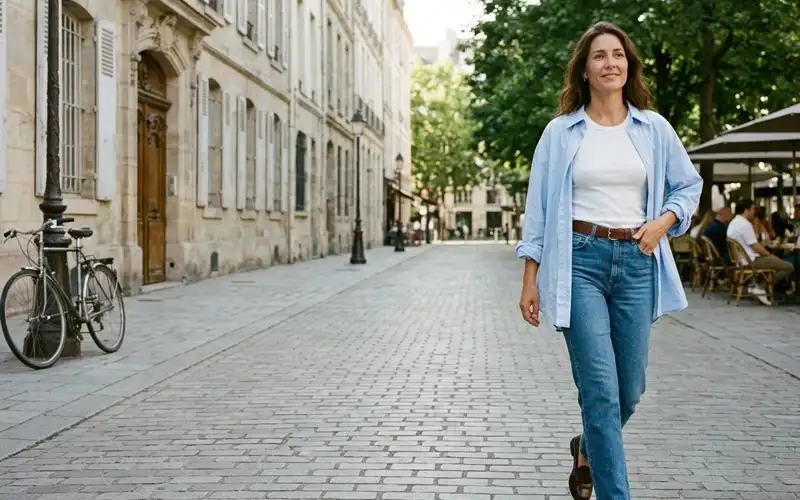
Wear an unbuttoned shirt over a fitted top for a relaxed, layered outfit.
Tuck the Entire Shirt Into Your Bottoms
A full tuck creates a neat outline and works especially well with tailored trousers, straight-leg jeans, and skirts. Unbutton the lower buttons if needed, place the shirt inside the waistband, and spread the fabric evenly around your waist. Fasten your bottoms, then smooth out any large folds before adding a belt.
This method often works best with shirts that are long enough to stay tucked in comfortably. Lightweight cotton or a soft, drapey fabric can sit smoothly under the waistband, while thick, stiff fabric may create extra bulk. For example, a cotton poplin shirt tucked into high-waisted trousers can create a clean shape for work or a smart-casual outfit.

A full tuck creates a neat waistline with tailored trousers and a simple belt.
Try a Half-Tuck for a Relaxed Finish
A half-tuck means placing only the front of your shirt inside the waistband while leaving the sides and back loose. It adds some shape without making the outfit look too formal and often works well with relaxed jeans or casual trousers.
A shirt with a slightly longer front and a soft or lightweight fabric can be easier to half-tuck because the front can sit inside the waistband without creating a thick fold. For example, try a soft cotton shirt with straight-leg jeans when you want a relaxed everyday outfit. If the shirt is very short or the fabric is stiff and bulky, it may keep slipping out or create an uneven shape. In that case, wearing it open or leaving it untucked may work better.

Tuck only the front of your shirt into jeans while leaving the sides and back loose.
2. Pair a Button-Down With Jeans for Everyday Outfits
Jeans provide a simple base for experimenting with different button-down shirts. The key is to consider how the shirt’s fit, length, and volume work with the cut of the denim.
Straight-Leg Jeans With a Front Tuck
Straight-leg jeans have an even shape from the hips to the ankles, making them easy to pair with different button-down shirts. A white, pale blue, or striped shirt creates a simple everyday combination without looking too formal.
Try a front tuck to define the waist while keeping the rest of the shirt relaxed. If the shirt is longer, tuck only the front and let the sides fall naturally. A belt can add definition when the waistband is visible, but make sure the shirt does not bunch up around it.

A front tuck adds definition to straight-leg jeans while keeping the shirt relaxed.
Wide-Leg Jeans With a Balanced Top
Wide-leg jeans have extra room through the legs, so the shirt’s fit can change the overall silhouette. A fitted button-down creates contrast with the wider cut, while a shirt that sits neatly around the waist keeps the outfit looking balanced. If you prefer an oversized shirt, check its length so it does not hide the shape of the jeans completely.
A partial tuck can help show where the waist begins without making the outfit look too formal. You can also leave a shorter shirt untucked if its hem falls naturally around the waistband. The aim is to balance the volume of the top and bottom rather than make both pieces fit tightly.

A fitted shirt and defined waist balance the extra volume of wide-leg jeans.
Skinny Jeans With an Oversized Shirt
Skinny jeans create a narrower line through the legs, which can balance an oversized button-down. Wear the shirt open over a fitted top, or button it and leave it untucked if the length suits your proportions. This combination works well when you want a relaxed outfit without adding several bulky layers.
If the shirt reaches well below your hips, rolling the sleeves can help break up the long shape. You can also try a half-tuck to add definition at the waist while keeping the back loose. If the shirt already falls neatly over the jeans, there is no need to tuck it in.
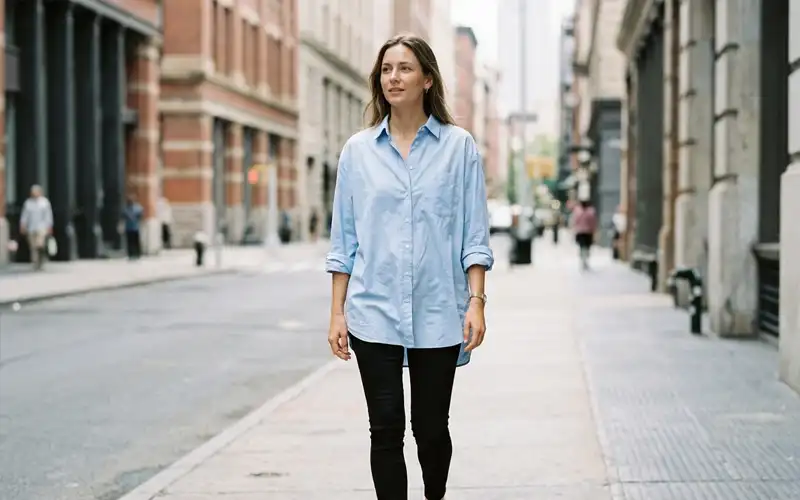
An oversized shirt creates a relaxed contrast with the narrow shape of skinny jeans.
Distressed Denim With Rolled Sleeves
Distressed jeans add texture and visual detail, so a plain button-down can keep the outfit from looking too busy. Wear the shirt open or partially tucked, and roll the sleeves for a relaxed finish. If the jeans have large rips or strong fading, avoid adding several competing patterns.
For a coordinated look, choose a shirt colour that complements one of the tones in the denim or the rest of your outfit. A solid shirt also creates a useful contrast with heavily distressed fabric. If you prefer a patterned shirt, keep the pattern subtle so the different details do not compete for attention.

Rolled sleeves and a simple shirt keep distressed denim looking relaxed and balanced.
3. Adapt the Shirt for Work, Weekends, and Evenings
A button-down can work for different occasions when you adjust the fit, fabric, and layers. A few small changes can make it suitable for the office, a relaxed day out, or an evening plan without changing the shirt itself.
Tailored Trousers for a Work-Ready Look
Pair a solid button-down with tailored trousers for a neat outfit suitable for many smart-casual workplaces. A full tuck creates a clean waistline, while a structured collar helps the shirt look polished. White, light blue, beige, and navy are easy colours to combine with neutral trousers.
Choose a shirt that sits smoothly beneath a blazer without pulling across the chest or shoulders. Loafers, simple flats, or low heels can complete the outfit, depending on your workplace dress code. Keep accessories understated if your shirt already has noticeable stripes, buttons, or other details.

A neatly tucked shirt and tailored trousers create a polished smart-casual work outfit.
A Midi Skirt for a Feminine Outfit
A button-down can add structure to a flowing midi skirt or soften the look of a more structured design. Tuck the shirt in to show the skirt’s waistband, or try a loose half-tuck for a more relaxed finish. If the skirt has a bold print, a plain shirt can help keep the outfit balanced.
Consider how the fabrics work together. Crisp cotton creates contrast with a soft, flowing skirt, while a lightweight, drapey shirt can complement a skirt with a smooth finish. For daytime plans, keep the outfit simple with comfortable footwear; ankle boots can be an option when the weather is cooler.

Pair a crisp shirt with a flowing midi skirt for a balanced daytime outfit.
Shorts for Warm-Weather Styling
For warm days, choose a lightweight cotton or linen button-down with denim, tailored, or relaxed shorts. Wear it open over a fitted tank top for easy layering, or button it and tuck it in for a neater look. If the shirt is long enough and the fabric is soft, you can also tie the front loosely.
Breathable fabrics help keep the outfit comfortable in warm weather. When both the shirt and shorts have a loose fit, rolling the sleeves or choosing a closer-fitting inner top can add definition. Keep the layers light so the outfit feels easy to wear outdoors.

An open linen shirt and lightweight shorts create an easy outfit for warm days.
A Blazer for Dinner or Evening Plans
For dinner or evening plans, layer a button-down beneath a blazer and pair it with tailored trousers or dark jeans. A full tuck usually creates a smoother shape under a structured jacket by reducing extra fabric around the waistband. Choose a shirt that allows comfortable movement and does not bunch up when the blazer is fastened.
For a more dressed-up finish, try a shirt in a smooth fabric or a subtle sheen, provided it suits the occasion. A simple necklace, understated earrings, or a compact bag can add detail without competing with the outfit. If your shirt has a bold pattern, choose a quieter blazer to keep the overall look balanced.

Layer a tailored blazer over a neatly tucked shirt for a polished dinner outfit.
4. Make an Oversized Button-Down Look More Balanced
Oversized shirts are useful for layering, but their extra fabric can change the proportions of an outfit. The key is to consider the shirt’s length, shoulder fit, and the shape of your bottoms so the overall look feels intentional rather than bulky.
Balance an Oversized Shirt With Your Bottoms
An oversized button-down can work with slim, straight-leg, or wide-leg bottoms, but the overall proportions make a difference. Slim jeans create contrast with a loose shirt, while wide-leg trousers give a relaxed silhouette from top to bottom. If both pieces are loose, look for a shirt with a shorter hem or sleeves that can be rolled neatly to keep the outfit from appearing overwhelmed by fabric.
Pay attention to where the shirt ends in relation to your hips and legs. A very long shirt may work well with narrower bottoms, while a shorter oversized style can pair more easily with wider trousers or skirts. Choose the combination that allows the shirt and bottoms to remain distinct parts of the outfit.
Layer It Over a Dress
An open button-down can work as a lightweight layer over a simple dress. A slip dress or fitted casual dress provides a clean base, while the shirt adds coverage and another texture. This combination is useful when you want an alternative to a cardigan or denim jacket.
Keep the dress and shirt fabrics appropriate for the weather. A thin cotton shirt can work in warm conditions, while a heavier fabric may feel more suitable for cooler days. Roll the sleeves if needed and choose shoes that suit the dress length and occasion.
5. Style Different Button-Down Fabrics and Patterns
The fabric and pattern of a button-down affect how it hangs, feels, and works with other clothing. Some materials create a crisp shape, while others fall softly or add texture. Understanding these differences can help you choose combinations that look balanced without adding unnecessary layers or details.
White Shirts for Clean, Minimal Outfits
A white button-down creates a clean base that works with a wide range of colours and textures. Pair it with beige, navy, brown, or other neutral shades for a simple colour palette, or use it to balance a more colourful outfit.
Pay attention to the fabric’s thickness and finish. Lightweight cotton may be slightly sheer, while thicker cotton usually provides more coverage and structure. If the shirt is transparent under certain lighting, choose a suitable underlayer that does not distract from the clean appearance.
Striped Shirts With Solid-Coloured Bottoms
Stripes add visual interest without requiring extra patterns or decoration. Pair a striped shirt with solid colours that complement one of the tones in the pattern. This keeps the outfit coordinated and allows the stripes to remain the main feature.
If you want to combine stripes with another print, consider the scale and colours of both patterns. Two patterns with similar colours but different scales may work together more easily than patterns that compete for attention. The direction and spacing of the stripes can also change the shirt’s overall appearance.
Denim Shirts With Contrasting Textures
Denim has a more noticeable texture and usually feels heavier than lightweight cotton. This makes it useful for adding structure to an outfit made with softer fabrics, such as cotton jersey, linen, or lightweight knits.
When combining denim pieces, compare their washes and textures. A lighter denim shirt with darker denim creates a clear contrast, while similar shades can give the outfit a more uniform appearance. The weight of the fabric also matters: heavier denim may feel bulky when layered over thick clothing, so lighter inner layers can be more comfortable.
Silk or Satin Shirts for a Dressier Finish
Silk and satin are known for their smooth surfaces and fluid drape. They can give an outfit a more refined appearance, especially when paired with fabrics that have a different texture, such as matte cotton, wool, or structured suiting material.
Consider the finish when choosing other pieces. A shiny satin shirt can stand out against matte fabrics, while combining several glossy materials may make the outfit feel visually busy. Delicate fabrics can also show creases or pull around seams, so check the garment’s fit and follow its care instructions to maintain the finish.
Linen Shirts for Lightweight Layering
Linen has a breathable feel and a naturally textured surface, making it useful for warm-weather outfits. Its relaxed appearance works well with other lightweight materials, including cotton and soft summer fabrics. Choose a linen shirt when you want texture without adding a heavy layer.
Natural wrinkles are a normal feature of linen, so the fabric does not need to look perfectly smooth to appear well styled. However, the amount of wrinkling can vary with the weave and blend. Check the garment’s care label before ironing or steaming, and avoid combining too many heavy fabrics if you want to keep the outfit light.
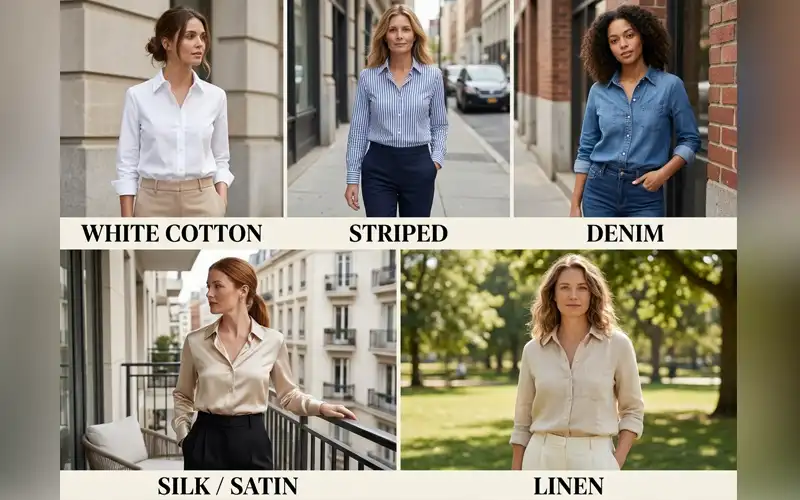
Compare white cotton, striped, denim, silk or satin, and linen button-down shirts to see how different fabrics and patterns change an outfit.
6. Finish the Outfit With Shoes and Accessories
Shoes and accessories complete a button-down outfit, but they should work with the clothes rather than compete with them. Consider the occasion, the shape of your bottoms, and the overall style before choosing the finishing details.
Choose Shoes That Suit the Outfit
Match your footwear to the formality and proportions of your outfit. Casual styles work well for everyday plans, while more structured shoes can make a button-down look suitable for work or dressier occasions. Check that your trousers or jeans fall neatly over or above the shoes without dragging on the ground or bunching excessively.
Belts, Bags, and Jewellery That Add Detail
A belt can define the waist when your waistband is visible, while a bag can complement the outfit’s colours or add a subtle contrast. Choose jewellery according to your shirt’s pattern and details. Simple pieces often work well with bold stripes or prints, while a plain shirt gives you more freedom to wear statement accessories. Avoid adding too many competing details at once.
Fix Common Button-Down Styling Problems
Small fit issues can affect how a shirt looks, even when the outfit combination is good. Before changing the entire outfit, check whether the problem comes from the shirt’s size, fabric, length, or the way it is styled.
Stop Buttons From Pulling Apart
Gaps between buttons can happen when a shirt is too tight across the chest or when the buttons are positioned too far apart for the wearer’s fit. Try a different size or cut that allows comfortable movement. A suitable underlayer or discreet fashion tape may help in some cases, but neither should replace a shirt that fits properly.
Tuck-Related Problems
If your button-down shirt bunches around the waist, smooth the fabric evenly before fastening your trousers or skirt. Make sure the shirt is not folded into thick layers under the waistband, as this can create unwanted bulk. If excess fabric keeps gathering, adjust the shirt so it sits flat instead of pulling tightly at the waist.
Get Sleeves to Stay Neatly Rolled
Start by unbuttoning the cuff, then fold the sleeve evenly rather than rolling it into a tight, bulky band. Adjust both sleeves to a similar height so the outfit looks balanced. If the fabric keeps slipping or creates thick folds, try fewer folds or wear the sleeves down.
Choose a Shirt That Fits Your Shoulders
The shoulder seams should sit close to your natural shoulder line in a regular fit, although intentionally oversized designs may sit lower. Button the shirt and move your arms to check for pulling across the back, chest, or underarms. A relaxed look should still allow comfortable movement.
Frequently Asked Questions
Should You Wear a Button-Down Shirt Tucked or Untucked?
Both options can work. A full tuck often suits tailored trousers and skirts, while an untucked shirt can feel more relaxed with jeans or shorts. Choose according to the shirt’s length, fabric, and the shape of your bottoms.
How Should an Oversized Button-Down Shirt Fit?
An oversized shirt should have extra room without restricting movement or feeling uncomfortable around the shoulders. Its length depends on how you plan to wear it. Check that the sleeves and hem work with your bottoms so the overall outfit looks balanced.
What Shoes Go Best With a Button-Down Shirt and Jeans?
Sneakers work well for casual outfits, while loafers and flats create a more polished finish. Ankle boots are another option in cooler weather. Consider the jeans’ cut, hem length, your comfort, and the occasion when choosing footwear.
Can You Wear a Button-Down Shirt Over a T-Shirt?
Yes, you can wear an unbuttoned button-down shirt over a fitted T-shirt or tank top. Pair it with jeans, shorts, or casual trousers for an easy layered outfit. A simple inner top helps keep the look balanced.
How Do You Style a Button-Down Shirt for Work?
Pair a button-down shirt with tailored trousers or a midi skirt for a polished work outfit. Tuck the shirt in neatly and add loafers, flats, or low heels. Choose a well-fitting shirt that feels comfortable throughout the day.
Which Button-Down Shirt Fabric Is Best for Summer?
Lightweight cotton and linen are popular choices for summer because they feel breathable and comfortable. Linen has a naturally textured appearance, while cotton can offer a smoother, crisper finish. Choose a fabric that suits the weather and your preferred style.
How Can You Make a Button-Down Shirt Look More Stylish?
Try rolling up the sleeves, adding a belt, or using a front tuck to give the outfit more shape. You can also layer an open shirt over a fitted top or pair a satin shirt with tailored trousers for a dressier look. Small styling changes can make the same shirt work for different occasions.
Final Thoughts
A button-down shirt can suit many different outfits when you pay attention to fit, proportions, and the way you wear it. Leaving it open creates a relaxed layer, a full tuck gives a cleaner shape, and a half-tuck offers a middle ground. Experiment with different bottoms, fabrics, and shoes to find combinations that feel comfortable and suit your everyday style.
Also Read : How to Wear Cargo Pants for Every Style, Season, and Occasion