Dark circles can appear blue, purple, brown, or gray. The right color corrector helps balance these tones and creates a smoother base for concealer. Choosing a shade depends on both your skin tone and the color of the darkness.
Quick Answer: Which Color Corrector Should You Choose?
Peach or salmon can help with mild blue-purple shadows, while orange or red-orange may suit deeper discoloration. Yellow can balance some purple tones. Choose a shade that matches your skin tone and the intensity of your dark circles, then apply a thin layer before concealer if needed.
Which Color Corrector Shades Work for Dark Circles?
Color correctors help balance unwanted discoloration by using colors that counteract one another on the color wheel. The most suitable shade depends on whether dark circles look blue, purple, brown, gray, or like a combination of these tones. Understanding the difference between corrector shades can help you select a product that reduces discoloration without creating an unnatural finish.
Peach Color Corrector for Light Blue and Gray Circles
Peach combines pink and orange tones to soften mild blue, gray, and blue-gray discoloration. It offers a balanced correction without the intensity of a strong orange shade. This makes it useful when under-eye shadows are noticeable but do not require very deep pigment.
A peach corrector should reduce the cool appearance of the shadows without leaving a visible peach layer. If the discoloration is particularly deep or strongly brown, a softer peach shade may not provide enough correction.
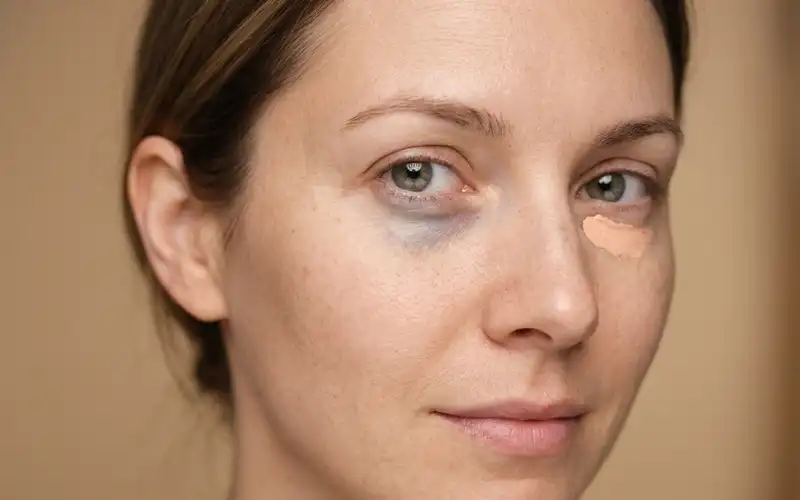
Peach corrector may help soften mild blue-gray under-eye shadows on lighter complexions.
Light Pink Color Corrector for Dull Under-Eyes
Light pink correctors can help brighten an under-eye area that looks dull or has a mild greenish cast. Their softer appearance can refresh the skin without adding the stronger orange pigment found in some correctors. The amount of brightening depends on the formula and the shade.
Pink is not always effective against pronounced blue-purple discoloration. When the darkness has a stronger blue or purple appearance, a peach-based shade may provide more noticeable color correction than pink alone.
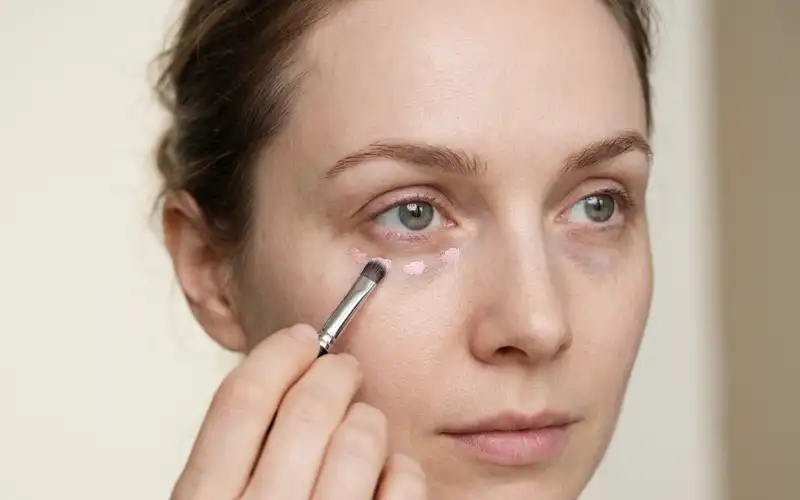
Light pink corrector may help brighten some dull-looking under-eye areas.
Salmon Color Corrector for Blue-Purple Shadows
Salmon combines pink and orange, making it useful for blue-purple shadows that need more warmth than a pale peach shade provides. It can help soften discoloration around the inner corners and the crescent-shaped shadows beneath the eyes.
Salmon shades range from soft pink-orange to deeper coral. Choose a shade with enough pigment to balance the visible discoloration without leaving a bright or overly warm layer. More intense shadows may require a deeper corrective shade.

Salmon corrector adds warmth to help balance blue-purple under-eye discoloration.
Orange Color Corrector for Blue and Brown Discoloration
Orange correctors provide stronger warmth to counteract blue-toned shadows and certain types of brown discoloration. They can be useful when the darkness remains visible through a regular skin-tone concealer, particularly when a softer corrector does not provide enough color balance.
Orange products vary in intensity, so the right amount matters. Apply a small quantity and check the result in natural light. If orange pigment remains visible through concealer, use less product or choose a less intense shade.

Orange corrector may help balance blue-toned shadows and some brown discoloration.
Deep Orange Color Corrector for Pronounced Darkness
Deep orange correctors provide richer pigment for more pronounced under-eye discoloration. They can help balance blue-gray and brown shadows that remain noticeable after lighter correction. Their deeper color can also provide a more effective starting point when the discoloration has a strong contrast with the surrounding skin.
The aim is to neutralize the shadow rather than cover it with a visible orange layer. Apply the product only to the discolored areas and build coverage gradually if necessary.

A richer orange shade may suit more pronounced under-eye discoloration on deeper complexions.
Red-Orange Color Corrector for Intense Discoloration
Red-orange correctors offer a stronger, warmer option for intense brown, blue-gray, or nearly black-looking under-eye shadows. Their combination of red and orange pigment can help counteract discoloration that may remain visible beneath softer corrective shades.
Because this color is highly noticeable, use a very small amount and blend it carefully. If the finished makeup has a red cast, the shade may be too intense or the application too heavy. The goal is a balanced under-eye tone rather than a visibly red or orange finish.

Red-orange corrector may be useful for pronounced discoloration when its depth suits the complexion.
Yellow Color Corrector for Purple Shadows
Yellow correctors can help balance purple or violet discoloration because these colors are opposite one another on the color wheel. They may be useful when the under-eye shadows appear more purple than blue, particularly in small areas around the inner corners.
Yellow is less suitable when the main concern is pronounced brown or deep blue-gray discoloration. Choose it according to the visible color of the shadows, and avoid applying a bright yellow product across the entire under-eye area.

Yellow corrector may help balance some violet or purple discoloration.
Bisque Color Corrector for Subtle Discoloration
Bisque is a shade name that varies between makeup brands. It can describe a muted peach, pink-beige, or warm beige color, making it a possible option for subtle discoloration that does not require a strongly pigmented corrector.
Check the actual product color rather than relying on the name alone. Some bisque formulas function more like concealers than dedicated color correctors. For noticeable discoloration, make sure the formula provides enough corrective pigment rather than simply adding another layer of beige makeup.

Bisque shades vary by brand and may offer softer correction than vivid orange formulas.
Lavender Color Corrector for Yellowish Dullness
Lavender correctors are mainly used to balance yellowish or sallow tones and brighten areas that appear dull. They are not generally the first choice for blue, purple, or brown dark circles because they address a different type of discoloration.
Use lavender when yellowish dullness is the main concern rather than under-eye darkness itself. For most dark circles, a shade that addresses the visible blue, purple, brown, or gray tones is more appropriate.

Lavender corrector is mainly used to balance yellowish tones rather than most types of dark circles.
How to Choose the Right Corrector for Your Skin Tone
Choosing a color corrector involves more than matching a shade to your complexion. The depth of the pigment and its undertone affect how naturally it blends with the skin. A suitable match should reduce the appearance of discoloration without leaving a visible patch or changing the natural color of the under-eye area.
Choosing the Right Depth for Fair Skin
Very light skin can make strongly pigmented correctors more noticeable, even when their undertone is suitable. Look for a shade that blends smoothly into the surrounding skin instead of appearing bright or overly saturated. Testing a small amount in natural daylight can help you see whether the pigment is too intense.
Finding a Balanced Match for Medium and Olive Skin
Medium and olive complexions can vary in their golden, neutral, or greenish undertones. Consider how the corrector looks next to your natural skin color rather than judging it by its appearance in the container. A shade that looks suitable under artificial lighting may appear different in daylight, so check the blend before applying concealer.
Matching Corrector to Brown Skin
Brown skin includes a wide range of depths and undertones, so one shade will not suit everyone. Choose a corrector that sits naturally against the surrounding complexion and does not leave a noticeably pale or overly bright area. Checking the result alongside your usual concealer can help you assess whether the two products create a consistent finish.
Avoiding an Ashy Finish on Deep Skin
On deep skin tones, a corrector with insufficient depth can make the under-eye area look gray or ashy. Instead of choosing a shade simply because it appears bright, check whether its pigment blends with your complexion. Apply a small amount first and assess the result before adding more product.
Check the Shade Before Applying a Full Layer
Test the corrector on a small area and allow it to settle according to the product instructions. Then check its appearance in natural light and, if you use concealer, see how the two formulas look together. The right match should soften the discoloration while keeping the under-eye area natural and even.
Cream, Liquid, or Stick Corrector — Which Formula Is Better?
The formula affects how a corrector blends, how much coverage it provides, and how it feels on the skin. A correct shade in the wrong texture may crease, look dry, or feel too heavy. Choose the formula according to your under-eye skin and the amount of makeup you prefer, not just the product’s color.
Cream Correctors for Stronger Coverage
Cream correctors are useful when you need concentrated pigment on a small area. Their texture can make it easier to build coverage gradually, which is helpful for visible blue-gray or brown discoloration. They can also work well when you want to apply product precisely to the inner corners or a narrow shadow.
Use a small amount and blend the edges carefully. A thick layer may settle into fine lines or make concealer look heavy. If your under-eyes are dry, prepare the skin first and choose a cream that remains comfortable instead of one that becomes stiff after setting.
Liquid Formulas for Lightweight Makeup
Liquid correctors can be a good choice if you prefer a thin, flexible layer. They are often easy to spread over small areas and may suit people who want natural-looking coverage. Some formulas are sheer, while others contain enough pigment to correct more noticeable darkness, so the texture alone does not tell you how much coverage you will get.
Check how the product looks after it dries and how it layers with your concealer. A very fluid formula may move around if you apply too much, while a quick-drying one may need to be blended promptly. Apply it in small dots rather than drawing a thick line beneath the eye.
Stick Correctors for Precise Application
Stick correctors can be convenient for targeting a small area because they are easy to place directly where you need coverage. Depending on the formula, they may provide medium to full coverage and can be useful for stronger discoloration. They are also handy for quick makeup routines when you do not want to use several tools.
Avoid dragging a firm stick repeatedly across delicate under-eye skin. Instead, pick up a small amount with a clean fingertip or brush and tap it onto the shadow. If the stick is very waxy or thick, use less product so it does not create a heavy layer under concealer.
Hydrating Formulas for Dry Under-Eyes
If your under-eye area feels dry or looks flaky, a comfortable, hydrating formula may sit more smoothly than a dry or very matte product. Prepare the skin with a small amount of moisturizer and allow it to absorb before applying makeup. Too much skincare residue, however, can make the corrector slide or separate.
For oily or creasing under-eyes, a very rich formula may not be the best fit. Look for a texture that stays in place without feeling tight. Whatever formula you choose, thin layers usually look more natural than trying to hide all darkness with one thick application.
How to Apply Color Corrector for a Natural Finish
Color corrector should balance discoloration, not become another visible layer of makeup. It generally goes after skincare and primer, and before concealer or foundation. Patting the products on top rather than rubbing them across the skin can help preserve the correction underneath.
Apply Corrector Only Where Darkness Appears
Use a tiny amount of the chosen corrector on the darkest areas. For many people, this means the inner corners and the narrow crescent directly beneath the eyes rather than the entire under-eye area. Start with less than you think you need because you can always add another thin layer.
Tap the product gently with a fingertip, small brush, or sponge. Keep the edges soft so the corrector blends into the surrounding skin. You should see the darkness becoming less pronounced, not a thick patch of peach, orange, or pink.
Blend the Edges Without Removing Coverage
Use gentle tapping motions to blend the product around the edges. Avoid sweeping it back and forth, because this can remove the pigment from the area where you need it most. If the corrector appears too strong, use a clean sponge or fingertip to lift away a little product before adding concealer.
Let the corrector settle briefly if the formula needs it, but do not leave a thick, wet layer waiting beneath your base makeup. The goal is an even, thin layer that reduces the discoloration and still allows the skin to look natural.
Layer Concealer Over the Corrector
Choose a concealer close to your skin tone when you want a natural finish. Apply it gently over the corrected area and blend the edges without rubbing away the layer underneath. A very light concealer placed over uncorrected darkness can sometimes make the area look gray, so correct the color first when the discoloration is strong.
You may not need concealer over every part of the under-eye. If the corrector has already softened mild darkness, use less concealer rather than adding extra coverage automatically. This keeps the makeup lighter and can reduce the chance of creasing.
Set Your Makeup Without Making It Look Dry
If your makeup tends to crease or move, use a small amount of finely milled setting powder. Press it lightly onto the areas that need it instead of applying a heavy layer across the entire under-eye. Dry skin may need very little powder, while longer-wearing makeup may benefit from a light set.
Check the finish while looking straight ahead and in natural light. If the skin looks dry or textured, too much powder or too many layers may be the problem. Remove excess product gently and adjust the amount next time rather than adding more makeup over the top.

Cream correctors offer buildable coverage, liquid formulas can feel lightweight, and stick correctors allow precise application. The best choice depends on the formula and your under-eye skin.
Common Color-Correcting Problems and How to Fix Them
A color corrector may not give the expected result even when you apply it carefully. The issue often comes from a shade mismatch, excess product, or the way makeup sits on your skin. Identifying the specific problem helps you make a small adjustment instead of adding more layers.
Why Your Corrector Looks Too Orange
An orange cast usually means the corrector is too intense for your complexion or has been applied too heavily. If the color remains visible through concealer, switch to a softer shade or reduce the amount you use. Avoid covering excess orange pigment with several layers of concealer, as this can make the under-eye area look heavy.
How to Prevent Gray or Ashy Under-Eyes
A gray or ashy finish can occur when a corrector lacks the depth or warmth needed to balance the discoloration. A concealer that is much lighter than your skin may make this effect more noticeable. Choose products that provide enough coverage while staying close to your natural skin tone.
Fixing Creasing and Cakey Texture
Visible creases and cakey makeup often result from excess product or layers that do not work well together. Allow moisturizer to absorb before applying makeup, and avoid combining a thick corrector with heavy concealer and powder. If makeup settles into fine lines, gently remove the excess rather than adding another layer.
What to Do When Darkness Shows Through Concealer
If dark circles remain visible, the corrector may not provide enough coverage or may not balance the underlying color. Reassess the shade and formula instead of automatically applying more product. Keep in mind that hollows beneath the eyes can create shadows that makeup cannot fully eliminate, even when the color correction is suitable.
How to Find a Good Drugstore Color Corrector
A drugstore color corrector can be a practical choice without stretching your makeup budget. Instead of judging a product by its price or packaging, compare its shade options, formula, size, and ease of use. Clear product descriptions and realistic swatches can also help you avoid buying a shade that does not suit your needs.
Check Product Details and Reviews Before Buying
Read the product description to understand its coverage, finish, and recommended use. Customer reviews can help you identify common concerns, such as a formula that feels dry, settles into fine lines, or becomes difficult to blend. Look for reviews and swatches from people with similar skin tones, but remember that individual results can vary.
When possible, test the product before purchasing. Check whether it blends easily and works comfortably with the concealer you already own. If shopping online, review the return policy because the shade shown on a screen may differ from the actual product.
When a Corrector Palette Is Worth Trying
A corrector palette may be worth the extra cost if you regularly need different shades or prefer mixing products to achieve a closer match. It can also be useful for experimenting with small amounts before settling on one formula.
If you only need one corrector, a single product is usually simpler and may offer better value. Compare the price per amount of product and consider how often you will use it before paying for a palette with several shades you may never need.
Frequently Asked Questions
What Is the Best Color Corrector for Dark Circles Under the Eyes?
Peach or salmon is often a good starting point for fair to light skin with blue or purple shadows. Medium and deeper skin tones may need orange or red-orange, while yellow can help with some purple discoloration. The best shade depends on both your complexion and the actual color of the circles.
Is Peach or Orange Better for Dark Circles?
Peach is generally a softer option for fair and light complexions, while orange often works better on medium to deep skin or stronger discoloration. Neither shade is automatically best for everyone. Choose the one that neutralizes the darkness without leaving a visible colored layer.
Can You Use Color Corrector Without Concealer?
Yes. If your corrector is subtle and the darkness is mild, you may prefer to use it alone or with a light base product. Choose a shade that blends naturally into your skin and apply a small amount. Strongly colored correctors usually look more natural when covered with a suitable concealer.
Should Corrector Be Lighter or Darker Than Your Skin?
The corrector should have enough depth and the right undertone to balance the darkness, rather than simply being lighter than your skin. A shade that is too pale may leave a gray cast, while one that is too deep or bright may show through concealer. Match it to the discoloration as well as your complexion.
Which Drugstore Color Corrector Is Good for Dark Circles?
Look for a drugstore corrector with a shade that matches your under-eye discoloration, a comfortable formula, and enough pigment to provide the coverage you need. Compare swatches on similar skin tones and check how the product layers under concealer. The best option is the one that blends naturally and does not require excessive product.
Final Tips for Choosing the Right Color Corrector
The best color corrector for dark circles is the one that balances the discoloration without looking obvious on your skin. Start by identifying whether your under-eyes look blue, purple, brown, or gray, then choose a shade with suitable depth for your complexion.
Apply a small amount, blend gently, and check the result before adding concealer. You do not need several correctors to achieve a natural finish. In many cases, one well-matched shade and a lightweight concealer are enough to make dark circles less noticeable.
Also Read : How to Make Eyes Look Bigger With Makeup for Any Age and Eye Shape