
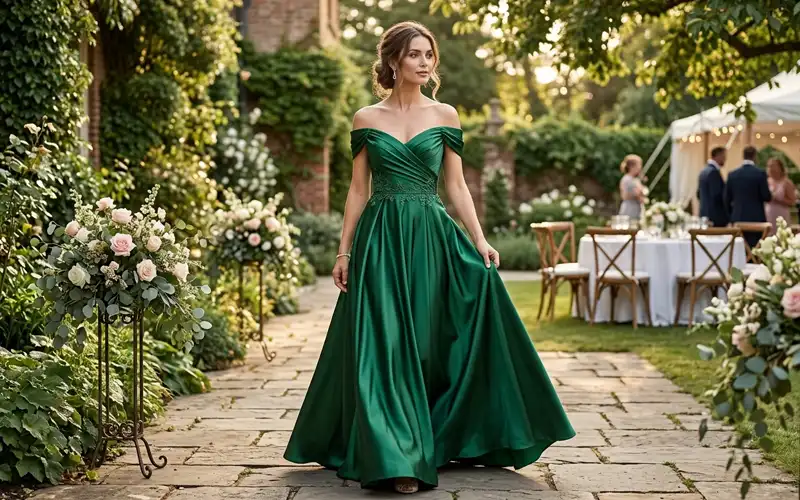
Choosing a green formal dress for a wedding gives you plenty of options, from soft sage and mint to rich emerald and deep forest green. However, the right choice depends on more than color. The wedding dress code, venue, time of day, fabric, fit, and dress length all influence whether an outfit feels appropriate.
A garden ceremony may suit a flowing green dress, while an evening reception may call for a more structured gown or a richer shade. You should also consider comfort, especially if you will spend several hours sitting, walking, and dancing.
This guide explains how to choose a green formal dress for a wedding, compare popular shades, find a flattering fit, and coordinate accessories. It also covers practical details to check before placing an order.
Green Formal Dress Styles for Different Wedding Occasions
Start with the level of formality stated on the wedding invitation. A beautiful dress may still feel out of place if its design does not suit the occasion. Consider the venue, time of day, and amount of coverage you prefer before choosing a particular shade or style.
Emerald Green Satin Gowns for Formal Weddings
An emerald green satin gown is a strong option for formal evening celebrations. The rich color and smooth finish create a polished appearance, even when the dress has minimal decoration. A V-neckline can create a longer visual line, while a square neckline gives the outfit a more structured feel.
For a black-tie wedding, consider a floor-length gown with subtle draping, an elegant neckline, or a defined waist. Keep decorative details balanced: if the dress has a dramatic neckline, you may not need heavy beadwork or an elaborate skirt.
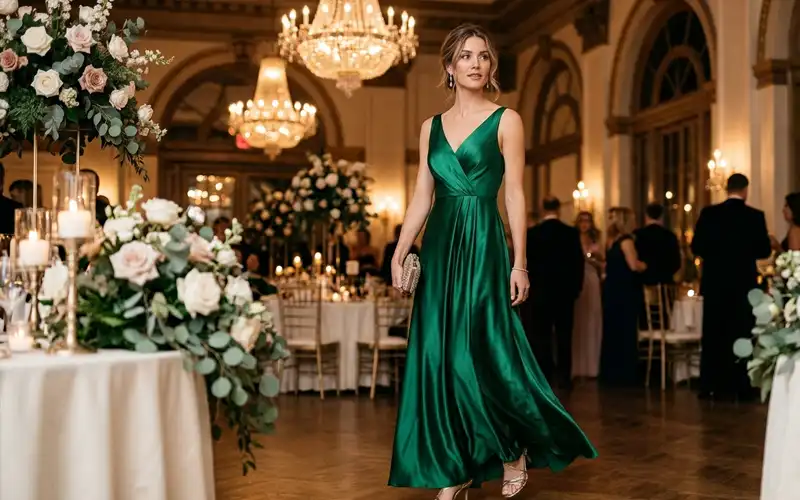
An emerald green satin gown creates an elegant look for a formal evening wedding.
Sage Green Chiffon Dresses for Garden Weddings
A sage green formal dress for wedding guests can be a lovely choice for a garden ceremony, spring celebration, or daytime reception. Chiffon creates soft movement, while a lined bodice and flowing skirt provide a more finished appearance.
Look for details such as flutter sleeves, gentle pleating, or a simple waist seam. These features add interest without making the outfit feel too busy. For a formal event, choose a refined maxi or an elegant midi design rather than a style that looks suitable for a casual picnic.

A flowing sage green chiffon dress suits garden ceremonies and daytime weddings.
Olive Green Dresses With Structured Details
Olive green offers an earthy alternative to brighter greens. It can work well for autumn weddings, outdoor venues, and celebrations with a natural color palette.
A pleated skirt, structured bodice, or clean neckline can give an olive green dress a more polished finish. Crepe and satin are useful choices when you want the outfit to feel dressy rather than casual.
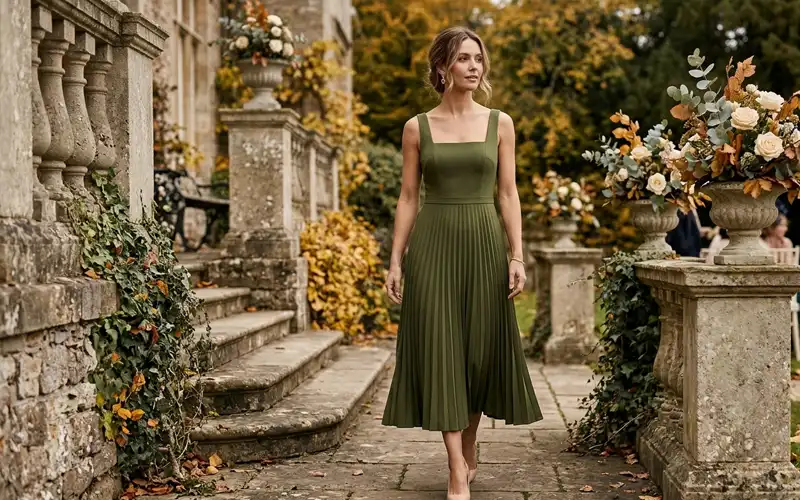
Structured details give an olive green dress a polished wedding guest look.
Forest Green Velvet Gowns for Evening Weddings
Forest green velvet creates a deep, textured appearance that works particularly well for formal evening celebrations and cooler weather. A long gown with a simple bodice can look elegant without requiring extensive embellishment.
If you prefer a little more detail, consider a gently flared skirt or a subtle decorative neckline. Velvet can feel warm in crowded indoor venues, so consider the season and reception temperature before choosing this fabric.

Forest green velvet adds rich texture to a formal evening wedding outfit.
Mint Green Formal Dresses With Delicate Details
Mint green is a lighter option for daytime weddings, spring celebrations, and outdoor receptions. Flowing skirts, soft gathers, and delicate ruffles can complement the shade without overwhelming it.
For a formal invitation, choose a refined silhouette and a fabric with enough structure to maintain its shape. A lined maxi dress may be more suitable than a very casual sundress. Because mint is pale, check the lining and coverage before buying.
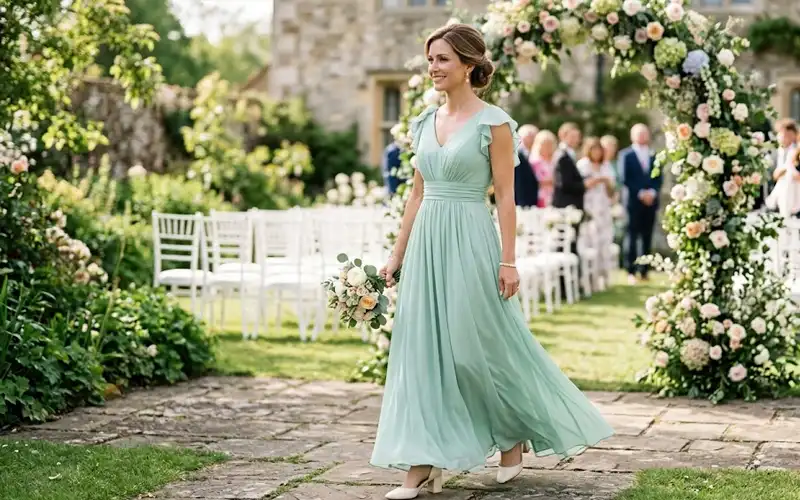
A delicate mint green gown brings a fresh look to a spring wedding.
Dark Green Gowns With Lace Details
Dark green is a useful option if you want a formal appearance without wearing black. Lace panels, embroidered details, or subtle beadwork can add interest, while a simple skirt keeps the overall design balanced.
Choose a gown with one main decorative feature rather than combining too many details. Dark green can look almost black under dim indoor lighting, so check the shade in natural light before purchasing.
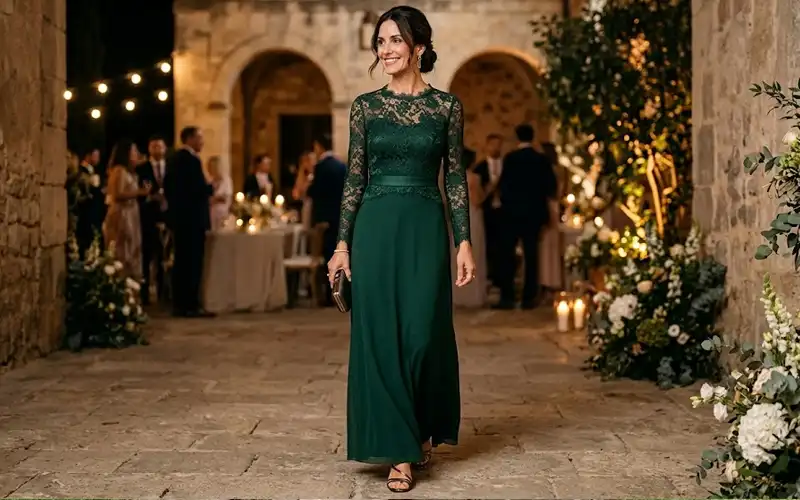
Subtle lace detailing adds texture to a dark green wedding guest gown.
Light Green Dresses for Daytime Ceremonies
Light green dresses can suit daytime ceremonies, spring celebrations, and weddings held in bright outdoor settings. A flowing skirt, a softly gathered waist, or a simple midi cut can create a fresh appearance without looking overly casual.
For a formal wedding, pay attention to the fabric and construction. A lined chiffon or crepe dress can look more refined than a lightweight casual design. Neutral shoes and understated jewelry can complete the outfit without taking attention away from the dress.
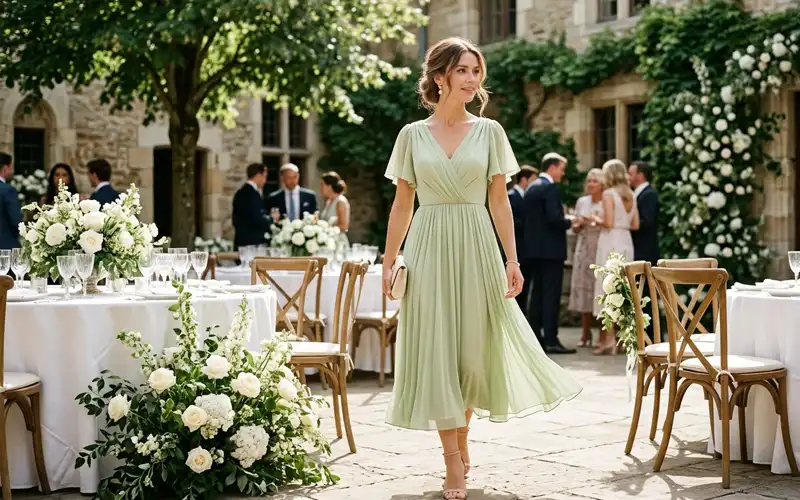
A light green formal dress creates a fresh, graceful daytime wedding look.
Moss Green Dresses With Soft, Natural Tones
Moss green offers a muted alternative to brighter jewel shades. It can work well for countryside venues, garden receptions, and autumn celebrations where earthy colors feel appropriate.
A softly draped skirt, clean neckline, or pleated detail can give the dress enough visual interest. Choose a shade that complements your accessories and the wedding setting, and check how it looks under both natural and indoor lighting.
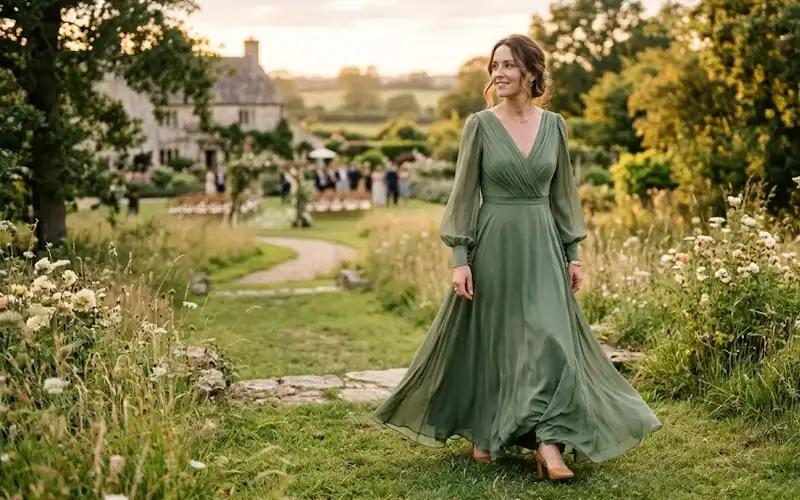
Moss green pairs naturally with the muted tones of a countryside wedding.
A-Line Green Formal Dresses for Comfortable Movement
An A-line green formal dress gradually widens from the waist, creating a shape that allows room through the skirt. This design can suit many wedding settings, from outdoor ceremonies to formal receptions, depending on the fabric and length.
A structured bodice with a flowing skirt can create a balanced appearance without feeling restrictive. If you expect to spend a lot of time walking or dancing, check that the skirt allows comfortable movement and that the hem works with your chosen shoes.

An A-line silhouette offers an elegant shape with room to move and dance.
Long-Sleeve Green Gowns for Extra Coverage
Long-sleeve green gowns can provide extra coverage while maintaining a formal appearance. Fitted sleeves create a clean outline, while sheer or softly draped sleeves add movement and detail.
For warmer weather, choose a breathable fabric that allows you to bend your arms comfortably. For cooler celebrations, a more structured material may be suitable. Check the fit around the shoulders and upper arms to make sure the dress remains comfortable throughout the event.
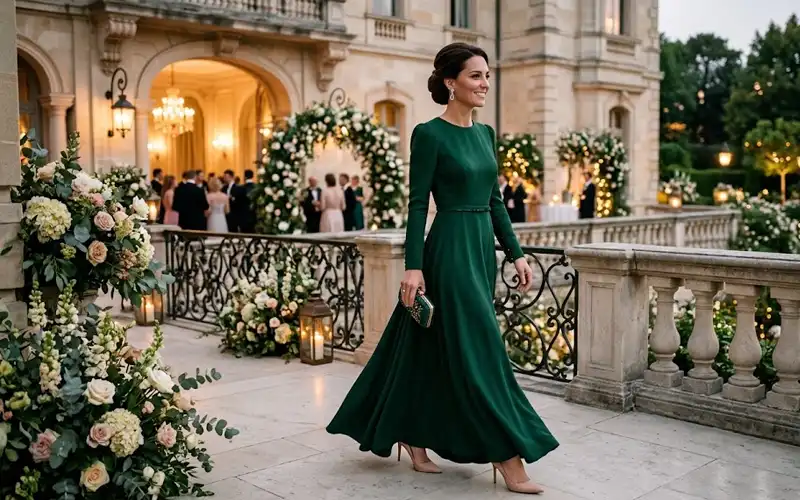
Long sleeves add coverage while keeping a green formal gown elegant.
Finding the Right Dress Length and Silhouette
Dress length influences both formality and ease of movement. A floor-length gown is a natural option for many black-tie weddings, while a midi dress may suit cocktail attire or a semi-formal reception. The invitation should guide your decision.
A maxi green formal dress for wedding guest attire can work for a range of celebrations when the fabric and overall design are appropriate. The term maxi generally describes a long dress, but not every maxi dress is formal. A casual cotton style and a satin evening gown can have a similar length while creating very different looks.
Consider these silhouette options:
- A-line: Gradually widens from the waist and offers room through the skirt.
- Column: Follows a straighter line through the body for a clean, streamlined appearance.
- Fit-and-flare: Fits more closely through the upper body and opens out through the skirt.
- Wrap: Uses an overlapping front to create an adjustable waist.
- Midi: Offers a shorter alternative to a floor-length gown, depending on the dress code.
Before choosing, consider how the dress will feel when you sit, walk, and dance. A fitted skirt may limit your stride, while a very full skirt may need extra room in crowded spaces. Try the dress with your intended shoes and make sure the hem does not drag or catch under your feet.

Compare A-line, column, and midi green dresses to find a silhouette that suits the wedding dress code.
Choosing a Long-Sleeve Green Formal Dress for a Wedding
Long sleeves provide extra coverage and can create a balanced look with a simple neckline or skirt. A long sleeve green formal dress for wedding celebrations may feature fitted crepe sleeves, flowing chiffon, or lace panels.
A long sleeve sage green formal dress for wedding guest attire can look elegant in lightweight fabric, particularly when the bodice is lined and the sleeves allow comfortable movement. For a more dramatic evening outfit, emerald or dark green can work well with structured sleeves or subtle embellishment.
Consider the weather before choosing a sleeve design. Lightweight, breathable materials are usually more comfortable for summer weddings, while velvet or heavier fabrics may suit colder months. Sheer sleeves can provide coverage without adding as much warmth as thick fabric.
Check the fit across your shoulders and upper arms. You should be able to bend your elbows, raise your arms, and sit without the fabric pulling uncomfortably. If the event continues into a cooler evening, consider whether you will need a wrap or jacket.
Finding a Flattering Fit for Different Body Shapes
A well-fitting dress should allow you to move comfortably while giving you the appearance you prefer. Instead of choosing a design based only on body-shape rules, focus on the areas where you want support, structure, or extra room.
If you are looking for a women’s green formal dress for wedding events, pay attention to the fit across the bust, shoulders, waist, and hips. Adjustable straps, supportive bodices, and well-placed seams can improve comfort. A defined waist may create a more structured outline, while a gently draped design can feel less restrictive around the middle.
For a sage green formal dress for wedding plus size options, look for a size chart with actual garment measurements. Consider the amount of room through the hips, the support provided by the bodice, and whether the straps stay in place. A-line, wrap, and flowing designs are worth trying, but no single silhouette is best for everyone.
If a dress fits well in some areas but not others, alterations may help. A small adjustment to the hem, straps, or waist can improve the finished look. Check the return policy before buying a dress that may need tailoring, especially if it is being shipped from another country.

Compare different green gown designs to find a comfortable fit that suits your personal style.
Which Fabrics Work Best for Formal Green Dresses?
Fabric affects the way a dress hangs, reflects light, and feels throughout the event. The right material should complement the design while suiting the wedding’s location and temperature.
- Satin: Smooth and often slightly reflective. It works well for emerald, dark green, and sage gowns when you want a polished finish.
- Chiffon: Lightweight and fluid, making it useful for flowing skirts, layered designs, and soft movement.
- Crepe: Usually has a more controlled drape and a less shiny finish. It can suit streamlined or structured dresses.
- Velvet: Adds depth and texture, making it a useful choice for cooler weather and evening celebrations.
- Lace: Provides pattern and detail around the sleeves, neckline, or bodice. A little lace can add interest without covering the entire dress.
- Jacquard: Often features a woven pattern or textured surface, which can make a midi or full-length dress feel more formal.
Do not judge a dress by fabric name alone. Satin can vary in thickness and shine, and chiffon may need a suitable lining to provide coverage. For an outdoor wedding, also consider whether the fabric wrinkles easily or catches in the wind.
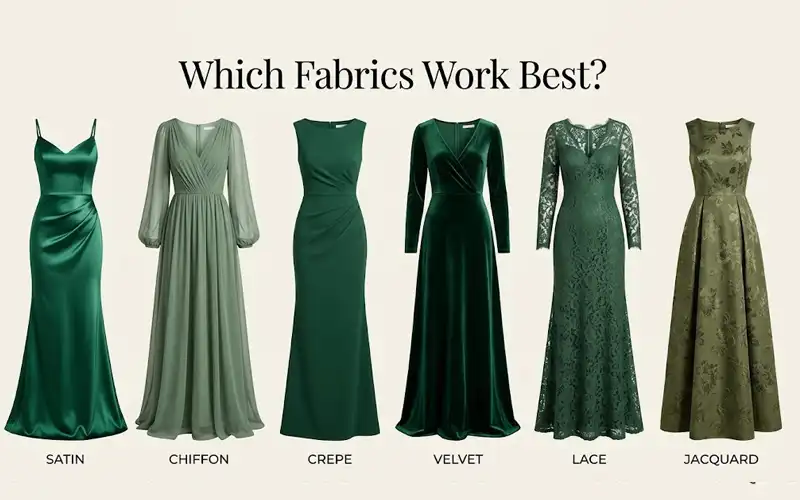
Satin, chiffon, crepe, velvet, lace, and jacquard create different textures and finishes for formal green dresses.
Choose a material that allows you to remain comfortable for several hours. A heavy dress may feel uncomfortable at a warm outdoor reception, while a very lightweight fabric may not provide the structure you want for a formal evening event.
Accessories That Complete a Green Wedding Outfit
Accessories should support the dress rather than compete with it. Start with your shoes, then choose jewelry and a bag that suit the neckline, fabric, and level of formality.
Shoes: Nude, beige, black, gold, and silver can all work with different shades of green. Gold adds warmth to emerald and olive, while silver can create a cooler contrast with sage or mint. For grass, gravel, or uneven outdoor paths, block heels or dressy flats may be easier to manage than narrow stilettos.
Jewelry: A dress with beadwork, lace, or a detailed neckline often needs only simple earrings or a delicate bracelet. With a plain gown, statement earrings or a necklace may add interest. Gold, silver, pearls, and crystal details are all options; choose according to the dress’s undertone and your other accessories.
Bags: A small clutch or compact evening bag works well for formal events. Neutral shades are easy to coordinate, while a metallic bag can add a subtle highlight. Make sure it has enough space for essentials without being awkward to carry.
Wraps and outer layers: A lightweight shawl, tailored jacket, or elegant wrap can be useful for cooler venues or ceremonies that require additional coverage. Choose a color and material that complement the dress without making the outfit feel mismatched.
For hair and makeup, consider the neckline and overall style. An updo can highlight an open or detailed neckline, while loose waves can suit a flowing dress. You do not need to match your makeup exactly to the green shade; a balanced finish is usually more versatile.
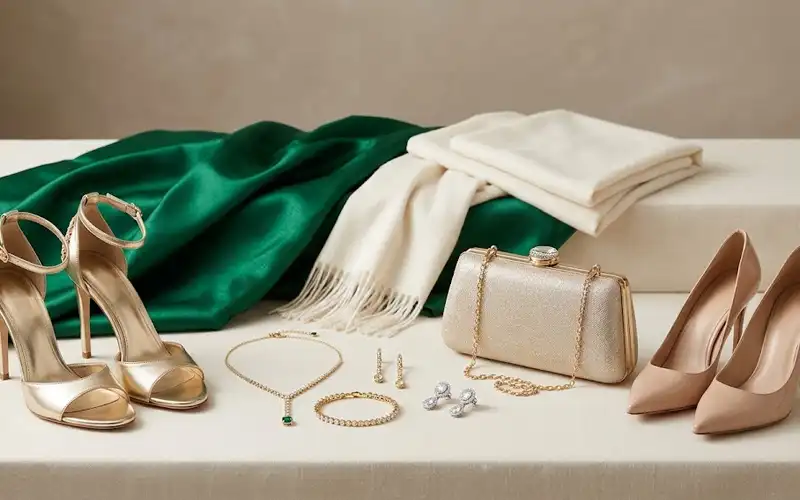
Coordinate shoes, jewelry, a clutch, and a shawl to complete a green formal wedding outfit.
Choosing a Green Dress by Season and Venue
The wedding setting can help you decide which fabric, color, and silhouette will work best. Season alone should not determine your choice, but temperature, lighting, and the type of venue can make a real difference.
Spring and summer weddings: Sage, mint, and lighter greens can complement outdoor ceremonies and daytime receptions. Chiffon, lightweight crepe, and breathable linings can help keep you comfortable. If the event is formal, choose a polished cut rather than a casual sundress.
Autumn weddings: Olive, moss, emerald, and forest green can work well with the richer colors often seen in autumn settings. Crepe, satin, and textured fabrics are useful options, depending on the venue and dress code.
Winter weddings: Dark green and emerald can look particularly suitable for evening events. Velvet, structured crepe, and jacquard may offer more visual depth, but choose a fabric that is comfortable for the indoor temperature.
Garden and outdoor venues: Consider the ground beneath your feet, the weather, and the amount of walking involved. A hem that is too long can drag on grass, while delicate heels may sink into soft ground. Flowing skirts can look beautiful outdoors, but a secure fit and practical shoes matter too.
Ballrooms and formal indoor venues: Floor-length gowns, refined fabrics, and elegant accessories are often suitable when the invitation calls for formal or black-tie attire. For cocktail dress codes, a well-finished midi dress may be enough.
Always follow the dress code first. A seasonally appropriate color does not automatically make a casual design suitable for a formal wedding.
What to Check Before Buying a Green Wedding Guest Dress
Before placing an order, review the invitation and confirm whether the event calls for black tie, formal, cocktail, or semi-formal attire. If the couple has shared guidance about clothing or colors, follow it rather than assuming every style will be appropriate.
It can also help to check whether the bridal party will be wearing green. Sage, emerald, and other green shades are common choices for bridesmaid dresses. If you are concerned about looking too similar to the wedding party, ask the couple or choose a noticeably different shade or design.
For online purchases, use this checklist:
- Size: Compare your measurements with the retailer’s size chart instead of relying only on your usual size.
- Color: Check multiple product photographs and read the description carefully. Screen settings and lighting can affect how green appears.
- Coverage: Confirm whether the dress is lined and whether the neckline, back, and slit provide the coverage you prefer.
- Delivery: Allow enough time for shipping, trying on the dress, and making any necessary alterations.
- Returns: Read the return and exchange policy before purchasing.
- Comfort: Check that you can sit, walk, raise your arms, and move comfortably in the dress.
- Total cost: Include shipping, alterations, shoes, and accessories when deciding your budget.
Trying the dress with your intended shoes and accessories can help you identify problems before the wedding day. If you are buying well in advance, keep the order details and check the dress as soon as it arrives.
Frequently Asked Questions
Is a green formal dress appropriate for a wedding guest?
Yes, green is generally a suitable color for a wedding guest. Choose a shade, fabric, and silhouette that match the invitation and venue. If the couple has requested particular colors or the bridal party is wearing a similar shade, take that guidance into account.
Which shade of green is best for a formal wedding?
Emerald and forest green are strong options for formal evening celebrations because their deeper tones create a polished appearance. Sage can also work for formal events when paired with an appropriate fabric and silhouette. The best choice depends on the dress code, venue lighting, and your personal preference.
Can you wear a sage green dress to an evening wedding?
Yes. A sage green dress can suit an evening wedding if the design matches the level of formality. Consider a floor-length silhouette, satin or structured crepe, and refined accessories for a formal event. A lightweight, casual sundress may not be suitable for black-tie attire.
What shoes go with an emerald green formal dress?
Nude, black, gold, and silver shoes can all complement emerald green. Choose a color that works with the dress and other accessories, and consider the venue surface and amount of walking. Block heels or dressy flats may be more practical for outdoor weddings.
Is a long-sleeve green formal dress suitable for summer?
Yes, if the fabric and sleeve design suit the temperature. Lightweight chiffon, breathable linings, and sleeves that allow airflow can provide coverage without adding too much warmth. Heavy velvet and thick, tightly fitted sleeves are usually less comfortable for hot outdoor ceremonies.
Conclusion
The perfect green formal dress for a wedding should suit the occasion, fit comfortably, and reflect your personal style. Start by checking the dress code and venue, then compare shades such as sage, emerald, olive, mint, and forest green. Consider length, silhouette, sleeves, and fabric before choosing the final design.
Accessories can complete the outfit, but fit and comfort deserve equal attention. Before buying, check the color, measurements, lining, delivery time, and return policy. These practical steps can help you choose a green dress that looks polished and feels comfortable throughout the celebration.
Also Read : What Colour Goes With Green Clothes? 13 Beautiful Colour Combinations